View in gallery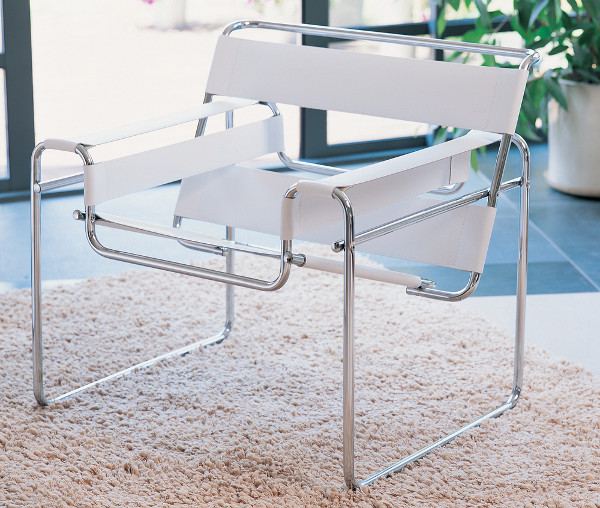
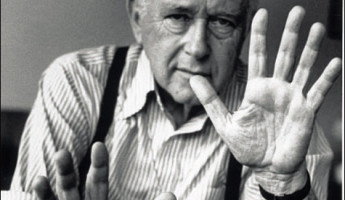
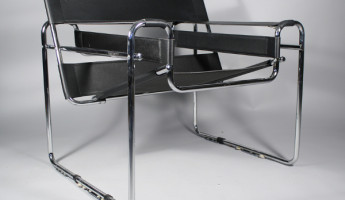
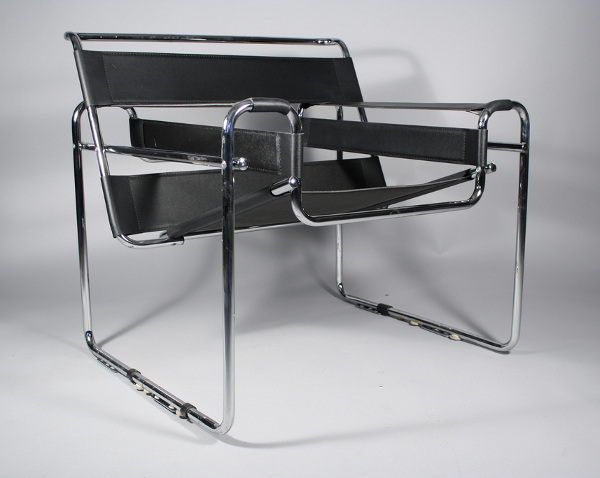
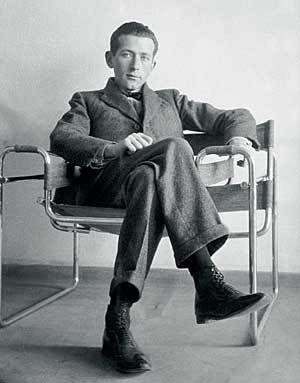
Revolutions in design are most often driven by advancements in material and technology. The famous Wassily Chair by Marcel Breuer is precisely one of these, the first ever chair to feature a bent-steel frame. While it was first created in 1926, it marked the beginning of a new era in modern furniture with a design that maintains a progressive look even today.
The Wassily Chair was first built by Marcel Breuer at the Bauhaus institution in Dessau, Germany. Breuer found his inspiration for the chair in the bent form of a bicycle handlebar, available for the first time in steel due to a development in technology. The German steel manufacturer Mannesmann had developed a process to produce seamless steel tubing, the first to allow tubes to be bent without breaking at the seam. Breuer’s Adler bicycle featured such tubing, which inspired the designer to employ this material in furniture.
View in gallery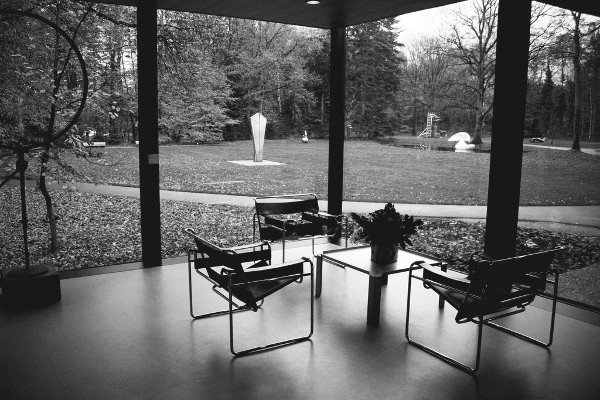
The Wassily Chair was originally known as the Model B3 Chair, but was later marketed as the Wassily Chair after a story about Breuer’s friend and colleague at Bauhaus, artist Wassily Kandinsky. After first producing the Model B3 Chair prototype, Kandinsky was so enthralled with the chair that Breuer decided to produce another for Wassily Kandinsky himself. This friendship, and the later popularity of Kandinsky led the producers of the Model B3 Chair to change its name to the now famous Wassily Chair.
View in gallery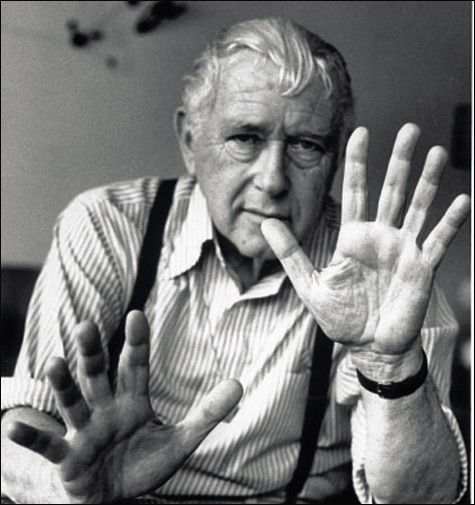
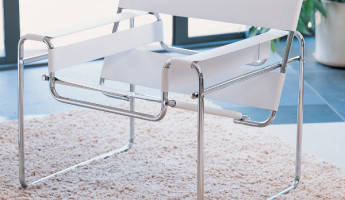
After going out of production for a number of years, the Wassily Chair was produced again shortly after World War II. The original Model B3 Chair featured a fabric seat, back and arm rests, but the re-introduced version was also available in white, black or brown leather. This design remains today, where it is still in production by Knoll Furniture and knocked off by many other producers.
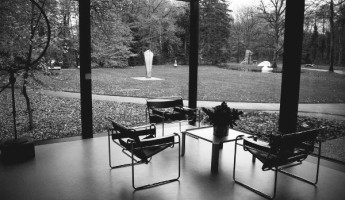
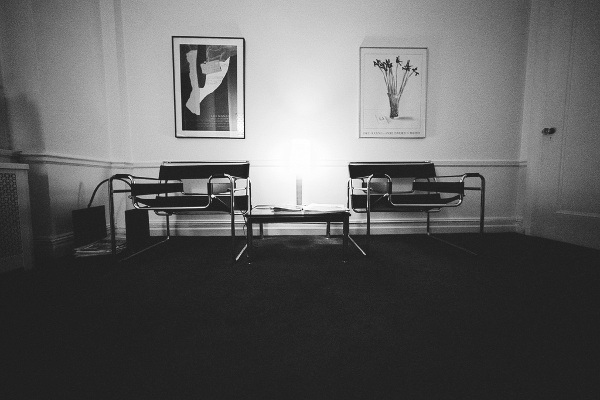
The Wassily Chair is a classic like none other. Its design remains progressive even in comparison to the design world’s latest furniture. Its build is complex in appearance but simple in construction, a contrast which has earned its place in museums throughout the world, and in thousands of modern-minded homes. We have a pair here at TheCoolist, and we can say without a doubt that the Wassily Chair is one of history’s greatest pieces of modern furniture. Marcel Breuer may have passed in 1981, but we believe his legendary piece of furniture will never lose its relevance to the world of modern design.
Wassily Chair Gallery