By the second morning, the T-shirts on the rack may be dry, but the towels still feel cold and damp. Turning up the heat is tempting. Before you reach for the thermostat, take a look at the shape your hanging clothes make.
Why the towels still feel damp on day two
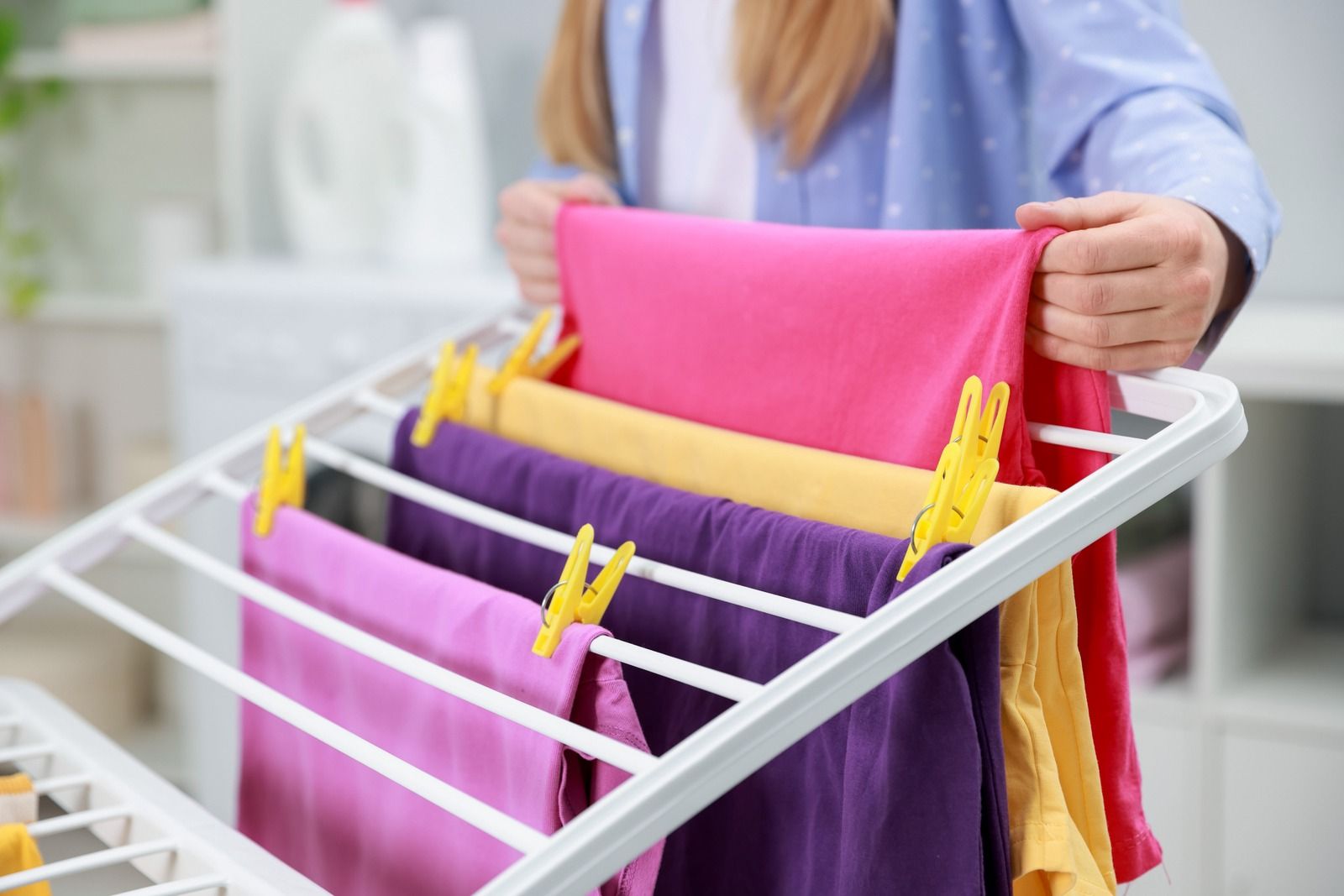
Drying is simple at heart: water leaves the fabric as vapor. Cold or humid air gives that vapor less room to go. Still air lets a damp layer settle around each garment. That’s why a winter load seems to stall.
Warmer air, lower humidity and moving air all help laundry dry faster. Turning up the heat only tackles the first one. The Japanese fix goes after the last one, and it starts with the way you hang the load.
The arch hiding in your laundry basket
In Japan, the technique is called “arch drying.” Instead of scattering long and short pieces at random, you hang the longest items around the outside. Then you place progressively shorter pieces toward the center.
Japanese household-goods company Lion compared this arch with V-shaped and alternating layouts. At 77°F and 65% relative humidity, the arch-shaped load dried in four hours. That was about 30 minutes ahead of the other arrangements.
The idea is to get the air moving. Long pieces hang where they get more air, and the shorter items in the center leave an open pocket underneath. Evaporation cools the nearby air and can create a gentle current through that space. Nothing is added to the wash, and you don’t need any new equipment. You’re just giving damp air a path through the load.
Building the tunnel from the outside in
Start right after the washer’s final spin, with a rectangular clip hanger or a compact drying rack. Sort the load into three rough piles: long or slow-drying items, medium pieces and short ones.
Pants, hoodies, bath towels and heavy cotton shirts go on the two outer ends. Regular T-shirts and hand towels come just inside them. Socks, underwear and washcloths take the center. The lower edges should rise toward the middle, like an upside-down U with a tunnel underneath.
Weight counts, too. If a thick item is shorter than a thin one, give the thick piece the outer spot, where it gets more air.
Those stubborn towels get one extra step. Shake each one about 10 times before hanging it to loosen its loops. Don’t fold big pieces over into doubled-up slabs, and keep neighboring fabrics from touching. If the rack is packed tight, save one piece for a second load.
As the small items dry, take them off so the center stays open. A quiet fan on low can help in a still room, but the arch itself costs nothing. Just keep the rack well away from the heater you were tempted to crank up.
Where rearranging socks stops working
Keep the rack at least 3 feet from a portable space heater, and never leave one running unattended. Space heaters should never be used to dry clothing.
Lion’s four-hour result came from controlled conditions, so your load may differ. The arch can’t pull moisture out of the room. If windows sweat or humidity nears 60%, the room needs ventilation or a dehumidifier, and recurring condensation or mold means fixing the moisture source.