

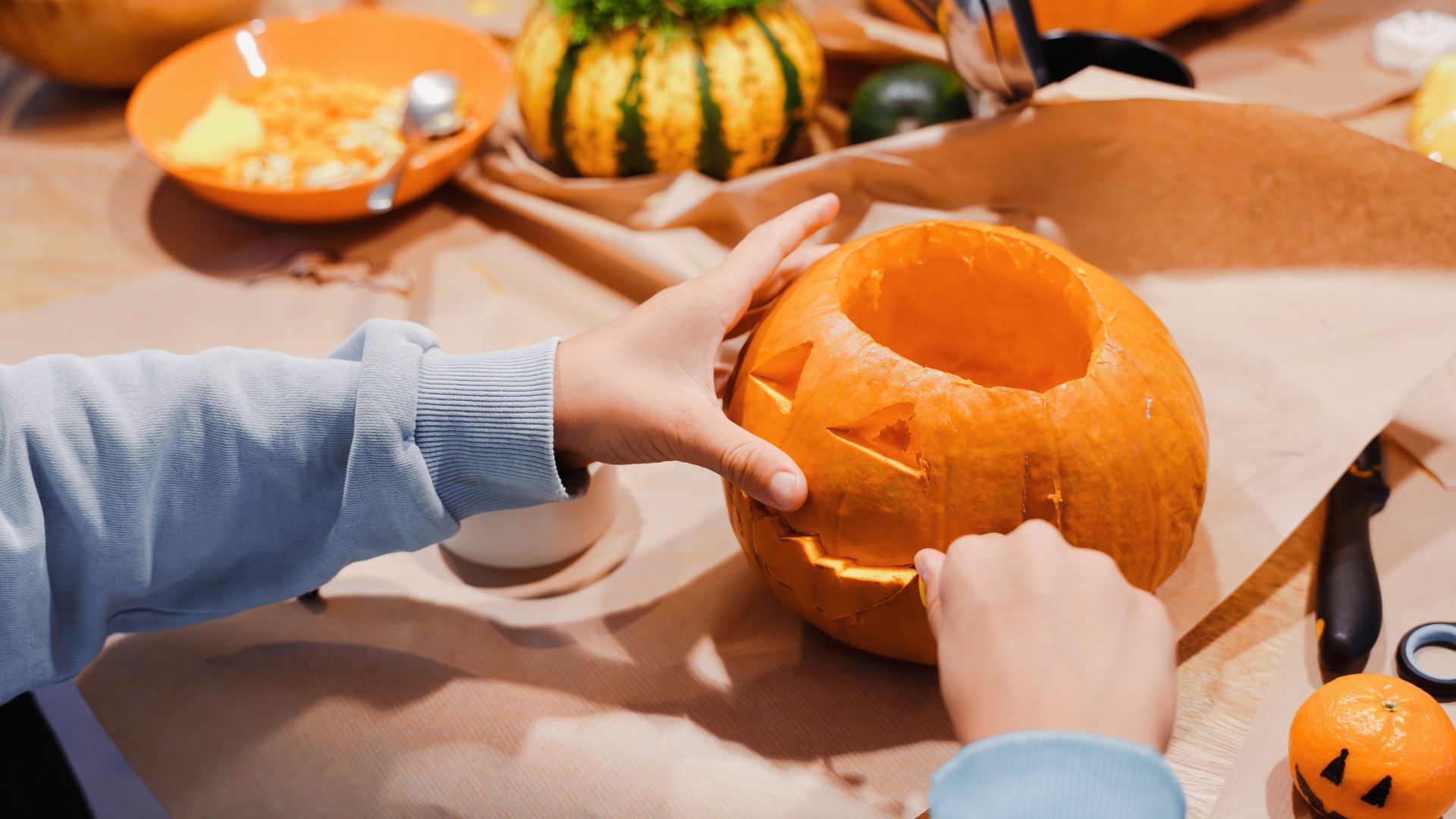
Walk past almost any front porch this October and you’ll notice something a little off. The pumpkin’s still there. The porch light’s still on. But the carving knife? Gone.
All over the country, people are quietly skipping the one Halloween ritual nobody ever questioned: cutting a face into a pumpkin. Instead, something nobody saw coming has taken over. Little rhinestones catching the porch light. Soft pastel paint. Pressed flowers. Ribbons tied around the stem. Stick-on gems lined up along a pumpkin’s natural ridges.
It looks like a cute decorating trend. It isn’t. Not really.
Something changed this year, and it changed fast. Instagram and TikTok are flooded with these new pumpkins. Walk into Target, Michaels, or Hobby Lobby and the Halloween aisle tells the same story: craft paint and stick-on jewels sold out early, while pumpkin carving kits are still sitting on the shelf. Blake Lively and Martha Stewart have both posted their own no-knife versions. Even the fashion press, from New York to Singapore, has been covering it.
The people switching say it has nothing to do with being lazy, or trying to look fancy. It isn’t even about saving time.
The real reason is one most people have never heard. It’s been piling up quietly, in medical journals and emergency-room records, for about ten years. The decorating trend didn’t cause the shift. It just gave people something to switch to.
What’s actually on front porches this year
The trend has a name. Hunker, the home-decor site, called it out on October 9, 2026, and tagged it the bedazzled pumpkin trend. Crafters cover whole pumpkins with glued-on flat-back rhinestones and stick-on gems, usually in matching colors. Clear gems on a white pumpkin. Purple stones on a dark one. Gold accents on a pale green one.
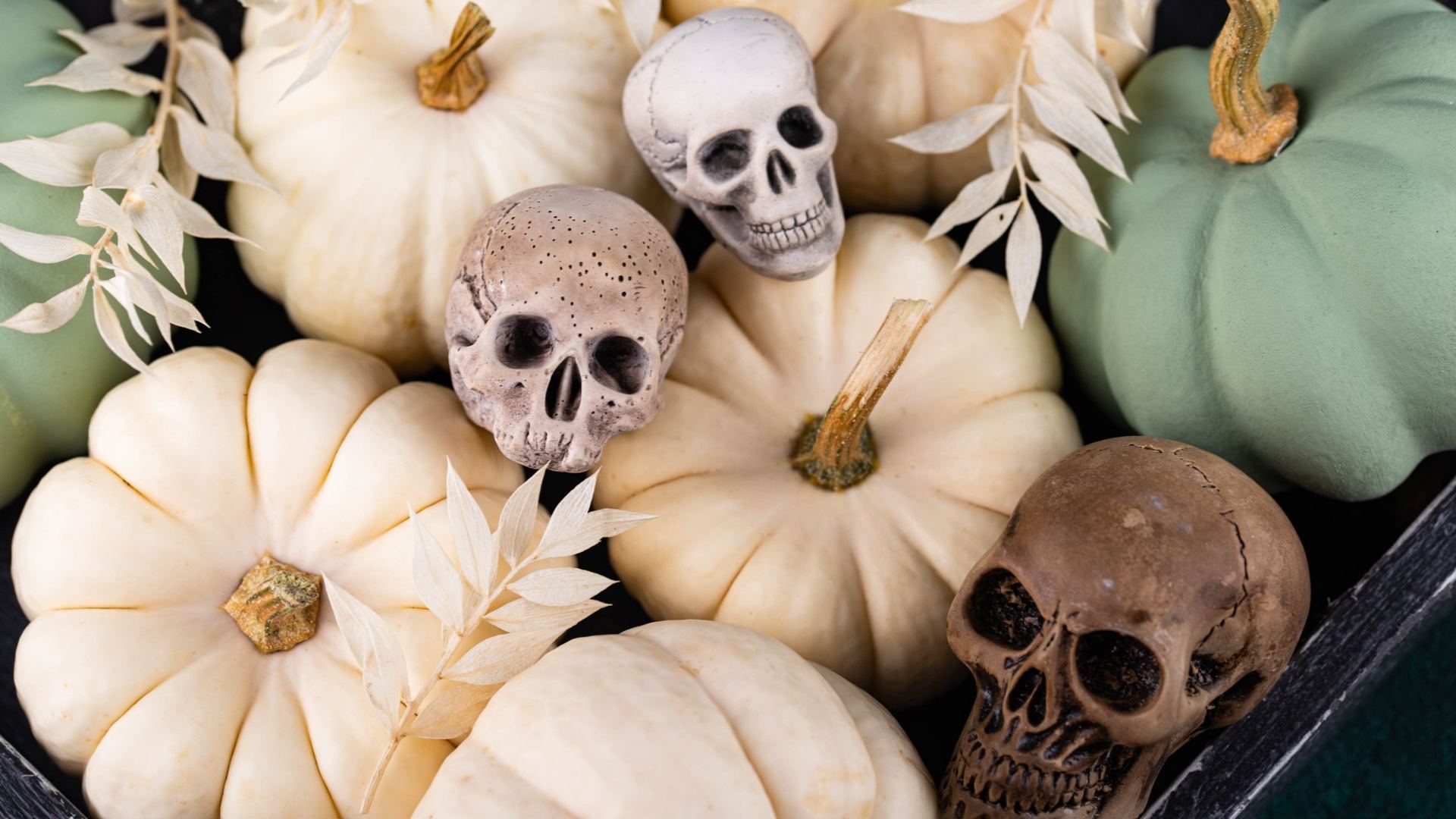
Hunker ties it to a bigger shift the fashion world has been tracking all year. Grazia and Vogue have both covered the “gem-maxxing” and “whimsy-maxxing” wave, pointing to Kylie Jenner’s August birthday party, Sabrina Carpenter’s gem manicures, and Fall 2026 runway shows that leaned hard into crystals and sparkle. By October, the look had reached the porch.
The bedazzled version isn’t the only no-knife style having a moment. Homes and Gardens showed off Blake Lively’s pastel-and-floral pumpkins. Martha Stewart’s been posting painted and fabric-wrapped designs on Instagram. Good Housekeeping ran a round-up of more than 60 no-carve ideas just this month.
None of this is why people are actually switching
The styles are fun. But the pictures aren’t what pulled parents, teachers, and busy adults away from carving this year. The real reason is less pretty, a lot older than the trend, and has nothing to do with how the pumpkin looks on the porch. Once you hear it, carving a pumpkin doesn’t quite feel the same.
It has to do with what happens the second the knife goes in. And what hand surgeons have been seeing in emergency rooms every October for the past ten years. The warning crept up slowly. First it was a few orthopedic clinics noticing more cases in late October. Then it was a nationwide pattern, big enough that doctors stopped treating it as a seasonal fluke and started writing about it in peer-reviewed journals.
The real reason people are putting the knives down
The number nobody shares at the pumpkin patch: a study in the American Journal of Emergency Medicine looked at U.S. emergency-room records from 2012 to 2021. Over those ten years, pumpkin knives sent about 20,579 Americans to the ER. Almost 88% of those injuries were to the hand, with the thumb and index finger hit the most. The single biggest group of victims? Girls between 10 and 19.
Dr. Trajan Cuellar, a hand surgeon at Sanford Health, puts the typical yearly count at about 2,300 ER trips, with a sharp spike the day before Halloween. He puts it bluntly: “The worst ones are tendon injuries. Even if the repair goes well, you sometimes don’t get full use of the hand back.”
That’s reason one. Reason two is why a no-knife pumpkin pays off well past October 31.
How to do a no-knife pumpkin that actually lasts
The steps are simple, and they matter if you want the pumpkin to make it to Halloween night.
- Pick a firm pumpkin with its stem still attached. A soft spot or broken stem is where rot starts. Carry it from the bottom, not the stem.
- Rinse it with plain water and dry it off completely. Any moisture trapped under decorations invites mold. Let it air-dry for at least an hour.
- Use the right glue. Hunker recommends Gem Tac, applied in tiny dots with tweezers. Hot glue works too but can lift paint. For a fully removable look, use peel-and-stick jewels.
- For painted designs, go with acrylic craft paint. It dries in under an hour and sits on top of the pumpkin’s skin instead of soaking in.
- Keep it out of direct sun and off hot concrete. Shade and air flow are what turn a few days of good looks into weeks.
- Before composting, pull off every gem, sticker, and decoration that won’t break down. Hunker calls this out, and it’s the step most people forget.
Why bother? Steve Reiners, a Cornell University pumpkin expert, says a healthy whole pumpkin lasts 8 to 12 weeks. A carved one? Just 5 to 10 days. Utah State University Extension explains why: the moment you cut, air hits the inside and mold moves in within days. Michigan State University Extension says a whole, undamaged pumpkin kept cool (45 to 50°F, or 7 to 10°C) can last three to six months.
In short: a no-knife pumpkin can sit on your porch from early October straight through November. No mush, no smell, no fruit flies.
The knife is on the drawer
Jack-o’-lanterns aren’t going anywhere. Plenty of people will still carve a last-minute face on October 30. What changed in 2026 is that cutting into the pumpkin stopped being automatic. The front porch has a new default. And the knife is on the drawer, where hand surgeons have been quietly hoping it would stay.
Sources: (1) Hunker on the bedazzled pumpkin trend; (2) American Journal of Emergency Medicine: pumpkin carving knife injuries study; (3) Valley News Live interview with Sanford Health’s Dr. Trajan Cuellar; (4) ZME Science quoting Cornell’s Steve Reiners; (5) Utah State University Extension on carved-pumpkin mold; (6) Michigan State University Extension on whole-pumpkin storage; (7) Grazia on the 2026 bedazzling wave; (8) Homes & Gardens on Blake Lively’s no-carve pumpkins; (9) Good Housekeeping no-carve pumpkin ideas round-up


