

Most of us have had the same sinking moment. You call in a kitchen pro, they walk through the room, and the number they hand back makes your stomach drop. For one homeowner, that number was $30,000. Just for the cabinets.
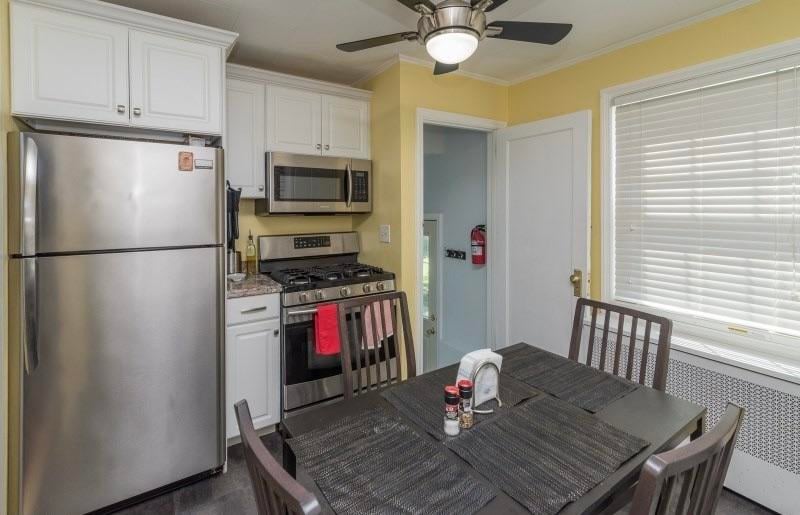
His kitchen was already dated. Yellow walls. White builder-grade cabinet doors with puffy raised panels. A busy mosaic backsplash. Shiny brown granite that felt too loud for the small space. He wanted something softer and timeless. The quote said he could not have it.
So he closed the laptop, opened YouTube, and did something most people would never try.
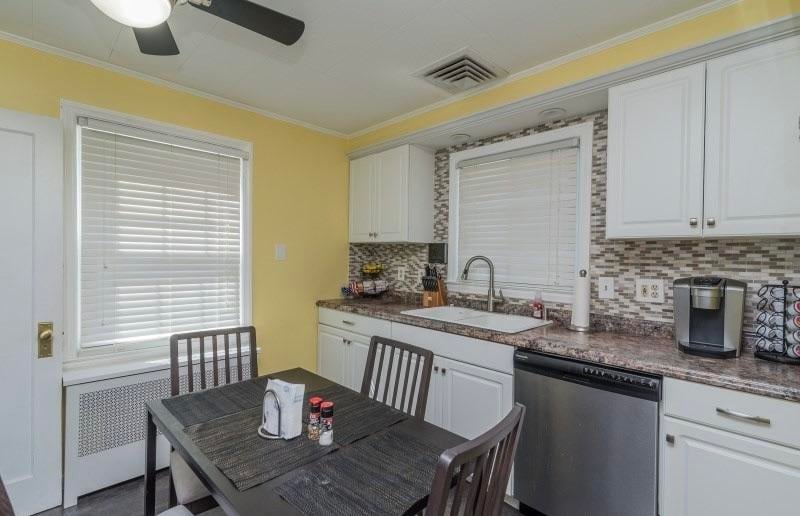
The old kitchen was not falling apart. The layout worked. The dishwasher and sink were in the right spots. The cabinet bases underneath were solid wood. The problem was skin-deep. Every surface shouted a different decade. The yellow walls fought the brown granite. The tiny mosaic tiles cut the room into a hundred pieces. The doors read as rental grade.
He kept staring at a kitchen style he loved from a British maker called deVOL. Shaker doors. Soft mushroom paint. Brass pulls. Butcher block counters. A deep white sink by the window. That look sells for $50,000 and up in the US. His $30,000 quote was already a stretch. The dream felt out of reach.
Here is where almost nobody would have made the call he made. He did not rip out the kitchen. He did not replace a single cabinet box. He kept every base in place.
Then he built brand new shaker doors from scratch. From a YouTube video. Using cheap knot-free pine from the hardware store.
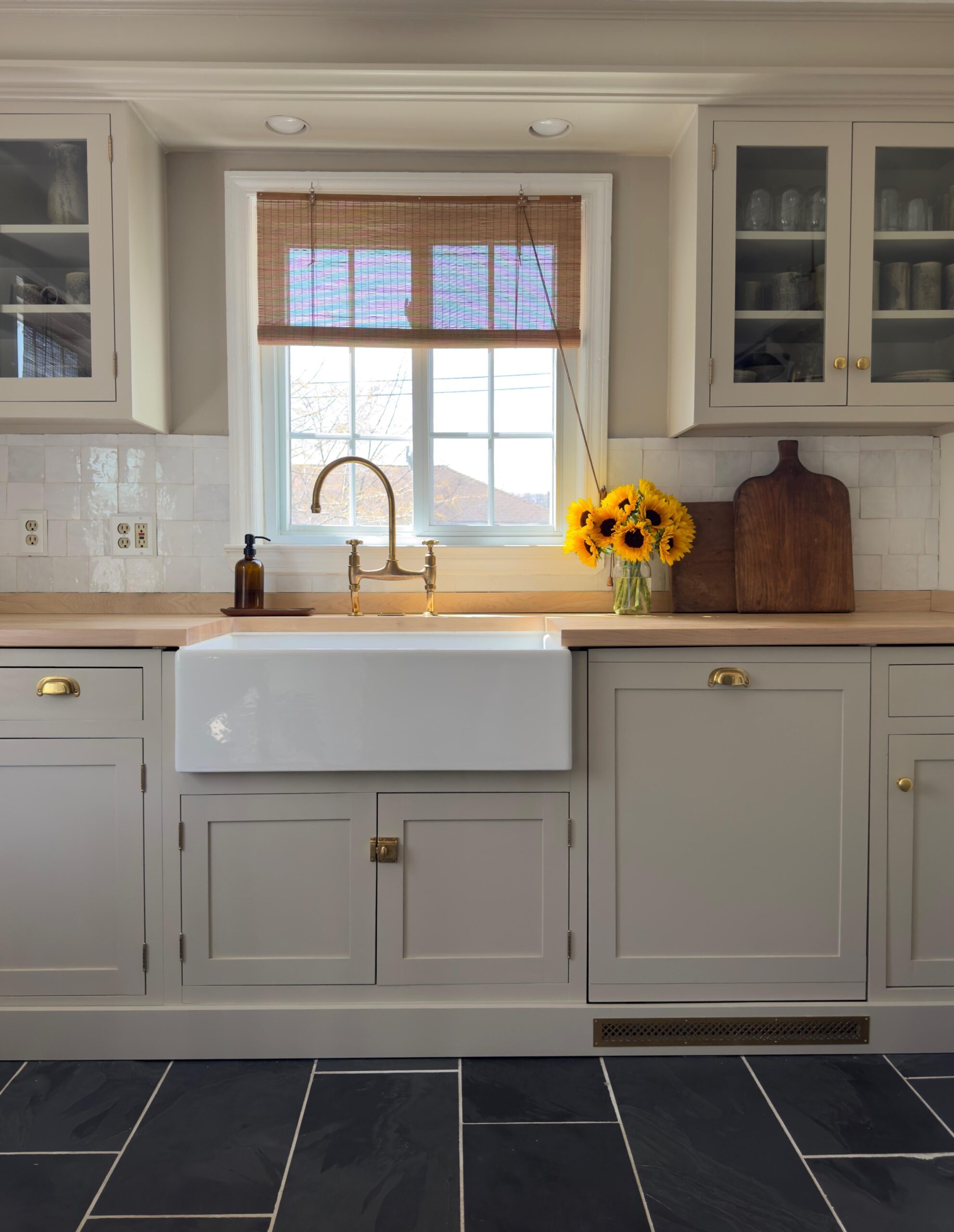
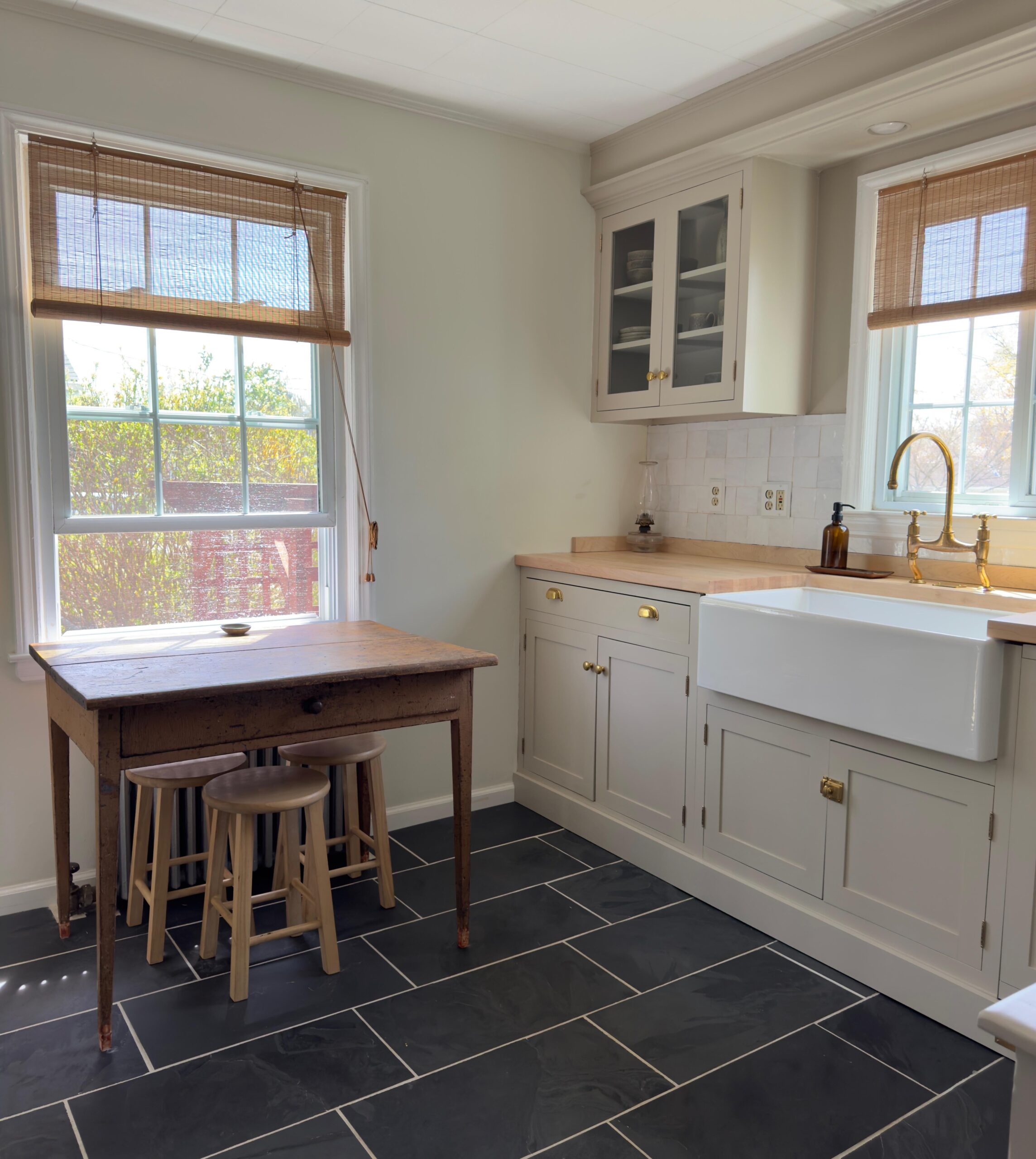
The first two doors came out rough. By door number three, he had the method down. He cut, glued, and clamped the frames in his garage. He sanded them smooth. He primed. He painted them Sherwin Williams Shiitake, a warm mushroom color that reads as cream in bright light and almost sage in the shadows. He added small brass cup pulls and bin latches. He swapped the solid uppers for glass fronts so the wall felt lighter.
The whole door run cost him about $1,600 in materials. Not $30,000.
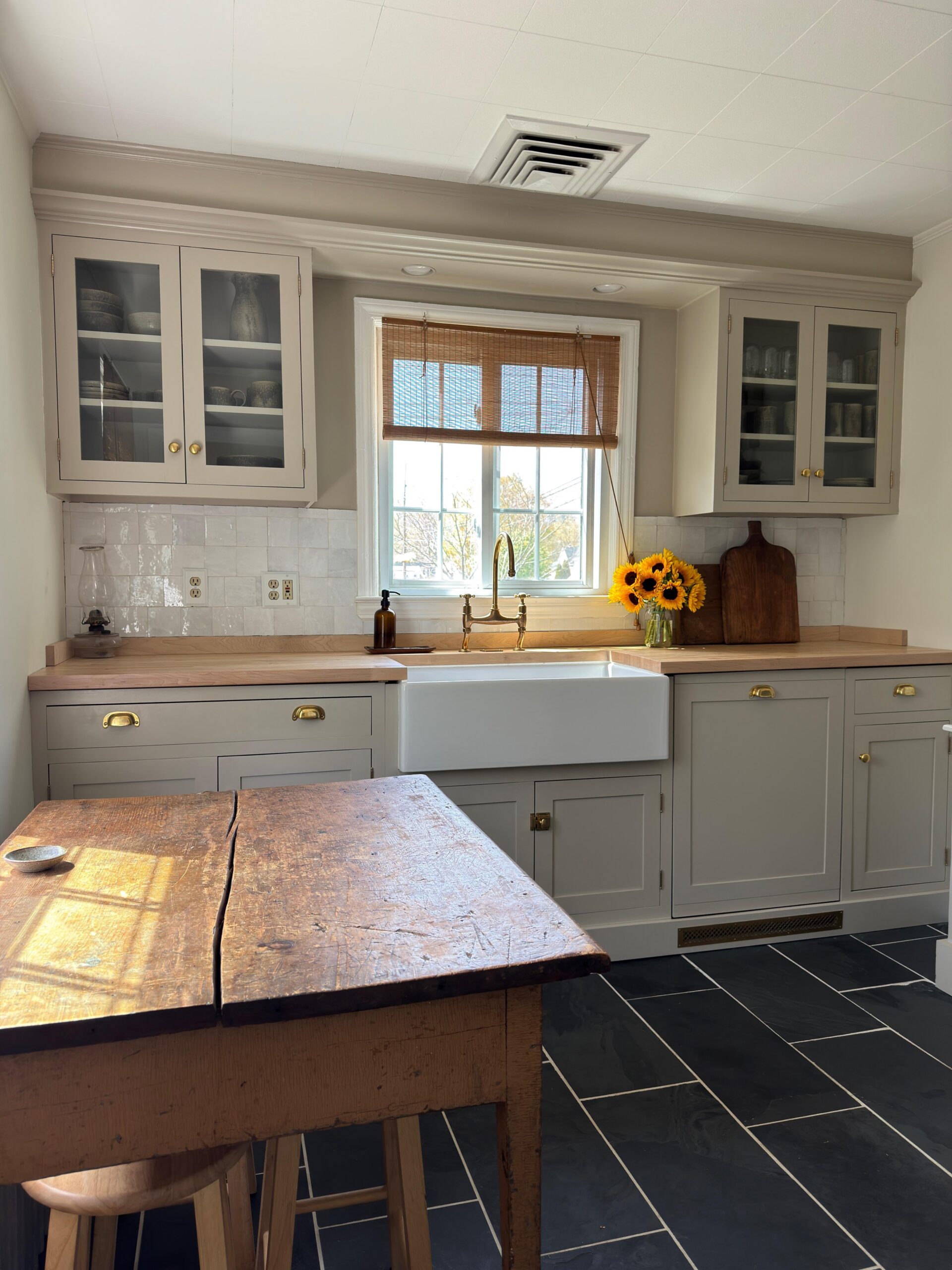
Once the doors were on, the rest of the room followed. He pulled the mosaic tile and set small white zellige squares from Cle in a shade called Sea Salt. He laid dark slate tile on the floor in a brick pattern. He dropped in a deep white farmhouse sink and a tall brass bridge faucet. The granite came out. Maple butcher block went in, finished with a clear oil that keeps the wood pale instead of turning yellow.
He kept the walls simple with Sherwin Williams Alabaster, a warm off-white that lets the cabinet color do the talking. He pulled in an antique wood table on tapered legs for extra prep space and seating. Three plain wood stools tucked underneath. No giant island. No gut job. No contractor.
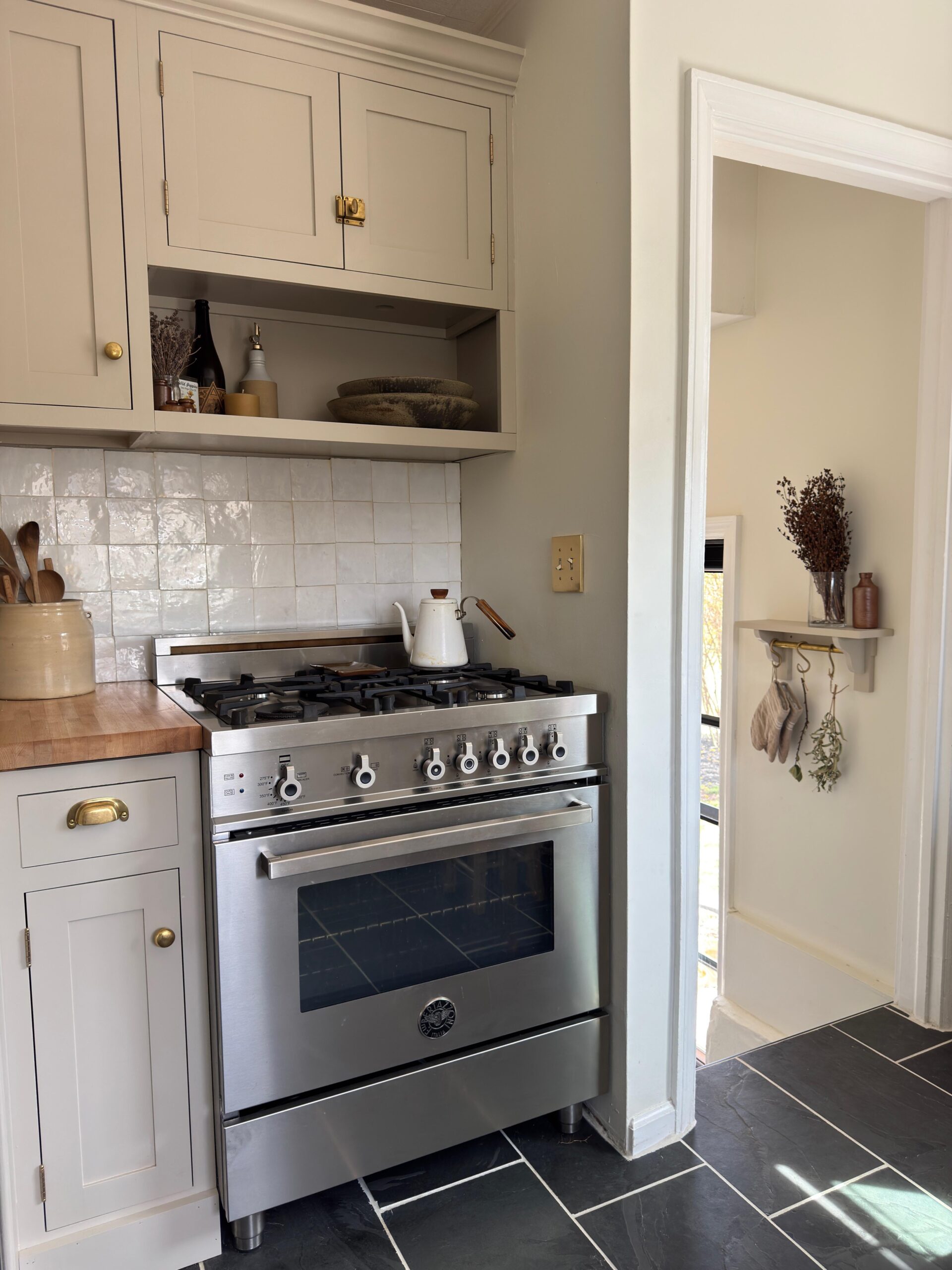
For the stove, he brought in a Bertazzoni gas range he had scored secondhand from a nearby town for $500. It sits in a corner next to the new cabinets, with a short open shelf above holding a few dried herbs and ceramic bottles.
The whole project took him about eight months of nights and weekends. The quote he turned down was $30,000 for cabinets alone. His full redo, with cabinets and tile and sink and faucet together, cost a small fraction of that. The kitchen now reads as a hand-built English build. Nobody who walks in guesses the bases underneath are the same ones from the yellow-wall days.
The lesson is quiet but strong. Sometimes the smartest renovation is the one that leaves most of the room in place.


