
You’ve pressed it a thousand times: the little fan icon on the oven panel, filed in your head under “convection, makes things cook faster.” Here’s the inconvenient news from the people who design these machines: on most ovens, the bare fan symbol isn’t the convection setting at all. There are two different fan icons on that panel, they run two different heating systems, and mixing them up is why your cookies brown unevenly on one setting and your roast dries out on the other.
The difference hides in one detail: the circle. A fan icon inside a circle or ring is true convection; a fan standing alone is something else entirely, and appliance-testing labs spell the distinction out: the ringed fan means heat comes from a dedicated circular element wrapped around the fan itself at the back of the oven, while the bare fan merely blows around heat made by the ordinary top and bottom elements.
Two symbols, two machines
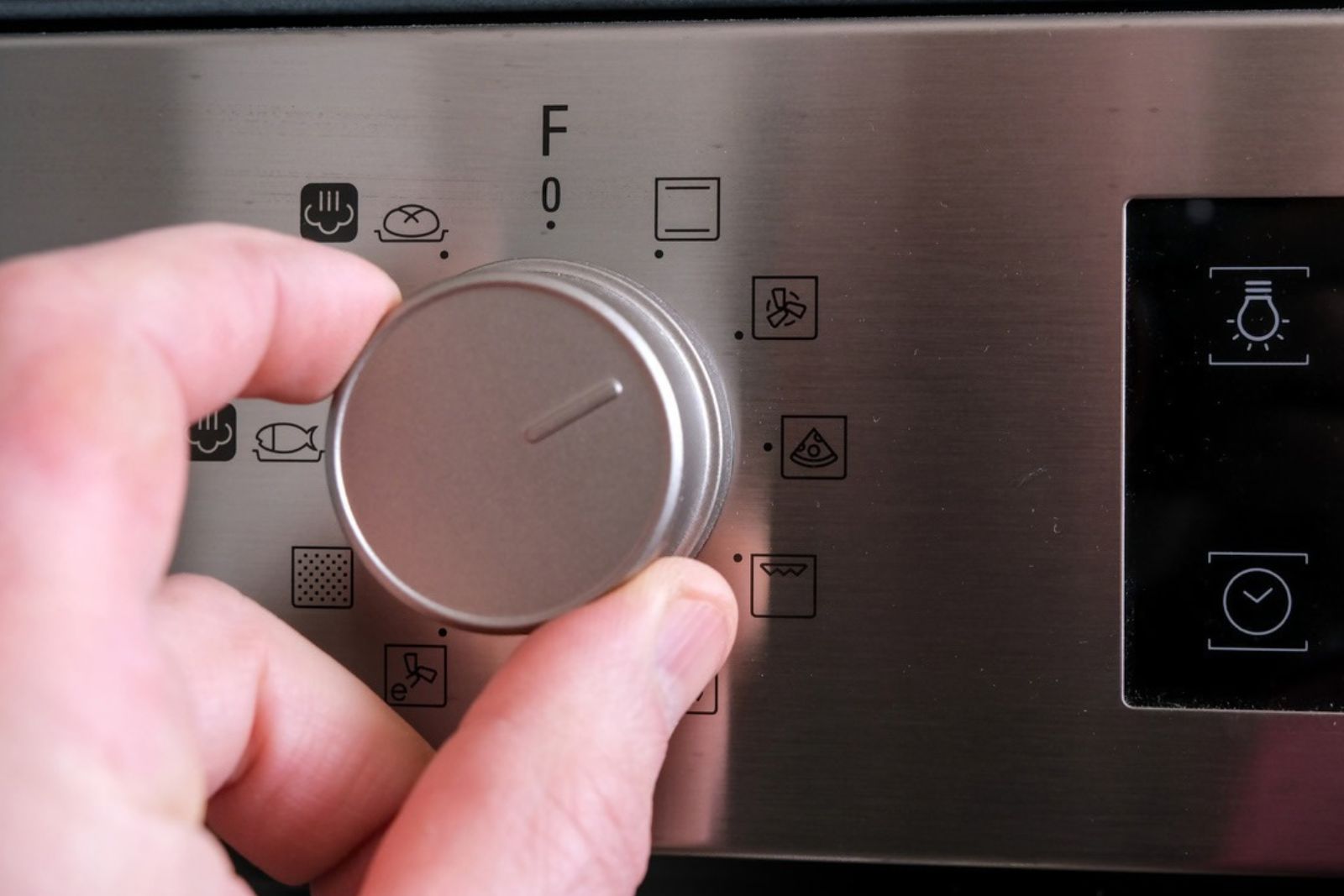
The bare fan is an air mover, not a heat source. On that setting, your oven cooks exactly as it always has, from above and below, with a breeze stirring the air. That’s fan-assisted baking: better than still air, but the heat still arrives unevenly from two ends, so the zones near the elements stay hotter. On many ovens, the bare fan paired with a snowflake does something even less expected: it runs with no heat at all, as a defrost mode. Pressing “the convection button” and getting a defroster explains a few mysterious dinners.
The ringed fan is the real thing. True convection (sold as “European convection,” True Fan or CircoTherm, depending on the brand) heats the air at the fan and pushes it everywhere at once, so every rack sees the same temperature. That’s the mode that earned convection its reputation: faster, more even, three trays of cookies browning identically.
When to use which, and the 25-degree rule
- Ringed fan (true convection): multi-rack baking, pastries, bread, roasted vegetables, anything where evenness is the goal. One adjustment is mandatory: moving hot air cooks harder, so drop the recipe’s temperature by about 25°F or start checking early; recipes assume still air unless they say otherwise.
- Bare fan (fan-assisted): everyday single-dish cooking, roasting meat where you want strong browning from the top element plus circulation, reheating. The same temperature reduction applies, a touch more gently.
- No fan at all (the two plain lines): still the right call more often than fan-lovers admit. Delicate cakes, soufflés, custards and cheesecakes hate moving air, which skins their surface and sets them lopsided before they’ve risen. For those, the fan icons are the mistake.
Thirty seconds that settle it for your oven
Brands draw these icons with small variations, so give your panel one honest look: find the fan symbols, check which wears the ring, and if in doubt, run each mode empty for five minutes and hold a hand at the open door; true convection pours heat straight out of the back wall vent, fan-assist radiates from top and bottom. Your manual’s symbol page, the one nobody reads, confirms it in a minute. It’s the same thirty-second audit that pays off all over the kitchen, from the fridge door’s paper test to the dishwasher door left ajar.
A fan is just a fan; the circle is the oven. Match the icon to the dish, drop 25 degrees when the air moves, and switch the whole breeze off for anything fragile. That’s the trick.


