The windows weep every morning, the bathroom smells faintly of damp, and somewhere online you read the fix: get houseplants, they absorb humidity. So another fern joins the windowsill, and the condensation gets, if anything, worse. There’s a reason, and it’s one the plant listicles never lead with: almost every houseplant you own is adding moisture to your air, not removing it, and the short list of genuine exceptions works on a completely different principle.
The physics is unambiguous. A potted plant is a wick between its watering can and your air: roots draw water up, and the leaves release the overwhelming share of it as vapor through transpiration; only a few percent stays in the plant. Every watered pot is a slow, silent humidifier, which is exactly why plant people cluster ferns to raise humidity around fussy specimens. Big-leaved, thirsty plants, Boston ferns, peace lilies, palms, pump the most. If your problem is a damp room, a jungle of them is working against you.
The few that genuinely drink from the air
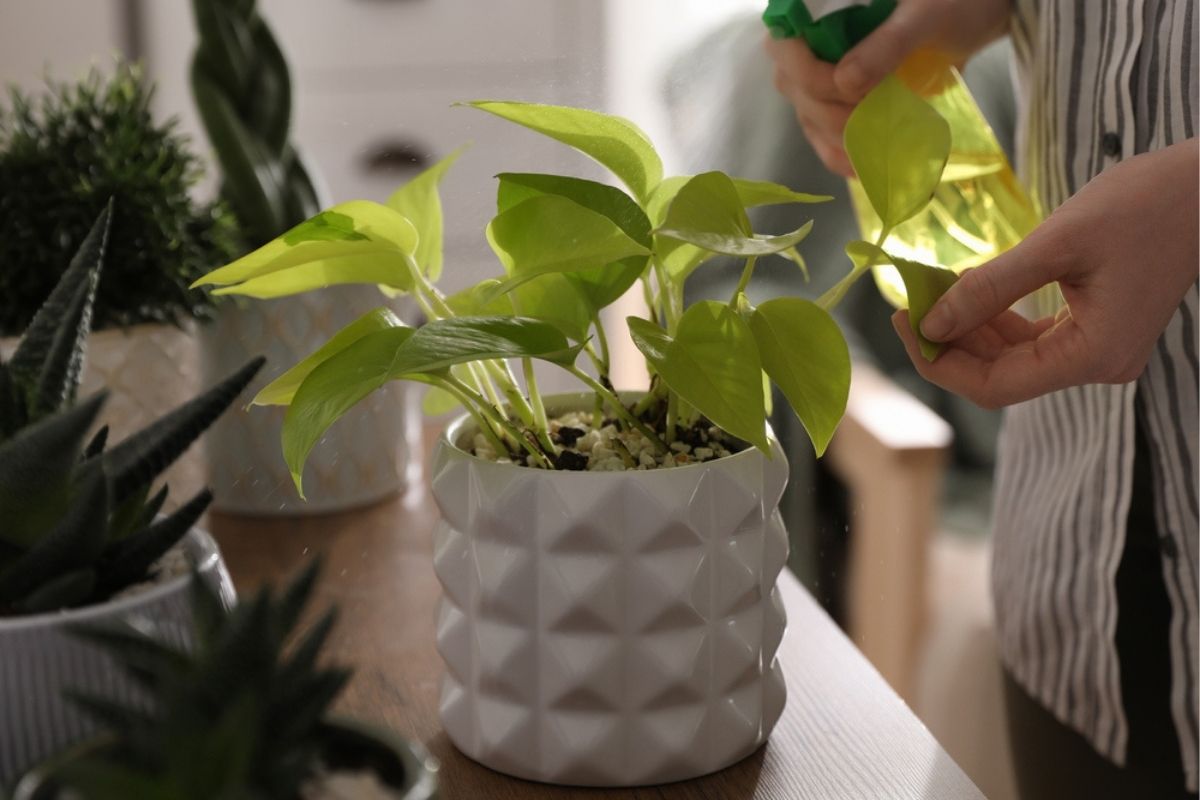
The exceptions are the plants that evolved without reliable soil water, and so learned to harvest moisture from the air itself.
- Air plants (Tillandsia), the real deal. These epiphytes grow with no soil at all; the silvery scales on their leaves capture water vapor, fog and dew directly, which is why specialists single out Tillandsia as the standout humidity absorber: it takes most of its moisture straight from the air. Every drop one drinks came out of your room.
- Their epiphyte cousins: bromeliads and many orchids, built for tree branches rather than soil, pull part of their water from humid air through specialized leaf and root surfaces, the mechanism botanists call foliar uptake, moisture entering through the leaves’ pores.
- The neutral citizens: succulents and snake plants don’t absorb your room’s damp, but they barely add any either, needing water every few weeks and transpiring stingily (snake plants even open their pores mostly at night). In a damp room, “low output” is the next best thing to “intake.”
Where to put them, and what to expect
Placement is where the trick pays or doesn’t: air plants and orchids belong exactly where your humidity peaks, the bathroom shelf near the shower, the kitchen window above the kettle, the bedroom’s weeping window, because that’s where there’s actually vapor to harvest, and those spots happen to be the conditions they love. Expectation-setting, honestly: a handful of Tillandsia sips grams of water, not the pints a shower releases; they’ll take the edge off a small room’s stickiness and thrive doing it, but no plant replaces a bathroom fan. If damp is a real problem, the plants are the garnish on the source-side routine, and the morning windowsill still deserves its spoon.
The practical reshuffle
One weekend move fixes most plant-humidity mismatches: send the big transpirers, ferns, palms, peace lilies, to the dry rooms that enjoy their moisture (the heated living room where winter air chaps lips), and staff the damp rooms with the drinkers and the frugal: Tillandsia, orchids, bromeliads, snake plants, succulents. Same plants, right postings.
Most houseplants humidify; a few harvest. Know which team each pot plays for, station them accordingly, and the greenery finally works with the house instead of against it. That’s the trick.