That rusty-brown film on an old baking sheet is not dirt you missed. It is cooked-on fat that has hardened into something closer to varnish, and the bottle by the sink was never designed to dissolve it.
In short
- The brown layer is oil that oven heat has bonded to the metal.
- Regular dish soap targets fresh grease and slides right over it.
- A baking soda paste or a hot soak loosens the layer without hard scrubbing.
- Nonstick pans need the gentlest method, with no steel wool.
Why soap and water stop working
Every trip into a hot oven leaves a thin film of oil on the pan. Heat breaks that oil down and links it into a hard, sticky layer that grips the metal. Tom’s Guide describes it as polymerized fat, a coating that behaves more like plastic than like grease.
Dish soap is made to lift fresh, liquid fat. On this cured layer it barely gets a grip, which is why a pan can come out of the sink clean and still look brown. A Bon Appétit writer, in a piece republished by Fox News, makes the same point: some of these stains simply do not budge with soap and water.
Scrubbing harder with a metal pad is tempting. It can strip small patches, but it also leaves fine scratches where new grease sticks even faster.
Three ways to lift the brown layer
The right method depends on the pan and on how thick the buildup is.
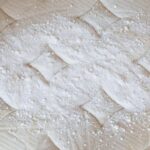
- Heavy buildup on bare aluminum or stainless steel. Mix about half a cup of baking soda with 2 to 3 tablespoons of hydrogen peroxide into a thick paste. Spread it over the stains, wait about 20 minutes, then work it with a non-scratch sponge. On stainless steel, scrub along the grain.
- A long soak for the edges. Fill a plugged sink with hot water, add half a cup of baking soda and half a cup of white vinegar, and keep the pan submerged for 30 minutes to an hour. Scrub, wash with regular soap, then dry it right away so it does not rust.
- Nonstick or light stains. Sprinkle baking soda on the marks, add a few drops of concentrated dish soap and a little warm water to make a soft paste. Leave it 20 minutes, then wipe with a soft sponge.
In that last version, dish soap finally earns its place, but as a helper to the baking soda rather than the main act.
The rest of the kitchen rewards the same patience. Some cooks swear by two glasses of water in the oven, others reach the glass panels by sliding an old sock into the oven door, and for greasy jobs there is the baking soda, dish soap and sugar mix.
Keeping the next layer from forming
Prevention is mostly about not letting oil bake on twice. Lining the pan with parchment paper or foil before roasting keeps most of the fat off the metal, and drying it right after each wash keeps rust away.
The limit
None of these methods is instant. The hydrogen peroxide paste is only for uncoated pans, and bare aluminum can discolor, so test a corner first. Nonstick coatings can be damaged by harsh scrubbing, which rules out steel wool entirely. A pan that has collected brown layers for years may need more than one round, and it may never look factory new.
That’s the trick.