You push open the bedroom door: clothes on the floor, cups on the nightstand, a desk buried under paper. The verdict lands before you’ve even stepped inside. Psychologists would ask you to wait, because that room says far less than you think.
The verdict that comes too fast
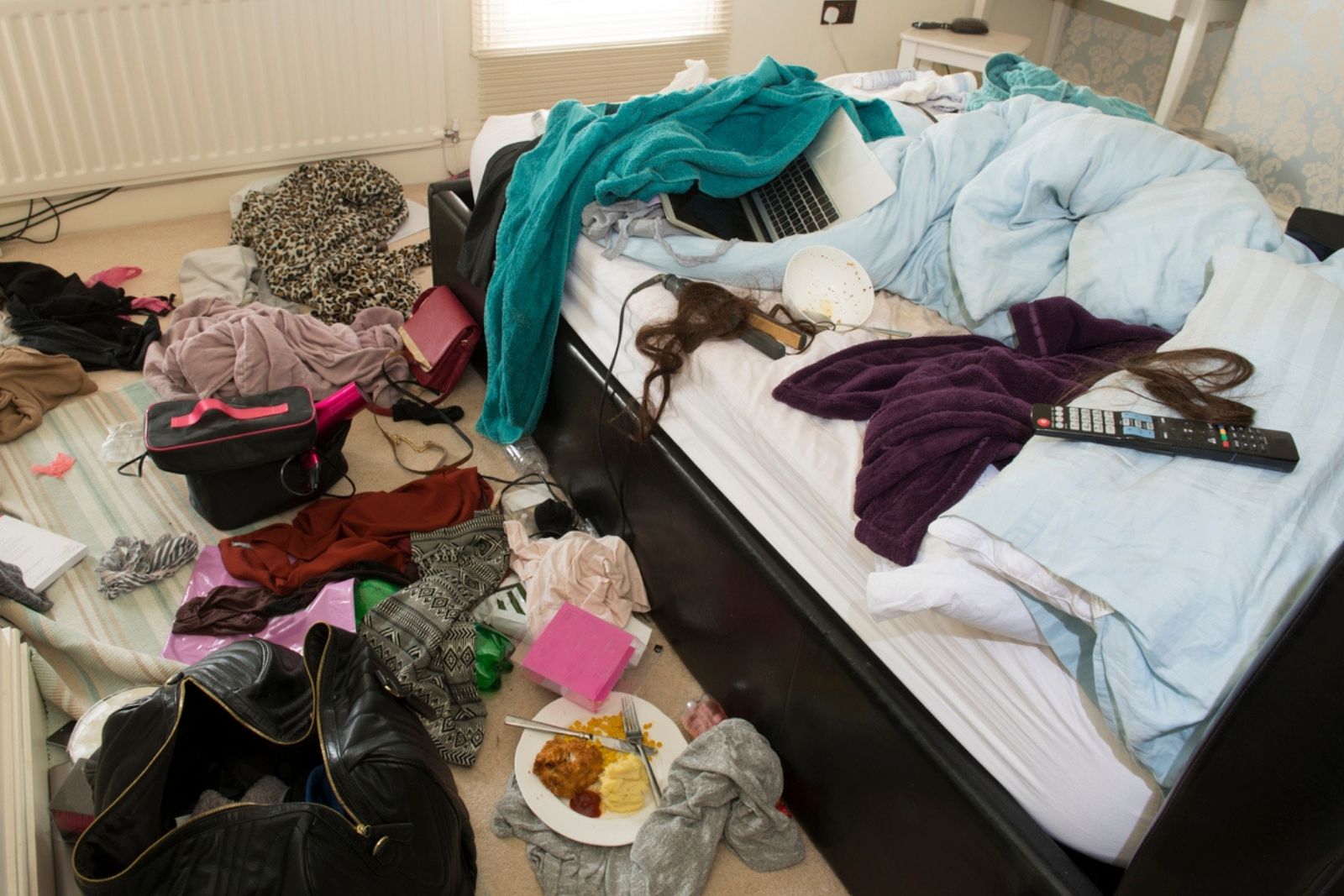
Lazy. Careless. Too indifferent to clean up. The words show up on their own, in a split second.
Don’t feel bad about it. It’s a very common leap. But a room simply can’t carry that kind of judgment, because mess has many possible causes. Psychologists don’t read a person from a pile of laundry. They look at symptoms, how long things have been going on, the person’s history, and whether daily life is actually suffering.
Even among adults who truly struggle with clutter, there’s no single profile. Research has found different patterns, including people who are mostly hesitant and others who are mostly indecisive.
And ADHD? Adults with ADHD may struggle with organization and long tasks. But a diagnosis looks back at childhood and rules out anxiety, depression, sleep problems and other causes. A messy room alone points to none of them.
So if the room isn’t a portrait of the person, what is it doing?
What all those piles are really asking
Look again at that nightstand. Every cup, every shirt, every sheet of paper is a small question waiting for an answer: keep it, move it, wash it, or toss it?
That’s what clutter does. It leaves more objects in view and more decisions close at hand. For people who tend to hesitate or put off decisions, those piles tend to grow worse. It can become a loop: as choices multiply, starting can get harder.
In a study of dual-income couples, wives who described their homes as cluttered or unfinished showed different patterns in their mood and in cortisol, though that kind of study can’t show the clutter caused it.
Which brings you back to the doorway, and to what you can actually notice from there.
Three questions to ask before you say a word
Start with function. Can the bed be slept in? Does the door open all the way? Can the desk still be used? When psychiatrists think about hoarding disorder, one of the signs they look for is living areas that no longer serve their purpose, along with a lasting difficulty letting go of things and real distress. A cluttered desk that still works is a very different story.
Then think about what’s normal for this person. Has the room always looked like this, or did it change suddenly after stress, an illness or a loss? A pattern over time tells you much more than one Saturday snapshot.
Finally, if you want to help, keep it small. Choose one surface or one category, ask before touching someone else’s belongings, and leave the judgment at the door. Professional cleaners like to set a 10-minute timer for just one spot, and it works just as well in someone’s bedroom. It deals with the space without pretending it explains the person.
Dana K White explains how to start decluttering when a room feels overwhelming.
When The Door Won’t Open All The Way
Safety comes first. Keep anything that can burn at least 3 feet from cooking and heating equipment, and keep doors and windows clear.
If rooms can’t be used, throwing things away causes intense distress, or severe low mood and lost interest have lasted 2 weeks or more, it’s time for a professional assessment. Ordinary mess, on its own, is not hoarding.