If you spotted it in a neighbor’s house, you’d assume someone forgot to finish setting the table: a single metal spoon, lying on the windowsill, pointing into the room. Except it’s there on purpose, it stays there all winter, and the people doing it are solving a problem you probably wiped off your own windows this morning. The gesture takes five seconds. The reason it works is a small, satisfying piece of physics.
The spoon is a condensation decoy. On cold mornings, the moisture in your indoor air condenses on the coldest surface it can find, normally the window glass, then trickles down to puddle on the sill, where it feeds mold spores and lifts paint. The spoon volunteers to be that coldest surface: metal conducts heat far faster than glass, so the spoon chills quicker and stays colder than the pane, and water vapor condenses on it first.
What the spoon actually does, and doesn’t
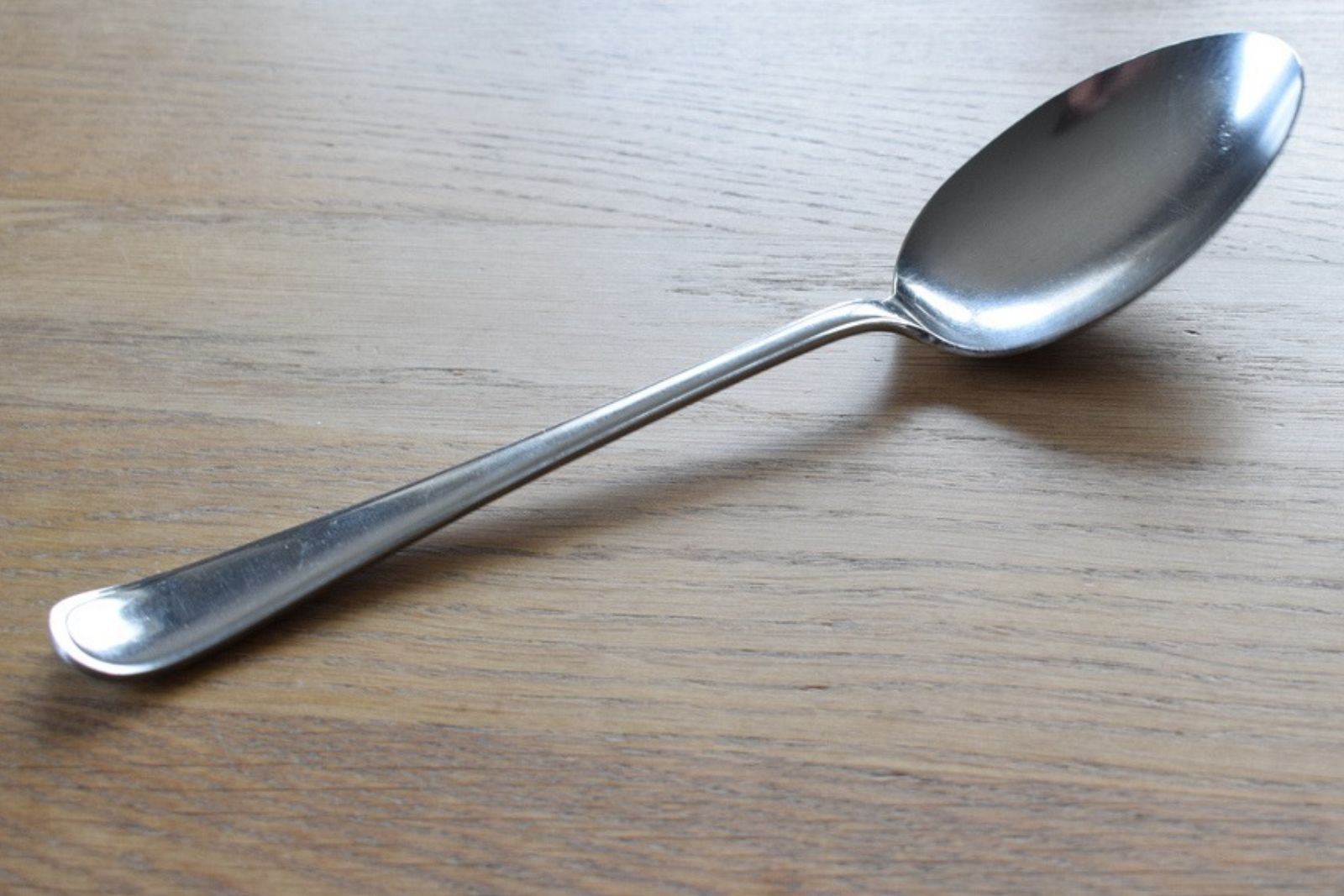
Think of it as a lightning rod for moisture. Instead of beading across the glass and pooling along the sill’s paint line, a share of the condensation collects on the spoon’s bowl, where it holds as droplets you can simply carry to the sink. On a sill that wakes up wet every morning, that diverted water is exactly the water that was soaking the woodwork.
Honesty requires the other half: the spoon diverts moisture; it does not remove it from your air. Your home’s humidity is identical with or without it; the trick only changes where some of the resulting liquid lands. It won’t protect the cold wall behind the wardrobe, and on a window drowning in condensation it’s a teaspoon against a tide. It’s a gadget, and a good one, for the right-sized problem: the lightly weeping bedroom window, the sill whose paint keeps blistering in the same corner.
Doing the five-second version properly
- Use a stainless steel spoon, the bigger the better; more metal means more cold surface to collect on. One per problem window.
- Lay it on the sill, bowl close to the glass, handle toward the room, where the air is coldest and the vapor condenses first.
- Empty and wipe it each morning, along with a quick pass of the sill. The ritual doubles as a daily humidity gauge: a spoon that’s drenched every day is your home telling you the air itself is too wet.
- Chill it for a head start: a spoon straight from a cold garage or fridge starts collecting immediately on damp evenings.
When the spoon is the messenger, not the fix
A soaked spoon every single morning means the real work lies upstream, in the moisture your household produces: run the fans, lid the pots, rethink the drying rack, air the rooms in short bursts, the whole source-side routine that actually stops mold. And since warmer glass collects less water, holding the house at a steady temperature helps too, one more point for the stable 68. The spoon then goes back to its proper job: catching the last stubborn drops on the one window that always weeps, and reporting every morning on how the campaign is going.
One spoon, bowl to the glass, emptied with the morning coffee. It costs nothing, it saves the paint on your worst sill, and it tells you daily whether the rest of your anti-condensation work is winning. Not bad for five seconds and a piece of cutlery. That’s the trick.