
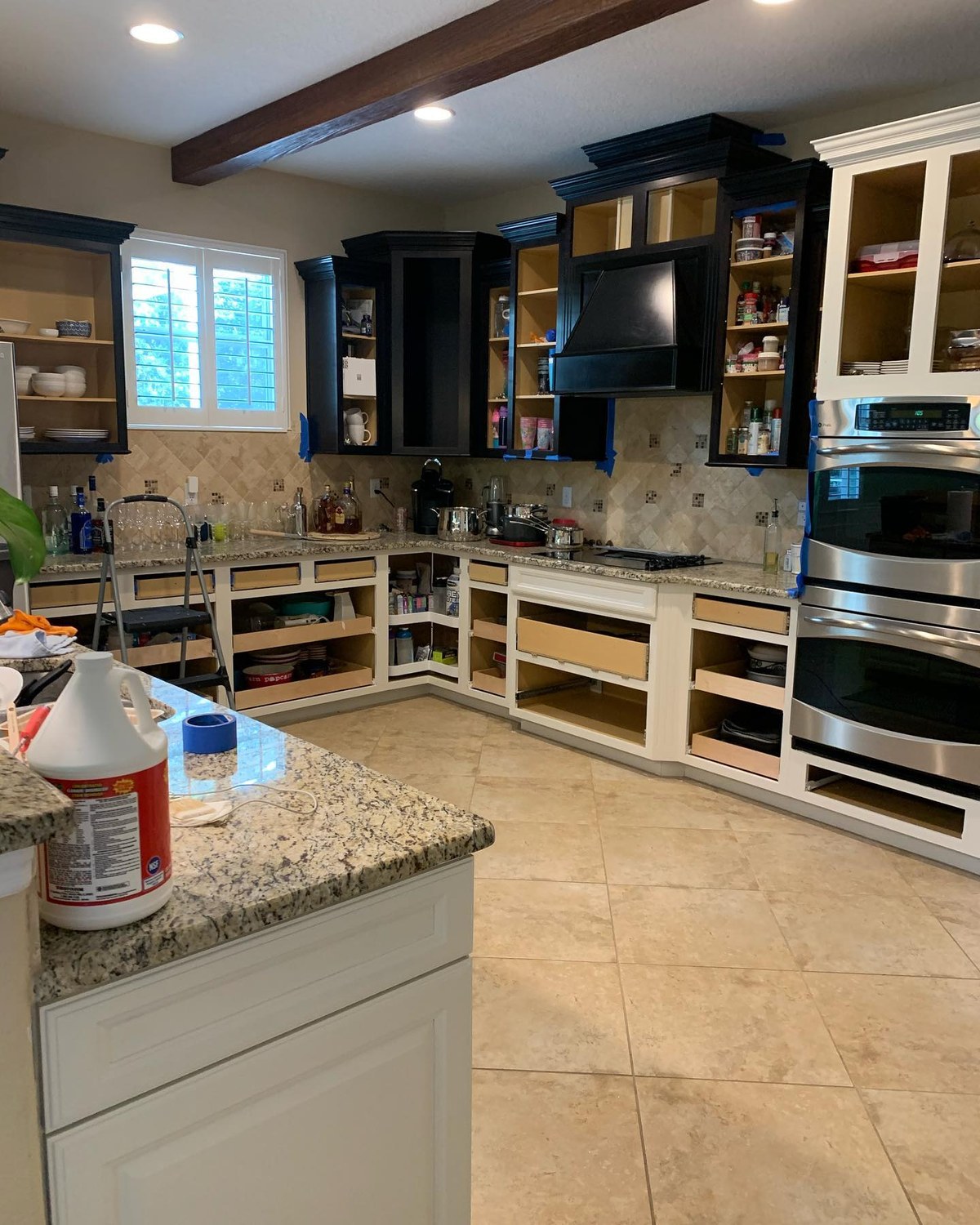
Look at the dark kitchen in that first shot. It isn’t the original. A few years earlier these cabinets were wood, and then came the upgrade everyone was pushing at the time: deep espresso, black hardware, the moody look that filled every kitchen board in 2017. She went for it. Painted the whole kitchen herself. Lived with it long enough to know it wasn’t working.
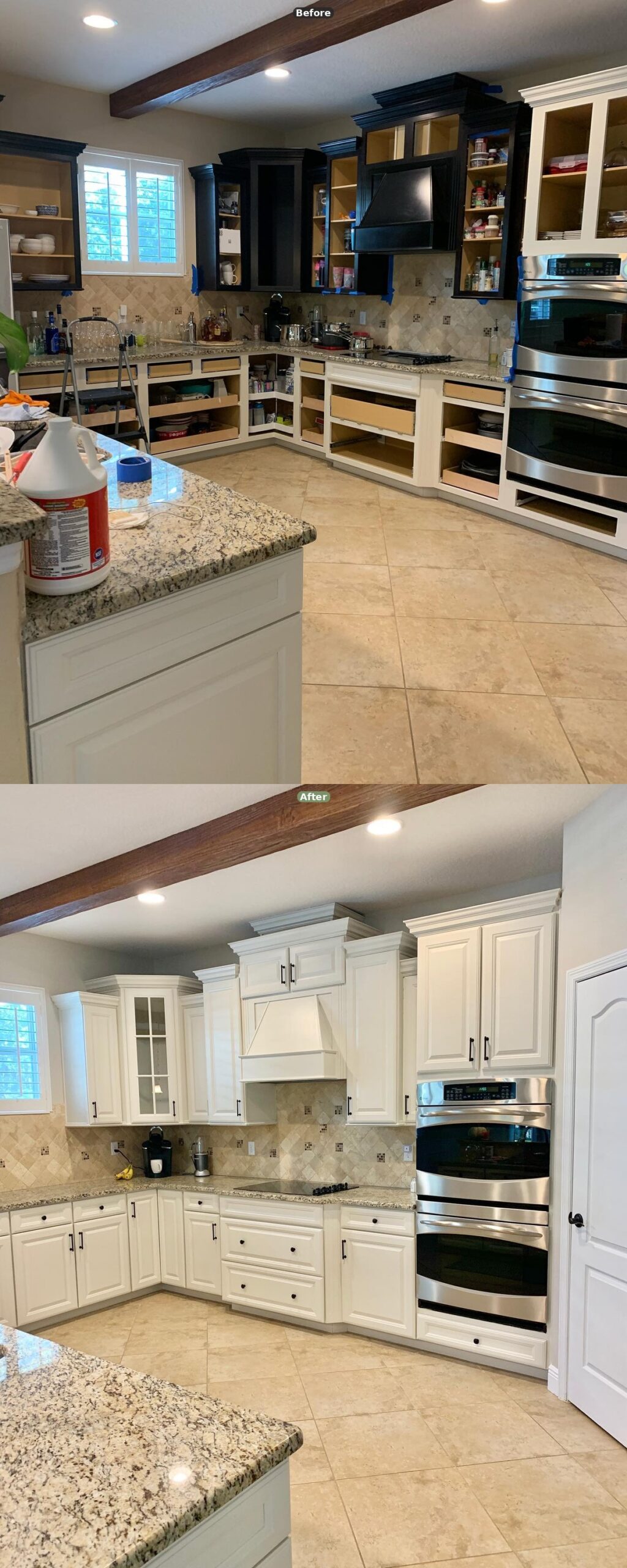
Why she couldn’t just live with it
Count the warm surfaces she couldn’t change: granite with heavy brown movement, travertine backsplash, beige porcelain floor, stained wood ceiling beams, oil rubbed bronze pendants. Full remodel wasn’t on the table, so none of that was coming out.
Against all that warmth, the dark cabinets fought every surface in the room. Granite went muddy. Travertine read yellow instead of cream. The arched pantry door across the room, which should have been a pretty detail, looked like it belonged to a different house.
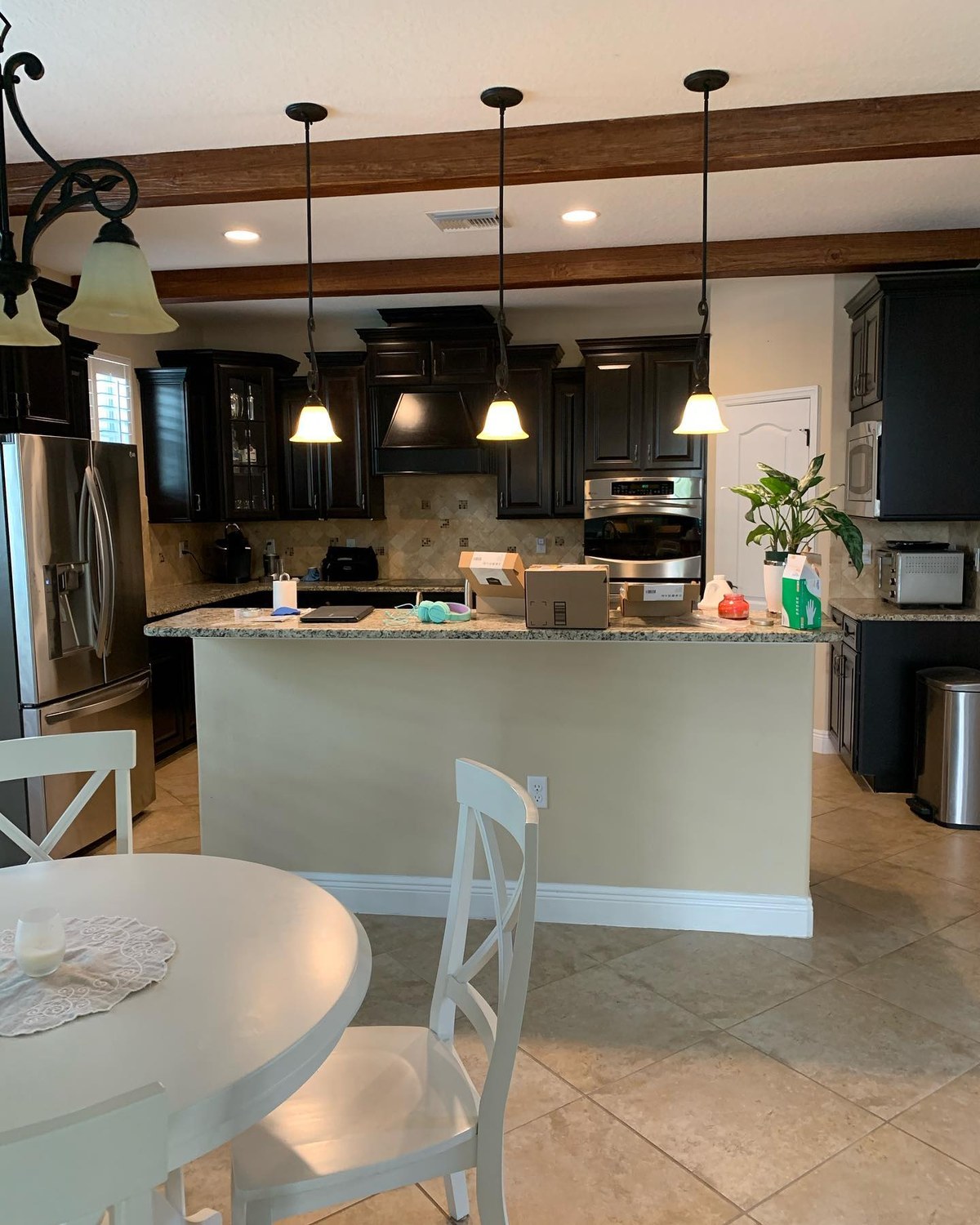
The color decision came from the floor, not Pinterest
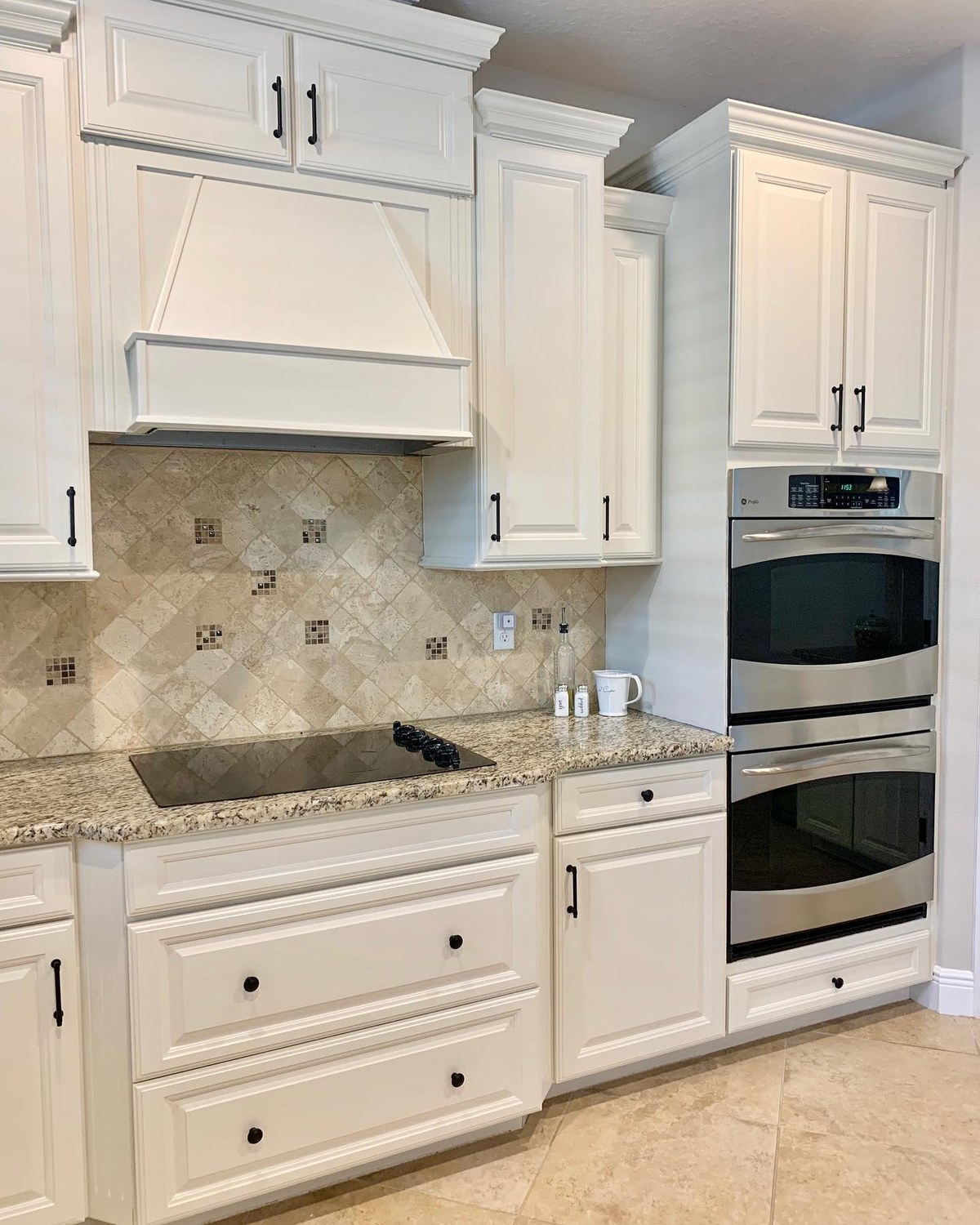
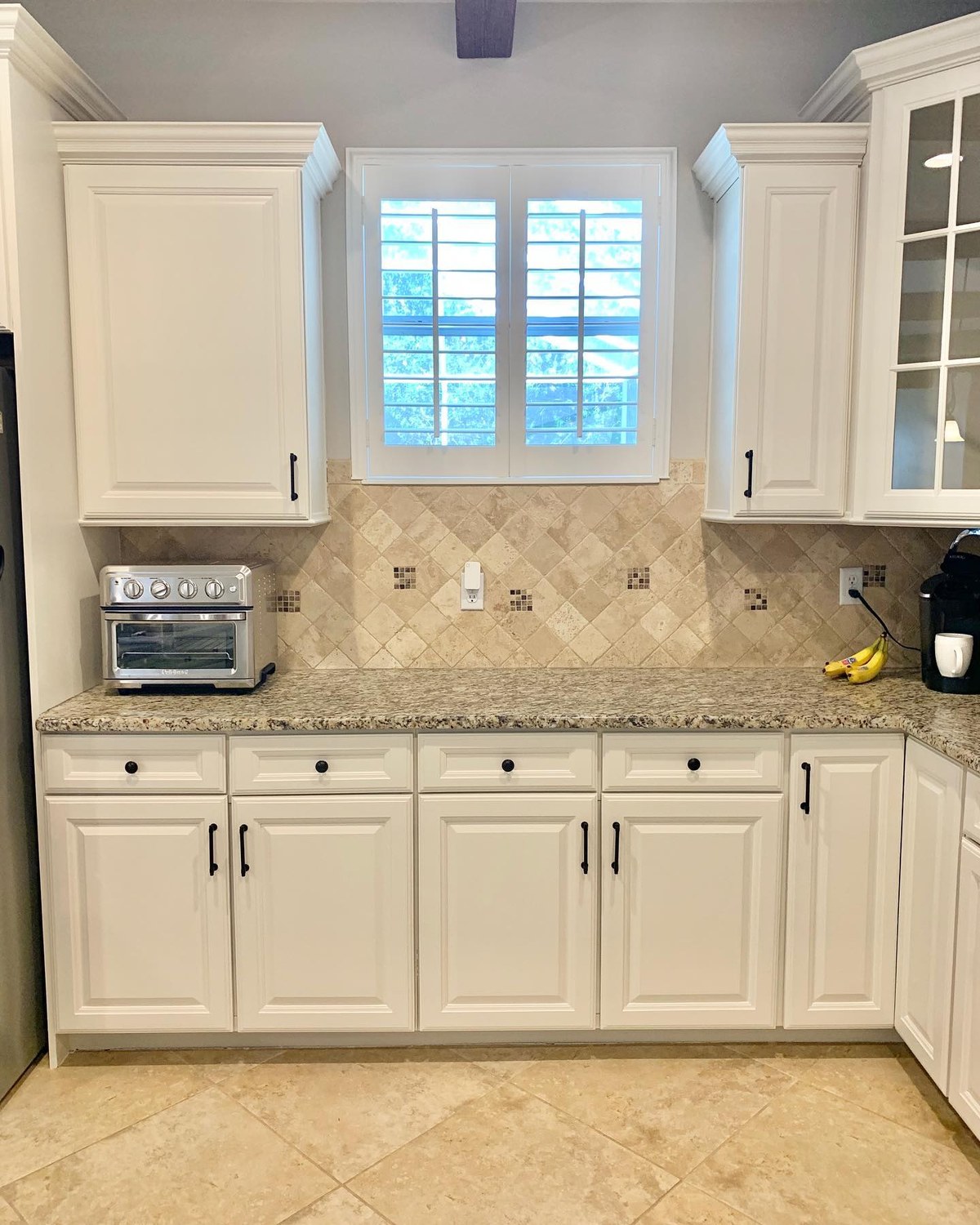
The part most paint tutorials skip: she picked Alabaster off the floor and backsplash, not a swatch book. Sherwin Williams Alabaster is a soft, creamy off white with a warm undertone, and that undertone matters more than any designer blog will tell you. A crisp gallery white would have been just as wrong as the espresso, only cold instead of heavy. Alabaster sits in the same family as everything she couldn’t rip out.
Then the real work started
She did this herself, no painter and no cabinet sprayer rental. Every door, hinge and pull came off, and then the full cycle on every surface: degrease, sand, prime, two coats, dry, flip, repeat.
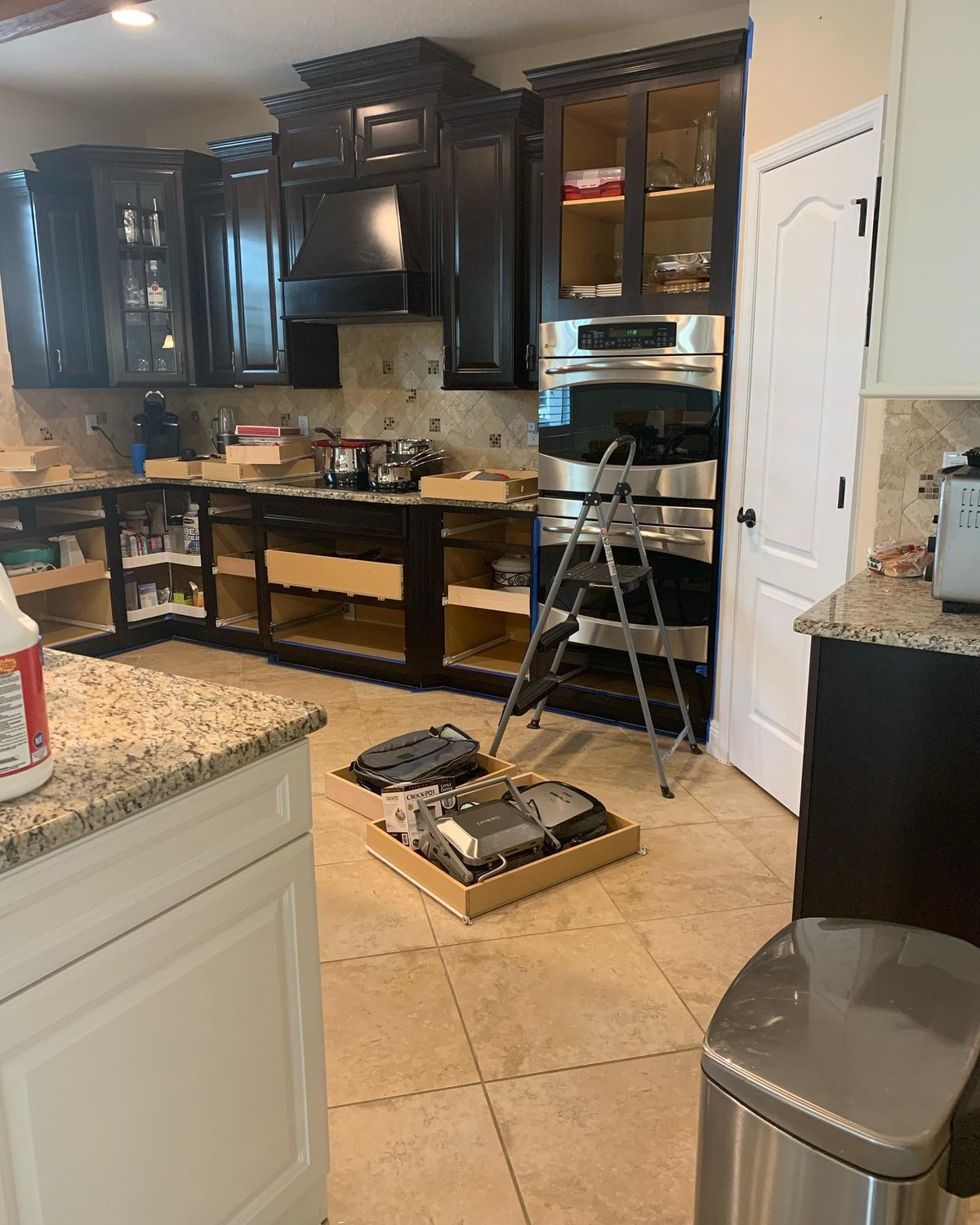
Week three, when the kitchen was two kitchens
The halfway point is the stage photographers love and homeowners hate. One side of the room sings the new tune, the other still belongs to a different house entirely. Appliances end up on the floor, drawers stack on the dining table, nobody can find a fork.
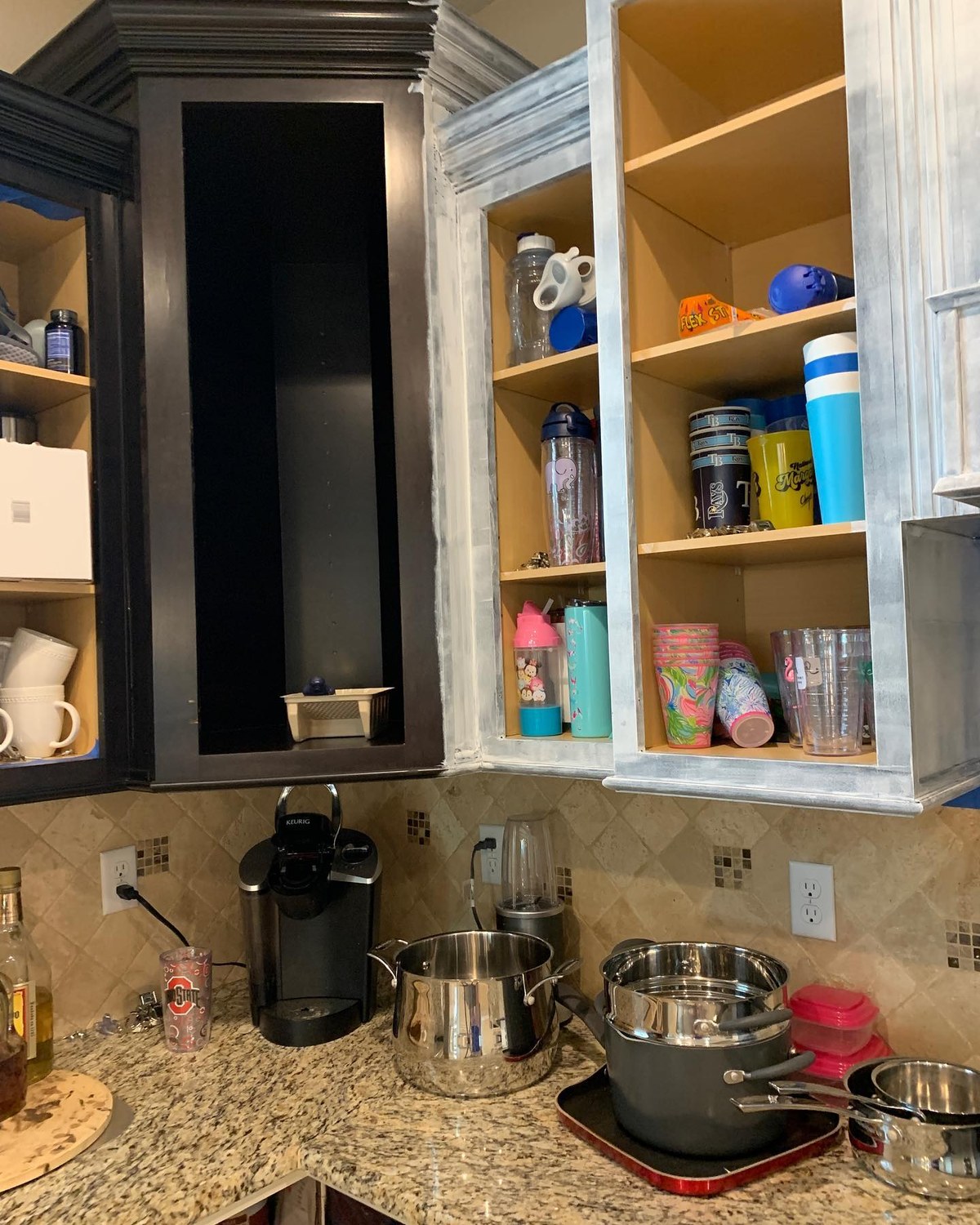
The corner cabinet that almost ended it
She called this one the piece that broke her. Full height corner upper, glass fronts, interior shelves, crown molding on top, and a side panel that butts into another cabinet at a strange angle. You can’t lift it down, can’t lay it flat. You stand on a stepladder for hours and paint around whatever is still inside.
Painting the hood was the move most people would have skipped
The hood is the piece most people pay somebody else to deal with. Angled faces, vent box above, all at eye level, impossible to hide. She painted it right along with the rest and walked away with a smooth finish and no drip marks. If you didn’t know it was a redo, you’d assume the hood shipped out of a cabinet shop that way.
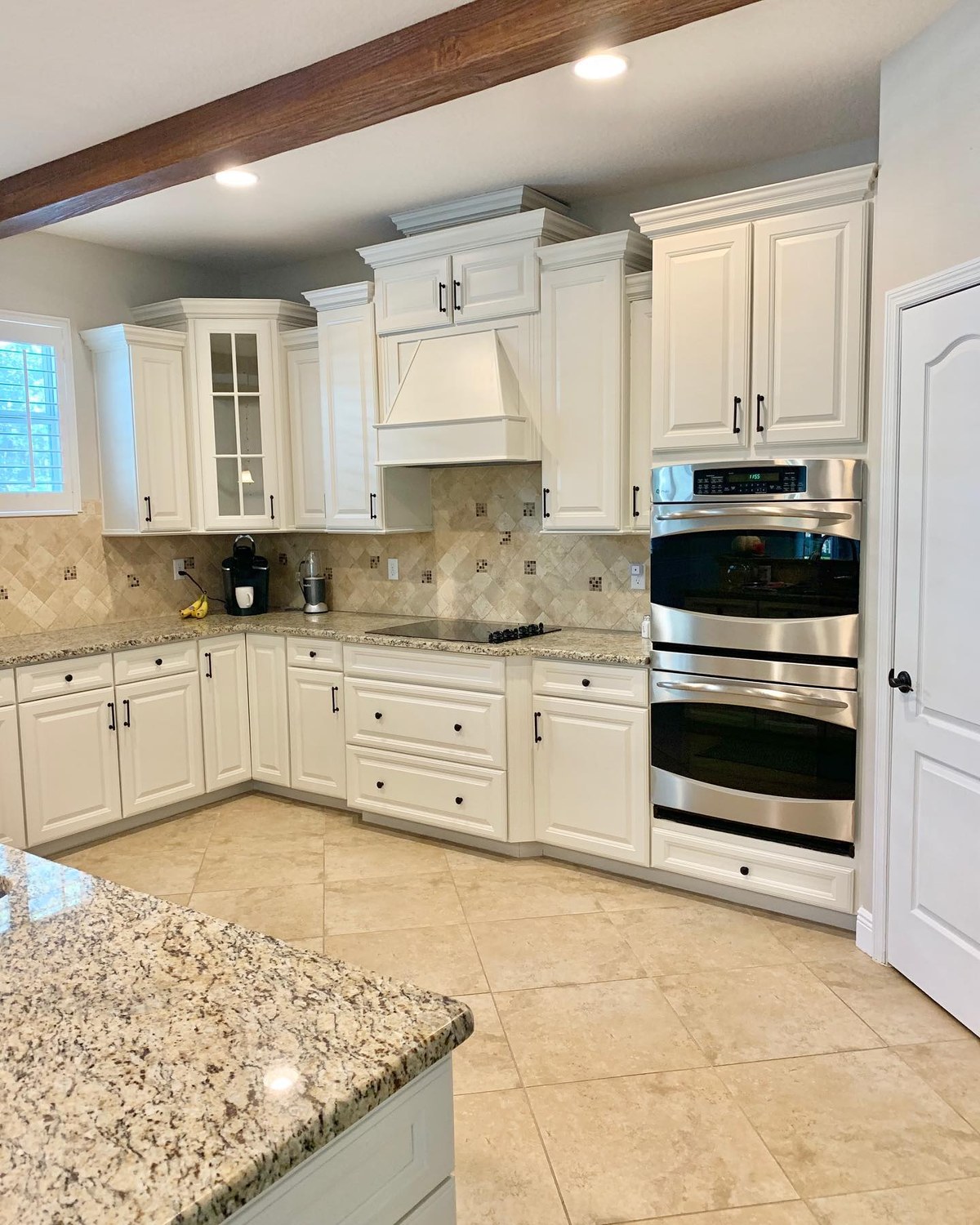
The hardware swap that keeps the drama
She liked the black hardware from her dark cabinet era. She didn’t want to lose that contrast entirely. Franklin Brass matte black pulls and knobs went on in place of the old oil rubbed bronze, and the result is that the room still has an edge without going dark. The walls went Benjamin Moore Edgecomb Gray, a warm greige, so nothing in the color story argues with anything else.
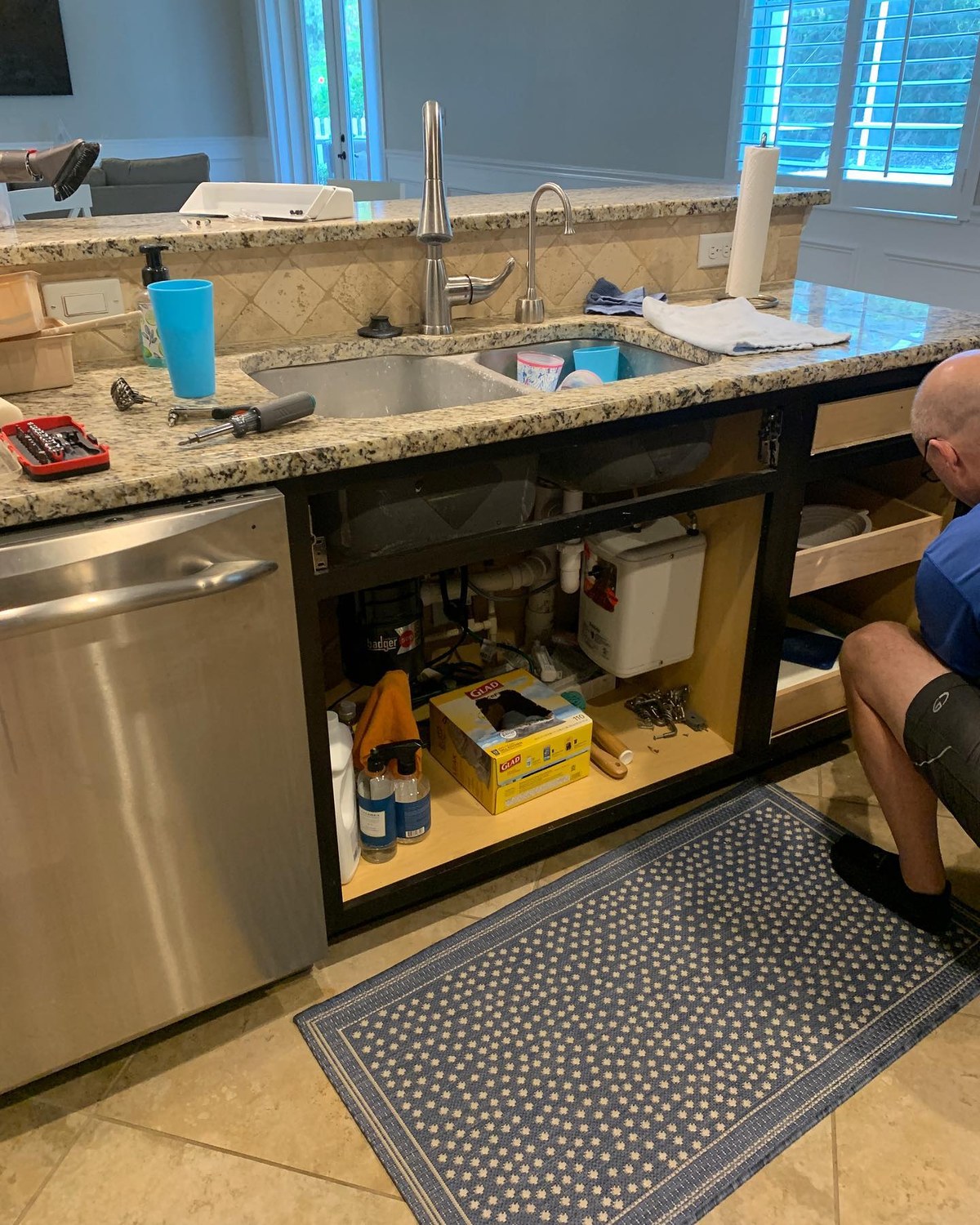
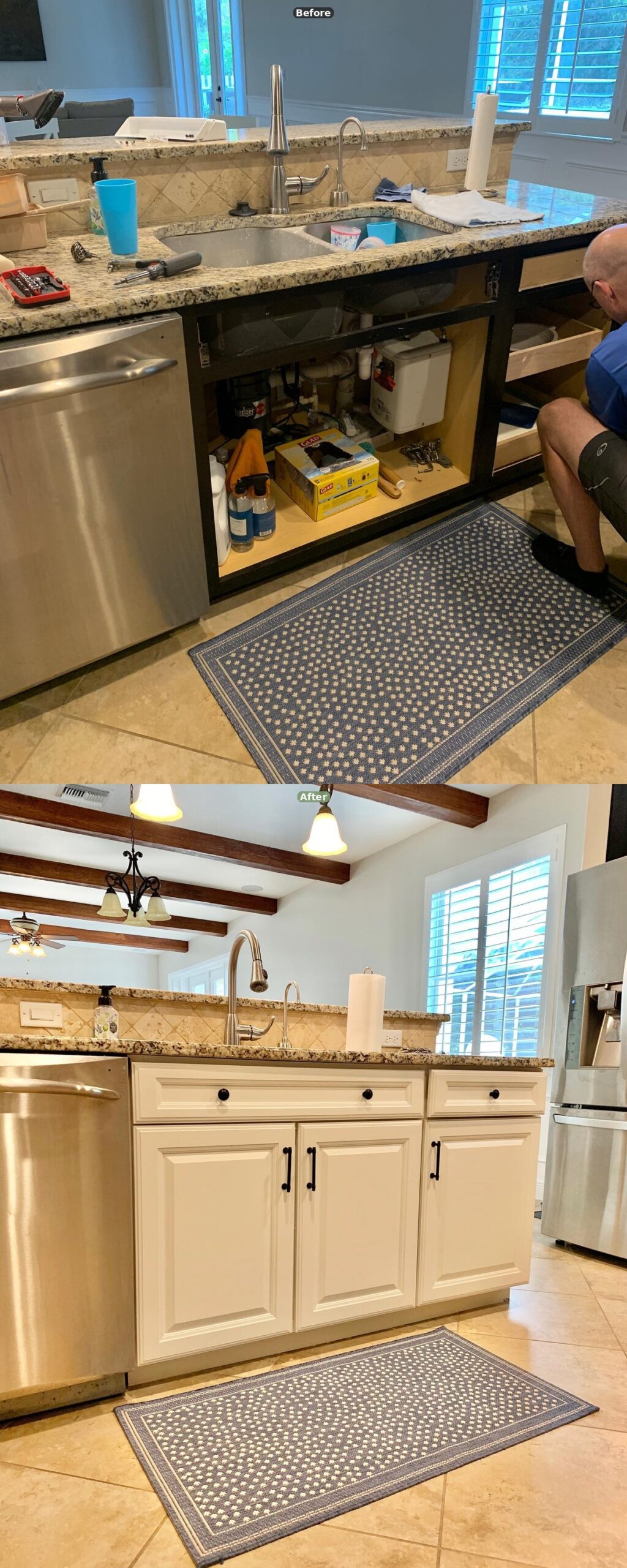
The island sink, same spot, different kitchen
Easiest way to see what changed is to put the island sink side by side. Same stainless dishwasher on the left, same undermount sink, same blue rug on the floor. Only thing that moved is the paint.
Stand at the dining table and look toward the island, and the space finally breathes. Granite reads light instead of heavy, travertine reads cream instead of yellow, and the ceiling beams finally look like intentional warmth rather than a holdover from the old palette.
The window wall is where the paint pays you back
Same window, same plantation shutters, same backsplash, and the whole corner now reads twice the size it did before. This is the paint tax nobody mentions on dark cabinets: not that they look bad, but that in a warm beige room with one average size window, they quietly eat the light.
The in progress shot that explains the choice
Primer on bare wood is the moment any cabinet painter either falls in love with the project or walks away from it. Base cabinets half done, uppers still staring you down, no going back.
What this transformation actually teaches
If your kitchen is stuck with warm granite, travertine, beige tile, or stained beams you can’t replace, the cabinet color that works is the one that agrees with everything else in the room. The trendy choice wasn’t wrong because it was dark. It was wrong because it fought what the room had. Six weeks, one quart of Alabaster, a set of Franklin Brass pulls, and the kitchen finally reads the way it was built to read.
Paint color: Sherwin Williams Alabaster (cabinets), Benjamin Moore Edgecomb Gray (walls). Hardware: Franklin Brass matte black.