The bag of frozen peas won’t fit back in the drawer, because the drawer won’t close. A crust of ice has grown around the walls, the shelves are shrinking, and the ice tray is welded in place. So you reach for a butter knife and start chipping, wincing every time it scrapes the wall.
Stop right there, and don’t feel bad: almost everyone tries the knife first. Ice builds up for reasons that have nothing to do with how you clean, and the fastest safe fixes use heat and patience, not force.
Where all that ice comes from
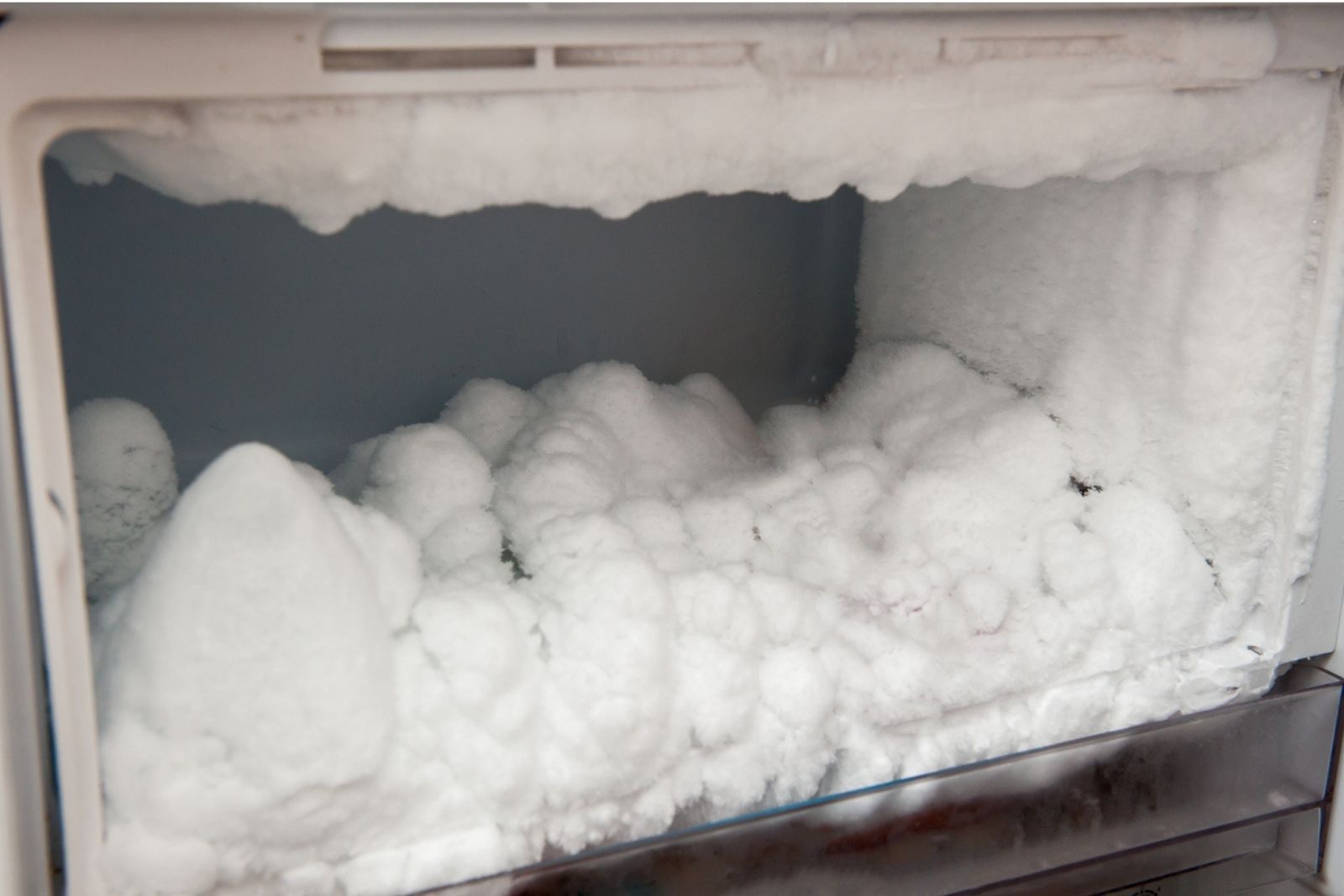
Every time the door opens, warm room air rushes in. Its moisture condenses on contact with the cold and freezes into frost, layer after layer. A door seal that doesn’t close tightly lets warm air in and cold air out, and the buildup speeds up. Whirlpool recommends defrosting once frost reaches about 1/4 inch thick, and at least once a year.
The 3 methods that clear it fast
Start the day before: turn the freezer to its coldest setting about 6 hours ahead, so the food is as cold as possible. Then unplug it, empty it into coolers with ice packs, put towels or a pan under the drain area, and pick a method:
- Bowls of hot water. Set a bowl of hot water inside and close the door, so the steam softens the ice. Lowe’s suggests replacing the water every 10 to 15 minutes. Never set a hot pan on cold glass shelving, which can shatter, or against plastic that could melt.
- A fan. Aim a fan into the open freezer to keep room-temperature air moving across the ice.
- A plastic or wooden scraper. As chunks loosen, lift them off gently with a plastic spatula or wooden spoon and drop them in the sink. Don’t force stubborn spots.
Two things to skip. Never use an ice pick, a knife or any metal tool, since it can puncture the freezer. And while some guides allow a hair dryer, Whirlpool’s instructions say not to use electrical appliances such as hair dryers or heaters to speed defrosting. Water and electricity don’t mix.
Plan on a few hours: with the door simply left open, Lowe’s estimates about two to three hours, longer for very thick ice. Wipe the inside dry with a mild detergent and warm water, then plug it back in.
The habit that keeps it from coming back
Ice is a moisture problem, so cut the moisture. Open the door less and make sure it closes fully, keep the freezer at 0°F, fill it to about 75 percent so air can still circulate, and let hot food cool before it goes in. The fridge side benefits from the same thinking, and a roll of toilet paper in the fridge is one cheap way people absorb a little extra moisture there.
The honest limit: if you find yourself defrosting every few months, something is off. Check the door seal, the thermostat, the drain and the vent, and call an appliance technician if the ice keeps returning. Food that has thawed to room temperature during a defrost should be thrown out, not refrozen.
Hot water, a fan, a plastic scraper, and a door that seals. That’s the trick.