
You finally bought the electric kettle everyone overseas swears by. Friends from abroad talk about water boiling in the time it takes to grab a mug. So you fill it, flip the switch, and wait. And wait. Nearly four minutes later it clicks off, and you wonder why anyone bothers when the old stovetop kettle seemed about as quick.
This is not your imagination, and it’s not a bad kettle. American kettles really are slower, and the reason has nothing to do with taste or tradition at first. It’s sitting right behind the plug, in the wall.
The Unexpected Reason: The Outlet
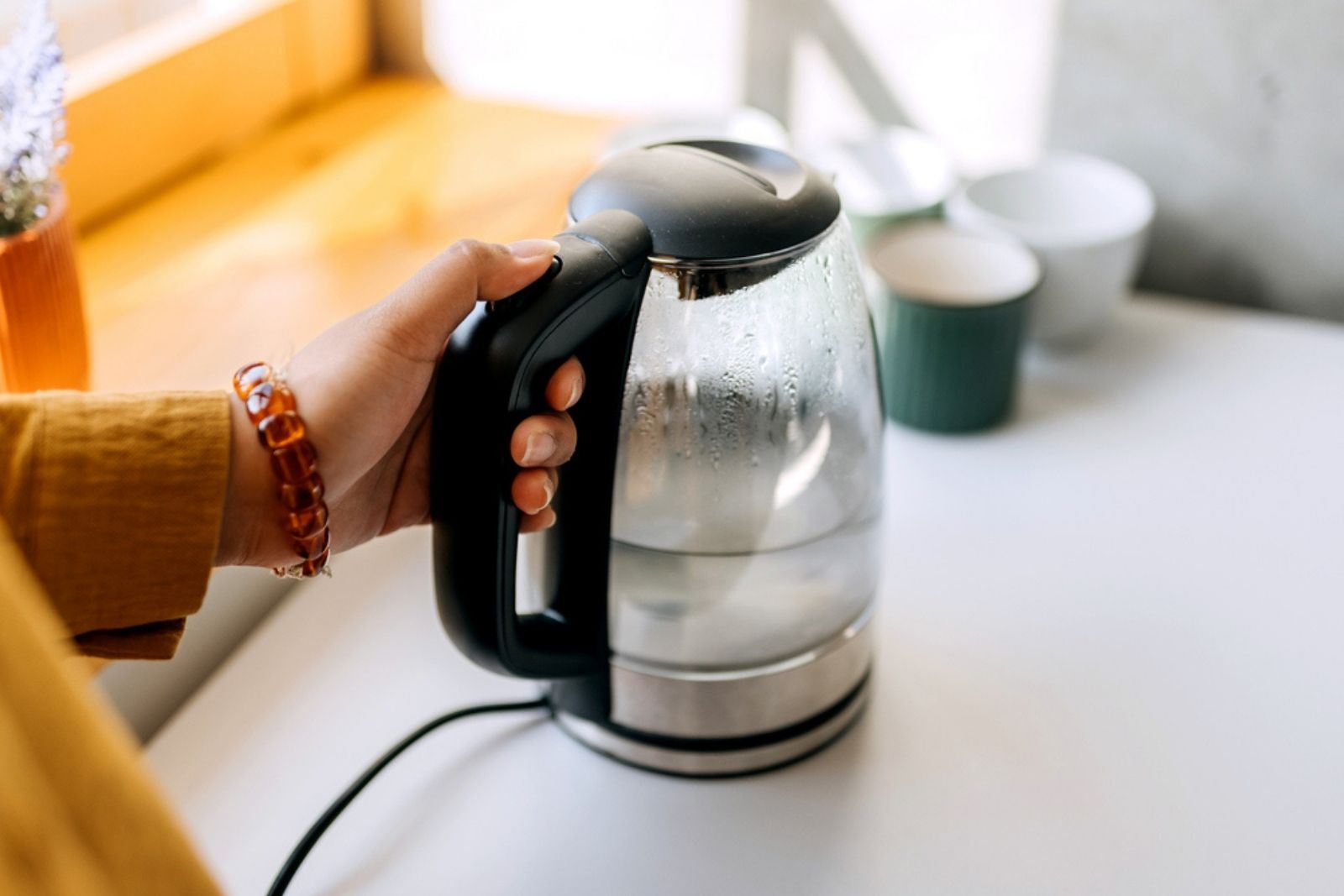
Most American homes run on about 120 volts, while much of the world uses 220 to 240. That difference sounds technical, but it decides how much power a kettle can draw. As ScienceABC puts it, “A US kettle on a 120-volt outlet tops out near 1,500 watts and takes nearly four minutes to boil a liter of water”. On 230 volts, a kettle can reach about 3,000 watts and boil the same liter in under two minutes.
The ceiling comes from the plug itself. The standard flat US wall plug is rated for 15 amps at 125 volts, which works out to roughly 1,800 watts. For a load that runs continuously, appliances shouldn’t pull more than about 80 percent of that rating, because the wires heat up. Eighty percent lands a little under 1,500 watts, which is exactly where American kettles stop.
The math is simple. Heating a liter, about a quart, from 59°F to a boil takes a fixed amount of energy, so half the power means roughly twice the wait. Even at perfect efficiency, a typical high-voltage kettle needs about 127 seconds, an American one about 237. That extra minute and a half, every single time, was enough to keep the stovetop kettle in its place.
Habit finished the job. Americans have long relied on the stovetop kettle that whistles when the water is ready, and in a country that drinks less tea, fewer people ever felt the need for faster hot water. One expat living in the US summed it up for Business Insider: the culture for it simply isn’t there.
When A Kettle Still Wins In A US Kitchen
Slower than its overseas cousins doesn’t mean slow. An electric kettle still earns its counter space here, especially when you look at efficiency instead of speed. Rough estimates from a National Renewable Energy Laboratory researcher put the options like this:
- Electric kettle: about 80 percent efficient, the best of the common choices.
- Electric stovetop: about 70 percent, varying a lot with the pot.
- Gas stove: around 70 percent, with much of the flame’s heat lost to the air.
- Microwave: about 50 percent.
- Induction: about 85 percent, the only option that beats the kettle, but it needs magnetic cookware.
So if you heat water for tea, oatmeal, pour-over coffee or a hot water bottle, a kettle is the most efficient everyday tool most American kitchens have. And it fits right into a dedicated coffee bar next to the grinder and the mugs.
How To Get The Most Out Of It
The biggest speed boost is free: boil only what you need. Since time depends on the amount of water, filling a kettle with one mug’s worth instead of a full liter cuts the wait to a fraction.
The limit is the same wall that slows it down. A 1,500-watt kettle already uses most of a 15-amp circuit, so running it at the same moment as a toaster or microwave on that circuit can trip the breaker. Plug it straight into a wall outlet, keep the cord away from the sink, and don’t try to fix the speed with a kettle built for 230 volts: on a US outlet, its heating coil would make only about 820 watts, so it would be even slower.
Fill it light, plug it in alone, and let it do the job it’s best at. That’s the trick.


