TheCoolist

The Design, Lifestyle and Luxury Community Powered by You

Peugeot B1K Bicycle Concept

Peugeot B1K Bicycle Concept

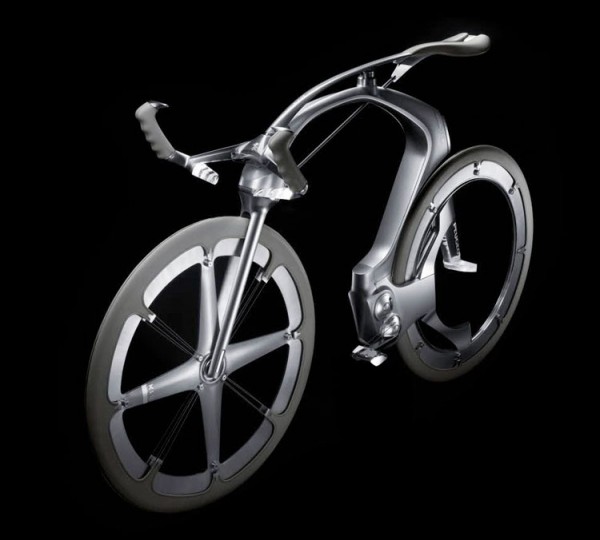
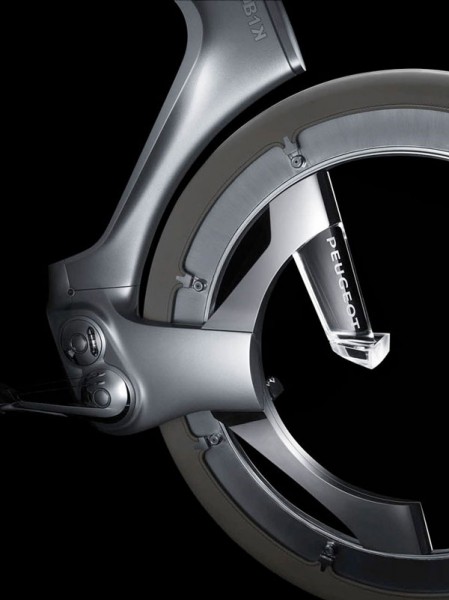
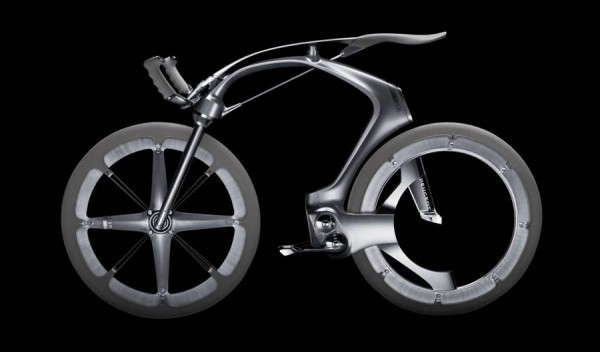
Peugeot B1K Bicycle Concept | Since its invention, the bicycle really hasn’t changed much.  Its basic components remain the same– a pair of wheels, a crank-driven drivetrain, a frame, a seat and some handlebars.  The components themselves have evolved, but the basic song has gone unchanged.  The design team at Peugeot Bikes, however, have created a bike concept so alien to our eyes that change may be on the horizion.  The Peugeot B1K Bicycle Concept takes on the traditional bike format by adding a chain-free drivetrain, removing the down tube and giving it a fierce new design that is as progressive as they come.

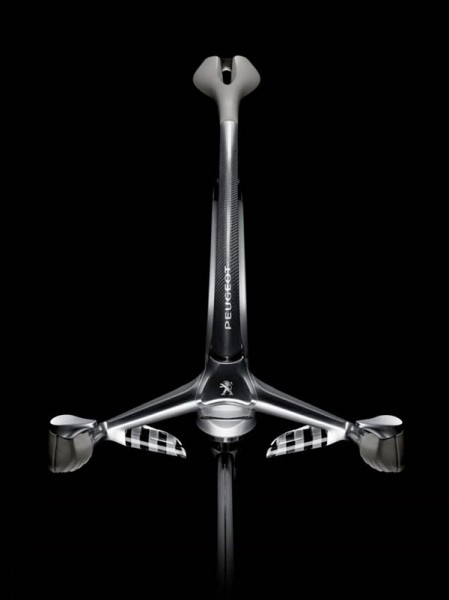
The Peugeot B1K Bike Concept is a carbon-constructed race bike built for the track or the urban pavement.  The rider’s torso is angled downward toward the pavement ahead, reducing drag and providing improvements in weight balance and power transfer.  The chainless drivetrain looks amazing, but details on its efficiency have not been revealed.  The lack of a down tube on the frame leads to questions about its rigidity, as the bike may flex during use.  Any racer will tell you– as light as a feather and as stiff as a board, the better.  But the design itself leads us to give Peugeot the benefit of any doubt, as this design is easily the sexiest we’ve seen yet in 2010, and high up in the running (er, riding) for 2009. [via bikerumor]

Peugeot B1K Bicycle Concept

Peugeot B1K Bicycle Concept

Peugeot B1K Bicycle Concept

  • The reason why the bicycle changes so slowly (which it does, with advances in materials and old-but-refined ideas such as belt drive) is that it simply works. This is yet another concept that appeals mostly to people who don’t actually rides bikes. The concept is riddled with overcomplicated solutions such as the hubless rear wheel (it’s just heavy and mechanically more complicated), superfluous shapes that are probably just braking points waiting to happen and an overall lack of understanding the physics that make a bike rideable (the straight fork will produce a harsh and squirrelly ride). And I have no idea what’s going on with those tires. This is strange because Peugeot has a long history of making pretty decent bicycles.

  • It remind me when NSU came up with the engine from Doctor Wankel everyone was laughing, ask Mazda if they would like to abandon the rotary engine …. people trash something they only have pictures off, oh but we are in an internet expert civiliasation , how long have you been riding a bike , 54 years and kind a fed up with the routine too.

  • As an Architect,I love the design lines, but as an amateur bike racer, I do have some technical reservations.
    Every cutting edge racing bike maker is continuing to Increase the size the the down tube, bottom bracket area and chainstays in an effort to achieve stiffer frame in the areas which yield better power transfer. Removing the downtube?, I like to see the structural calcs on that one.
    Also we continue to focus on less mass, especially rotating mass, calculated by engineering formulas as 300% more effective than static mass.
    The drivetrain design needs to be sorted, such that the rear wheel plus drive train weigh less than a conventional rear wheel plus
    chain, rear gears(cassette) and chain, OR needs to quantitatively demonstrate such a higher efficiency of direct power transfer to more than negate the additional mass.
    I also concur with the above comment about the no rake fork. modern Carbon forks appear straight, but actually the at the lower fork-frame juncture, the fork has a slight angle engineered into it.
    Tire design in the concept is highly suspect, as it appears to be heavier than any type of tire used for racing. Although the front spoke design is highly plausible as an efficient way to use carbon fiber.
    Finally, the leading edge of the frame “tubing” is square profile in the direction receiving direct wind resistance, blatantly a no-go for racing.
    Time Trial (TT) frames are known for being aerodynamically slippery. Brands such as Orbea, Cervelo, Willier, and Storck produce key examples
    http://reviews.roadbikereview.com/blog/storck-delivers-most-aerodynamic-storck-frame-ever/
    Summary,
    Cutting edge “style” of design by a team which has no real word contact with actual road biking, let alone racing, experience.
    A design school student’s wet dream if there ever was one, predictably by a fat kid whose never ridden anything more than an X-Box.Tis a pity too, back in the 80′s Peugeot build a few good bikes, (but alas, even then, some of there products were lambasted as “assemblages of plumber’s pipe”)

Leave a Reply