Look at the lawn this week and you can watch it happening: the green between the grass blades is getting denser, softer, spongier. That’s moss, and fall is its favorite season, the one where it quietly claims whole patches while the grass winds down. Most people wait until spring to fight it, which is precisely backwards, because there is one fall gesture, with one cheap product, that stops the takeover before winter, and the window for it is open right now.
First, why now. Moss doesn’t outfight grass; it moves into the space grass leaves behind, and fall hands it everything it loves at once: cool temperatures, returning rains, shortening light, soil compacted by a summer of use, and turf thinned or stressed by the dry months. While the grass slows down, moss wakes from its summer dormancy and puts on a growth spurt, so a fall treatment stops it establishing a foothold over winter. Left alone until spring, every patch spends the whole winter widening.
The one gesture: iron, now
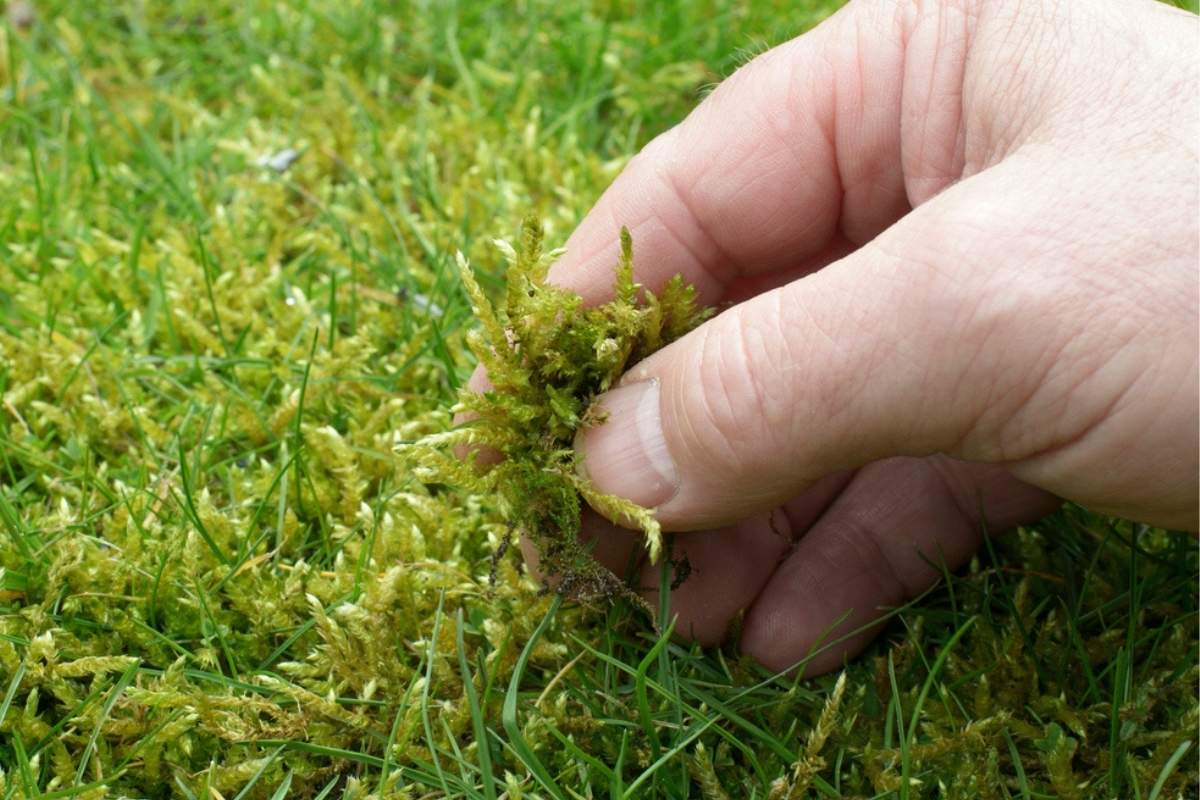
The product is iron sulfate (sold as ferrous sulfate, moss killer, or as the active ingredient in classic “lawn sand”), and the gesture is a single even application across the mossy areas. Moss absorbs the iron and desiccates: it blackens within days and dies over one to two weeks, while the same iron deepens the green of the surrounding grass, the treatment’s famous side bonus. The timing rules that make it work:
- Apply in early-to-mid fall, while the grass is still growing, on a damp, mild, overcast day, ideally with rain forecast to wash the iron in; never with frost in the forecast, and never in heat.
- Mow a few days before, so the product reaches the moss, and follow the label’s rate exactly: more iron doesn’t kill moss deader, it just scorches grass and stains.
- Mind the surfaces: iron sulfate permanently rust-stains concrete, pavers and clothes, so load the spreader on the lawn, not the driveway.
The follow-through that makes it stick
Dead moss doesn’t remove itself, and left in place it rots into a thatch layer that smothers grass and cradles the next generation of moss. So one to two weeks after treatment, once the patches are black and crisp, rake them out hard with a spring-tine rake (or run a scarifier on big lawns), and overseed the bare spots so grass claims the ground first, waiting about two weeks after the iron before seeding, since fresh residue can hinder germination. Fall’s warm soil germinates seed beautifully, which is the other reason this is the season for the whole operation.
Then spend ten minutes on the why. Moss is a symptom wearing a plant costume: it reports shade, compaction, poor drainage, scalped mowing or starving turf. Raise the mower a notch, aerate the compacted runs, prune back what over-shades, and feed the lawn this fall, or the moss accepts your spring invitation to return. (Its cousin on the patio plays by different rules entirely, with its own two-drink eviction, and go easy on miracle amendments while you’re at it, the ash bucket included.)
One damp fall afternoon, one bag of iron, one hard raking two weeks later. The moss goes into winter black and beaten instead of spreading, and the lawn comes out of it green. That’s the window, and it’s open now.