
The frying pan is clean, yet the backsplash still feels tacky and dinner’s smell has drifted down the hallway. Bay leaves and baking soda are probably already sitting in your pantry. Together they can help, but only once you know which one does what.
Two jobs hiding in one saucepan
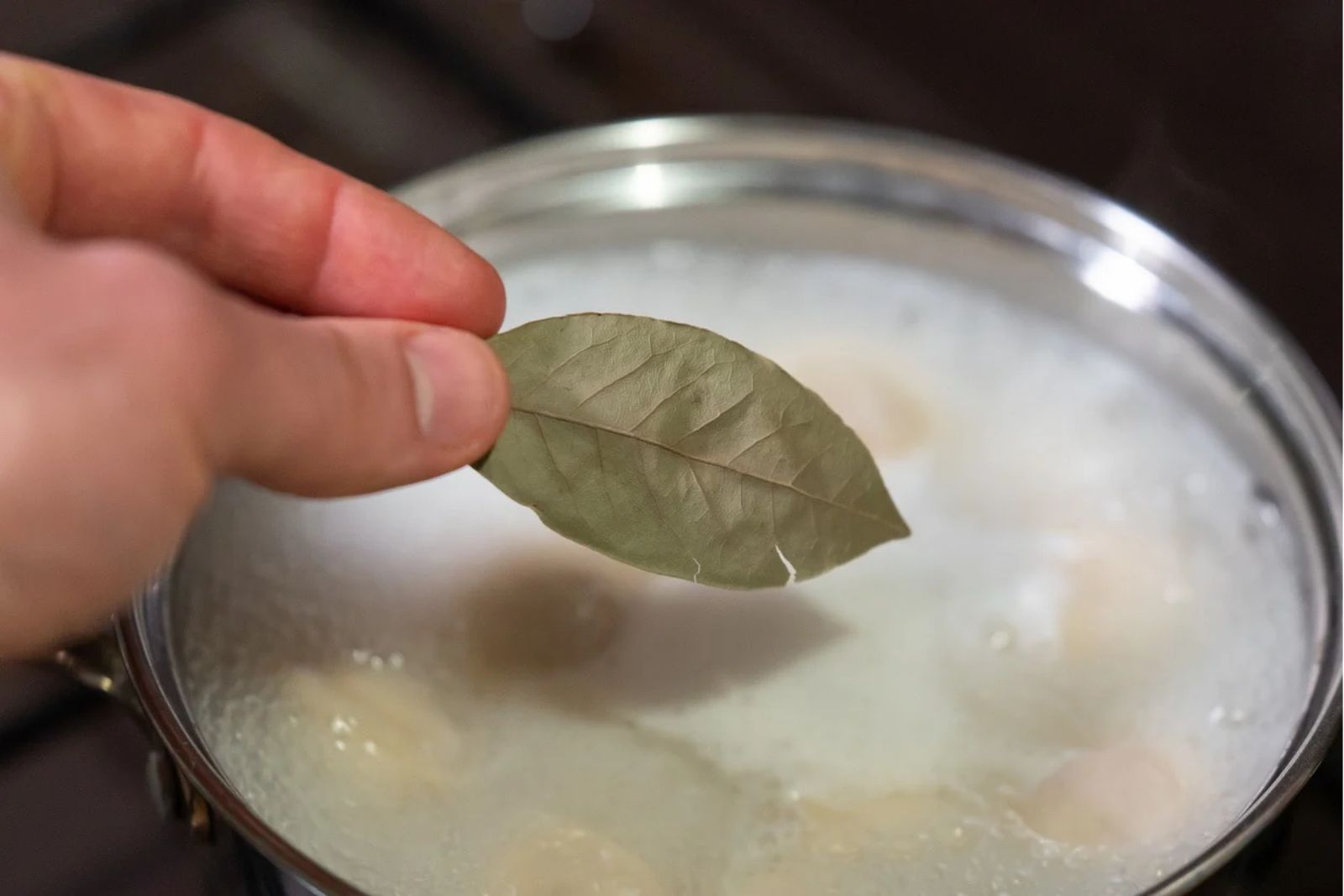
It sounds like a single simmering trick. You drop bay leaves and baking soda in a pot and let the kitchen take care of itself. In practice, it’s two small jobs, and they happen in two different places.
The bay leaves handle the smell, on the stove. The baking soda handles the grease, but only when it touches the surface itself. Baking soda is a mild alkali. It helps loosen that oily film, and its fine grains add a gentle scrub. That makes it a simple pick for cutting grease and cleaning oven spills.
So the backsplash waits a little. The scent comes first.
Ten quiet minutes on the stove
In the jar, dry bay leaves barely smell of anything. Their aromatic compounds stay trapped inside the leaf. Warm water draws some of them out, and the rising steam carries that herbal scent beyond the stove. You get a eucalyptus-like note, something flowery and a hint of clove. In a hot pot, the leaves suddenly have a lot more to say.
Pour 4 cups of water into a medium saucepan. Add three or four dried culinary bay leaves and stir in 1 level teaspoon of baking soda. Bring it briefly to a boil over medium heat. Then turn it right down to a low, uncovered simmer for 10 minutes.
You want a lazy ripple, not a rolling boil. As it goes, the scent can drift through an open kitchen and into nearby rooms.
When the time’s up, turn off the burner and let everything cool. Remove the leaves and pour the liquid away. Wash the saucepan as usual before you cook with it again. Now, back to that sticky wall.
Back at the tacky backsplash
This part happens with a sponge, not steam. Wait until the stove and backsplash are cool. In a separate bowl, dissolve 4 tablespoons of baking soda in 4 cups of warm water. Dip in a soft sponge and wring it until it’s just damp.
Wipe a small test area first, then work over the light splatters. Direct contact is what lets the baking soda work on the oily film. Finish with a clean damp cloth. Then dry the surface so no chalky residue is left behind.
The Pan You Never Walk Away From
Never leave the pan unattended or let it boil dry. Stand by your pan and turn off the burner before you leave the kitchen, the U.S. Fire Administration advises.
The simmer won’t clean grease anywhere else, and it doesn’t purify or disinfect the air. Baking soda may dull scratch-sensitive finishes, so check the manual. For heavy grease or odors that keep coming back, use dish soap, clean the vent filter and air the room out.


