
The tips went brown again. So you did what everyone does: watered more, maybe added a feed to perk the plant up, trimmed the crispy ends, and waited. Two weeks later, new brown tips. The frustrating truth about this most common of houseplant symptoms is that the reflex it triggers is almost always wrong, because a browning tip is rarely a thirsty plant. It’s the plant showing you, with surprising precision, where its plumbing ends and what’s been traveling through it.
A leaf tip is the last stop in the plant’s water transport system. Whatever is dissolved in the water, minerals, fluoride, chlorine, fertilizer salts, rides to the end of the line and concentrates there, and whatever disrupts the flow, dry air or erratic watering among the causes, shows up there first. Read the tip correctly and it names its culprit.
The three real causes, and how to tell them apart
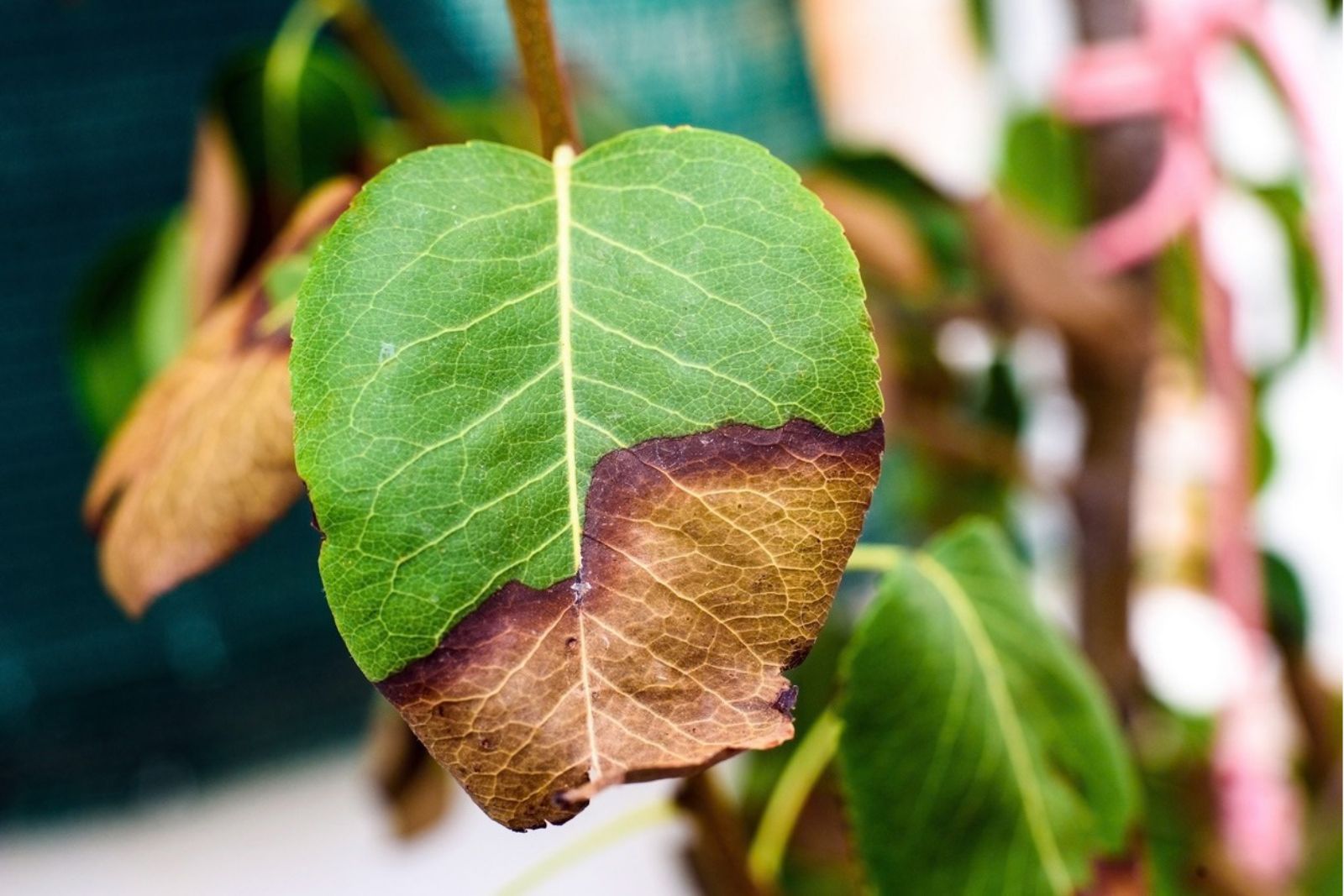
Your tap water. If small, dry brown tips with a yellow halo appear across many leaves of an otherwise healthy plant, suspect the faucet. Municipal water carries chlorine, fluoride and dissolved minerals, and sensitive species like spider plants, dracaenas, prayer plants and calatheas brown at the tips from exactly this. Softened water is worse: it swaps minerals for sodium, which plants tolerate even less.
Fertilizer salts. If the browning came after a generous feeding streak, or you see a white crust on the soil surface or pot rim, the soil is holding too much salt. Fertilizers are salts, and in a pot they have nowhere to go: they accumulate, pull moisture away from roots, and burn the tips from inside.
Dry air, the winter classic. If tips go papery-brown just as the heating season starts, on humidity-loving plants like calatheas and ferns, the air is the problem: indoor humidity in a heated home routinely drops below 40 percent, and leaves lose water faster than roots can replace it. The tip, farthest from the supply, dries first.
Genuine underwatering does exist, but it announces itself differently: browning along entire leaf edges with curling and wilting, not neat dead tips, and the soil pulls away from the pot like old cake.
The fixes, matched to the culprit
- Change the water, not the schedule. For sensitive species, switch to rainwater, distilled or filtered water, or at minimum let tap water sit out overnight so chlorine dissipates (fluoride, stubbornly, stays).
- Flush the pot. Every month or two, run water generously through the soil until it streams from the drainage holes, carrying accumulated salts out. Then feed less: half-strength, growing season only, nothing all winter.
- Raise the air’s humidity honestly. Group plants together, use a pebble tray, or run a small humidifier; the same moisture balance that keeps leaf tips green is the one to watch on the other side, since a home’s winter humidity is a two-way adjustment. Misting feels helpful but evaporates in minutes.
- Trim for looks, diagnose for real. Snip brown tips with scissors, following the leaf’s natural shape, but know the trim fixes nothing: new tips will brown until the cause changes.
A brown tip is not a cry for the watering can. It’s a lab report, printed at the end of the leaf: what’s in your water, what’s in your soil, what’s in your air. Read it once correctly, change the one thing it names, and the next leaf comes out green to the very end.


