
Every fall, a quiet mistake costs home orchards a chunk of next summer’s fruit, and it isn’t a storm or a pest. It’s a well-meaning gardener with clean pruners, standing in front of the wrong tree at the wrong moment. Because fruit trees split into two families with opposite pruning calendars, and for one of those families, the safe window is closing right now, while touching the other one this month sets it up for a poor year.
The trees on the clock are the stone fruits: cherries, plums, peaches, apricots and nectarines. For them, the rule professional growers live by is prune in the warm, dry season, right after harvest, and have the wounds closed before the cold rains arrive. Sweet and sour cherries in particular are pruned after picking, not in winter, and the reasoning is pure disease math.
Why the window closes in fall
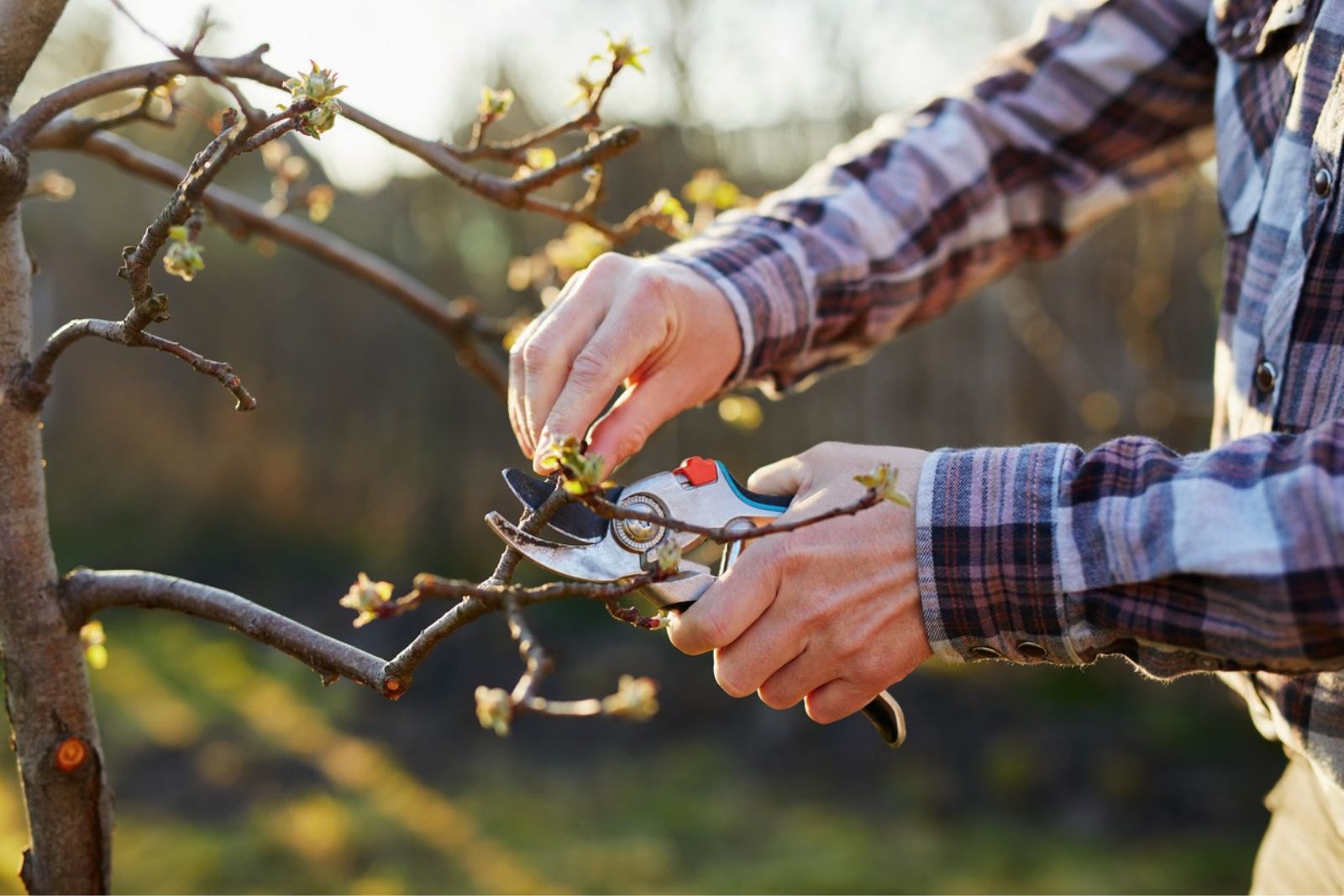
A pruning cut is an open wound, and a tree seals it with new tissue only while it’s actively growing. Cut a cherry or an apricot in late fall or winter and the wound sits open for months, exactly when the enemies of stone fruit are airborne: silver leaf fungus and bacterial canker both spread in cool, wet weather and enter trees through damage inflicted close to dormancy. An infected limb stops producing; an infected trunk can take the whole tree. That’s the invisible chain between a November cut and a thin harvest: the tree spends next season fighting instead of fruiting. Commercial growers add a precise rule worth copying: prune stone fruit only above 50°F with no rain forecast for 36 hours, so the cut surface dries before spores can land.
So if your cherry or plum still needs its post-harvest cleanup, the next dry, mild week is the last sensible call of the year. Missed it, or does the forecast refuse to cooperate? Then the counterintuitive right answer is to do nothing: wait for spring, close to bud break. A shaggy tree loses far less fruit than a diseased one, and extension specialists are blunt that winter pruning of tender stone fruits invites injury.
The one cut that matters most
Whatever else you do in that closing window, make the sanitation cut: remove dead, broken and visibly diseased wood, the branches that cross and rub (every rubbing wound is a disease door), and any gummy, sunken, cankered sections, cutting back to clean wood. Then open the center so light and air move through, because a dense, damp canopy is where fungus winters. Keep it light: this pass is surgery, not styling, and heavy shaping waits for the proper season. Clean the blades between trees, and skip wound paints, which trap moisture more than they protect. While the pruners are out, resist piling the fall mulch against those same trunks; that volcano shape undoes everything the careful cuts just protected.
And the trees you must NOT touch now
Apples and pears play by the opposite rulebook: they’re pruned fully dormant, in late winter, when their main diseases are asleep. Pruning them in fall triggers tender regrowth just in time for frost to burn it. So the October rule of thumb for the whole orchard reads in one line: stone fruits finish now, in the dry; apples and pears wait for February.
Two families, two calendars, one closing window. Get the cherries and plums sealed up before the rains, leave the apples alone, and next summer’s baskets will show which trees you understood.


