

One morning the yard is empty. The next, a handful of small gray birds are hopping around under the feeder as if they had always been there. They carry a nickname that goes back to at least the 1700s, and keeping them around takes one humble seed that most other birds won’t touch.
In short
- The bird is the dark-eyed junco, better known as the snowbird.
- It turns up across much of the country when the cold arrives and heads north again in spring.
- It eats on the ground, under the feeder rather than on it.
- Its favorite is white millet, an inexpensive seed most feeder birds skip.
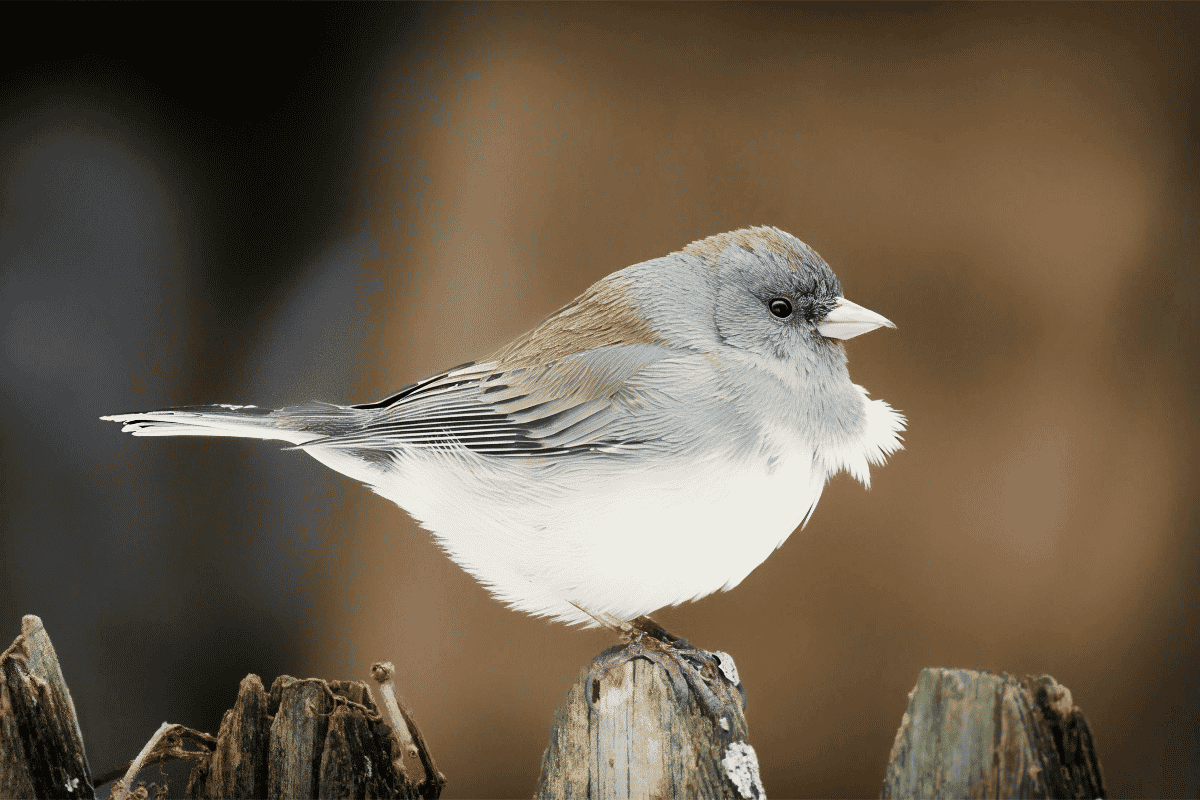
The bird that brings winter with it
“Everyone loves a junco,” Audubon magazine wrote this year, and the nickname explains why. People have called these birds snowbirds since at least the 1700s. John James Audubon himself used the name on one of his original watercolors. Even the scientific name says it: hyemalis comes from the Latin word for winter.
For much of the Southwest, the Midwest and the East, their arrival is a sign that the cold is here. In spring, the migrants fly back to northern forests to raise their young.
They’re easy to recognize. In the eastern United States, the junco is slate gray on top with a clean white belly. When it takes off, look for the white feathers on the outer edges of the tail, which flash in flight. And you’re unlikely to see just one. Juncos travel in flocks, and with roughly 223 million of them, they are among the most common birds in North America.
Why it eats under the feeder, not on it
Seeds make up about three-quarters of a junco’s diet, which makes it a backyard regular. But watch where it lands. Juncos are usually on the ground, hopping around in search of whatever the other birds have spilled.
The ground is simply where they live. They even nest there, in a hollow under a log, behind a rock or hidden in long grass.
The seed nobody else wants
Here’s the part most people miss. The seed juncos go for is white proso millet, a tiny pale seed that most feeder birds push aside. Audubon lists it among the seeds in a mix that other birds leave behind and juncos are glad to clean up.
The Cornell Lab of Ornithology agrees. Its guide to seed types lists white millet as a favorite of ground-feeding birds, juncos included.
How to serve it
- Scatter it on the ground: Cornell recommends it, as long as you put out no more than the birds can eat in a day.
- Or use a low tray feeder: pick one that sits close to the ground and drains well.
- Read the bag: you want white proso millet. Red millet is a filler that most birds leave behind.
The limit
The snowbird isn’t a winter-only guest everywhere. Audubon notes that juncos live year-round in much of the Northeast, the Appalachians, the Mountain West and the Pacific Coast, and that the common junco out West is brownish rather than gray. Millet has a downside too: cowbirds, blackbirds and house sparrows love it, and Cornell advises against using it when those birds are around. And common doesn’t mean safe. A 2019 study cited by Audubon found 168 million fewer juncos than in 1970.