You spot a flash of blue near the garden fence as the winter light fades. When the forecast calls for a freezing night, the bluebirds in your yard face more than a search for food, and a small choice during fall yard cleanup can make a difference.
In short
- Eastern bluebirds huddle together in nest boxes on freezing nights to conserve warmth.
- A nest box in your yard gives a whole group a place to shelter from the cold.
- Clean out old nesting material after the breeding season, then leave the box up for winter.
- Mealworms, fruit, suet, and other foods give bluebirds another way to find food in winter.
Bluebirds share warmth on cold nights
View in gallery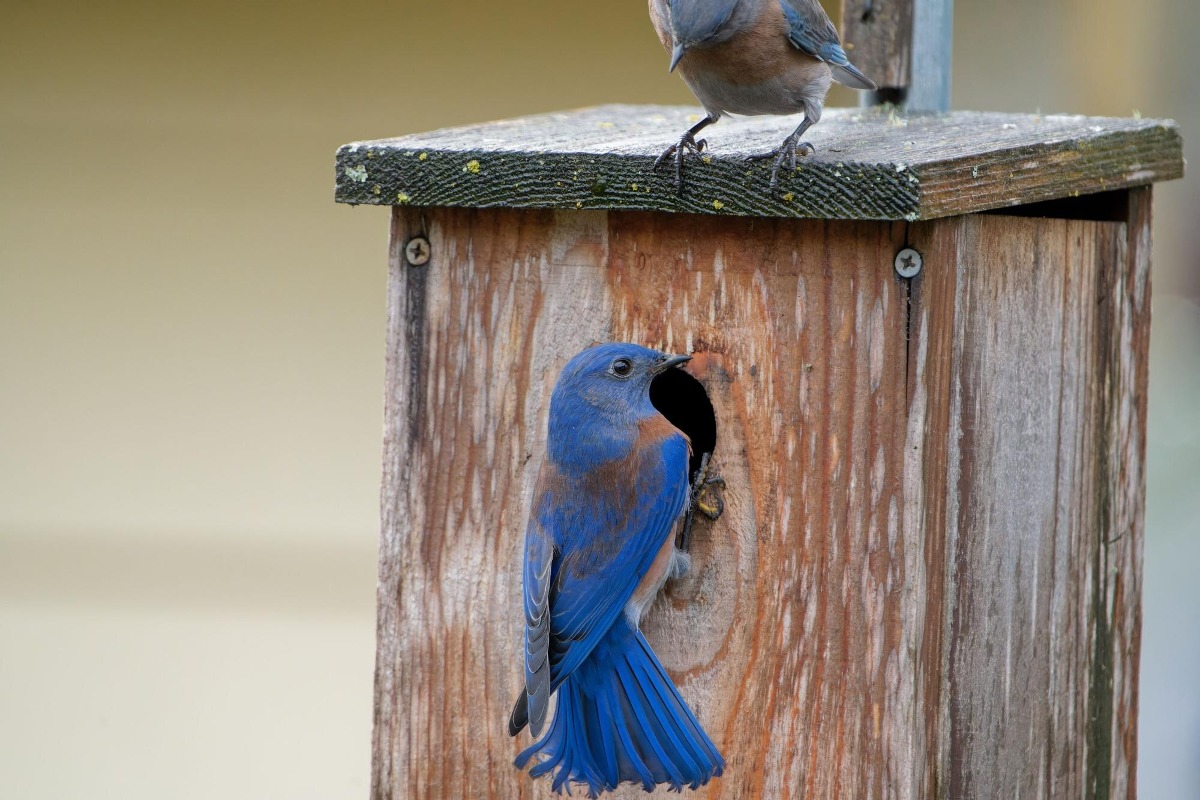
Imagine looking out at your garden on a freezing morning. The nest box you associate with spring is quiet, until bluebirds begin coming out. Observers have seen 8 leave a single box after a winter night.
Inside, several eastern bluebirds press close together to hold onto body heat. Groups of 10 or more have shared a box, and cold-weather gatherings of up to 20 have been reported in tree cavities and other tight spaces. In one observed birdhouse, more than a dozen settled on the bottom in a circle, tails toward the middle and heads facing out.
That closeness matters when the temperature reaches freezing. Sharing warmth helps the birds lose less heat and use less energy through the night. A box you can see from your window offers the kind of enclosed space they seek when the cold sets in.
Leave the nest box in place
When the last brood has left, it is tempting to put the nest box away with the rest of the garden gear. Keep it in the yard instead. Bluebirds use nest boxes for winter roosting, often with several birds inside at once.
The useful gesture comes first: remove the old nesting material after the breeding season, then leave the box up over winter. NestWatch, the Cornell Lab of Ornithology’s citizen-science program, recommends this approach so birds have a place to roost. Small mammals also use boxes left up through winter.
Cleaning serves another purpose. Old bluebird nests can harbor mites, blowfly larvae, and other parasites that overwinter in the box and harm the next nestlings. Taking out the old nest leaves the shelter standing for a cold night and prepares it for the next breeding season.
Food helps them face the cold
The birds that spent the night tucked into a box still need food when they come out. Insects are harder to find during the cold months, and bluebirds accept several foods you can offer in winter. Mealworms are one choice; fruit, hulled sunflower seeds, peanut butter, and suet are others.
Think of food and shelter as 2 parts of the same small welcome. The box gives bluebirds a place to gather when temperatures fall. Winter food gives them another source to turn to when they leave it.
The limit
A nest box offers shelter, not a guarantee: bluebirds also roost in natural cavities, and severe cold can still put them at risk. A group sharing a box is not necessarily a family. Keep mealworms to no more than 15 per bird per day and offer them as an occasional treat or during bad weather, not as the main food source.