You lift the attic hatch and spot gray or black specks scattered across the wood overhead. The marks are easy to see, but the right next move is less obvious. That spray bottle of vinegar may look tempting, and it can help, just not first.
Those specks are telling a water story
Those specks usually come back to one thing: dampness. It might be a roof leak, condensation or simply humid air drifting up from the rooms below. Left alone, that moisture can damage the wood, spoil the insulation and give mold a place to grow.
Most of it starts with your everyday routine. Warm air from showers, cooking and laundry slips through small gaps in the ceiling, then cools against the underside of the roof. If a bathroom fan or a dryer empties into the attic, it adds even more. It’s the same story as mold around bathroom caulk: scrub all you want, the cleanup won’t last if the surface keeps getting wet.
So before the vinegar comes out, play detective. Look at the roof after a rain and press a hand on the insulation to feel for damp spots. Follow the bathroom and dryer ducts to see where they end. Fixing leaks and sending that exhaust outdoors gives the patch you’re about to clean a real chance to stay dry.
Why vinegar, of all things
Once the water is under control, the patch itself is next. White vinegar contains acetic acid, which makes the surface too acidic for some fungi to tolerate.
The spray has a second, quieter job. It dampens the growth before you scrub, so loose particles don’t float straight into the air you’re breathing. Then the scrubbing does the real work, lifting off what you can see.
That’s why vinegar earns its place for a small, surface-level patch: it’s a cleaning helper, not a cure-all.
One bottle, one patch
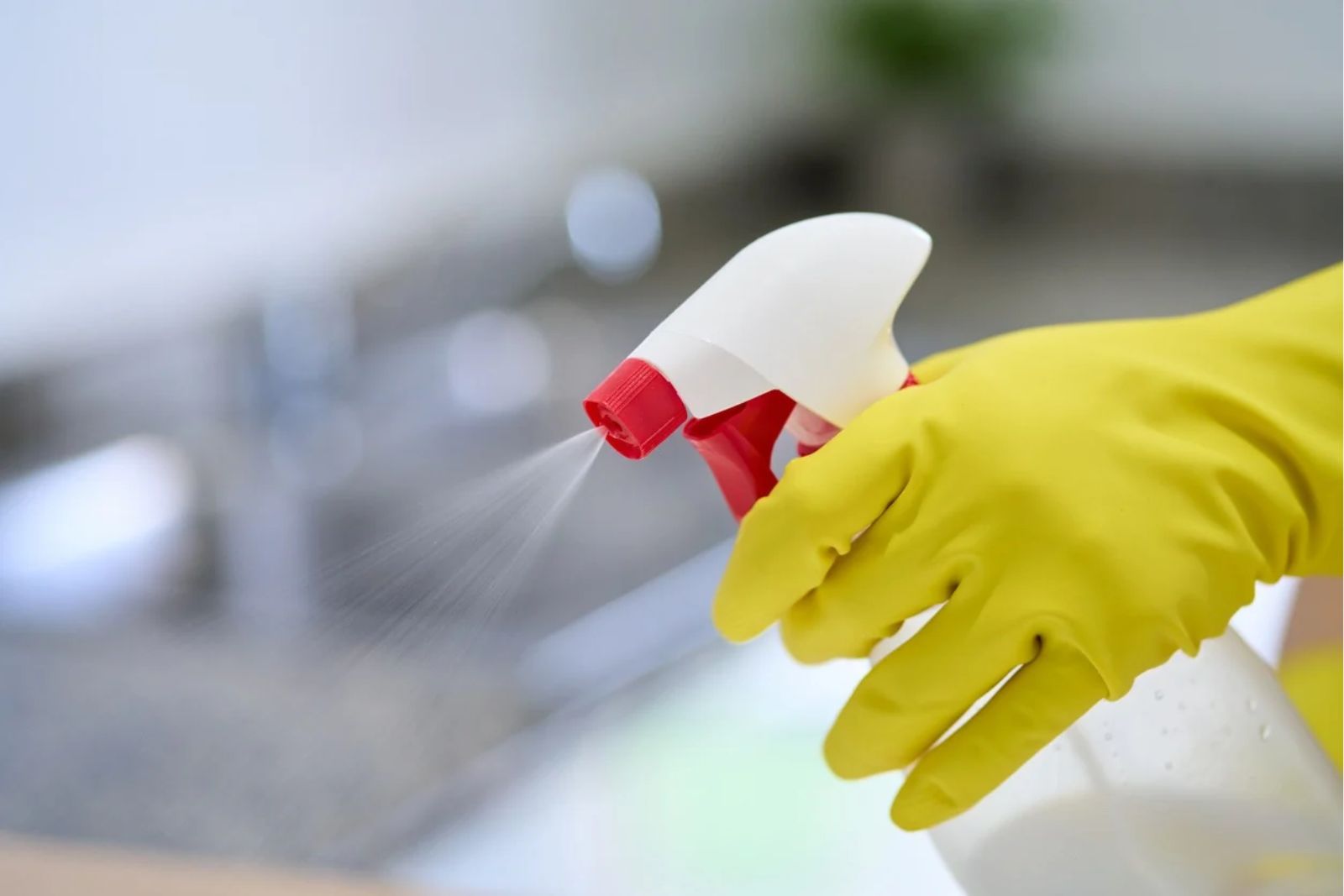
Keep this job to a spot you can reach easily and that’s smaller than about 3 feet by 3 feet. The setup couldn’t be simpler: pour white vinegar into a spray bottle and label it.
Before you start, put on a well-fitting N95 respirator, waterproof gloves and sealed goggles. Make sure your footing is stable and your light is good. Cover nearby fiberglass, cellulose or any other insulation that could soak up liquid with plastic, and keep the spray away from wiring and fixtures.
Then mist the patch lightly, just until it’s damp, not dripping. Scrub with a cloth or a soft nylon brush, and wipe away whatever comes loose. Now comes the hard part: waiting. Let the wood dry completely before you decide whether the cleanup worked.
Where the spray bottle stops
Vinegar won’t sterilize the wood or keep mold from coming back, and it should never be mixed with bleach or another cleaner. If the wood is still damp after 24 to 48 hours, the water or ventilation problem isn’t fixed yet.
For more than 10 square feet, rotten wood, moldy insulation, HVAC contamination or water damage, bring in a mold professional. People with asthma, COPD, severe allergies or weakened immunity should not do this cleanup.