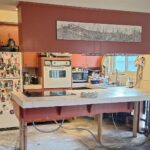
If you have multi-tone granite from the 2010s, you have probably been told the same thing. The counters are dating your kitchen. You need quartz. Budget twelve to fifteen thousand, plus a week with no sink and whatever the demo crew does to your backsplash on the way out.
A homeowner in Georgia was ready to sign that quote. Before she did, she had a painter come out for a cabinet estimate. He walked around the room, looked at the slab, and told her the granite wasn’t the problem. The pale cabinets around it were.
Here is what she started with.
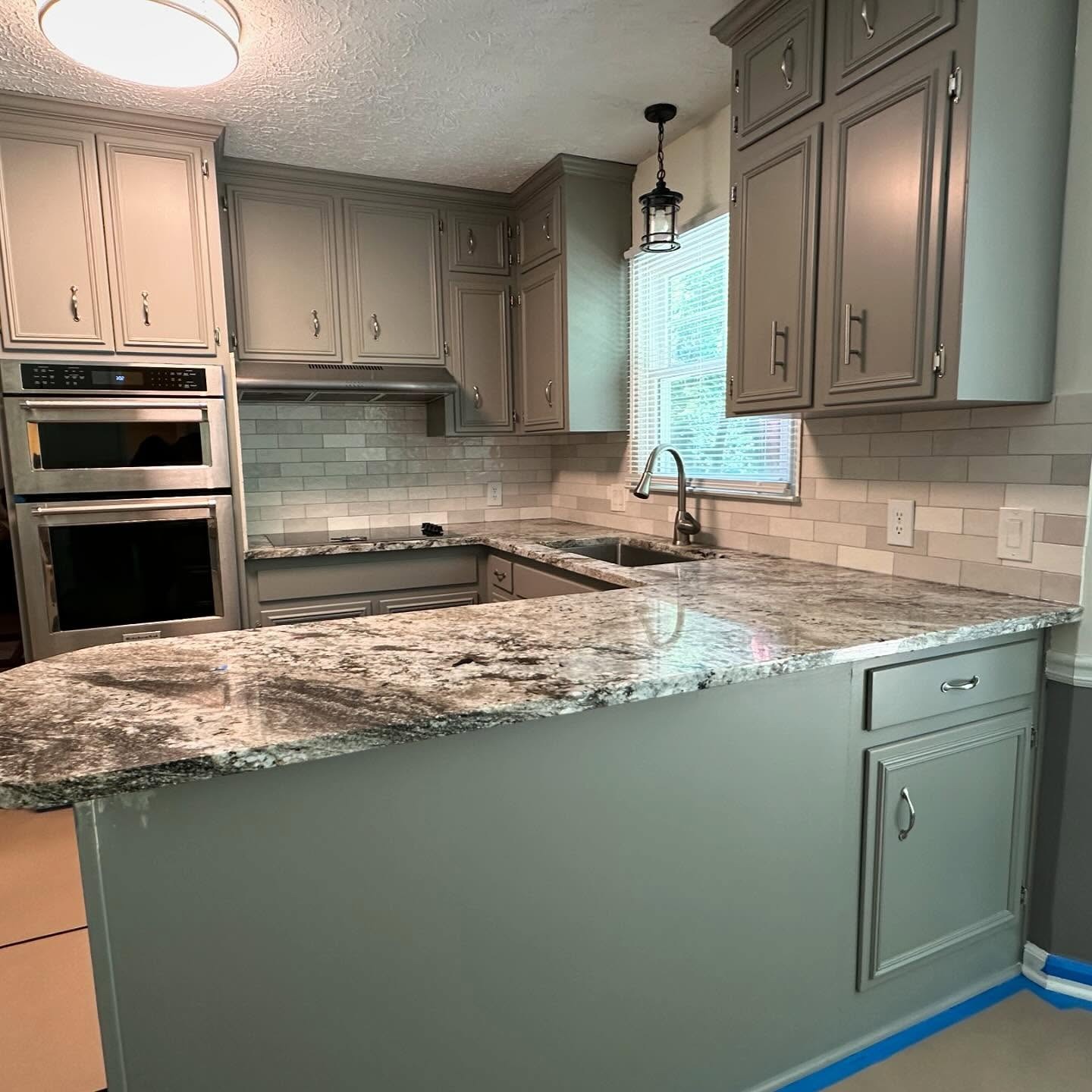
The counters are the first thing your eye lands on, because they are the only thing in the room doing any work. The cabinets have gone quiet. That greige paint, the agreeable gray every “safe” renovation reached for in the last decade, is not pulling its weight next to a slab this active.
Pale cabinets and loud granite is a fight
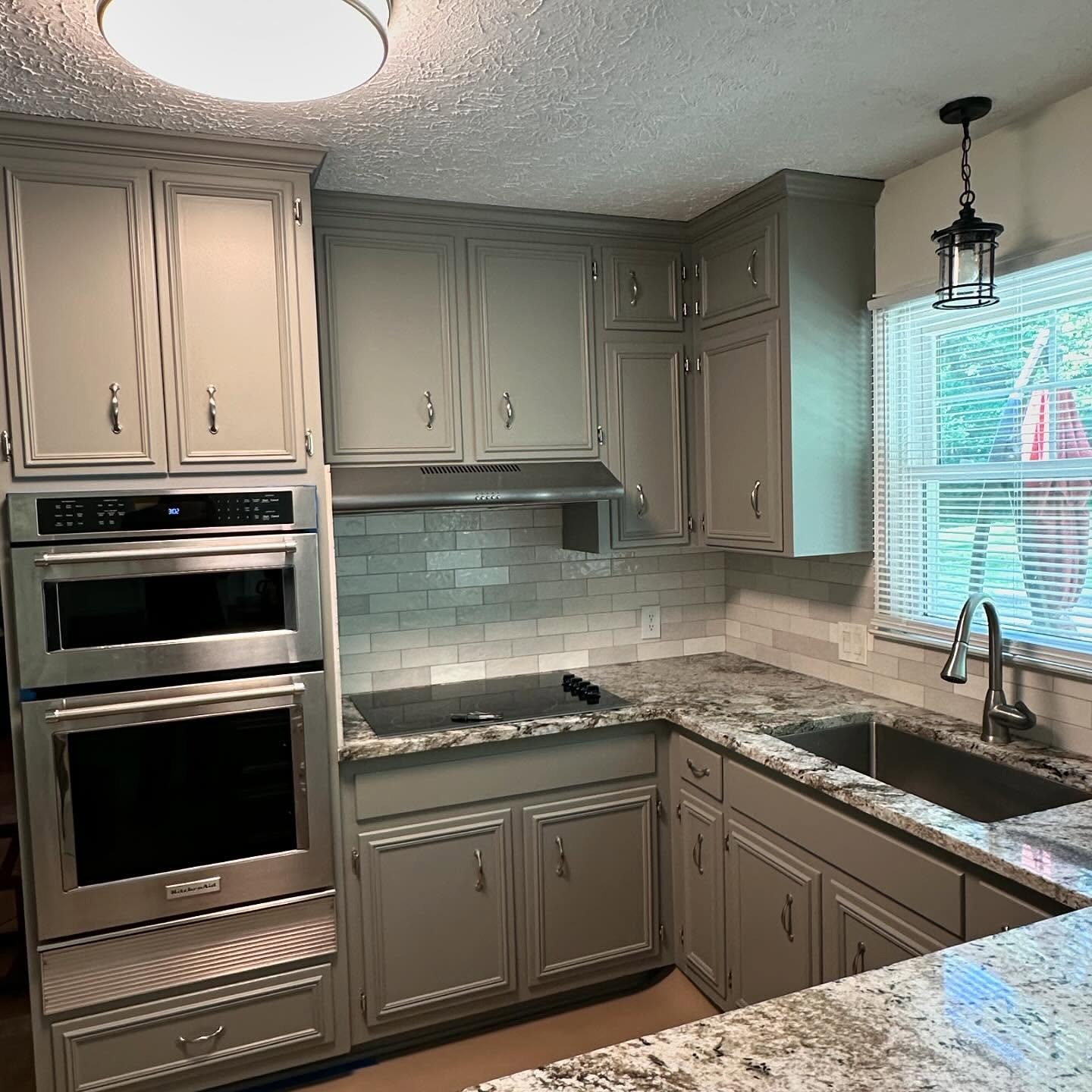
Walk around to the cooking wall and the same imbalance shows up. The counter is louder than the entire wall it is sitting on.
Same thing on the way in from the dining room. The cabinets flatten into the paint behind them, your eye slides past the whole wall, and you land on the stone.
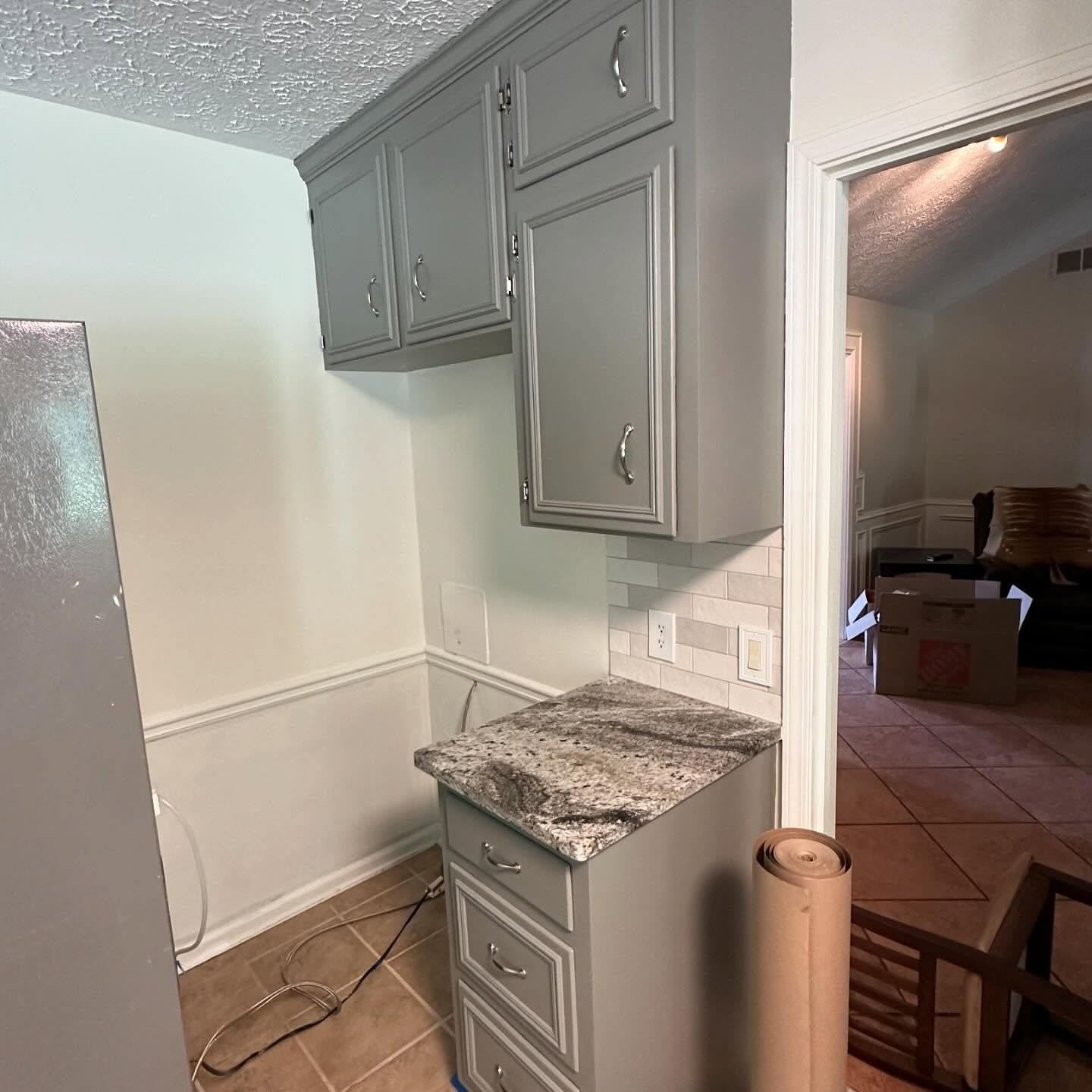
This is why so much “Alaska White” and “Blue Flower” granite gets written off as dated. The slab is doing all the talking. It is not actually old. It is surrounded by surfaces too polite to balance it.

Iron Ore does the opposite of what most people think
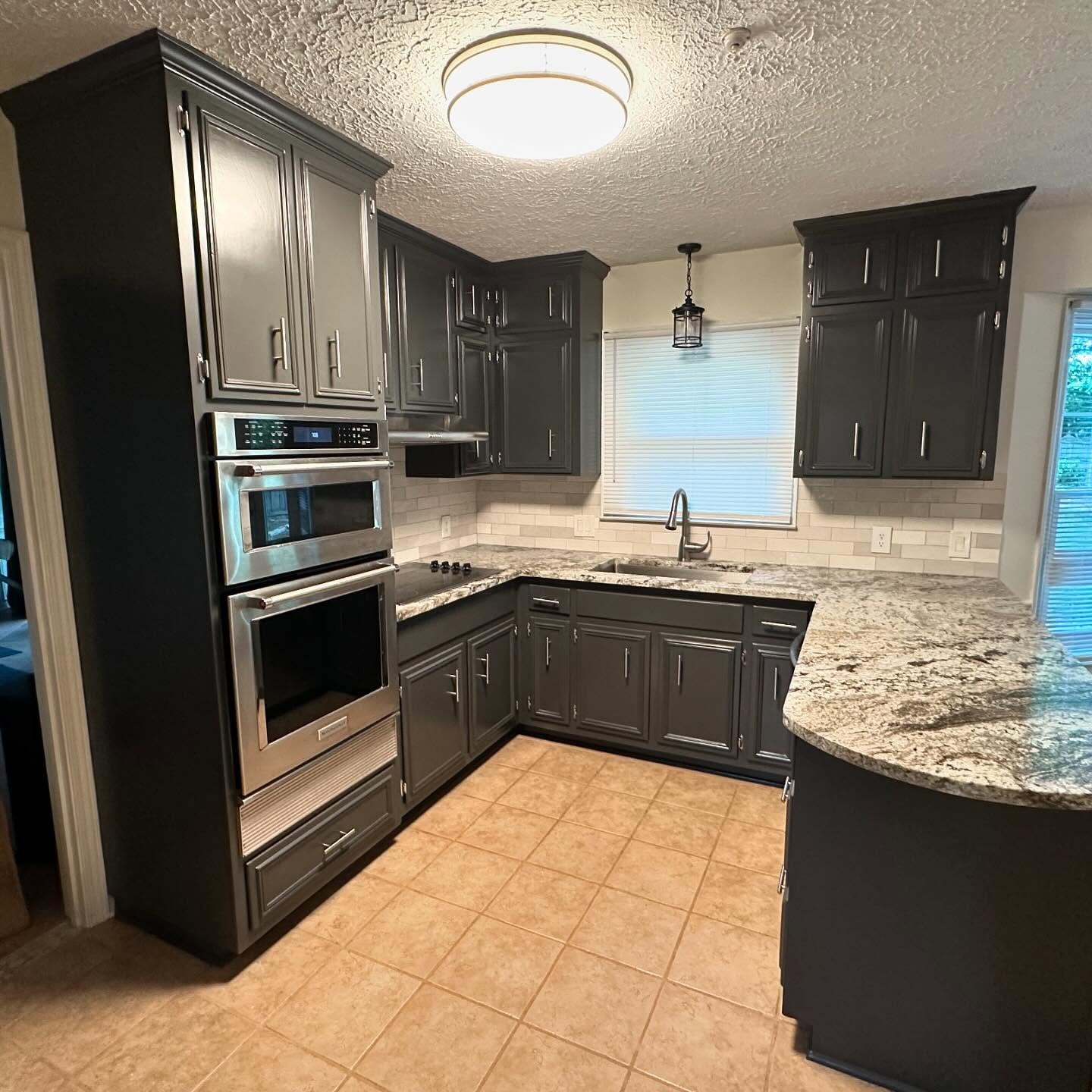
The painter’s call was Sherwin-Williams Iron Ore on every perimeter cabinet, with a saturated deep teal reserved for the island. No new counters. No new backsplash. No new tile. The hardware stayed.
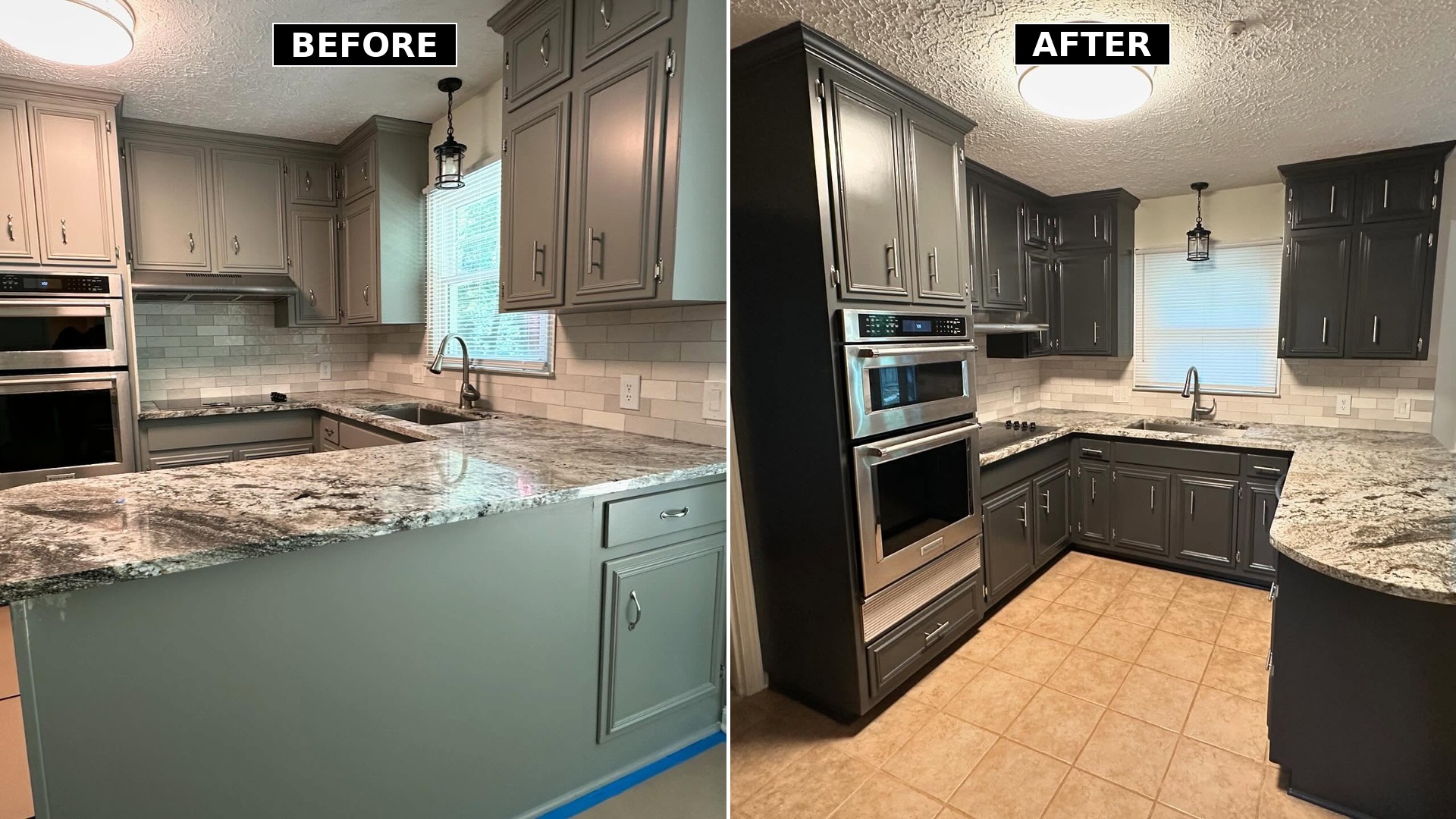
Same room. Same slab. Same tile. Same pulls. One color decision.
What makes it land is how dark Iron Ore actually goes. It is Sherwin-Williams’ near-black with just enough warm charcoal to keep it from reading cold. A true black would have picked a fight with the cream backsplash and the tan floor. Iron Ore meets both halfway, which is why nothing looks orphaned after the paint dried.
The granite stops competing because it is no longer the heaviest surface in the room. The cabinets are. Dark cabinet, light counter is the whole trick, and your eye finally has somewhere else to land.
The teal island is the move most paint jobs skip
Painting everything in Iron Ore would have swallowed the room. Low ceiling, bulky soffit, nine feet of near-black wall-to-wall gets heavy fast. So the island was pulled out on its own in a deep teal, somewhere in the Dark Night family.
That teal is doing three jobs at once. It gives your eye a landing spot in a dark room. It reads as its own piece of furniture, which makes the kitchen feel bigger. And it is the detail that turns a paint job into something that photographs like a built-in bar.
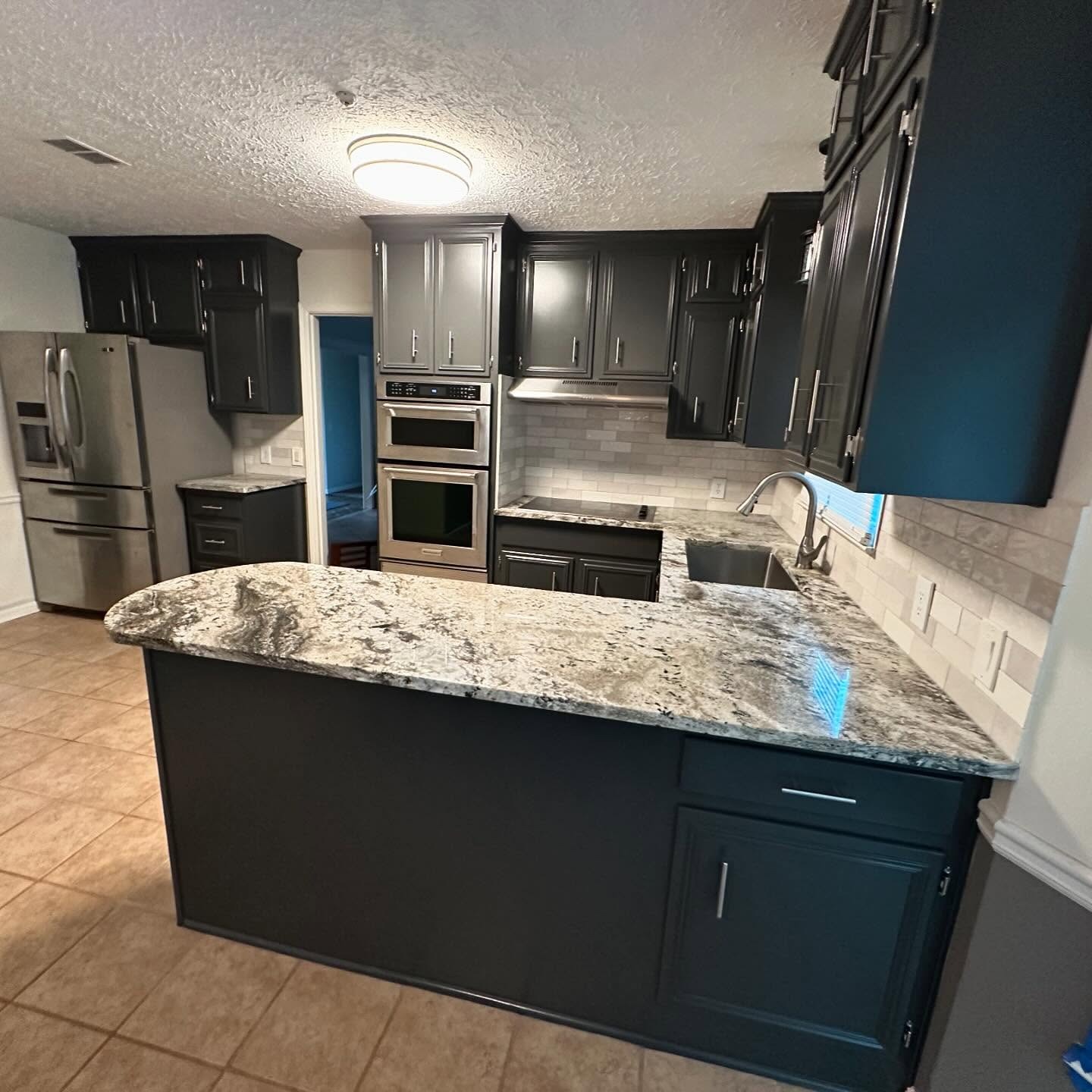
Up close, the island shows what the painter was really solving for.
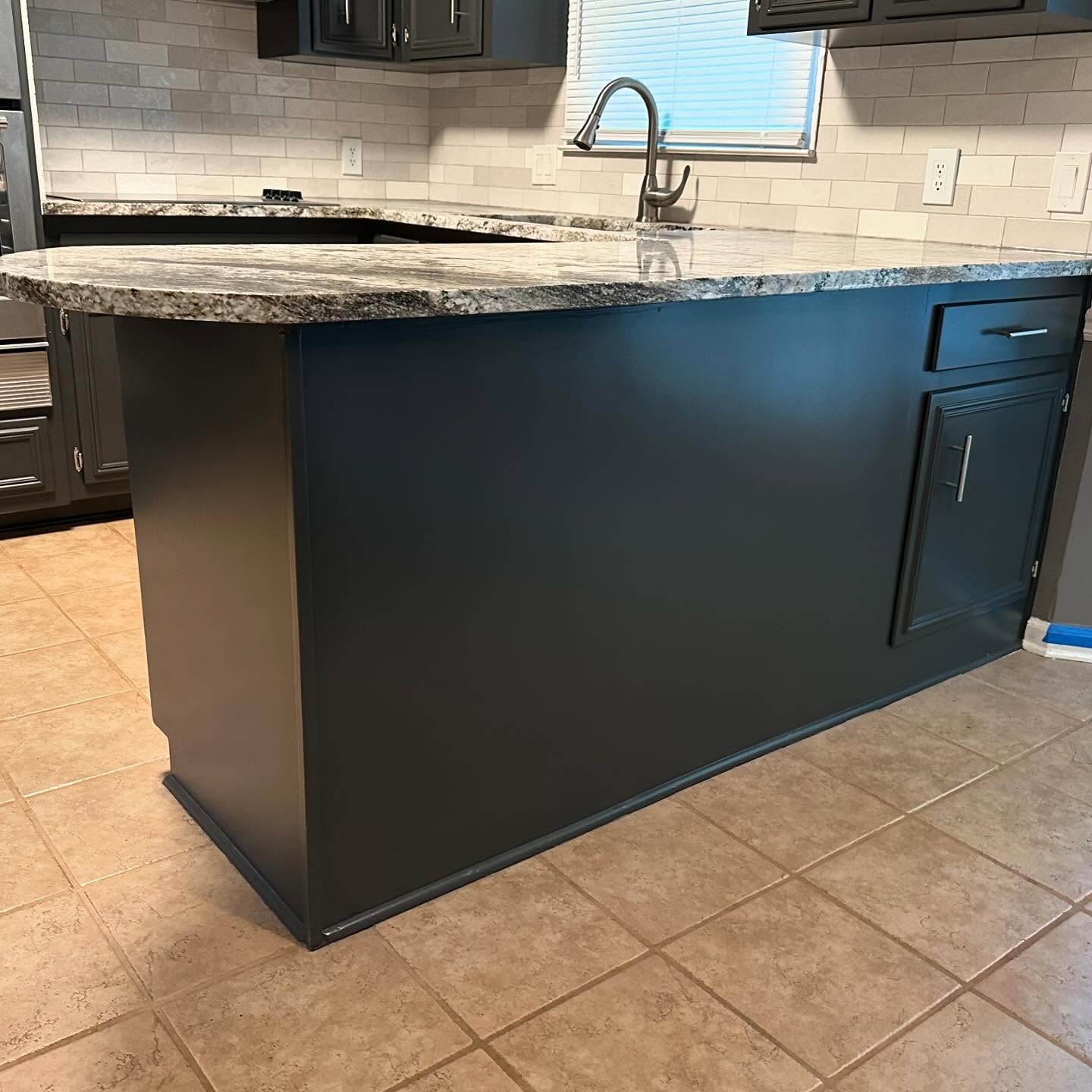
That is the same stone from the first photo in the article. Same pattern. Same movement. All that has changed is what sits behind it.
Why Iron Ore works where trendier colors don’t
A lot of homeowners painting cabinets right now reach for Benjamin Moore Hale Navy or a deep forest green. Both are beautiful. Neither would have worked here. The warm cream backsplash and tan tile floor would have clashed with a cool navy or a true green, and the kitchen would still look mismatched, just in a different direction.
Iron Ore wins because its charcoal has warm undertones that already live in the floor and the backsplash. That is the quiet rule behind every dark cabinet transformation that lands. Pick a color whose undertone matches the stuff you are not replacing.
What the paint quote saved
A fresh counter install in a kitchen this size runs about ten to fifteen thousand dollars, before plumbing disconnects, backsplash repairs, and a week of takeout. A lacquer cabinet job of this quality runs about three to six thousand regionally and wraps in roughly two and a half days. Even at the top of the paint quote, that is thousands of dollars staying in the account, and the stone she already paid for stays in place.
The lacquer part is not optional on a job you want to last. Lacquer is what the big cabinet companies spray onto brand-new boxes at the factory. It cures hard, resists chipping around the handles and the stove, and holds its color past year one. A latex roller job on the same cabinets would look great for a few months and start to tire fast. Pay the upcharge.
Before you call the counter company
Pull up a photo of your own kitchen on your phone and squint. If the counter is the loudest thing in the frame, something above or around it is too pale or too safe to hold its own next to it.
Dark cabinets with a lighter, busier counter is a move interior designers charge serious money to recommend. In this house, it came out of a cabinet estimate.
Would you have been brave enough to go this dark on the cabinets before touching the granite?