
You threw out the flour, wiped every shelf, and for two weeks the kitchen was quiet. Then, one evening, a small copper-and-gray moth zigzags out of the cabinet while you’re cooking. The next morning there’s another one on the ceiling. Back to square one, and you start eyeing the whole pantry like it’s a crime scene.
This is not your fault, and you didn’t clean badly. The moths you see are the end of the cycle, not the start, which is why a single big cleanup almost never ends it. They also have a season: Colorado State University Extension notes that adults are most often seen from November through February.
Why They Always Come Back
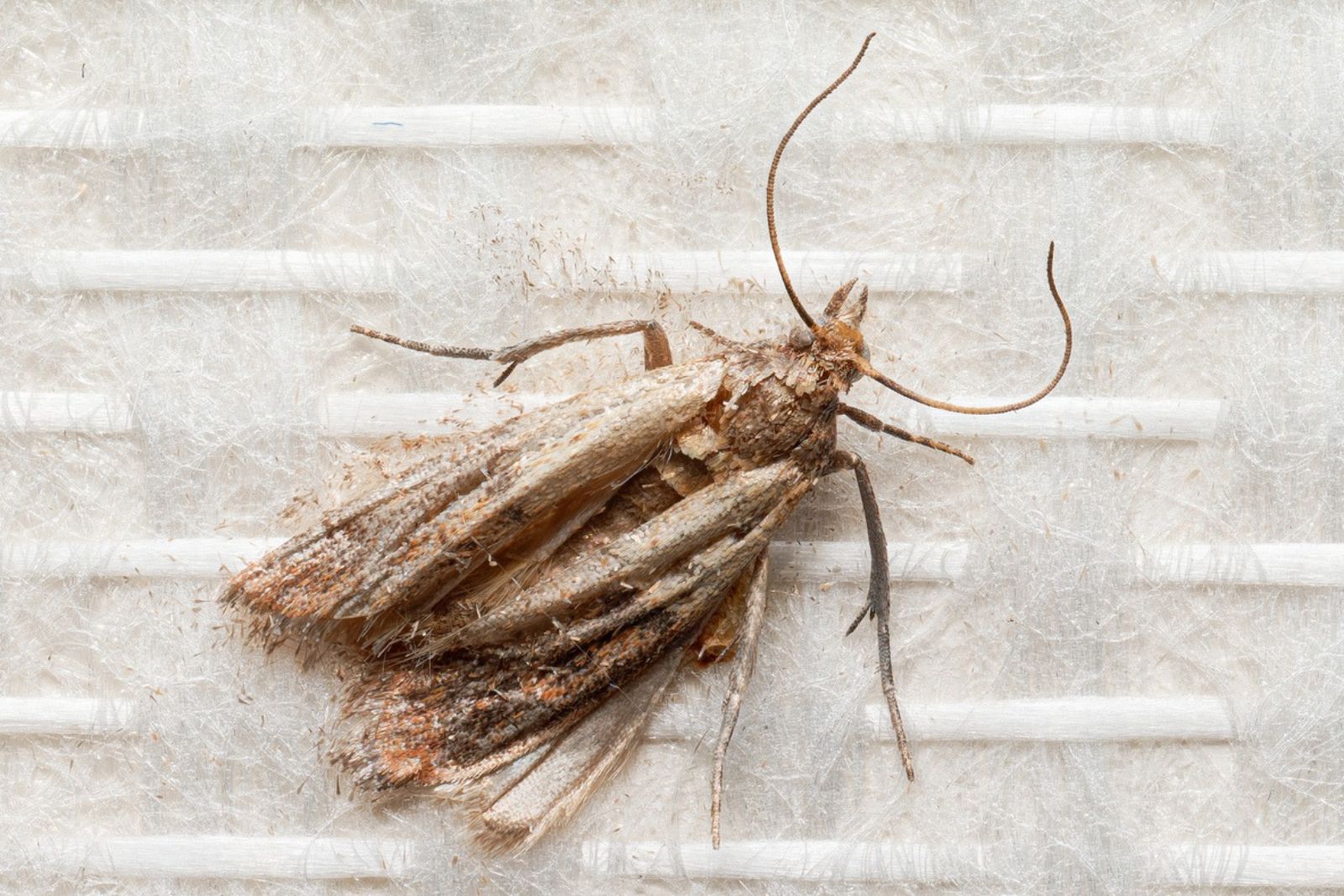
Each female can lay over 200 tiny eggs, about 0.5 mm across, on or near food. The larvae that hatch can chew through plastic bags and thin cardboard, binding food together with silky webbing. When they’re fully grown, they leave the food entirely and crawl into cracks to pupate, often where a shelf meets the wall or the ceiling.
That is the whole trap. Infestations often start with an infested package brought home, and one missed box of crackers, or a few pupae tucked in a shelf joint, is enough to restart everything. The adults don’t even eat and live only a little over a week, but a home can support three or four overlapping generations a year.
The 3 Steps That Actually End The Cycle
- Hunt the webbing. Open everything: flour, cereal, nuts, dried fruit, spices, pet food, bird seed, even dried flowers. Webbing is the surest sign. Throw out what’s infested. For anything you want to save, freeze it for at least two to three days, or heat it in the oven at about 120 to 140°F for 20 minutes, longer for bulky items.
- Vacuum, then wipe. Pull everything out and vacuum crumbs, corners, shelf-pin holes and the seam along the back wall, where larvae hide to pupate. The cleaning product matters far less than removing every bit of spilled food.
- Starve them for a month. Move dry goods into tightly sealed hard plastic, glass or metal containers. About a month covers the pupal stage plus the adult lifespan, so whatever is still hiding has nothing to lay eggs on. Keep bird seed and dog food out of the pantry entirely.
Plan B if moths still appear: a pheromone trap will show you the hot spot, but it only catches males, so treat it as a detector, not a cure.
Where The Bay Leaf Fits In
The cheap spice people swear by is the dried bay leaf, and it does earn a place on the shelf, just not the one most people think. A 2016 study cited by Hunker found bay leaves repel, and even kill, several grain pests that share the pantry, including flour beetles, mealworms and weevils. Against the moth itself, the honest answer is different: “There is no available scientific evidence that bay leaves are effective against the common pantry moth”.
So use it for what it’s good at. Tuck a couple of dried leaves into the flour and rice containers as cheap insurance against beetles, and let the three steps handle the moths.
Two limits are worth knowing. Skip insecticide sprays in the pantry: extension entomologists don’t recommend them, and they must never touch food or food surfaces. And if moths keep showing up after a month of sealed containers, the source is likely outside the pantry, such as a forgotten bag of bird seed, dried flower arrangements, or seeds and nuts stashed by rodents. At that point, call a pest professional.
Find the webbing, vacuum the cracks, seal everything for a month, and let the bay leaf guard the flour. That’s the trick.


