You notice them on a walk around the yard: gray, silky tents wrapped around the tips of the pecan or the cherry tree, or small brown cones dangling from the arborvitae like forgotten Christmas ornaments. Some look abandoned, others seem to be moving. You wonder if the tree is dying, whether to spray something, or whether to just cut the whole branch off.
This is not your fault, and it’s not a sign of a neglected yard. These are two very different insects, and telling them apart from the ground decides whether you should act now or simply wait for spring.
What’s Inside Each One
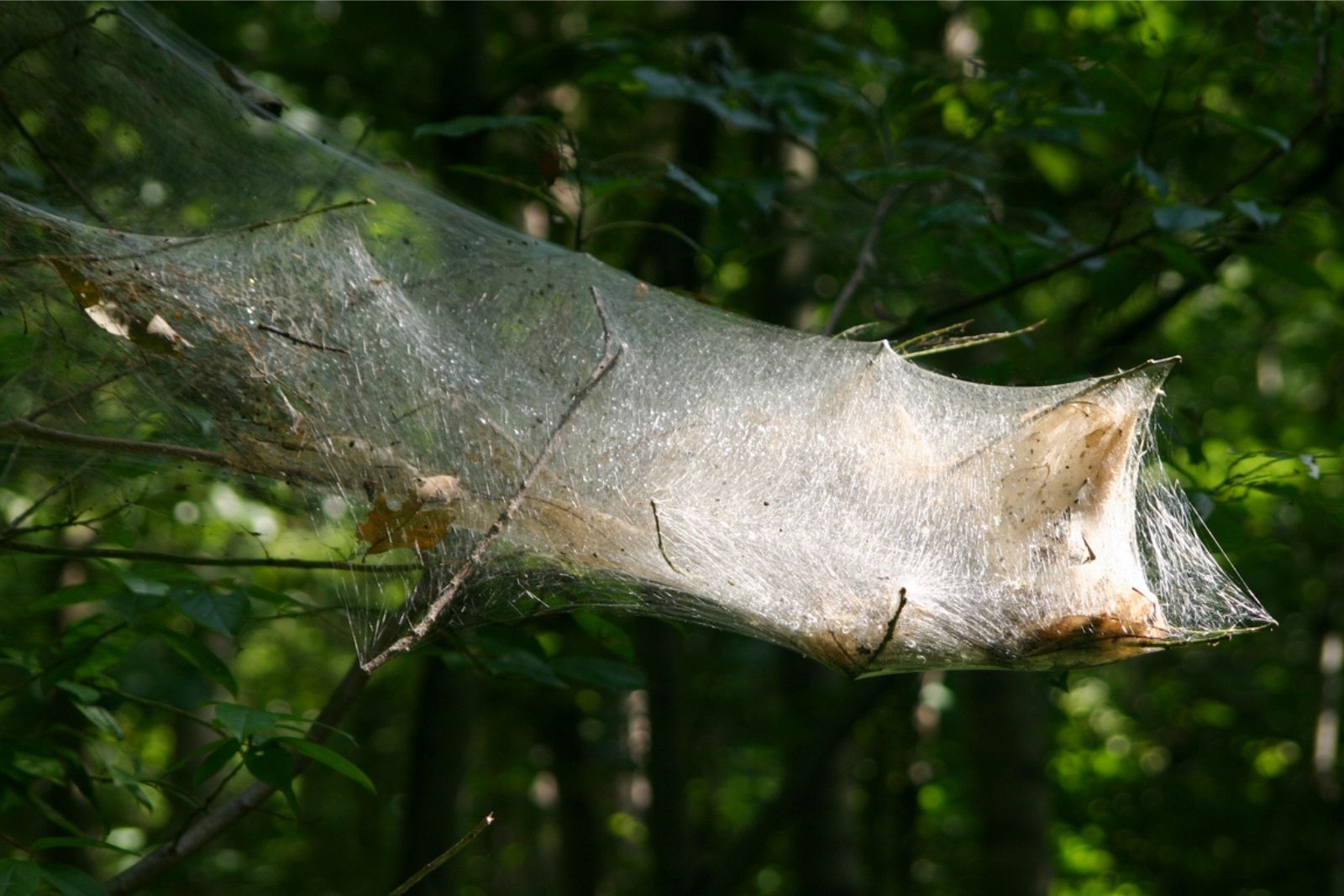
Silky tents at the ends of branches are usually fall webworms. They show up in late summer into fall on deciduous trees such as pecan, persimmon, walnut and fruit trees. Inside are yellowish-green caterpillars with black spots and long white hairs, up to 1.5 inches long. The good news: according to NC State Extension, the webs are unsightly but usually do not harm the tree’s overall health.
Hanging cone-shaped bags are bagworms, and they’re the ones to take seriously. Each bag, from about 1/8 inch to 2 inches long, is spun from silk and camouflaged with bits of the tree itself. They favor evergreens such as arborvitae, juniper, red cedar and Leyland cypress. By fall, the adults have mated and each female has laid her eggs inside her own bag: between 500 and 1,000 of them. The eggs sit there all winter and hatch from late May to mid-June, ready to strip the same shrub again.
The One Move To Make Before Spring
For bagworms, the answer is refreshingly low-tech. The Missouri Botanical Garden puts it plainly: “The most economical method of controlling bagworms is to handpick the bags and destroy them.” Late in the season, sprays don’t work once the caterpillars stop feeding, so picking is almost always the preferred method.
- Bring a bucket of soapy water and a pair of pruning snips.
- Pick or clip every bag you can reach, working around the whole shrub, inside and out. Bags blend in, so look closely.
- Drop them into the soapy water to drown them, rather than just tossing them aside.
- Finish before late May, when the eggs start hatching. Any time over the winter works.
For fall webworms, there’s nothing urgent to do now. If a web is within reach, pull it apart with a stick or pole so birds and wasps can get to whatever is left, or prune out the branch tip. Don’t burn webs in the tree: fire can get out of control and damage the tree, nearby property, or you.
When To Call An Arborist
Hand-picking has its limits. If bags are clustered high in a tall evergreen, or a shrub is already heavily stripped, an arborist can reach and assess what you can’t. Insecticides for bagworms only work on young caterpillars, in June or early July, while they’re small enough for the spray to reach them. Mark your calendar if you missed some bags this winter. While you’re scanning the yard this time of year, it’s worth knowing what tiny egg clusters in the yard can mean, too.
Tents can wait, bags can’t: pick them before the spring hatch. That’s the trick.