Raking under the hedge, you uncover something that stops your hand: a tight little cluster of tiny spheres, reddish-brown and faintly translucent, like caviar someone spilled in the leaf litter. The reflex is to poke it, crush it, or shrug and rake on. All three can be the wrong move, because if those are tick eggs, you’re looking at a few thousand future ticks in one spot, and what you do with the next ten minutes, and with your yard this fall, decides whether they ever hatch on your property.
First, the identification. Tick egg masses are laid off the host, never on your dog: an engorged female drops off, crawls somewhere sheltered and humid, and deposits 2,000 to 5,000 eggs in a single cluster before dying beside them. Each egg is well under a millimeter, and the mass reads as a glossy, gelatinous clump of brown-red beads, tucked into leaf litter, soil crevices or dense vegetation, classically along the yard’s shady margins: under hedges, at the wood-line, beneath brush piles, along fences and foundation cracks.
What fall really means in the tick calendar
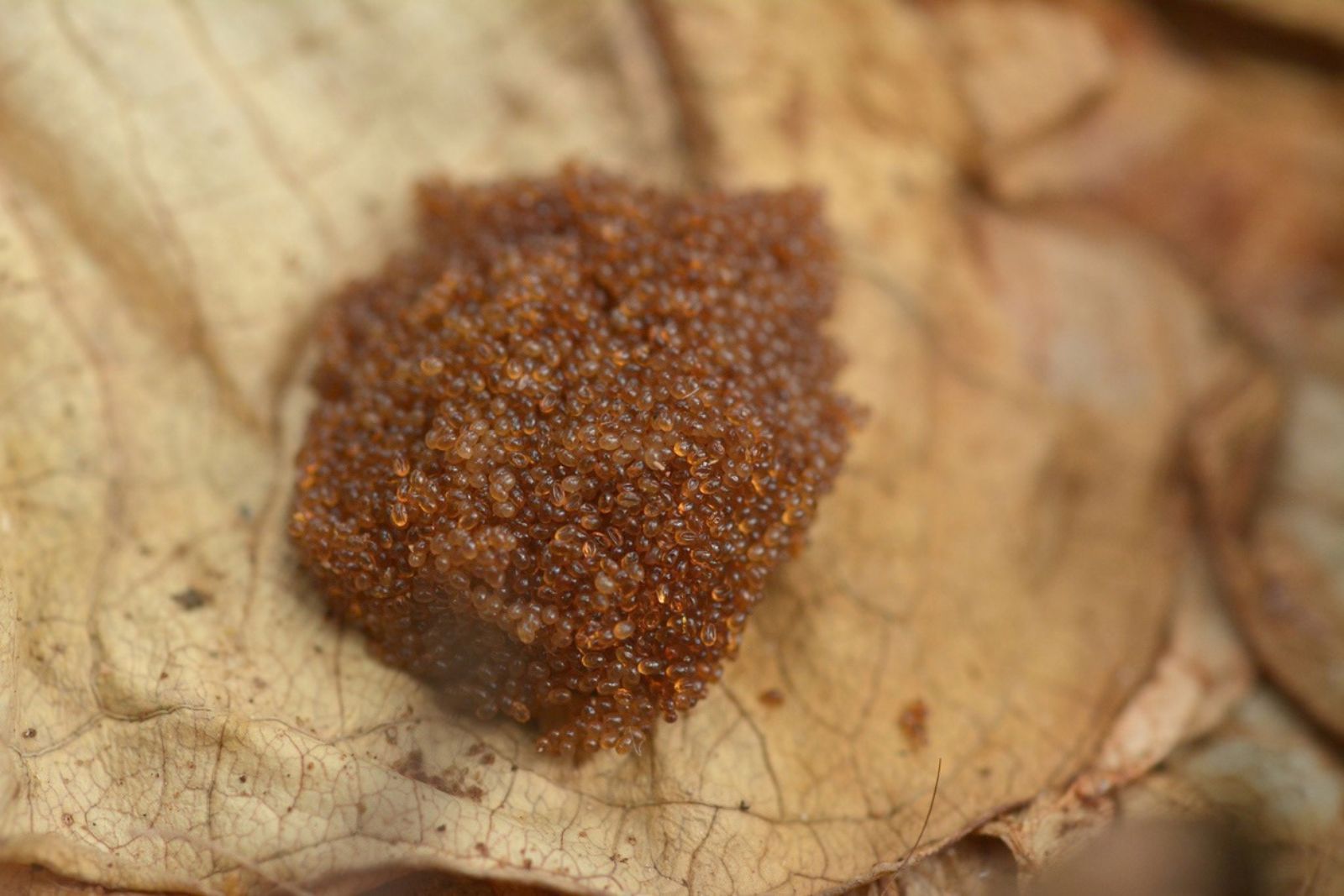
Here’s the part worth getting right, because it changes the strategy. For the main disease-carrying species, blacklegged (deer) ticks first among them, the big egg-laying happens in spring: females feed in fall, overwinter engorged in the leaf litter, then lay in early spring and die. So a cluster found in October may be eggs (some species and warm regions do produce late clutches, and the brown dog tick will lay any time, indoors included, in kennels and baseboard cracks), but just as often the fall find is the stage before the eggs: fat, slow, engorged females bedding down in your leaf piles, each one a spring egg mass on legs. Either way, the conclusion is identical: the leaf litter you leave this fall is the nursery, and fall, when adult ticks are at peak activity, is precisely when yard work hits them hardest.
If you’ve found a cluster
- Don’t touch it bare-handed, and don’t crush it: gloves on, since ticks and their residues can carry pathogens, and crushing scatters more than it destroys.
- Scoop the whole mass, plus an inch of the litter or soil under it, into a sealable bag or jar.
- Kill it properly: soak the contents in rubbing alcohol, then seal and trash. (Flushing thousands of eggs is less certain; alcohol is.)
- Read the location: a cluster marks a humid, sheltered, host-visited corner. That corner, not just that clump, is what needs changing.
Closing the nursery before spring
The eggs of next year are decided by this fall’s cleanup, and every item targets the same conditions, moisture and cover: rake and remove leaf litter (don’t just pile it at the fence line, which builds a better nursery), mow the margins short, clear brush piles and raise the woodpile, and lay a classic 3-foot wood-chip or gravel band between lawn and woods, a dry moat ticks hesitate to cross. Then cut the host traffic that delivers females to the yard: the same audit as when a rat shows up, since rodents and deer are the tick’s taxi fleet, and remember that cozy mulch piled against trunks shelters exactly the rodents that carry them.
One gloved scoop and a jar of alcohol for the cluster you found; one honest afternoon of raking for the thousands you’ll never have to find. The hatch happens in someone’s yard every spring. The ten minutes and the rake decide whose.