You cleaned the windows on Saturday, stepped back, and there they were again by Sunday’s low sun: streaks, arcs and ghost trails, exactly where you wiped. So you bought a better glass cleaner, then a more expensive one, and the streaks outlived them all. The fix that’s been quietly spreading through European cleaning circles isn’t a glass cleaner at all. It costs a few cents per use, and if you own a dishwasher, it’s already in your kitchen, doing a smaller version of the same job every night.
The product is dishwasher rinse aid, the Jet-Dry-style liquid you pour into the little reservoir so glasses come out spotless. The trick, popularized by German household sites: a small squirt of rinse aid in a bucket of warm water, and windows dry clear, without streaks and without specialty cleaners.
Why your windows streak in the first place
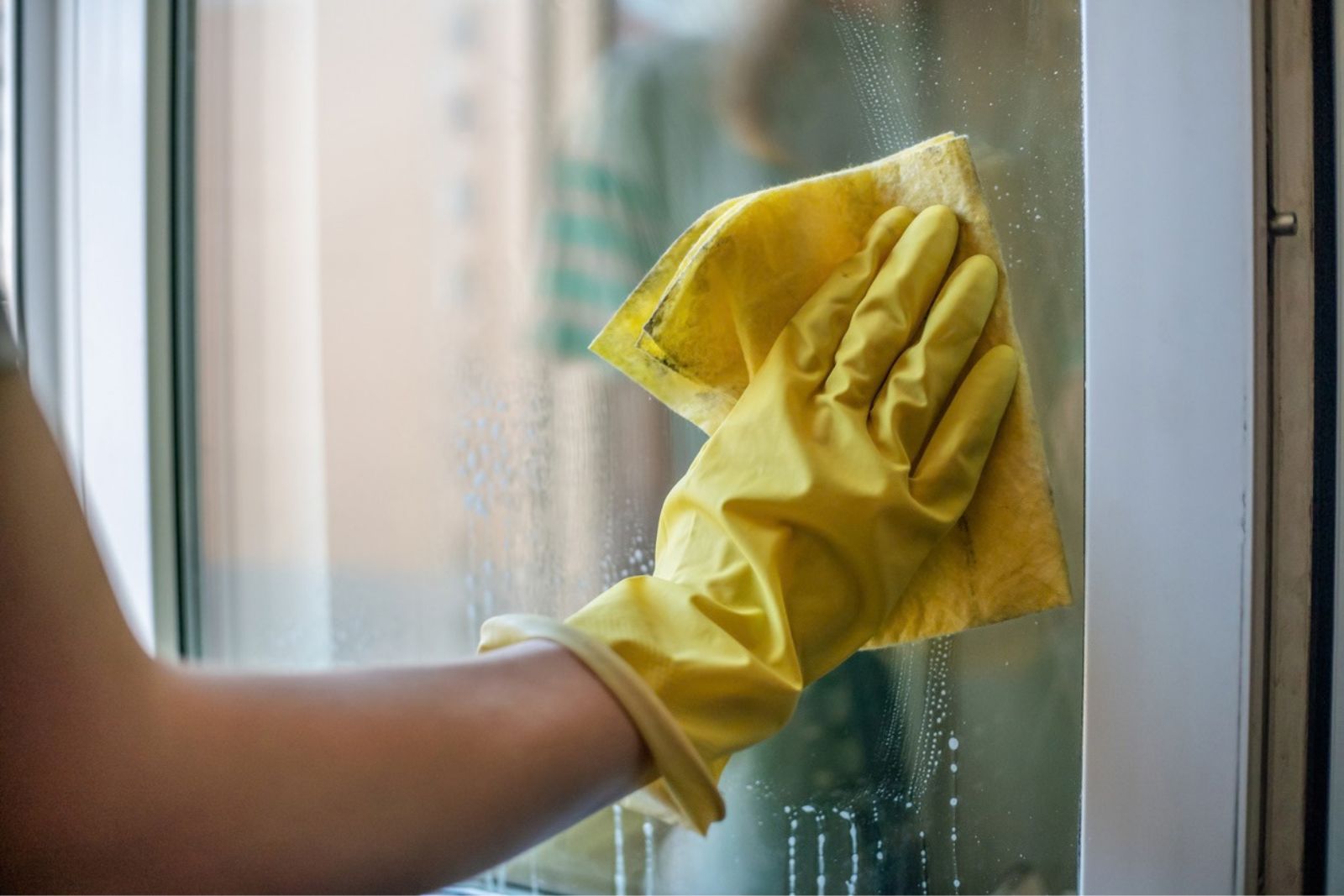
Streaks are not dirt you missed. They’re what the water left behind: dissolved minerals from your tap water, deposited as the film dries, plus the residue of the cleaning product itself. That’s why the classic failures all make streaks worse: too much product (more residue), hard water (more minerals, the same ones that crust up a shower head), and washing in direct sun, which flash-dries the film into visible trails before you can remove it.
Rinse aid attacks the mechanism itself. It’s a surfactant blend built to do one thing: break water’s surface tension so it can’t sit in droplets. On a glass in the dishwasher, that means water sheets off instead of drying into spots. On a window, the same physics makes the rinse water flow off in a thin, even film, taking minerals and residue with it, and the microscopic layer it leaves actually repels water and new grime, so the glass stays clean longer.
The method, start to finish
- Brush or vacuum the frame and sill first, so grit doesn’t end up smeared across clean glass.
- Fill a bucket with warm water and add two squirts of rinse aid; for genuinely dirty windows, add one small squirt of plain dish soap (skip the “moisturizing” formulas, whose conditioners are streak factories of their own).
- Wash the pane with a sponge or microfiber cloth dipped in the mix, working edge to edge.
- Finish with a squeegee in overlapping passes, or buff dry with a clean, lint-free microfiber cloth. Minimal pressure; the chemistry is doing the polishing.
Three cautions keep the trick honest: keep the mix off rubber seals and painted frames as much as practical (rinse aid is gentle, but pooling liquid never helps), never pour rinse aid into a steam cleaner or spray bottle for other surfaces, and pick a cloudy day, because no chemistry survives glass that dries in seconds of direct sun.
Where this leaves the blue bottle
Commercial glass cleaner still earns its spot for quick touch-ups: a fingerprint on the patio door, a splash on the bathroom mirror. For full windows, though, it’s mostly alcohol, perfume and marketing at ten times the per-use price of the squirt of rinse aid, and it does nothing about the mineral problem that causes most streaking. If your tap water is very hard, the final upgrade costs nothing: do the last rinse with distilled water, and the glass has nothing left to deposit. The same logic that keeps fog off your panes, by the way, lives on the other side of the glass: indoor moisture has its own cheap fix.
One squirt from the dishwasher cabinet, a bucket of warm water, a cloudy afternoon. The streaks were never about effort. They were chemistry, and now the chemistry works for you. That’s the trick.