

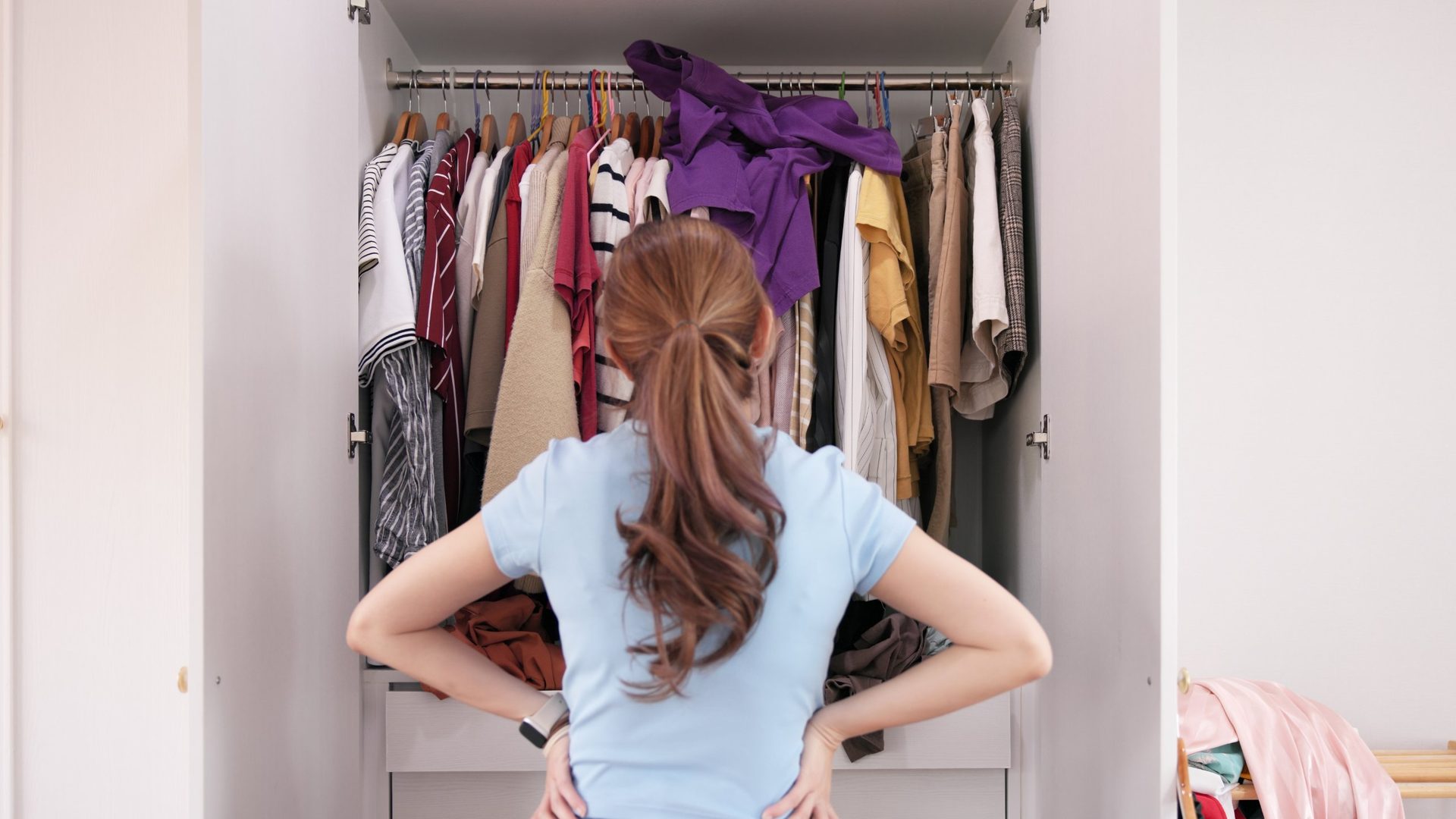
You open your closet, push the hangers to one side, and nothing moves. Your shirts come out wrinkled because they’ve been squished together all week. So you start looking at dressers online, because you’re obviously out of room.
You’re probably not. Your closet has a big chunk of space you aren’t using, and you look right at it every single morning.
Before you buy a dresser that eats up your bedroom floor, take two minutes to find out where that space is hiding. The fix costs about as much as a takeout lunch, and you don’t need any tools.
Most of your clothes are shorter than you think
Think about what you actually hang up. For most people, it’s mostly shirts and tops.
Organized Living, a company that makes closet systems, lists how long common clothes are when they’re on a hanger. A men’s shirt is about 38 to 40 inches (97 to 102 cm). Women’s shirts and blouses are about 30 to 36 inches (76 to 91 cm). Pants folded over a hanger are about 28 to 32 inches (71 to 81 cm).
Only dresses, coats and robes are really long, at about 46 to 66 inches (117 to 168 cm).
Now look at how high your closet rod is. ClosetMaid, a well-known closet shelving brand, says the usual height for a shelf and rod that hold long clothes is about 70 inches (178 cm) off the floor.
Keep those two numbers in mind. They matter in a minute.
Why a dresser won’t fix it
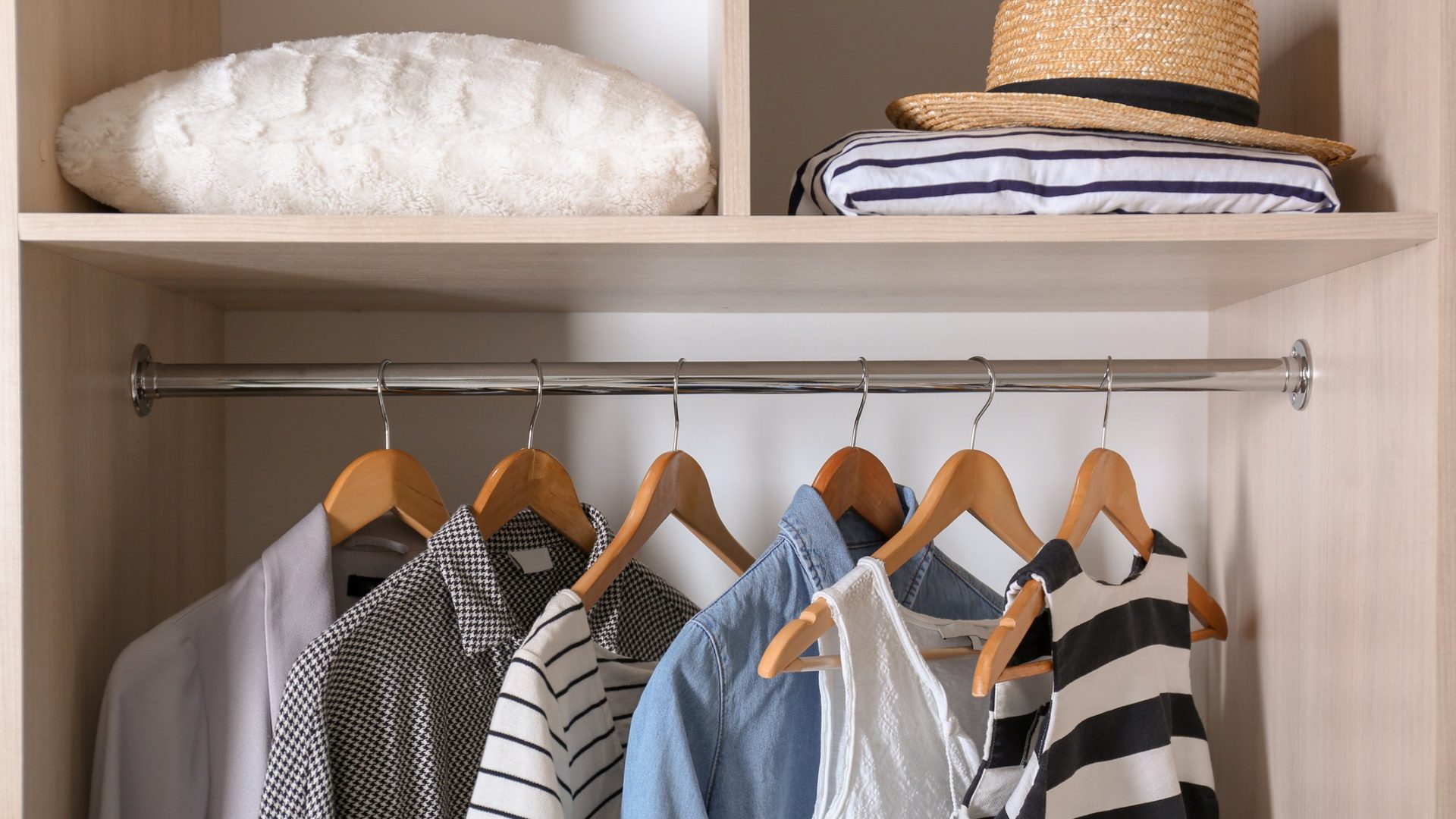
When your closet feels full, it’s natural to add storage somewhere else. A dresser, a rolling clothes rack, bins under the bed. Every one of those takes up floor space you don’t get back. A dresser also means folding shirts that used to hang, and folded shirts wrinkle. You’d be trading one problem for two.
People who design closets for a living see it differently. Organized Living’s guide for home builders says a bigger closet is no substitute for a well-planned one. In its own example, a smaller closet that’s set up well gives you 53% more storage space than a bigger closet that isn’t.
So the size of your closet isn’t the real problem. It’s how the space is being used.
Take a look at the floor of your closet
Open your closet and look down. What’s there?
For a lot of people, it’s a pile of shoes, a laundry basket, maybe a bag that never got put away. It’s the messiest part of the whole closet, so most of us shut the door and move on. Nobody wants to deal with it before work, and it’s easy to think it’s just a junk zone.
Now crouch down and look up. You probably never see your closet from down here, and it tells you more than you’d expect. The answer isn’t on the floor itself. It’s in what’s sitting right above it.
The space nobody uses
Do the quick math. Hang a 38-inch shirt from a rod that’s 70 inches high, and the bottom of the shirt stops about 32 inches (81 cm) above the floor.
That means in a closet like this, there’s more than 2½ feet (about 81 cm) of empty space under your shirts. That’s nearly as tall as a kitchen counter, all along the rod.
What closet pros do with that space
The same Organized Living guide tells builders to give 85% of a regular bedroom closet two rods, one above the other, and keep just 15% for long clothes.
But a built-in second rod usually means drilling into walls, and renters often aren’t allowed to do that.
The fix, and why it takes two minutes
Grab a hook-on double-hang closet rod. It’s also sold as an “adjustable hanging closet rod” or a “double closet rod.” You’ll find one at Walmart, Home Depot and on Amazon for about $15 to $25 (about €13 to €22, or £11 to £19).
It’s a simple piece of hardware: two hooks up top, an arm down each side, and a second rod hanging between them. No drilling, no screws. You hook it over your existing rod like a coat hanger, set the arms to the height you want, and you’re done. Two minutes isn’t a marketing line. It really is that quick.
The trick is where the lower rod ends up. In built-in closets, closet makers like ClosetMaid put it about 42 inches (107 cm) off the floor. With a hook-on rod, your old rod decides how much room you get. The shirts on top shouldn’t touch the clothes below, and the clothes below shouldn’t touch the floor.
An easy test: add the length of your longest top to your longest folded pants, both on hangers. If your rod is at least that high, both rows fit. If not, save the bottom row for shorts, skirts or kids’ clothes. Also check how far it hangs down. Honey-Can-Do’s version at Home Depot drops only 30 inches (76 cm), too short for most men’s shirts.
What goes where:
- Upper rod (your original): shirts, blouses and light jackets.
- Lower rod (the new one): folded pants, skirts, shorter tops and kids’ clothes.
- The end with no lower rod: dresses, coats and robes, so they can hang straight.
Check the weight limit, too. Honey-Can-Do’s holds 25 pounds (about 11 kg), and all of it pulls on your old rod.
The payoff is simple math: same rod, two rows of clothes. ClosetMaid calls a two-rod setup the quickest way to get more closet space, and says it can double your hanging space if you mostly own shorter clothes. No dresser, no drill, no landlord call.
Your closet was never too small. It was set up for long coats when you mostly own shirts. Use the space under your shirts, and that dresser can stay in the store.
Sources: (1) Organized Living, Bedroom Storage 101 clothing guide; (2) ClosetMaid, How To Guides; (3) Organized Living, Closet Design Guide for New Construction; (4) Honey-Can-Do Chrome Adjustable Hanging Closet Rod, The Home Depot; (5) Honey-Can-Do Steel Adjustable Hanging Closet Rod, Walmart; (6) STARTOSTAR Adjustable Hanging Closet Rod, Amazon


