The kitchen is dark, everyone’s in bed, and on the counter a small appliance sits plugged in, exactly as it has every night since you bought it. Firefighters keep showing up at houses where that appliance, untouched for hours, was the thing that started the fire. Their advice fits in one sentence and takes two seconds a night, and it targets a machine that half of American kitchens now own.
The appliance is the air fryer. Fire crews across the country have been repeating the same warning after a string of overnight and unattended fires, including cases where the air fryer caught fire while plugged in but not even in use. Their instruction is as plain as it gets: when you’re done with it, unplug it.
Why this machine, specifically
An air fryer is a compact convection oven: a powerful heating element and a fan stuffed into a plastic-shelled box that lives on the counter. That design concentrates three risks. First, raw power: some models draw up to 15 amps, essentially a full household circuit, which is why fire officials tell owners to give it its own outlet and never an extension cord or power strip, the same rule an electrician applies to all heat-making appliances. Second, grease: every batch of wings coats the basket and element a little more, and accumulated grease is fuel sitting millimeters from a heat source. Third, and this is what the overnight warning really targets, a plugged-in appliance is a live appliance: a failed component, a damaged cord or a faulty control board can energize the element with nobody in the room. Millions of air fryers have been recalled for exactly that fire risk, and fires have started in units that weren’t running.
Unplugged, none of those paths exist. A dead cord cannot start anything, which is the entire logic of the firefighter habit: electricity only flows to the appliance during the minutes you’re actually standing there cooking.
The two-second routine, plus its supporting cast
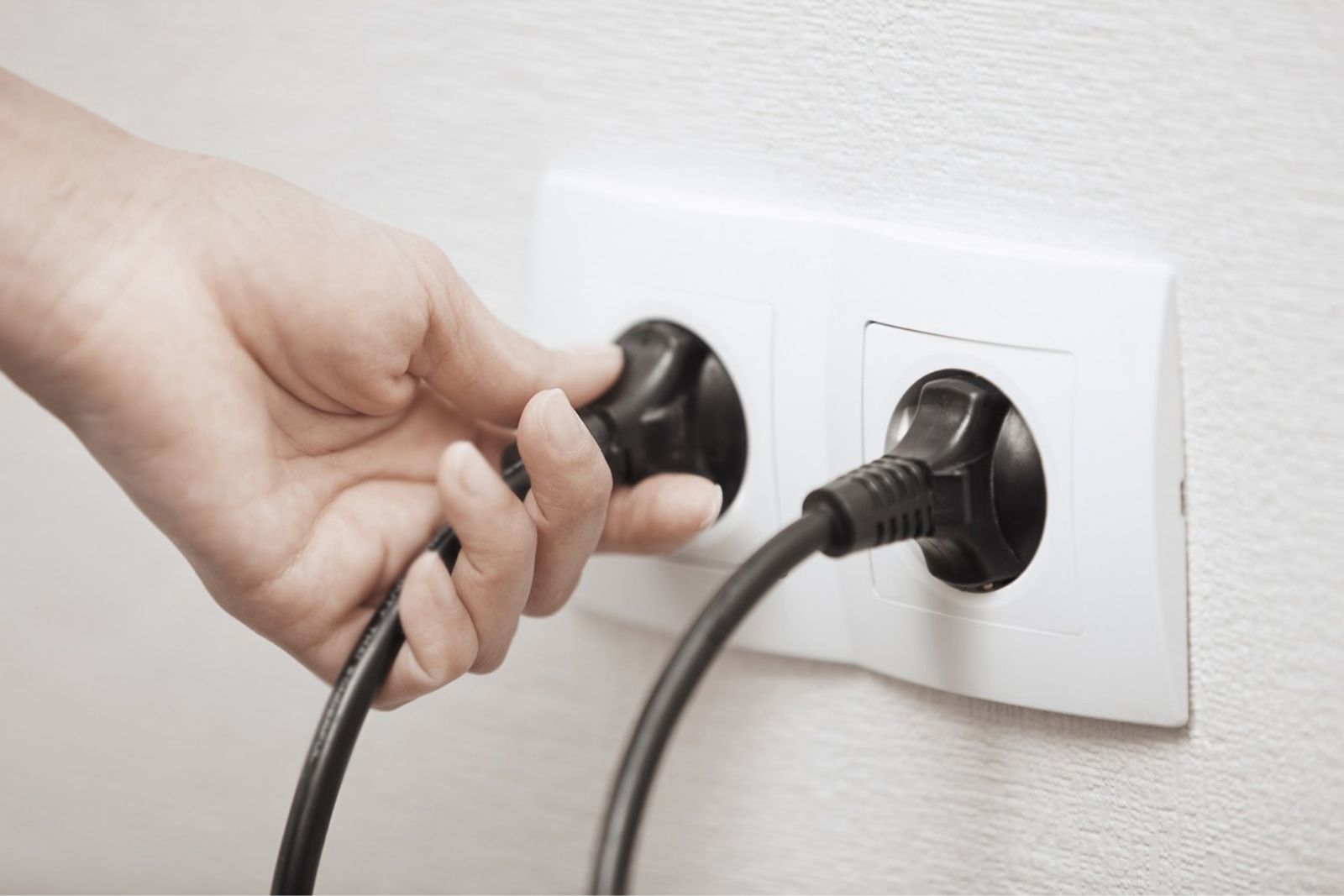
After dinner cleanup, pull the air fryer’s plug. That’s the habit. Around it, fire crews add four reinforcements that cost nothing:
- Extend it to the countertop family. The toaster is the historic member of this club: fire marshals have traced fires to plugged-in toasters that hadn’t been used in days, their worn lever springs sagging enough to switch the element on alone. Toaster ovens and coffee makers follow the same rule: not in use, not plugged in.
- Keep the clearances. An air fryer vents serious heat; it needs open space around it, never a spot under the cabinets, never a stovetop parking spot where a burner knob bumped on can ignite the unit itself.
- Clean the basket and element regularly. Grease is the fire’s first course.
- Never run it unattended. It cooks fast precisely because it runs hot; it earns the same supervision as a stovetop pan.
Check your model against the recall lists while you’re at it, and test the smoke alarms, the detail that turned several of these stories into anecdotes instead of tragedies.
One plug pulled after dinner, every night. It’s the cheapest fire protection ever invented, and it’s the one the people who hose down kitchens keep begging us to use.