
It feels like the last lock of the night: turn the deadbolt, leave the key sitting in the cylinder, and head to bed knowing the door is “plugged” from the inside. Millions of people do it, and most would tell you it adds security. Locksmiths see it differently. According to them, that key in the lock isn’t guarding the door overnight. On several counts, it’s quietly working against you.
The habit matters mainly on doors with a keyed cylinder on the inside, double-cylinder deadbolts and glass-paneled doors among them, and the case against it comes down to three mechanisms, none of which most homeowners have heard of.
Three ways the key betrays you overnight
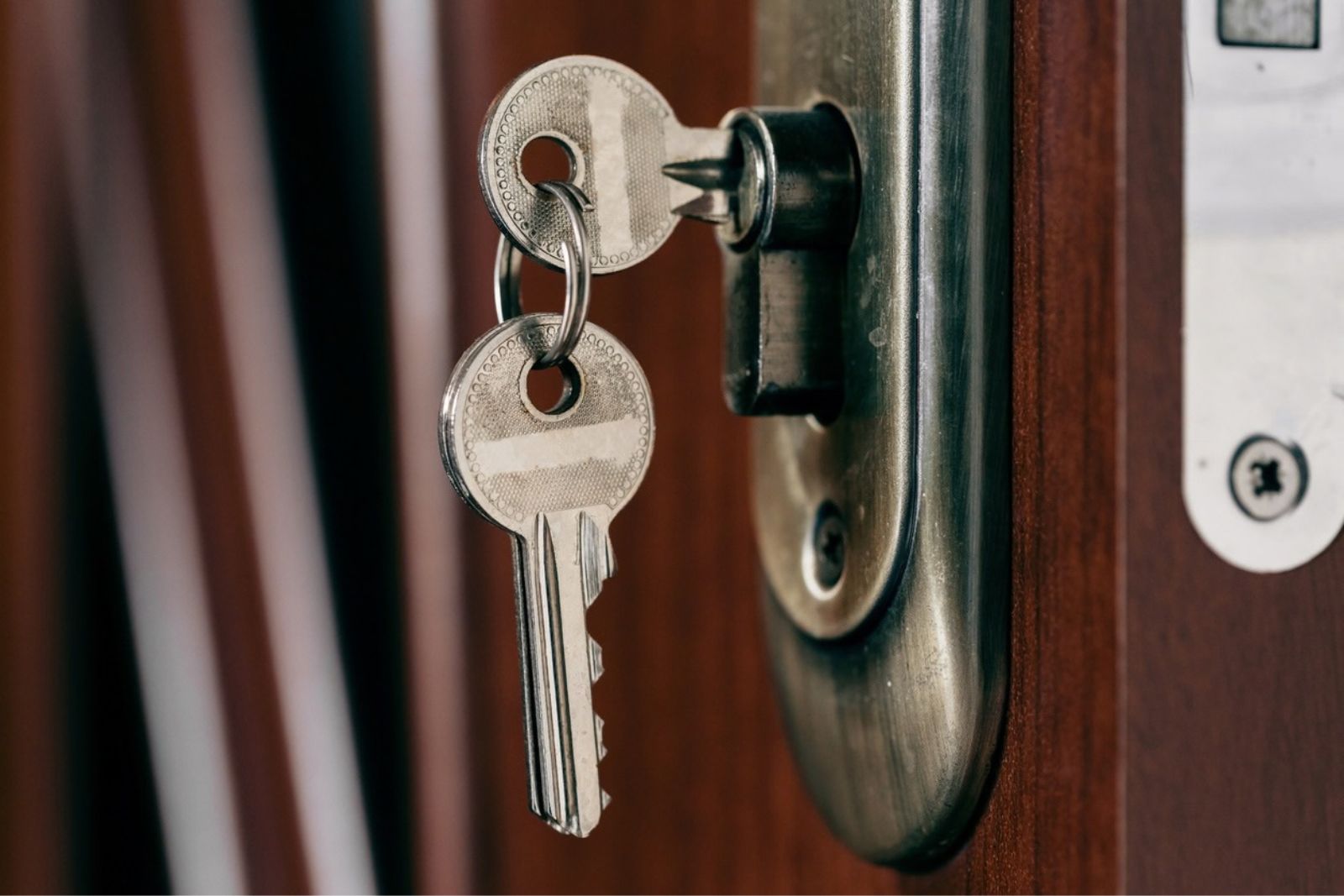
It can help a burglar, not hinder one. A key sitting in a cylinder holds the internal pins in position, and security specialists note this can make some locks easier to manipulate, not harder. Worse, on doors with glass panels or a window nearby, the oldest trick in the burglar’s book is to break the pane, reach in, and use your own key to walk out the front door with full hands and no visible forced entry. And an intruder who entered elsewhere finds, in your front-door key, a discreet exit ready and waiting.
It can lock out the people trying to help you. This is the scenario locksmiths bring up first. On many traditional cylinders, a key inserted inside blocks a key from working outside. If you have a fall or a medical emergency during the night, the family member or neighbor holding your spare stands at the door with a useless key, and so do paramedics. That stuck-key lockout is one of the most common midnight calls locksmiths get, and forcing the door at 3 a.m. costs hundreds of dollars and often the lock itself.
It wears the mechanism. A key is meant to turn and come out. Left loaded in the cylinder for eight hours a night, year after year, it keeps constant stress on springs and pins, and invites the absent-minded half-turn that leaves the bolt not fully thrown.
What to do instead, starting tonight
Take the key out after locking, and give it a fixed home near the door but invisible from any window: a drawer, a hook inside a cabinet, anywhere your hand can find it in the dark in two seconds. That preserves the one legitimate reason people leave it in the lock, a fast exit in a fire, without the downsides; what matters for emergency escape is that every sleeper knows exactly where the key lives. If someone in the house is elderly or at risk, and family holds a spare for emergencies, ask a locksmith about cylinders with an emergency function, designed so an outside key still works even if one is inserted indoors.
While you’re standing at the door
Since the nightly ritual is changing anyway, upgrade it: check the strike plate screws (three-inch screws into the stud turn a decorative plate into a real one), and remember that for keyless modern cars the key’s location at night matters even more than the door’s, because thieves now attack the key’s signal, not the lock.
The key out of the cylinder, in the same hidden spot every night, known to everyone in the house. Same two seconds as the old habit, and this time every one of its effects points in your favor. That’s the trick.


