The bathroom remodel is almost done. New tile, new vanity, a faucet in a warm finish you spent weeks choosing. Then the contractor asks about the towel warmer, and the default answer appears: the same white ladder rail found in hotel bathrooms and home catalogs for years. It works. It also suddenly looks like the one thing in the room nobody chose.
Don’t feel bad for defaulting to it: for years it was simply the most common option. The white ladder hasn’t vanished, but it now has serious company, and the choice is wider, and often cheaper to install, than most homeowners expect.
What’s Showing Up In New Bathrooms
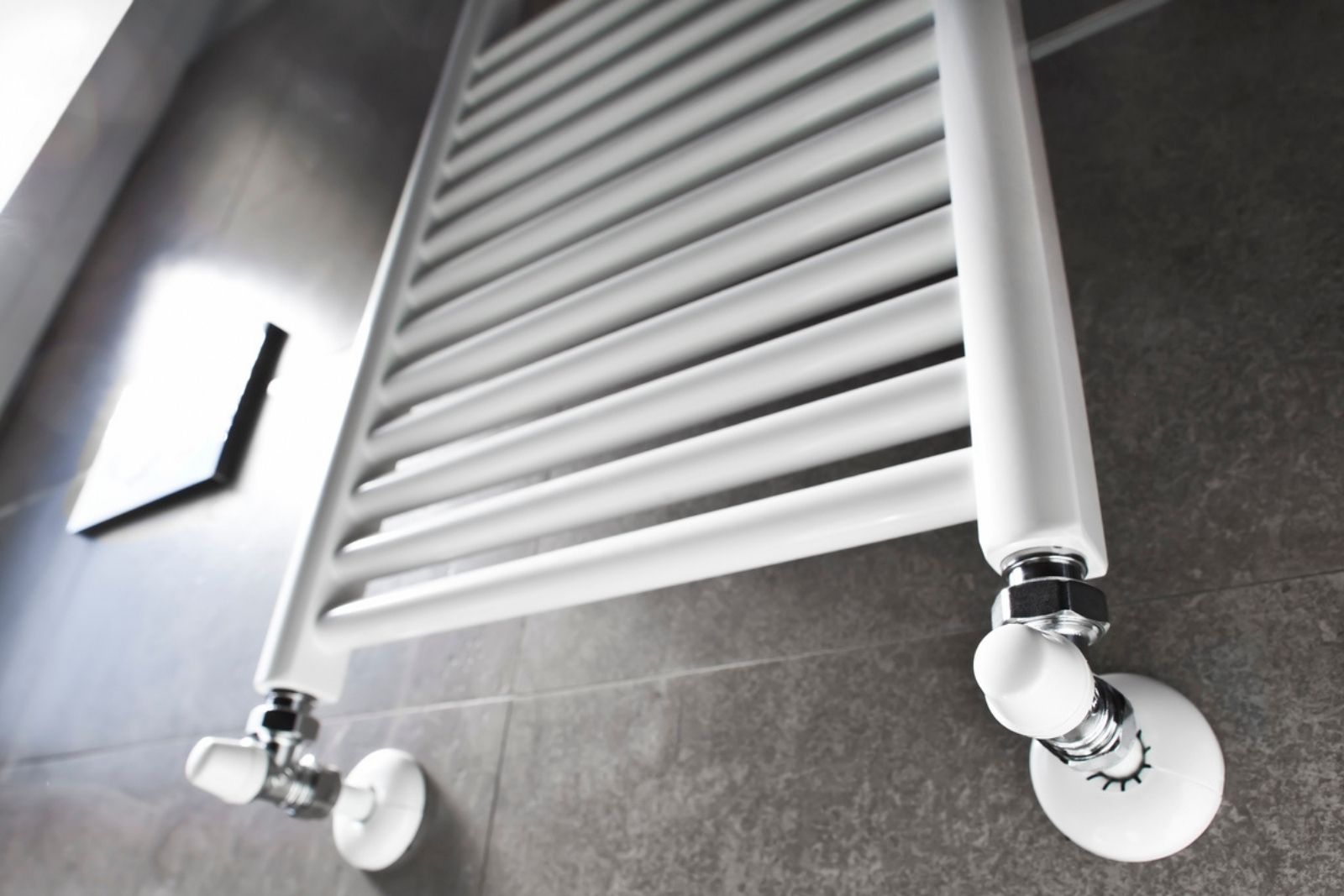
Radiator specialists tracking bathroom trends describe a clear shift in finishes. One retailer’s 2026 roundup notes that “in 2026 the palette is expanding to include deeper bronze tones and antique brass finishes.” Straight ladder rails remain popular, but curved rails are gaining attention, and sculptural designs with geometric patterns, unusual silhouettes or textured finishes are becoming a category of their own.
American towel warmer makers reflect the same widening menu. Alongside brushed and polished stainless, you’ll find matte black and gold finishes, and bars in round, square or flat profiles. It’s easy to see why: a towel warmer is one of the largest pieces of metal on a bathroom wall, and a finish that echoes the faucet or the cabinet hardware makes it read as part of the design instead of an afterthought.
What A Swap Actually Costs
- The unit. Basic models start around $100 to $200, while large premium designs can run several thousand dollars. One major US maker lists models from about $115 to $920.
- Plug-in installation. A plug-in towel warmer mounts on the wall and plugs into a GFCI-protected outlet. It takes 15 to 30 minutes and no electrician, which makes it the easy choice for renters.
- Hardwired installation. A hardwired unit connects to a wall circuit for a cleaner look, and needs an electrician for about 1 to 2 hours, plus mounting.
- Running costs. On a timer for 2 hours a day, an 80-watt model costs about $0.78 a month and a 150-watt model about $1.46, according to WarmlyYours’ sizing guide. Left on around the clock, those figures rise to about $9 and $18 a month.
If you’re also short on storage, a towel warmer is only half the answer: these bathroom towel storage ideas show how designers handle the rest of the wall.
Before You Rip Out The Old One
Check what you have first. If your current towel radiator is connected to the home’s hot-water heating system rather than plugged in or wired, replacing it means working on the plumbing loop, and that’s a job for a plumber. For electric models, every unit should sit on a GFCI-protected circuit, away from direct splashes, and any hardwiring belongs to a licensed electrician.
Finally, size it to your habits. A big hardwired rack makes little sense if you only warm one towel after a shower. A small plug-in model on a timer may give you the look and the comfort for a fraction of the cost.
Match the finish to the faucet, pick plug-in or wired, and put it on a timer. That’s the trick.