

Somebody stood on this deck one spring morning with a floor sander in one hand and a serious decision to make. The boards were a tired, sun-faded red that had been peeling for a few summers too many. The conventional move was to strip it down and refinish it in another wood stain, probably the same red, probably peeling again by 2027. They did something nobody recommends out loud. They painted it. Gray. Flat. A color the stain purists would call a mistake.
Then the neighbors started asking when the new composite boards went in.
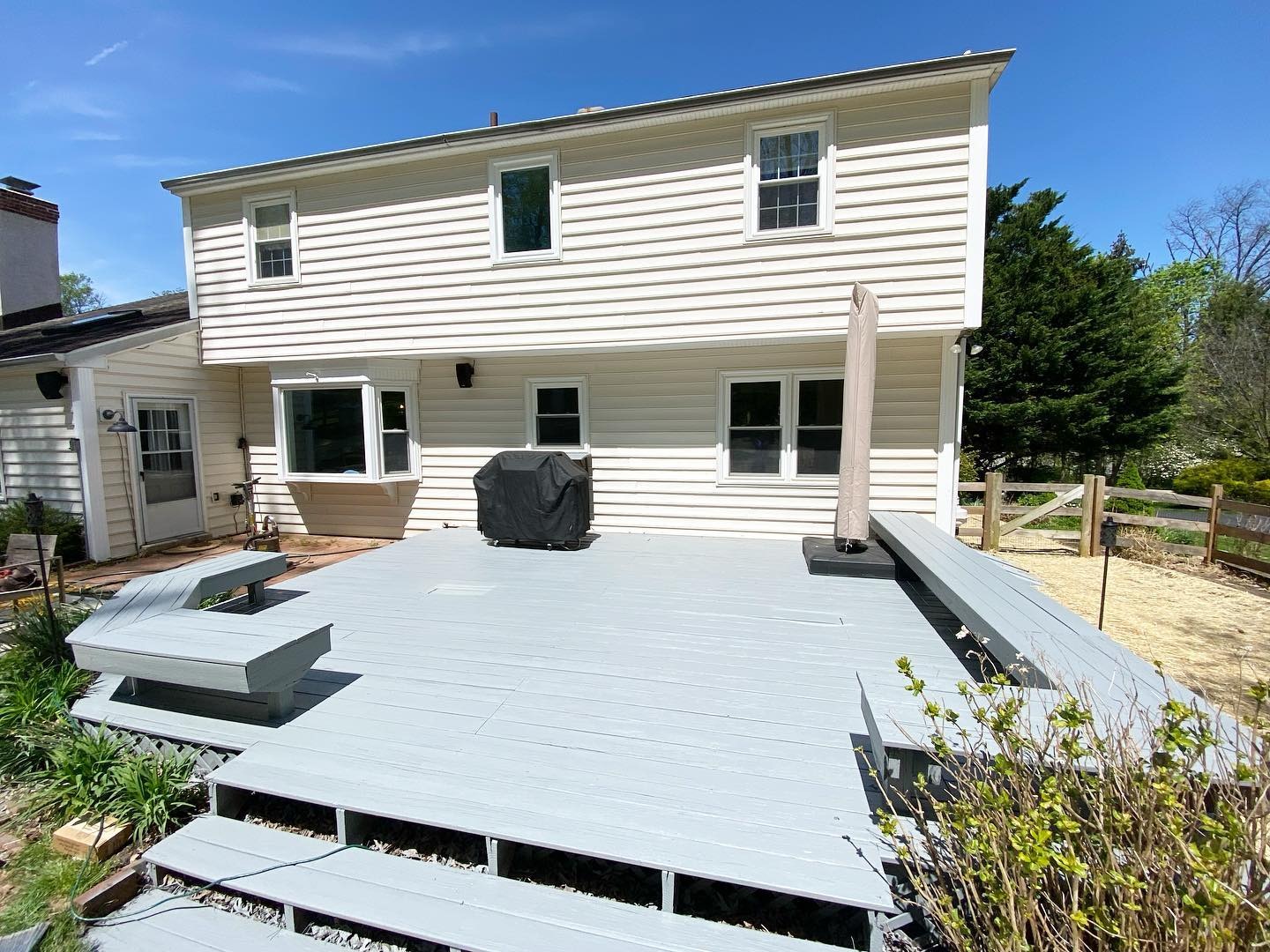
That is not a new deck. Same lumber, same framing, same benches, same stairs. The only thing that changed is which paint can got opened. A real composite rebuild at this size runs fifteen to twenty thousand dollars once you factor in demo, new joists, hidden fasteners, and labor. This owner spent one weekend and around three hundred dollars in materials. The gap between those two numbers is the whole reason this story is worth pausing on.
Years of red stain, years of sun
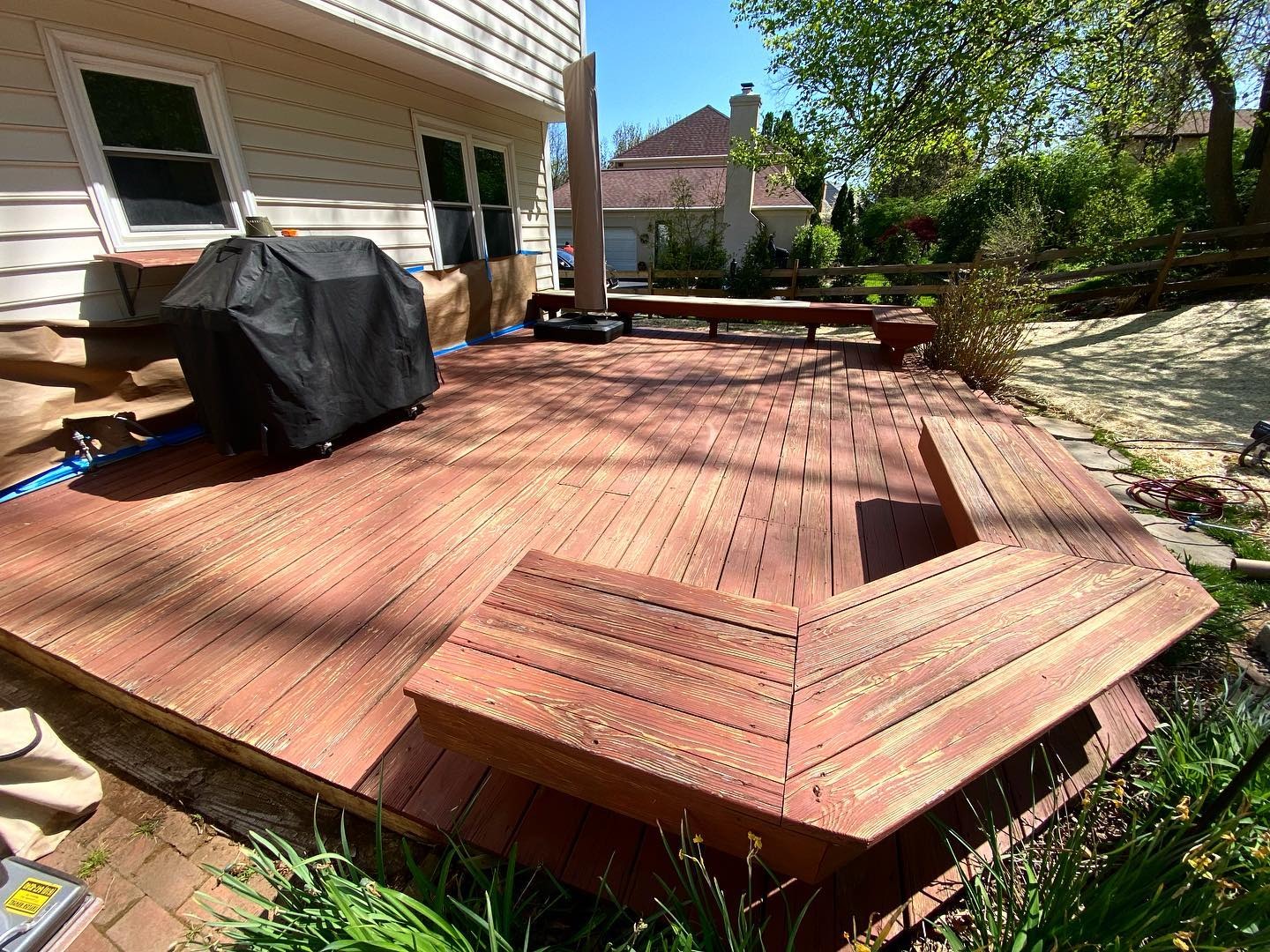
Look at those planks up close. The red is not one red anymore. Some boards went chocolate in the shade, some went pink where the sun hit hardest, and a few are peeling in long strips you could pick off with a fingernail. This is what every solid-stain deck eventually turns into. The grain stopped being visible the first time someone put opaque stain on it, so the usual “you’ll lose the wood grain” argument never applied here. There was no grain left to save.
The mess before the paint touched anything
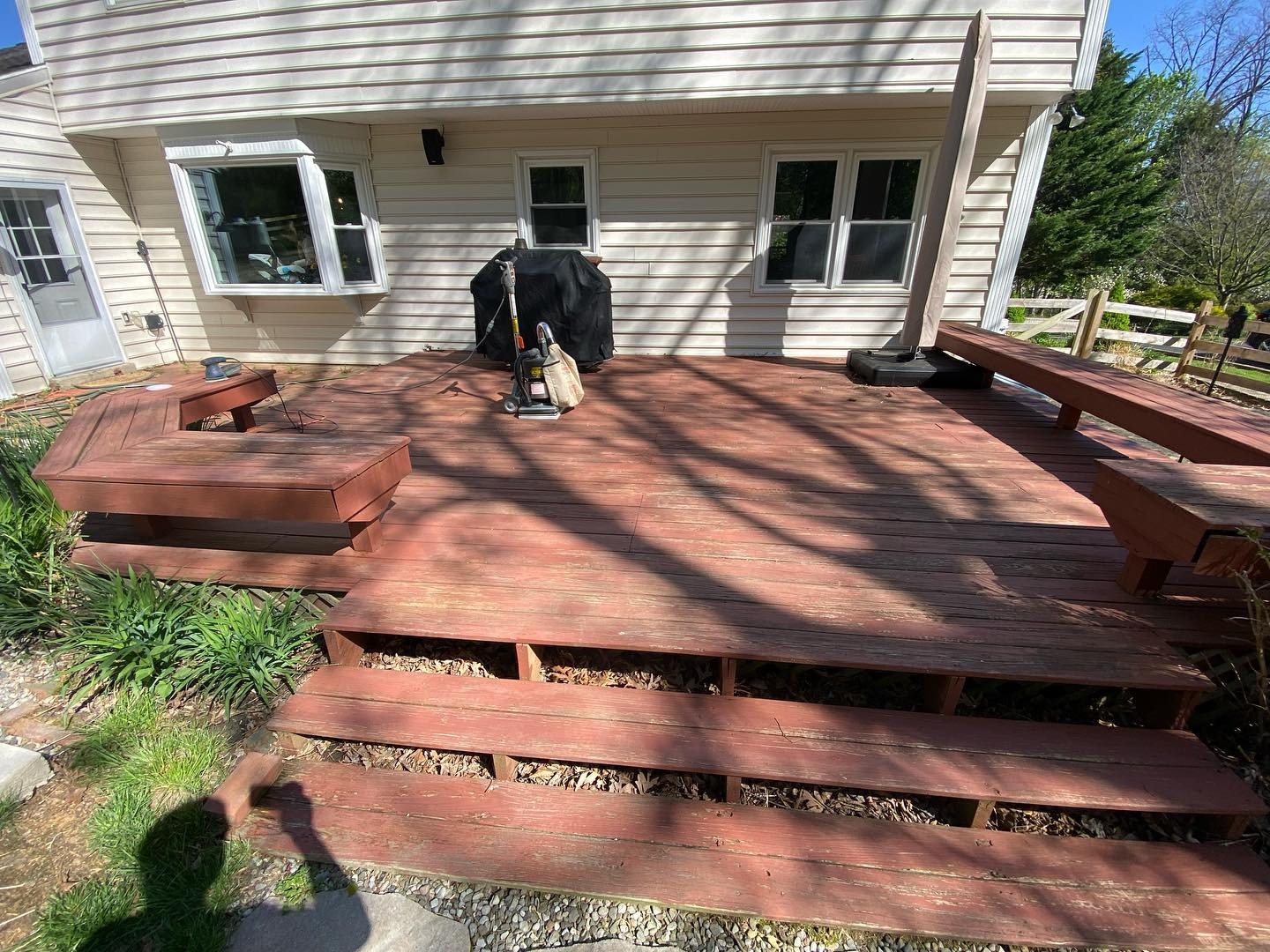
Prep is the part nobody posts about, and it is also the part that decides whether the paint lasts three summers or ten. A rented floor sander knocked down the loose and flaking areas until the surface was rough enough for primer to bite. The whole deck got washed, dried, and primed with a product made for old, previously coated wood. Skip this step and the gray will peel in the same spots the red peeled, only faster.
Three paint choices did almost all the work
The hard thinking on this project was not in the labor. It was in picking colors that would fool the eye.
One. The main deck boards got Behr Slate Gray in a flat finish. Gray is the color that reads as composite in the American backyard. Trex Island Mist, TimberTech Driftwood, Fiberon Weathered Gray, every top composite line sits in this exact cool, muted range. When a passing neighbor sees a deck this color, their brain fills in the rest. The flat finish matters too. Painted wood usually gives itself away with a slight shine in direct sun. Flat deck paint reads as dusty and matte, the same way real composite reads.
Two. The step risers and the fascia edges got a deeper charcoal gray. That two-tone move is lifted from how actual composite installers finish a deck. It hides board ends and worn edges without the eye noticing, and it does more work than most people would guess.
Three. The siding stayed cream, the grill stayed black, the umbrella stand stayed beige. Nothing else in the backyard got touched. Leaving the surroundings alone is what makes the new deck color pop the way it does.
Up close, the illusion holds
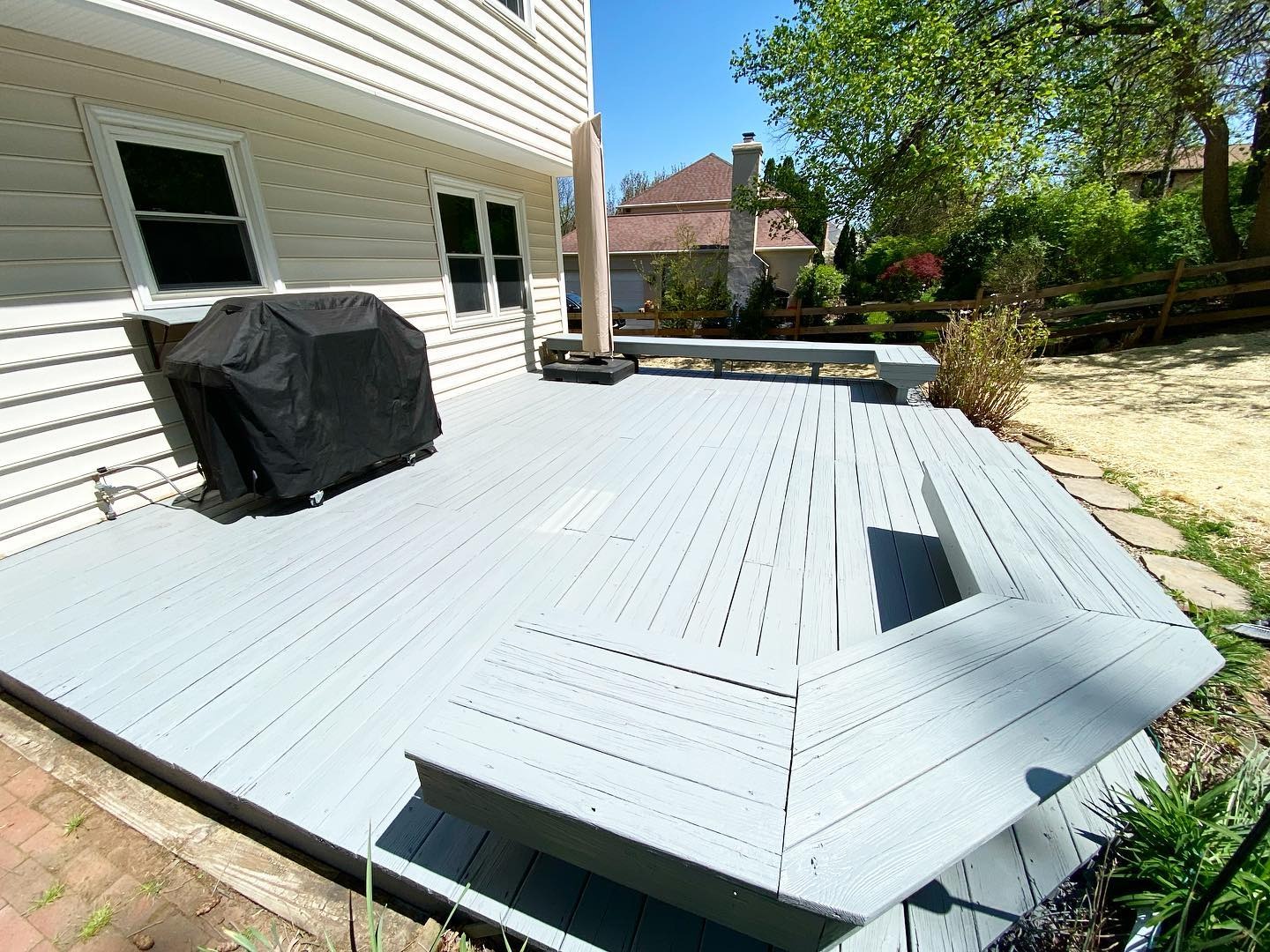
Stand on the deck and look down. The planks read as one surface instead of a patchwork of faded boards. The bench sides got the darker gray, so the places where the wood was most worn now look like intentional trim instead of damage. If you did not already know this was painted wood, you would not know.
Same corner, same bench, different paint job
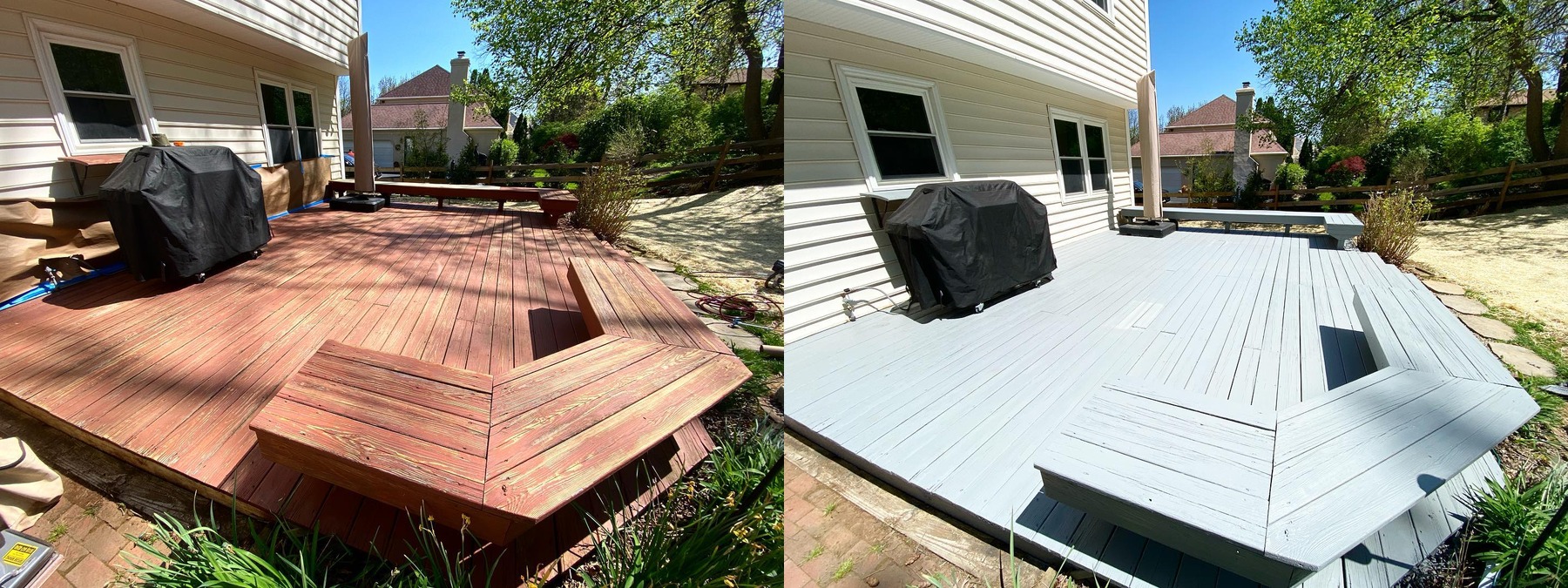
Same hex bench in the foreground. Same grill in the same spot against the siding. Same umbrella stand. Same neighbor’s cream house with the brown chimney in the background. Nothing moved. That is the whole reason this comparison lands. One version looks like a deck someone has been meaning to get around to for three summers. The other looks like it came with the house last week.
Who this actually works for
Be honest about what you have before you grab a brush. If your deck is bare cedar or fresh pressure-treated lumber with grain still showing, listen to the stain purists. Paint is a one-way door, and once it goes on, no stain will ever bond to that wood again.
But if your deck already wears a solid stain that is blotchy and peeling after too many weathers, the choice changes. The real comparison stops being paint versus stain. It becomes paint versus a full strip, sand, and refinish cycle that will cost real money and eat real weekends. For a deck like that, a flat gray paint in a composite-matching color is one of the cheapest and most dramatic upgrades a backyard can get.
What a weekend and sixty dollars really buys
A few real limits before you drive to Home Depot. Deck paint needs a recoat every three to five years. High-traffic lanes will wear before the edges do. Up close, you can still spot brush marks if you look for them. None of that is a dealbreaker on a deck that was already past the point of a proper refinish.
For the right deck, under the right conditions, one gallon of the right paint can buy you something that reads like a twenty-thousand-dollar composite rebuild from the yard. Most homeowners would take that trade without blinking.