Your coffee maker, toaster, air fryer and mixer crowd the counter, so after every use you start hauling them into a lower cabinet. Soon the heaviest one is back by the sink, because lifting it got old. You’re not lazy: most cabinets were built for dishes, not machines, and more and more kitchens are changing that.
Hidden, not banished
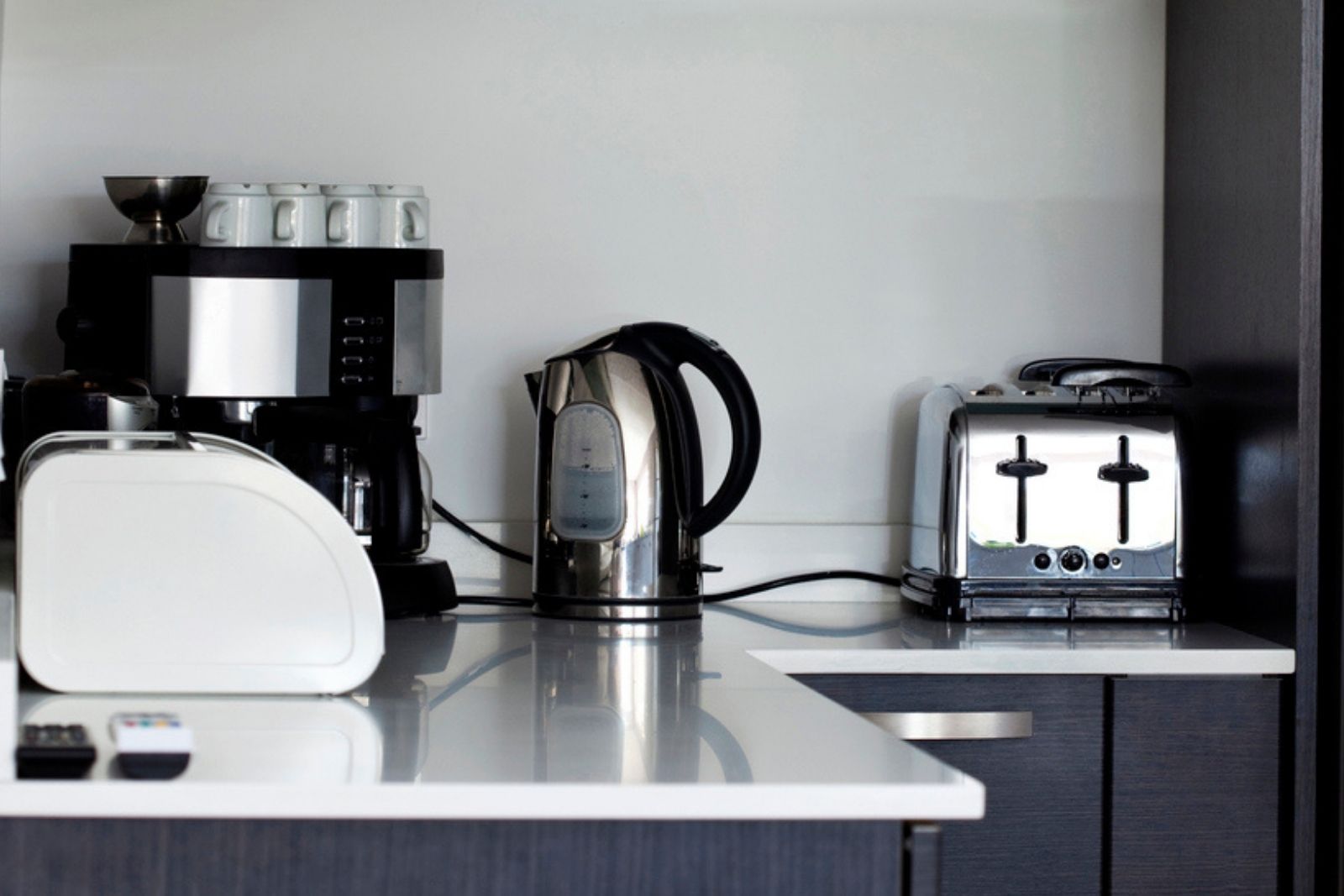
The counter isn’t losing its machines. It’s learning to hide them. The National Kitchen & Bath Association’s 2024 Design Trends report counts small appliances behind cabinet panels among the biggest trends for the following three years.
Houzz says the appliance garage is making a comeback as kitchens fill up with more gadgets. The idea is simple. Your coffee, breakfast or baking station lives behind a door that closes like any other cabinet. So how does that door actually work?
The door that gets out of the way
An appliance garage can sit right on the counter, fill a tall cabinet or rise out of a lower cabinet on a lift. Wherever it goes, the door has one job: stay clear of both the machine and the aisle.
Pocket and lift-up doors park the panel out of the opening, so steam and the appliance itself never fight the door. Tambour doors roll upward. Pocket, lift-up or tambour doors are the answer where a swinging door would block your prep space or the path through the kitchen. Inside, adjustable shelves make room for machines of different heights and for the clearance each manufacturer asks for.
But before you pick any of it, there’s an important first step.
Start with the machines, not the cabinet
Before ordering a single cabinet, do a dry run with your appliances right where they sit now. Rank them. The ones you use most often get the easiest reach, on shelves near working height, so they slide forward instead of being lifted. That’s the answer to the heavy one parked by the sink. Occasional equipment can go to deeper storage. Our countertop organization ideas can help with that first sort.
Then measure every move, not just the box. Write down the width and depth. Then measure the height with the lid closed, the lid raised and the tank removed, with bowls fitted and handles extended. The tallest of those numbers goes on the cabinet plan. Check it against the clearance in the manual before you settle on shelf spacing.
Power comes next. Have an electrician place the outlets. The U.S. Consumer Product Safety Commission says to keep cords away from hot surfaces, and to keep appliances away from the sink unless the outlet has GFCI protection.
Finally, rehearse the cleanup. You should be able to slide a machine forward, empty the crumbs, wipe the splashes and close the door without moving anything else.
Darlene Baer demonstrates it in the video “Kitchen appliance garage.”
When The Toaster Has To Stay Out
Hidden doesn’t mean every machine can run behind a door. One toaster manual forbids use in an enclosed appliance garage and warns that nearby cabinets can catch fire. Check the manual for anything that heats, and keep it on the open counter if needed.
Unplug countertop appliances when you’re not using them. If an outlet feels warm, a plug fits loosely or a machine gives even a slight shock, stop and call an electrician.