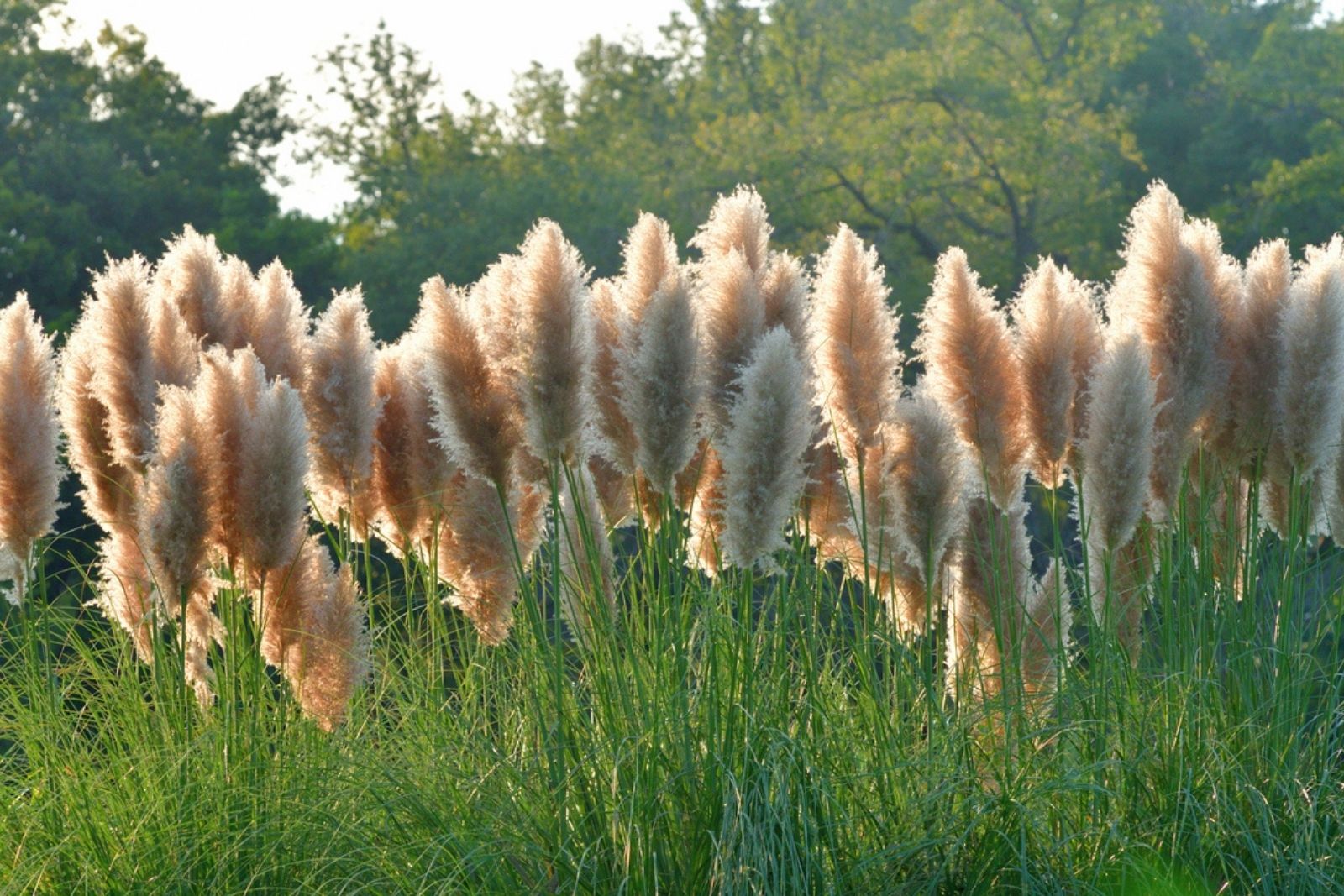
The feathery stems look perfect in a floor vase, and that nursery clump promises instant drama beside the patio. Before you reach for the bundle, though, check the Latin name on the tag, and your local rules. In more and more places, this decorating favorite is no longer welcome.
The bundle that’s off limits in Spain and France
“Banned” doesn’t mean the same thing everywhere. In Spain, the entire Cortaderia genus is off the table. You can’t sell it, transport it or plant it.
France has prohibited C. selloana since 2023. Since then, producing, distributing or planting it has been prohibited.
In the United States, rules can be narrower. Ashland, Oregon, restricts new pampas plantings within 30 feet of a structure. Washington lists it as a nonregulated Class C noxious weed. That means control is encouraged, not required. Hawaii classifies both C. selloana and C. jubata as noxious weeds.
So why all the fuss over a pretty grass? The answer is hiding in those plumes.
What’s tucked inside those silvery plumes
Pampas fruit is tiny and light. Wind, vehicles and people can all move it along. Bare, disturbed soil helps the seeds establish. A single stand can produce millions of seeds a year and send them several miles.
Once it escapes, it pushes out native plants. Its dead leaves and stalks build up into a dense, dry fuel layer. And those graceful leaves have saw-like edges that can cut skin. In Florida, UF/IFAS now rates the plant invasive and recommends it for no landscape use.
That raises the real question: what should you do if the bundle is already in your cart, or the clump is already in your yard?
Before you buy, move or dig it up
Start with the tag. Look for the Latin name, Cortaderia selloana or C. jubata, instead of guessing from the plume. The two are difficult to tell apart. Then check the rules where you live. Look up your state agriculture rules, your county weed-control rules and your city’s fire-landscaping rules before you buy, move or throw out a single stem.
If a clump has to go, Washington’s weed board suggests a careful order. First, put on leather gloves and protective clothing. Next, cut and bag every flower head before you dig or cut the clump itself. You can pull small seedlings or grub them out by hand. For an established plant, a shovel, mattock or Pulaski lets you remove the entire crown and upper roots.
Then don’t leave the spot bare. Mulch it, or replant with a noninvasive species, so any seed that sprouts has competition instead of an empty bed. If that empty corner needs a fresh look, a few fence-line landscaping ideas can get you started. Just choose species your local extension service recommends.
Matthews Landscape shows how a pampas grass clump comes out of the ground.
Why The Vase Isn’t Off The Hook
A cut stem isn’t automatically outside the rules. In France, flower stalks that may still carry germinable seed are prohibited unless they can be shown to be sterile.
Pulling up a plant and moving it carelessly can spread seed and let it resprout. Keep seed heads bagged, follow your local disposal instructions, and ask a county weed coordinator before using herbicide on a large clump.