You pull out your plastic cutting board to slice tomatoes, and your knife crosses grooves left by years of dinners. Those worn lines are drawing new attention to an everyday kitchen habit, especially if that same board handles everything from sandwich fixings to weeknight meal prep.
In short
- Wooden cutting boards, including maple, are the alternative to plastic.
- Chopping on plastic boards releases tiny plastic particles that can reach your food.
- In bacterial-contamination tests, wood held fewer bacteria than plastic.
- Wood boards need hand-washing and regular oiling.
Plastic leaves something behind
View in gallery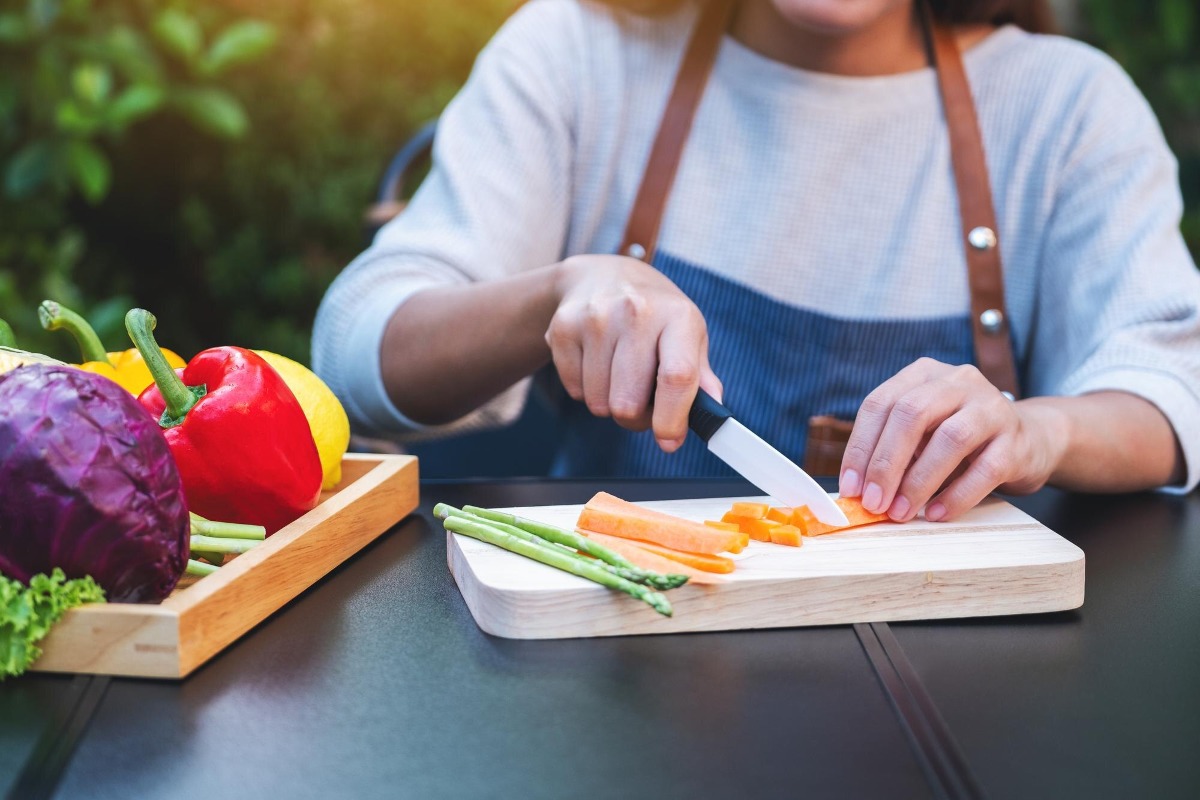
You slice a carrot for dinner, then scrape the pieces from your board into a pan. The board looks much as it did before. Yet a knife can take tiny bits of plastic with it as it cuts, and some of those bits can land in your food.
A 2023 study in the American Chemical Society journal Environmental Science & Technology examined 2 common cutting-board plastics: polyethylene and polypropylene. Cutting on both released microplastics. In the study, plastic boards produced between 1,536 and 7,680 tiny flecks that could end up on the knife and in food.
The type of board made a difference. Polypropylene boards released 14% to 71% more particles than polyethylene boards in the researchers’ tests. It is a detail you cannot spot while making dinner, which is part of what makes the familiar plastic board worth another look.
Wood gives you another surface
A maple board brings a different feel to the same kitchen routine. You set it out, chop what you need and bring the food to the stove. The appeal goes beyond how wood looks on the counter: experiments comparing wood and plastic boards found a difference in what happened to bacteria left on their surfaces.
In one set of contamination tests, 99.9% of bacteria on wooden boards had died after 3 minutes. Bacteria on plastic did not die off the same way. Another study of contaminated boards found that bacteria could be recovered from plastic for minutes to hours and could multiply when a board was left overnight.
Those findings give wood a practical reason to sit beside the knife you use every day. If you have been looking at your plastic board and wondering what each new cut leaves behind, maple offers a straightforward alternative: a wood surface for the chopping you already do.
A little care keeps wood ready
After dinner, a wooden board asks for a small routine. Wash it by hand rather than putting it in the dishwasher. Then give it a place in your usual cleanup, alongside the knife you have just used.
Every few weeks, apply food-grade mineral oil. Care guidance for maple and other wooden boards recommends it to help keep the wood from drying out and cracking. A mineral oil and beeswax finish is another recommended option.
That is the everyday trade you make when you choose wood: a little attention to the board in exchange for leaving plastic out of your chopping routine. You do not need a new way to cook dinner. You need a surface you feel good reaching for when it is time to cut the vegetables.
The limit
Wood still needs proper cleaning and upkeep; oiling does not replace washing. The USDA says both wood and nonporous plastic can be used for raw meat and poultry, so its guidance is not a recommendation to abandon plastic. It also recommends separate boards for raw foods and for fresh produce and bread. And while the research explains why you might choose wood, it does not establish how many kitchens have switched.