Scroll through enough home accounts and you learn the pattern. New floors, new furniture, three thousand in lighting, and a reveal captioned “best decision we ever made.” This dining room did none of that. Nobody ripped the carpet up. Nobody bought a chair. The pendant was already there before a wall was touched. A pro painter in the UK walked in, picked a sage green, and spent the long hours doing one thing most of his industry quietly skips.
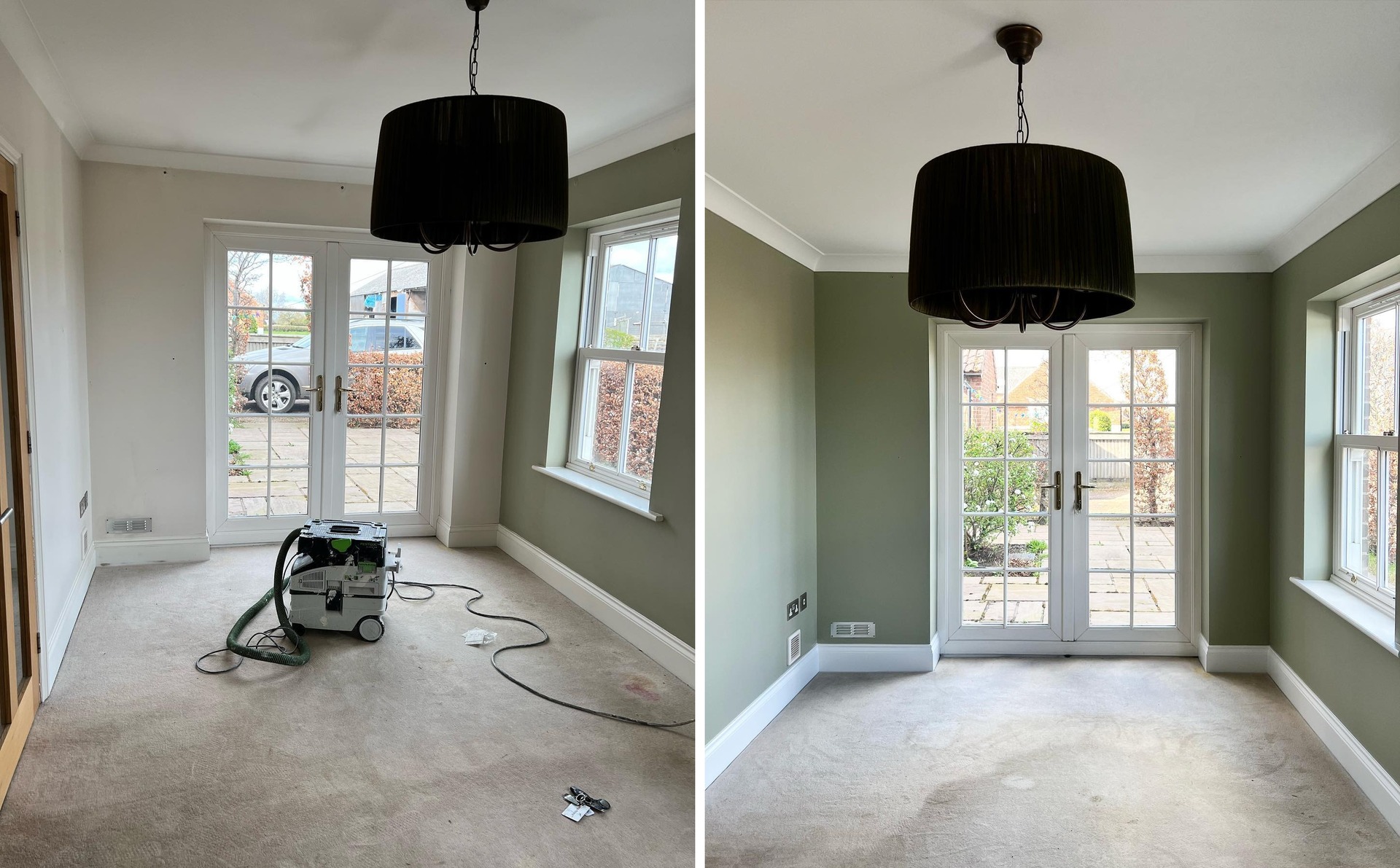
The painter is Colour Coated Restorations. In his caption he tagged Dulux Trade Gooseberry Fool 3 on the walls, Benjamin Moore Scuff X Satin on the woodwork, then dropped a quiet little line almost nobody picked up on. “Hand finished for a change.” That line is the whole story.
The morning the job started it looked like nothing
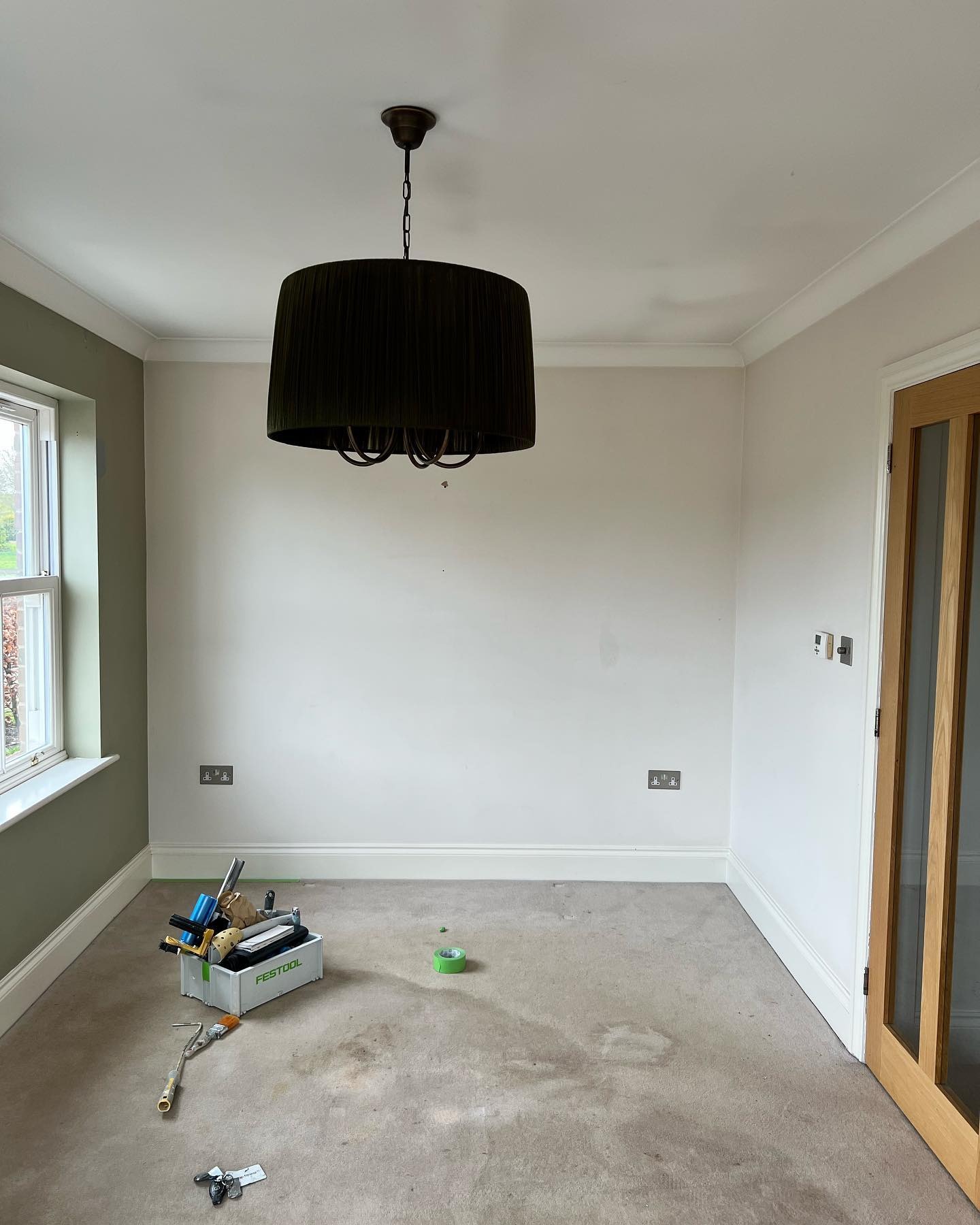
Sander in a Festool box. Green painter’s tape still down. Footprints on the carpet. The point in a renovation where you walk in and wonder if any of this is going to work.
And yet it is a nice room already. Good ceiling height. Oak doors just out of frame. A pretty sash window. A pendant someone clearly thought about. All in place before he arrived.
He tested the sage on the wall before committing
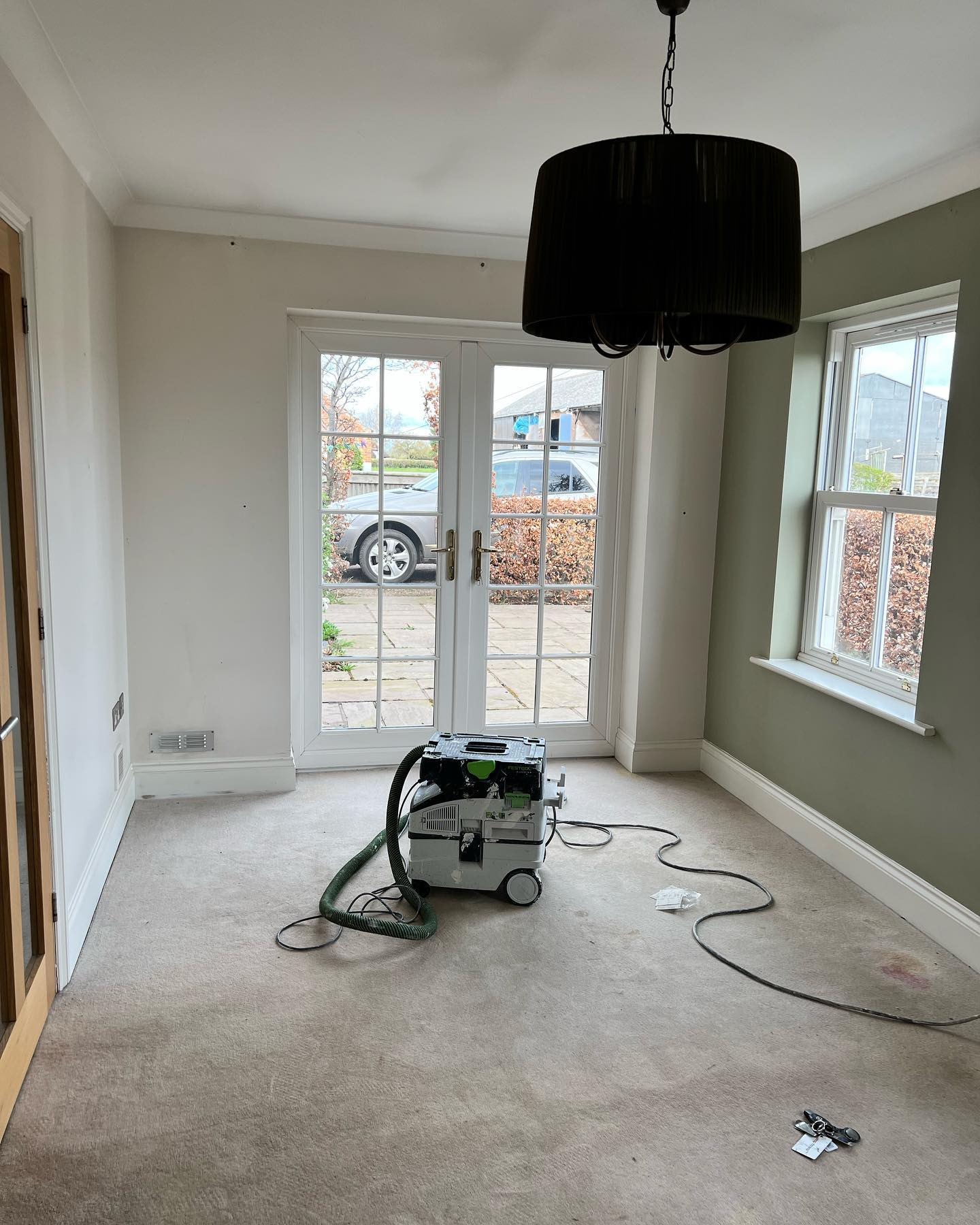
See that soft wash of green peeking through on the right wall? That is him trying the color on in real light. A lot of sages look fine on a card and read gray and sad on an actual wall. Anyone who has been burned by a paint chip learns to check first.
Why Gooseberry Fool 3 was the right call
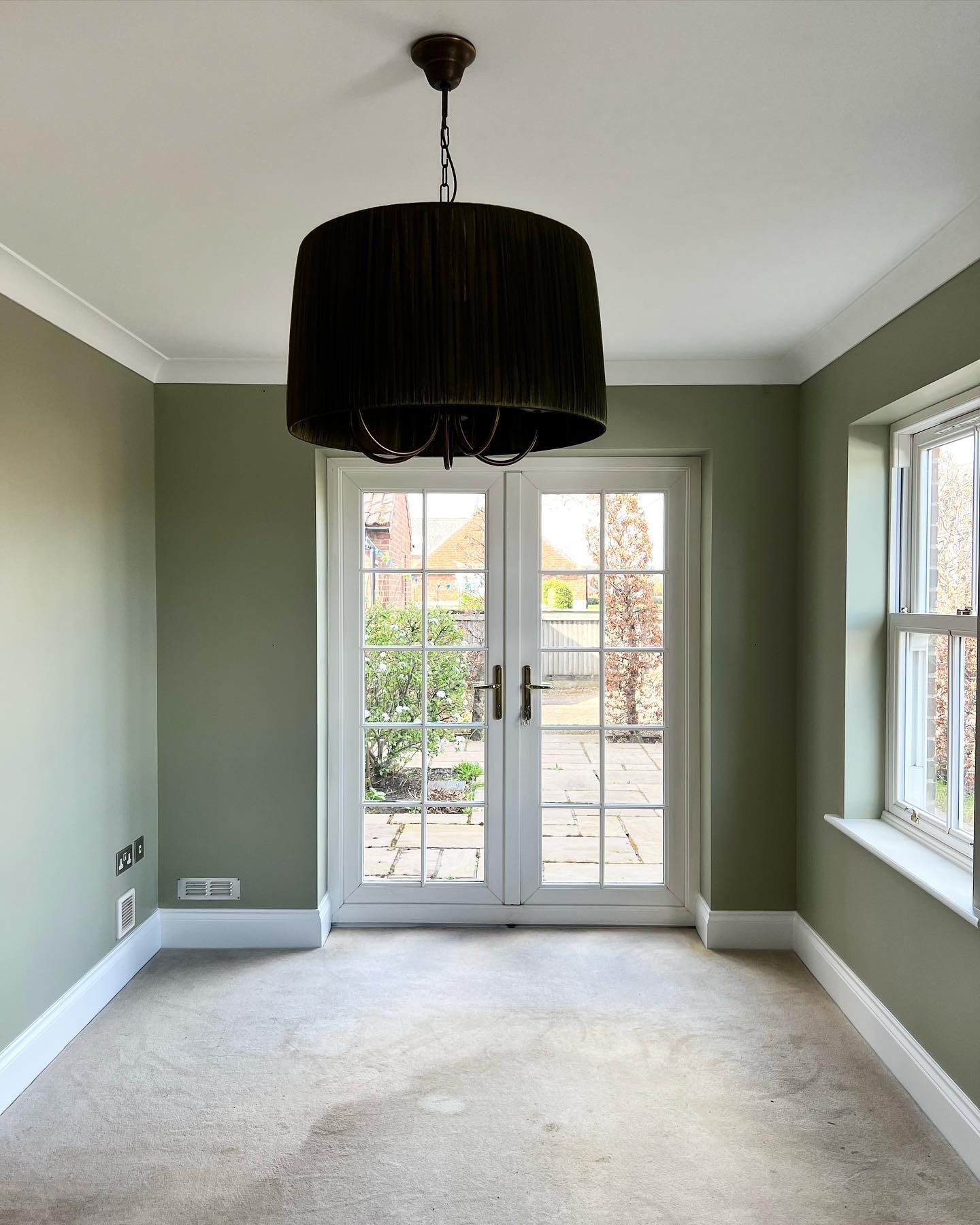
Same garden. Same doors. Same carpet. All that changed is the walls stopped fighting the room.
Gooseberry Fool 3 is one of those greens that behaves. Soft at midday. Deeper after the light drops. It does not look trendy. It looks like something a family picked once and lived with for thirty years.
The pendant finally has somewhere to belong
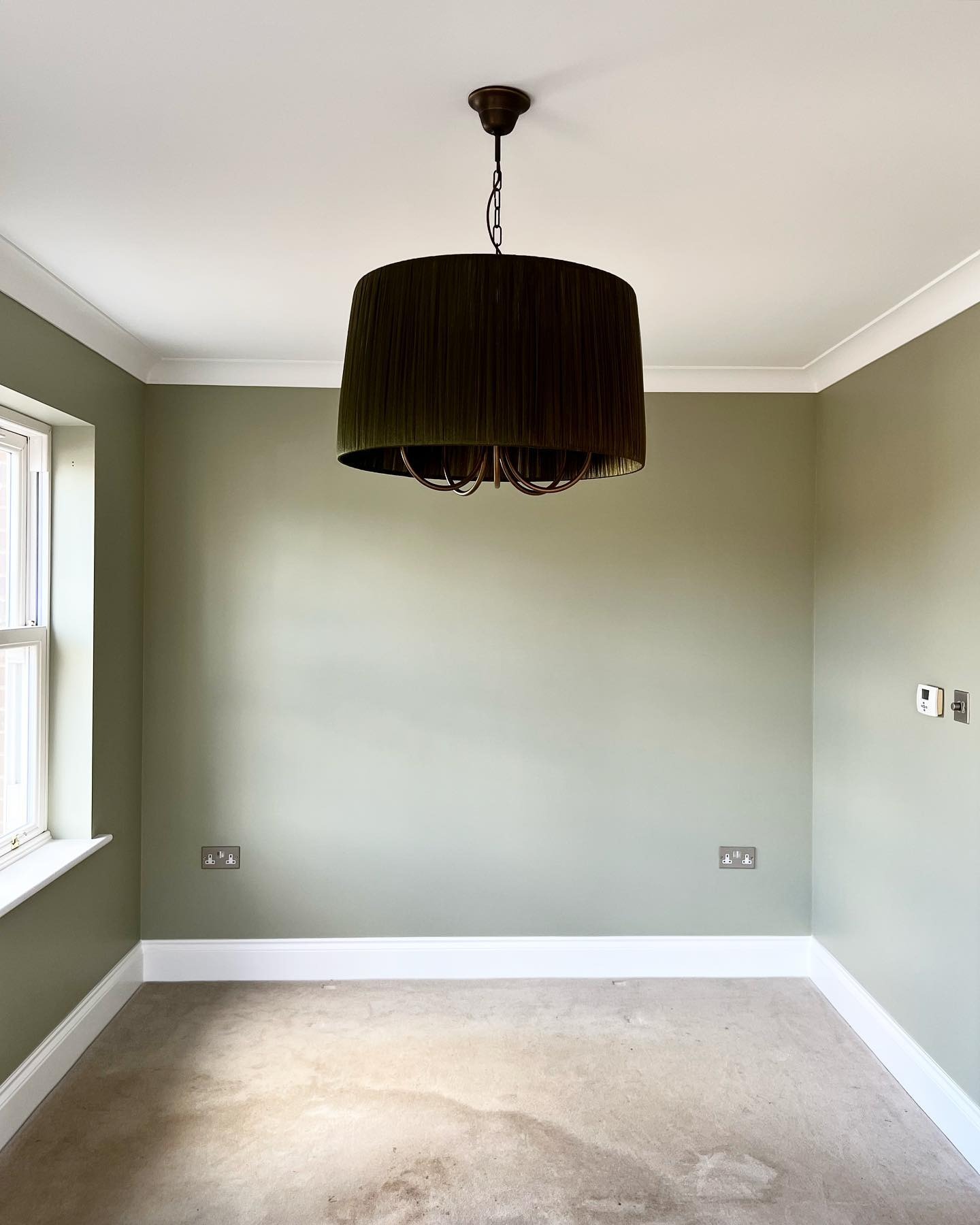
The pleated shade stops looking lonely. The bronze on the canopy picks up something you cannot quite name. You just feel the room settle.
Now the part almost nobody notices
Most sage dining rooms on the internet fall apart in the same spot. The paint goes on, the photo looks fine on your phone, something feels off and you cannot say what. Usually what you are seeing is cheap looking trim.
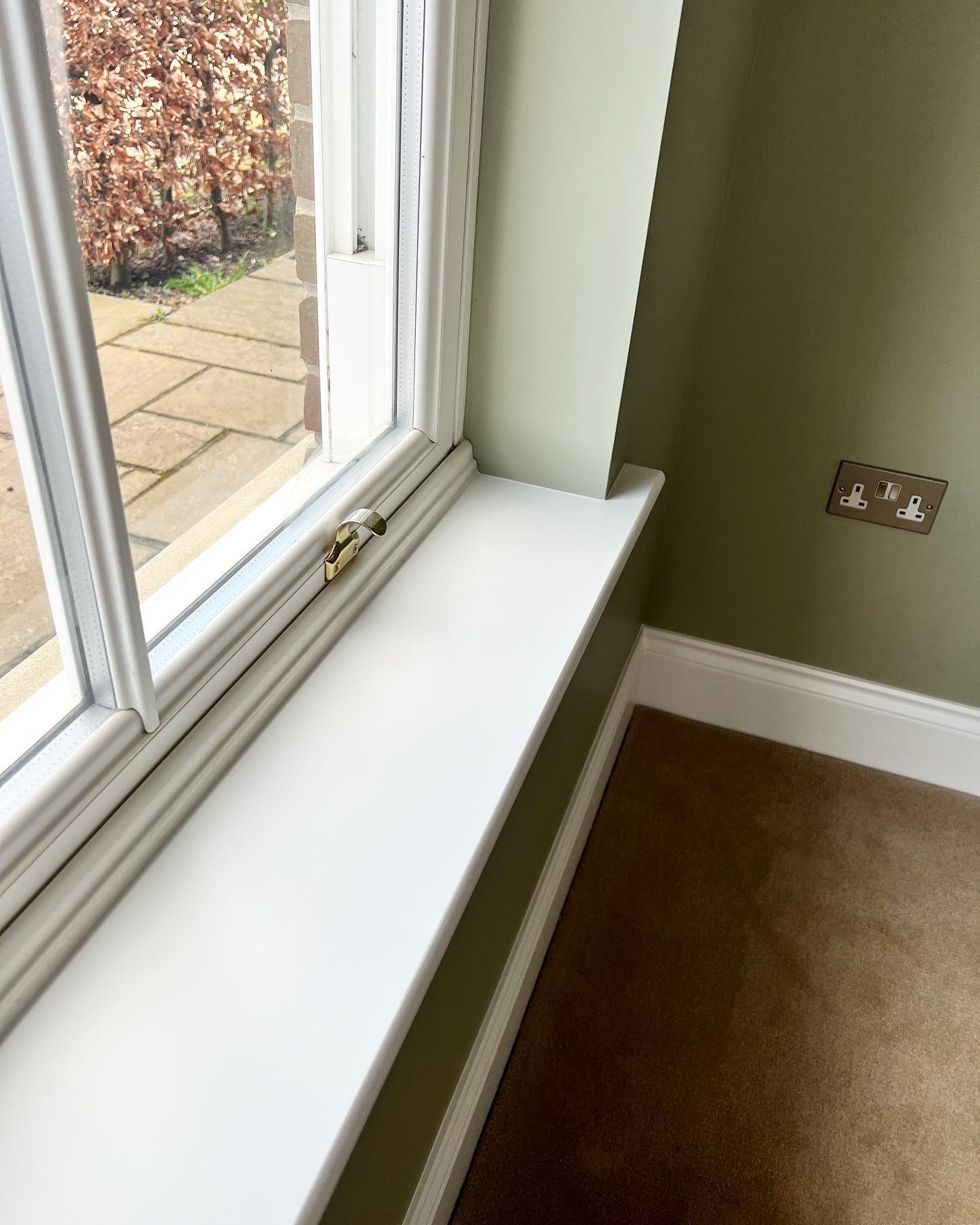
Pull in on the top of that sill. Notice anything? Soft lines running with the grain. Almost invisible. That is a paintbrush in a human hand.
Which is a strange thing to brag about in 2026. Almost every pro sprays trim now. A sprayer finishes a whole room’s woodwork in the time it takes to coat two windowsills by hand, and the result comes out flat as a car hood. Clients ask for it. Teams expect it. This painter went back to brushing on purpose.
The brush says something a sprayer cannot
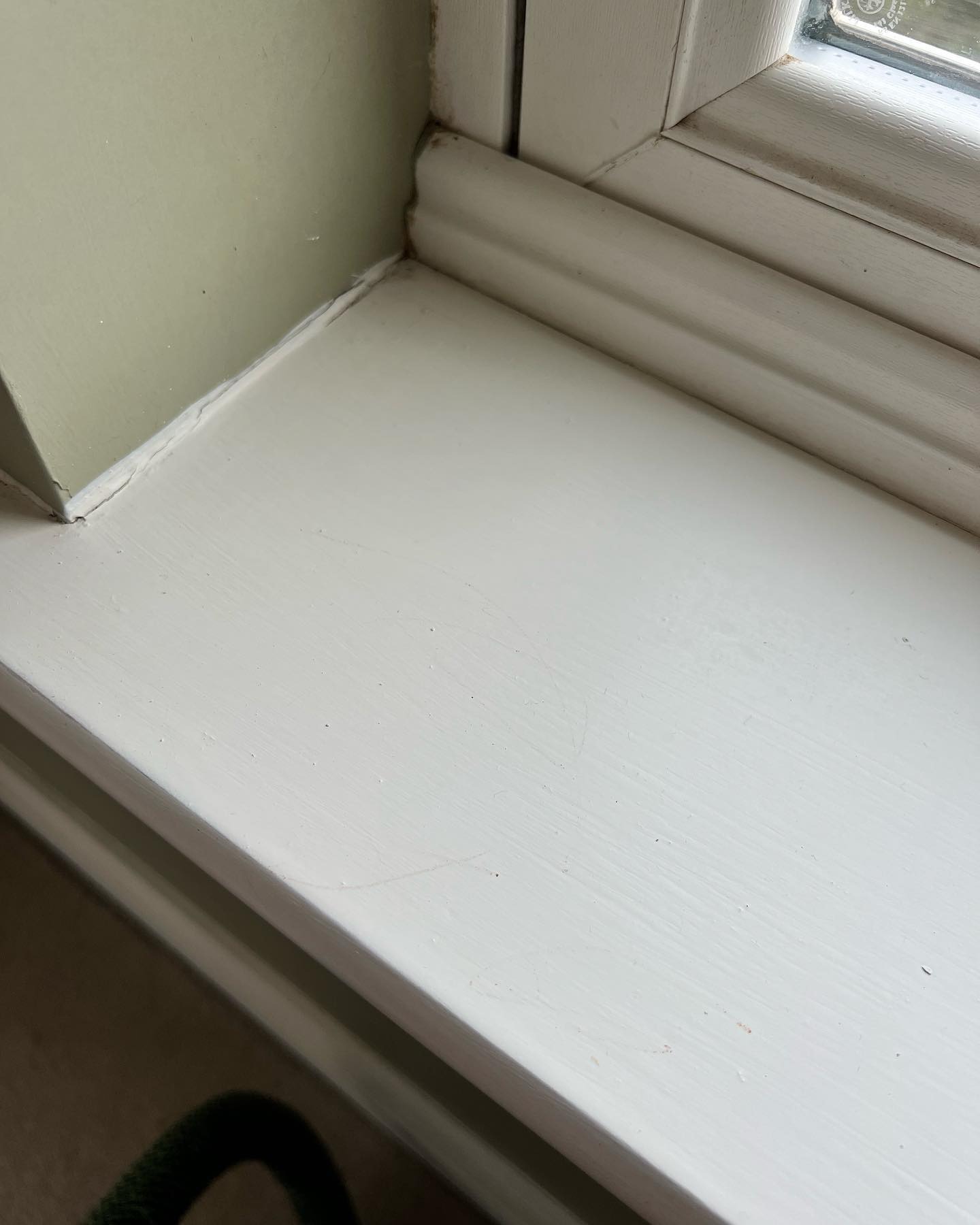
Spray gives you a factory face. Brush gives you a built face. The eye reads the second one as older and better cared for, even when you cannot explain why. It is how trim looks in old houses that look like money. The finish says this was done, not applied. Benjamin Moore Scuff X Satin is designed to spray beautifully. He used it the slow way anyway.
The cut line is where paint jobs give themselves away
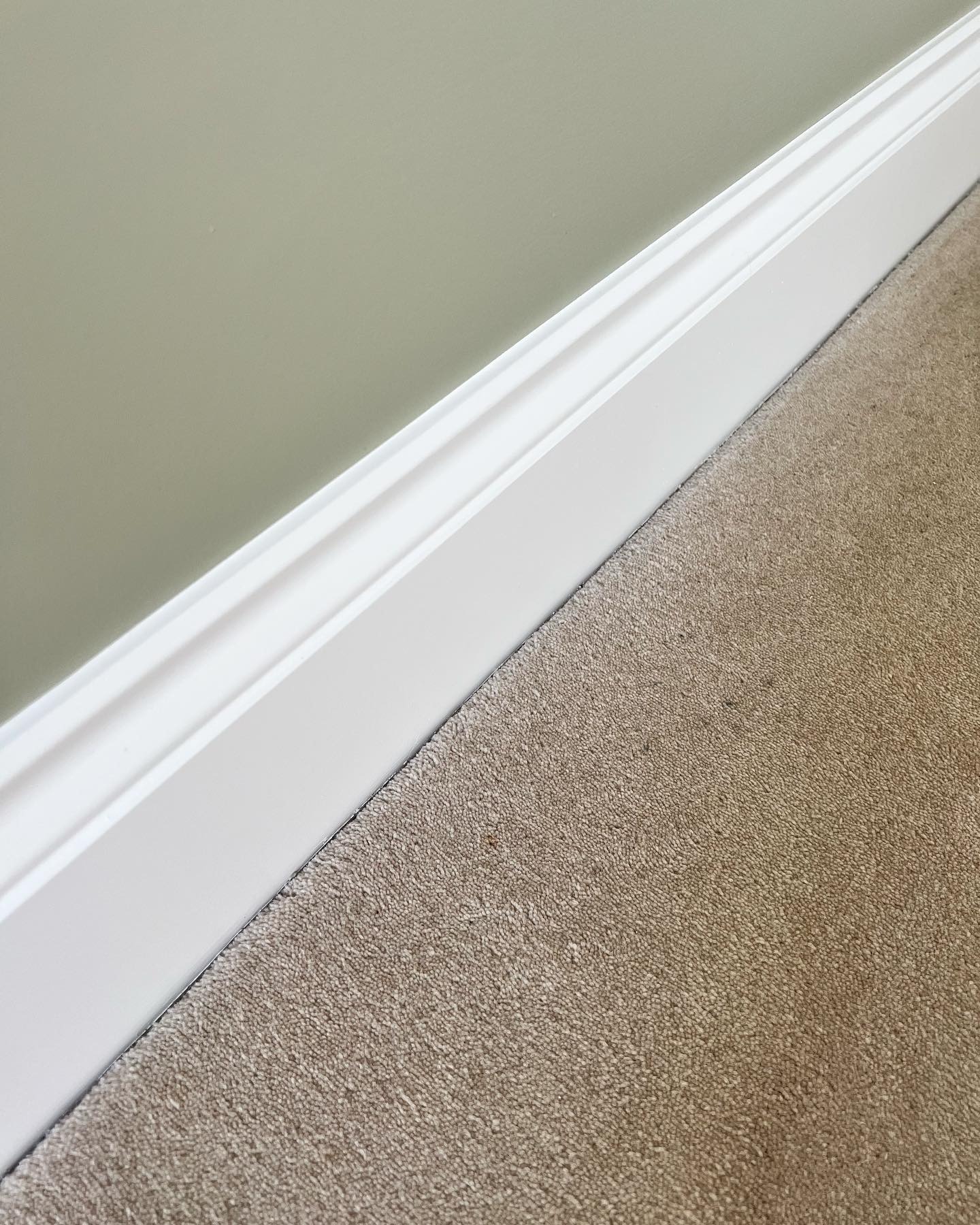
Look where the sage meets the white baseboard. No wobble. No feathered edge. No sage seeping down into the trim. That sharp line is the second thing making this room read professional, and it is the most common place a DIY job falls on its face. If the cut line is shaky, the whole room looks shaky. No color choice fixes it.
Why it all talks to itself now
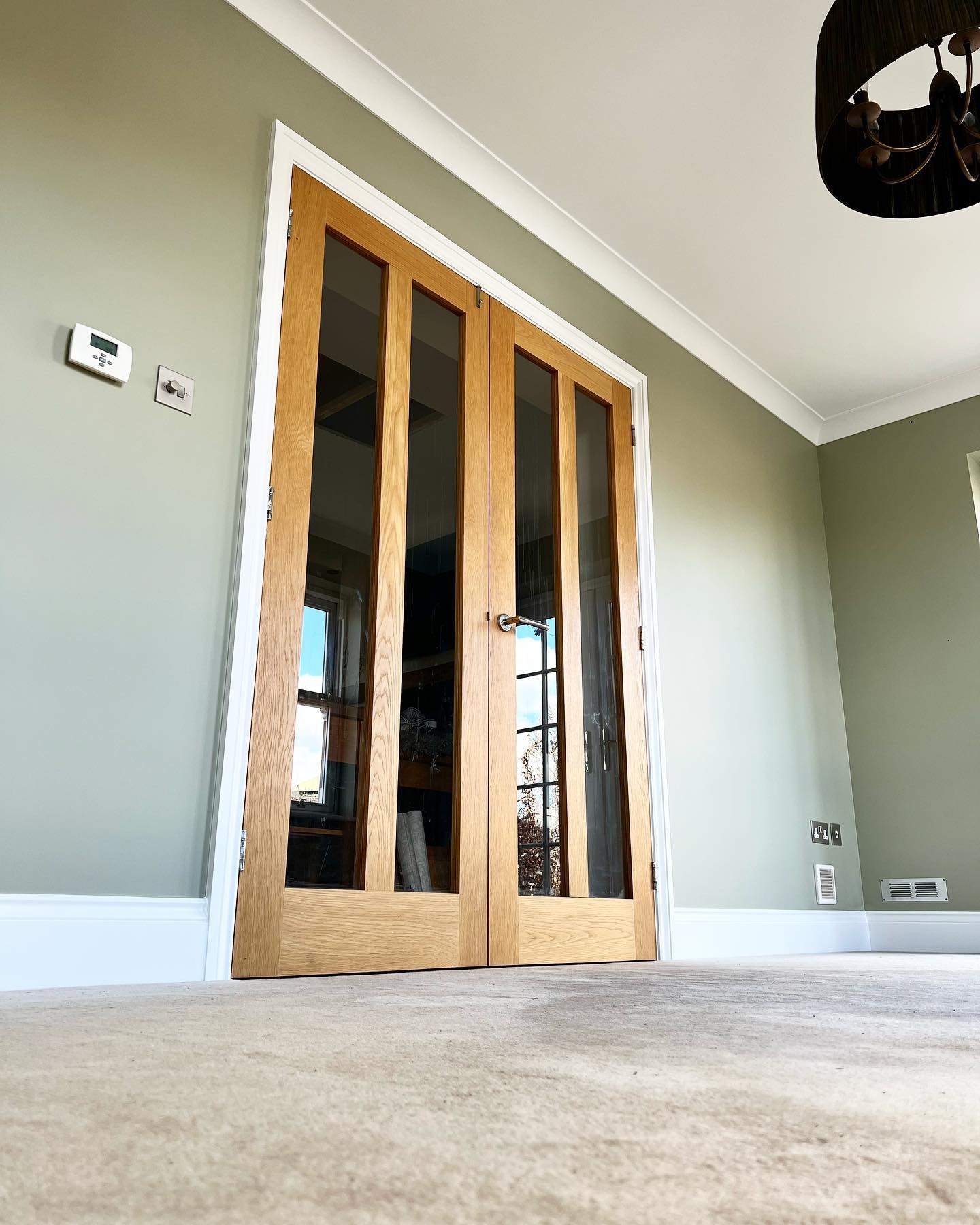
Those oak doors were there the whole time. In the before shots they looked like a nice piece sitting in the wrong room. Against the sage they come alive. Oak and this kind of green are a bit of a cheat code together. You see it in old English kitchens and in Scandinavian studies.
A different light, a slightly different green
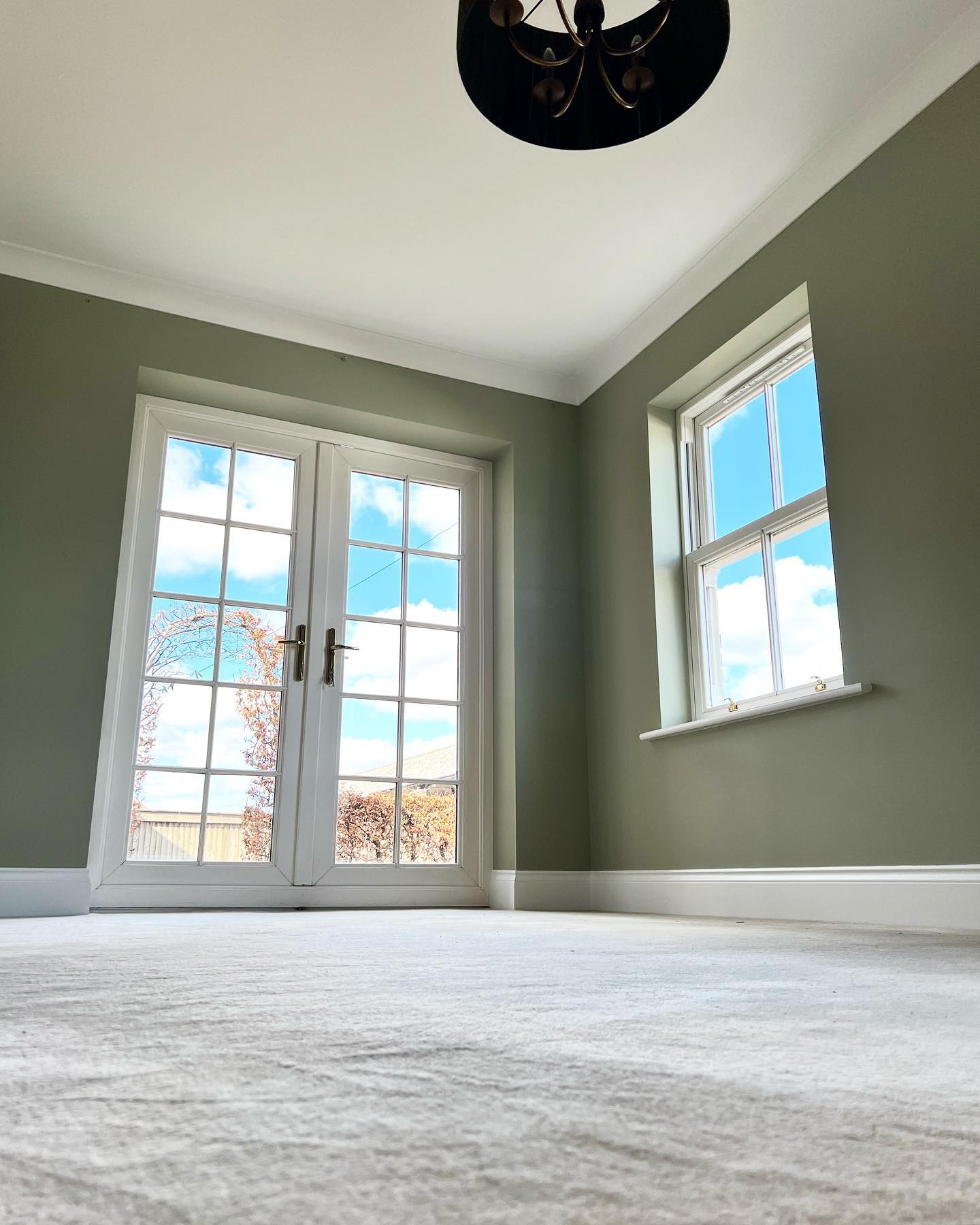
In bright direct daylight the green pulls grayer, more washed. Still grounded, still calm. That shift is part of why sage greens like this one earn the high price tags.
The fall light brings the whole mood together
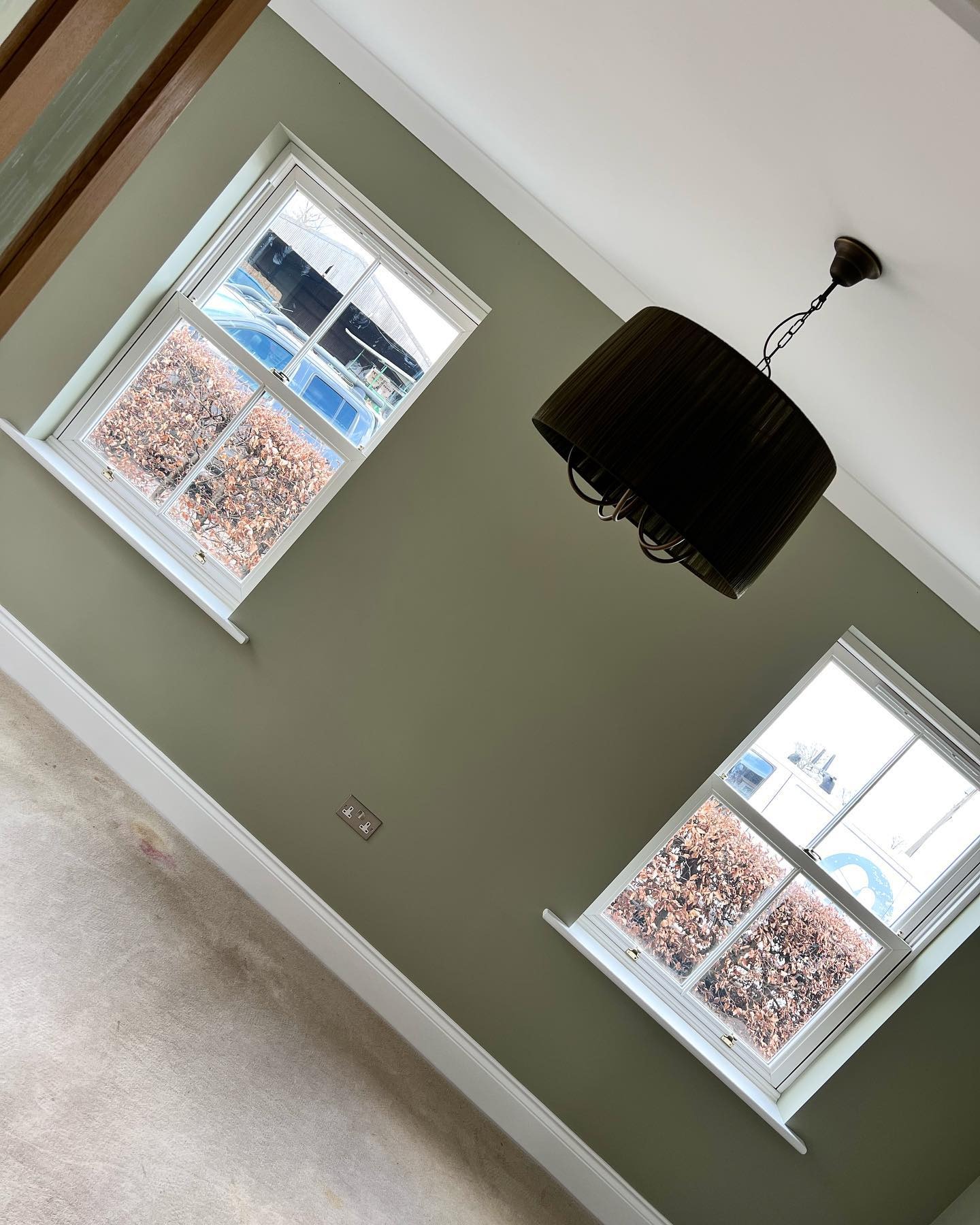
With the autumn hedge sitting right outside, the room feels like it belongs in its own season. Not the color doing that alone. The color, the trim, the cut lines and the light, all agreeing on one mood.
The quiet lesson worth stealing
An expensive looking room is almost never one big expensive decision. It is three small, boring, patient ones. One, the color picks itself when you test it on the actual wall in the actual light. Two, the trim finish carries half the weight. Brush instead of spray and the room ages up ten years in a good way. Three, every paint line where two colors meet is what separates a paint job from a design job.
No new floor, no new furniture, no new fixtures. Just paint and patience, and a painter who did it the old way on the day everyone else would have sprayed. That is what bought the whole designer look.