Your sofa is fine. So are the coffee table, the armchair, and the pictures you picked because you liked them. Yet somehow, the room still looks ordinary.
Before deciding the furniture needs replacing, look at how everything sits together. Are the best pieces hidden behind smaller objects? Do the chairs feel disconnected from the sofa? Is every corner decorated, but nothing stands out?
Those are useful places to start. A more expensive-looking room can come from giving existing pieces a better setting, without painting walls, replacing furniture, or planning a renovation.
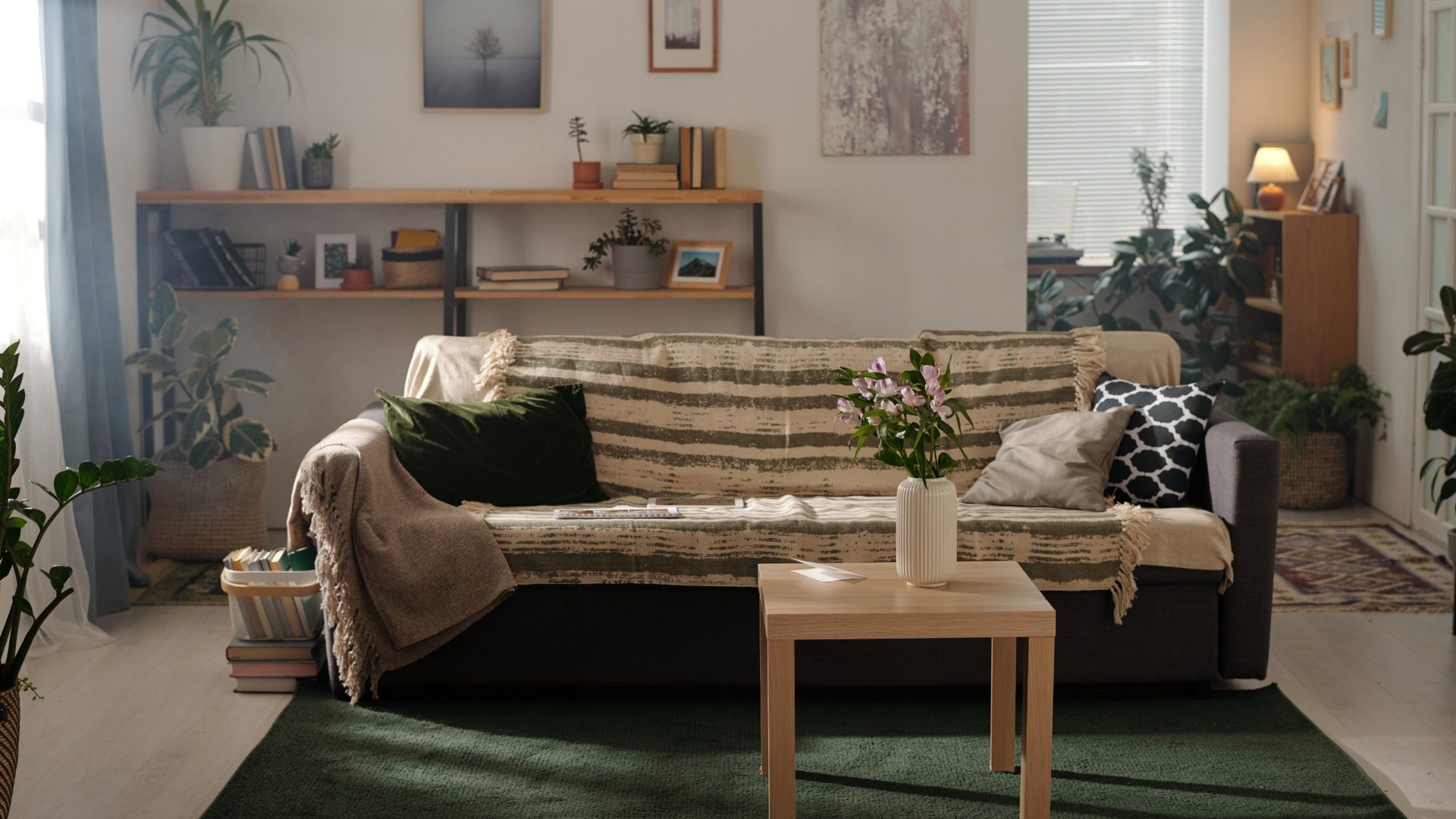
Start by taking things away
A coffee table can hold several lovely objects and still look cluttered. When everything is on display, the shape of the table and the individual pieces become harder to appreciate.
Crowded surfaces can undermine an otherwise thoughtfully decorated room, as Homes & Gardens points out. Restoring some order lets the room’s stronger features stand out.
Try this on one surface before tackling the whole room. Clear the coffee table, sideboard, or dresser completely. Clean it, then return the things you use and the decorative piece you most want to see. Leave some of the surface visible.
Stand back before putting anything else down. You may find the bowl you barely noticed now looks like a deliberate choice.
Keep useful objects within reach. A room that only looks good after you hide everything you need will be difficult to maintain.
Give the room one place to draw your eye
Once the smaller distractions are gone, decide what you want to notice first. It could be the fireplace, a favorite painting, the bed, or a window with an attractive view.
Designer Jeanne Barber put this into practice in a bedroom with an arched window. As she explains in Good Housekeeping, her team focused attention on that existing feature, making it the room’s main attraction.
Choose a feature you already have, then check what competes with it. If your favorite picture hangs above a sideboard, try removing the tall ornaments blocking its lower edge. If the window is the strongest feature, move the occasional chair that interrupts the view.
You don’t need every wall to make an equally strong statement. Give your favorite part of the room enough space to be noticed.
Bring the furniture into a usable arrangement
A room can feel unfinished when the sofa, chairs, and table seem to occupy separate areas. Before replacing anything, test whether bringing them closer makes the seating feel more connected.
Designer Sarah Bowman recommends placing a coffee table about 16 to 18 inches from the sofa. Treat that as a starting point, then adjust for comfortable movement and reach.
Try turning an armchair toward the sofa or moving a side table beside the seat where someone actually needs it. If a spare chair crowds the walking route, test the room without it.
This is also a chance to check balance. Does one side hold all the bulky furniture while the other feels empty? Moving an existing piece may help, but keep doors, drawers, and walking paths usable.
Rearranging has limits. It cannot make an oversized sofa smaller. Start with changes that improve how the room works, rather than forcing a layout that only looks good in a photograph.
Put existing textures together
After clearing and rearranging, the room might need a little softness. Before shopping for cushions or throws, check what is already in the room or tucked away in a closet.
Designer Jen Bedford also emphasizes the luxurious feeling that comes from mixing natural materials. A Studio B interior featured in the same article shows the idea through a rust-colored sofa, cushions, a patterned throw, and upholstered chairs. It is a styling reference, not a documented no-cost makeover.
Apply that principle with your own belongings. Try a knitted throw against smooth upholstery, or place an existing ceramic bowl on a wooden table. Let the different surfaces show. Piling on every blanket and cushion can hide the furniture again.
Keep the combinations you enjoy seeing and using. There is no need to make every fabric match or remove a comfortable piece because it isn’t a luxury material.
Move the lamps and reconsider the artwork
Before buying a light fixture, test the lamps you already own after dark. Try moving a table lamp beside a reading chair or placing an existing floor lamp near a dim seating area. Compare the room with different combinations switched on, keeping enough light for everyday tasks.
Then look at the artwork from the doorway and from your usual seat. Does it feel connected to the furniture below it, or stranded on an otherwise empty wall? Before making new holes, hold it in a different position and take a photograph to compare.
Designer Leslie Kramer recommends moving existing art into unexpected positions. Elaine Bauer Brooks also suggests putting attractive serving pieces to everyday use instead of keeping them stored away.
Brooks offers a real example: she moved a patchwork teak dining table into her studio, where it became a workspace and presentation table. The lesson for your room is simple: a familiar piece may deserve a different job or a better position.
Compare the same room before and after
Take a photograph from the doorway before you begin. Afterward, take another from the same spot, at a similar time of day. That gives you a fairer comparison than changing the camera angle or brightening only the second image.
For a practical test, work through this sequence:
- Clear one crowded surface. Return useful items and the decoration you want to feature.
- Choose the main attraction. Move smaller distractions away from it.
- Adjust the seating. Check table reach, conversation, and walking space.
- Reposition existing finishing touches. Test a throw, lamp, or artwork where it contributes most.
Keep what improves your room and undo what doesn’t. The photograph should help you spot the difference without losing sight of comfort.
The most useful result is being able to see and enjoy what you already own. The furniture can stay. Give it a better setting.