The pasta is drained, the sink is backing up, and the kettle is still hissing. Pouring that boiling water down the drain feels like the obvious fix for the grease. It’s a common reflex, and plumbers have a good reason to wince when they see it.
Why the sink seems fixed for a moment
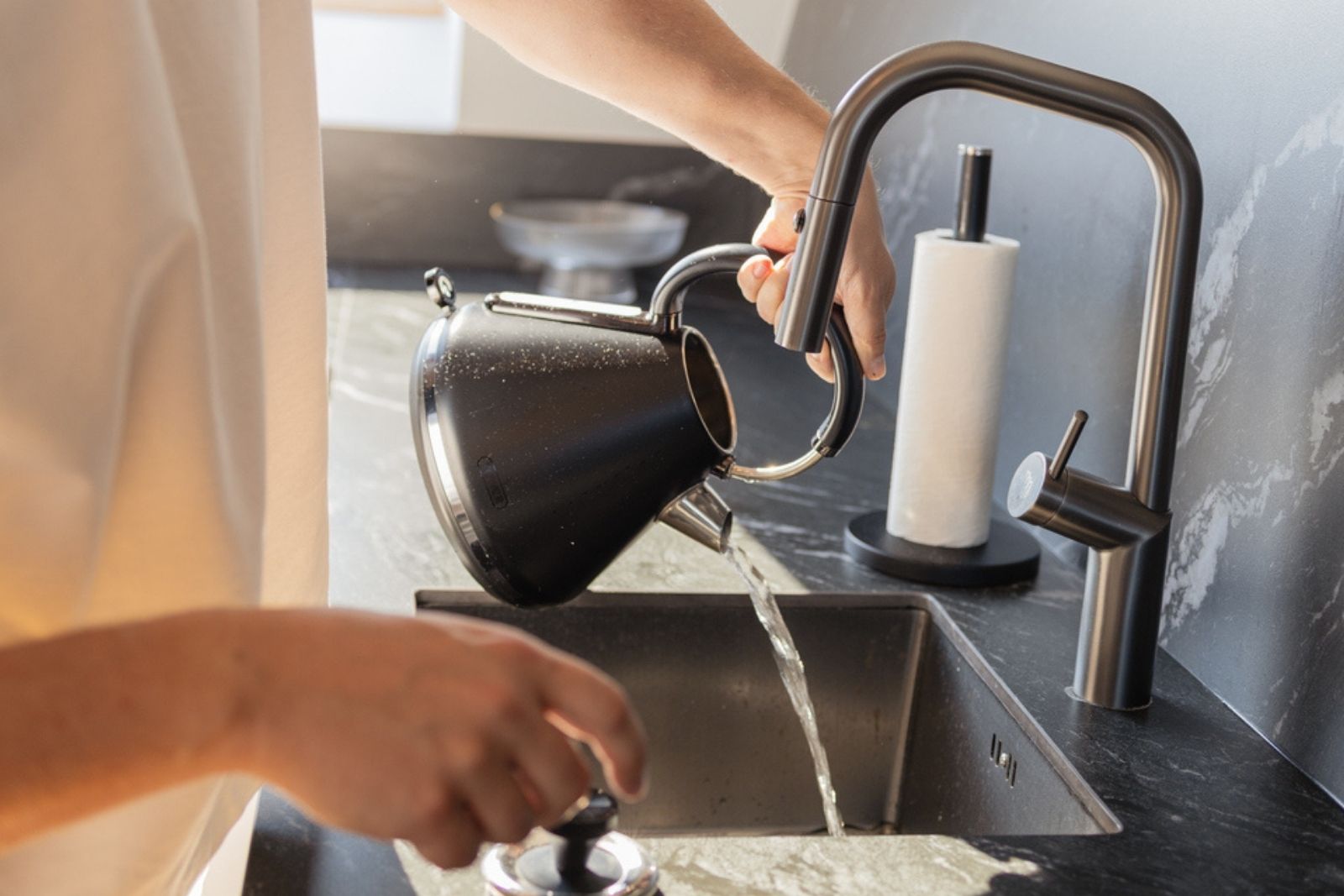
At first, it looks like it works. You pour, the water swirls, and the sink starts draining again. Boiling water hits 212°F, hot enough to loosen soap and grease. That sudden heat can soften a thin coating or cut a small channel through a soft clog.
But faster draining is relief, not proof that the line is clear. Melted fat doesn’t disappear. Hot water can spread that fat over the inside of the pipe, where it can cool and harden again a little farther down. And no amount of heat can pull out a plug of food scraps or a hard blockage. The kettle doesn’t wash the clog away. It just pushes the problem down the line.
Which raises a quieter question: what is all that heat doing to the pipe itself?
What the kettle does to the pipe under your sink
Before the next pour, it’s worth knowing what’s hiding under the sink. If any section of the drain is PVC, boiling water is a poor choice. One major pipe maker rates its standard PVC drain pipe for water no hotter than 140°F. PVC starts to soften above 175°F, which is why Oatey advises keeping boiling water away from it.
Your kettle blows past both numbers. And when the sink is backed up, the water doesn’t rush through. It sits there, holding that heat against the trap and the joints instead of carrying it away. That’s when a kettle of boiling water can look like the answer.
So if heat isn’t the answer, what is? Something that pulls the clog out instead of warming it up again.
Put the kettle down and grab the plunger
Start with force, not temperature. A plunger and a drain snake come before chemical cleaners, and that simple order works for a kitchen sink too.
Take out the strainer first and lift out any scraps you can reach with tongs. If there’s a garbage disposal, cut its power before you work near the opening. Then run enough tap water to cover the plunger head so it can make a seal. Pump 10 to 15 times, which is enough to tell whether the clog has let go.
Still sluggish? Feed a hand snake in slowly. When you feel resistance, rotate it, then pull the debris back out and test the sink with ordinary tap water. Once it runs freely, it’s a good time to clean the disposal splash guard where odors hide, since that’s residue you can actually remove instead of trying to melt it away.
HomeServe explains when boiling water may help a clogged drain and when it may hurt the plumbing.
When it’s more than grease in the trap
A plastic pipe won’t fail every time a kettle is poured into the drain. And if you know the whole drain run is metal, boiling water may loosen a minor soft deposit, but it still won’t pull the clog out.
Call a plumber when several fixtures slow down at the same time, the sink keeps backing up, or a sewage smell comes with the clog. Those signs point to something beyond a little grease in the kitchen trap, and another kettle won’t solve it.