Every morning there are a few more of them: tiny, fuzzy flies resting on the shower wall or hovering over the sink. You swat them, spray them, open the window. Two days later, they’re back, as if nothing happened.
This is not your fault. These are drain flies, also called moth flies, and spraying the ones you see does almost nothing. Utah State University Extension describes them as small, gray and very hairy, about 1/8 inch long, with moth-like wings. They nest in the scum lining drains and sewer lines, and their larvae hide behind that slimy film, out of reach of whatever you spray in the air.
Why they keep coming back so fast
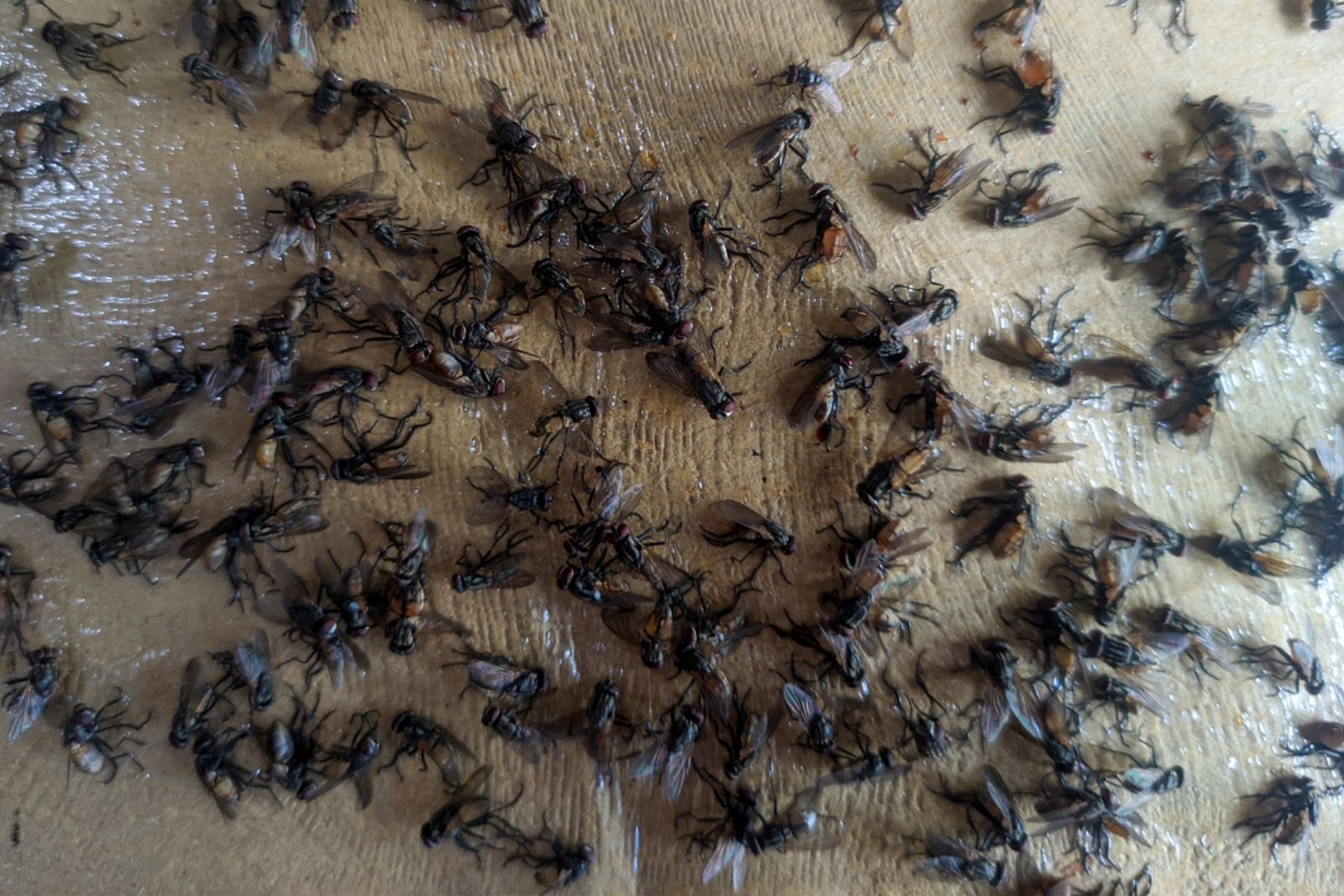
The cycle is quick. Ohio State University Extension says drain flies can complete their life cycle in one to three weeks, that eggs are laid in irregular masses of 10 to 200, and that adults live about two weeks, with old ones dying as new ones emerge. A drain left alone keeps producing new flies.
The usual reflexes miss the real target. Utah State notes that larvae hiding behind the scum make treatments with boiling water, pesticides or other chemicals ineffective. Ohio State adds that bleach doesn’t seem to clear the scum and that the larvae are surprisingly resistant to it, while aerosol sprays only knock down the adults already flying.
They’re mostly a nuisance, but not entirely harmless. Ohio State notes that inhaling fragments and dust of dead flies can trigger bronchial asthma, and that the flies can physically carry microbes. That’s the real reason to deal with them now.
How to find and clear the source
- Find the drain they’re using. Before bed, cover each suspect drain with a clear plastic container with a glue board taped inside, as Ohio State suggests. By morning, the trapped flies point to the source. Check the sink, tub, shower and any floor drain.
- Scrub out the film. Use a stiff, long-handled brush to clean the drain pipe and trap. Utah State says the goal is to remove the scum layer where the larvae live.
- Follow with an enzyme drain cleaner. Ohio State says cleaning works best with an enzyme product designed to break the sticky bond that bacteria and algae form on pipes. Follow the label directions.
- Never mix products. Ohio State warns that caustic drain cleaners must never be followed with bleach, since chlorine gas can be released in the drain line.
- Test again. Put the container back over the drain a week later. Because a full cycle can take up to three weeks, keep cleaning until the traps stay empty.
Drains you rarely use deserve attention too. Run water through guest sinks and spare showers regularly, and keep the trap filled, the same water seal behind this vacation trick for the sink drain.
When the drain isn’t the problem
If the flies keep appearing after every drain tests clean, the source may be hidden. Utah State says drain flies can also breed around broken pipes or drains under slabs or in crawlspaces. In that case, the fix is to repair the moisture problem and seal it, which usually means calling a plumber.
Also look for damp spots elsewhere: Utah State notes they breed in decaying organic material, not just drains. Any damp, organic buildup around the bathroom is worth cleaning out.
Trap first to find the drain, then scrub the film and finish with enzymes. That’s the trick.