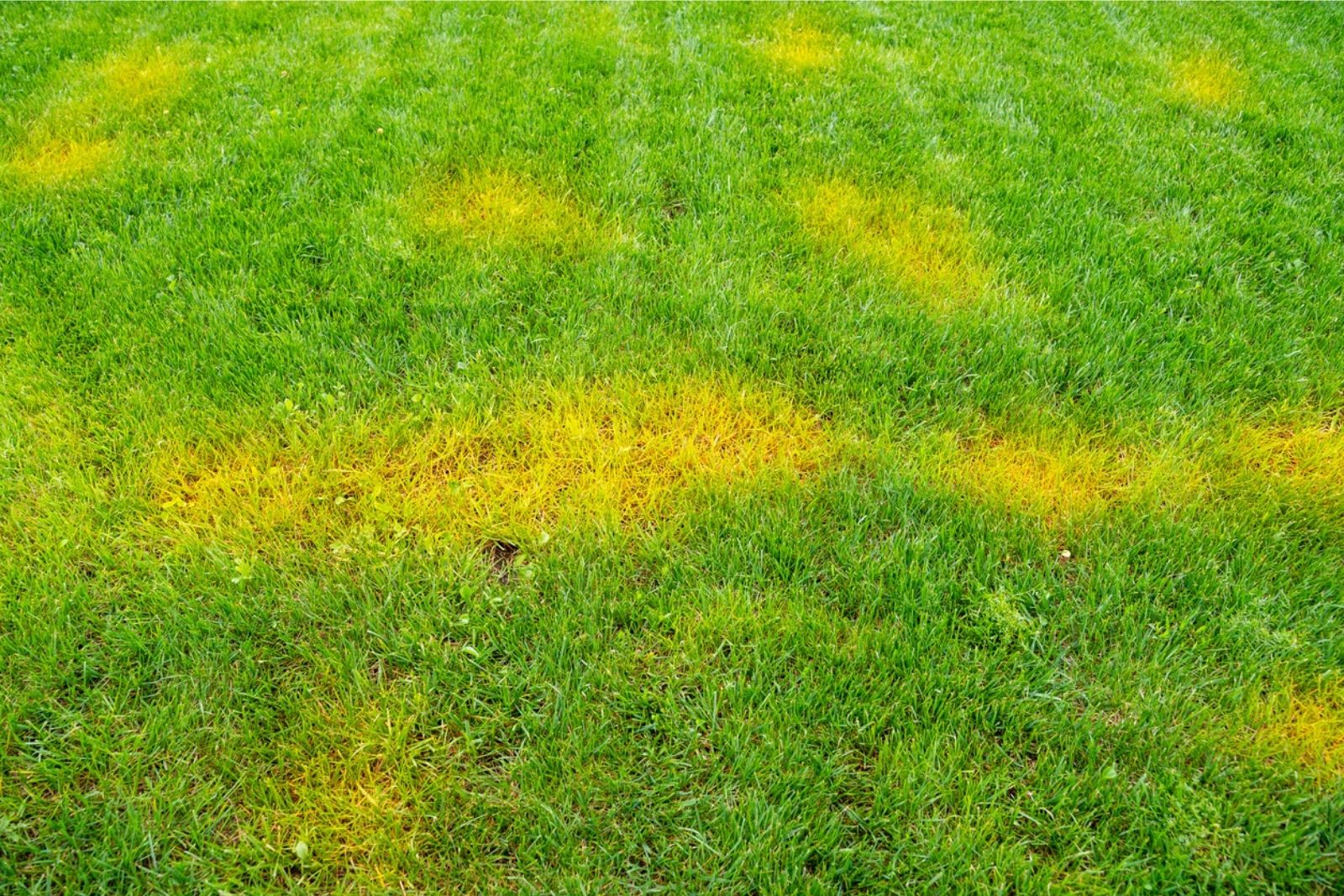
It started in late summer as a few straw-colored patches. You watered more, and they kept spreading. Now, in the fall, the grass in those spots feels spongy underfoot, and one morning you find the edges torn up, as if something had been digging all night.
This is not your fault. Grub damage looks almost exactly like drought. Texas A&M AgriLife describes irregular patches of dead turf that may resemble drought stress, and University of Georgia Extension explains that grub feeding destroys the roots, leaving the tops to wither and die. In heavy infestations, it says, the turf can be rolled back like a carpet. More water can’t fix grass that has lost its roots.
Why fall is the turning point
White grubs are beetle larvae. University of Kentucky entomologists note that masked chafers and Japanese beetles have one-year life cycles, with adults laying eggs from late June to early August. The grubs then chew off grass roots just below the soil surface, and the damage usually appears in late August and September.
As the soil cools in autumn, Kentucky’s guide says, the grubs move deeper into the soil, where they spend the winter. That’s why spraying now is mostly wasted: Kentucky puts the best window for curative insecticides in early to mid August, and says spring generally is not a good time for curative grub control either. The fall move isn’t a late spray. It’s confirming the cause, repairing the turf and setting up next summer.
The fall move, step by step
- Do the sod test. At the edge of a dying patch, cut three sides of a 1-foot square, fold the sod back and count the grubs, UGA advises. Repeat in several spots and average.
- Read the count. Texas A&M considers 5 to 10 grubs per square foot the threshold above which damage occurs. Fewer than that, or none, and something else is behind the patches.
- Repair what’s dead. Rake out the dead grass and reseed the bare spots. For heavily damaged Kentucky bluegrass or perennial ryegrass, Kentucky suggests renovating with tall fescue, which tolerates grubs better.
- Water deeply, not daily. Kentucky says thorough, periodic soaking is more beneficial than frequent, light watering, the same principle behind this deep morning watering habit.
- Mark next summer’s dates. In Kentucky’s guide, the best window for a preventive treatment is mid-June to mid-July, while the new generation is still young, with curative treatments in early to mid August. Water the lawn after applying any product to move it into the root zone.
If you only found a few grubs, you may not need any treatment: Kentucky notes that a few grubs per square foot is normal.
What this won’t fix
Those torn-up edges are often skunks or raccoons hunting the grubs. Kentucky notes that controlling grubs may discourage that digging, but that killing grubs does not eliminate mole activity, since moles also eat earthworms and other insects.
Treatment windows shift with your climate, so check your local extension office for exact dates, and always follow the product label. If whole sections of the lawn lift away or the patches keep spreading next August, a lawn care professional can confirm the species and the timing.
Count first, repair now and treat next summer, not in November. That’s the trick.