Your egg hits the skillet, the thin white runs toward the rim, and the yolk keeps cooking while you wait for the edges to set. A few drops of vinegar are supposed to stop that breakfast drift. Cooks do reach for the bottle, just not always at the moment you’d expect.
What’s happening as the white spreads
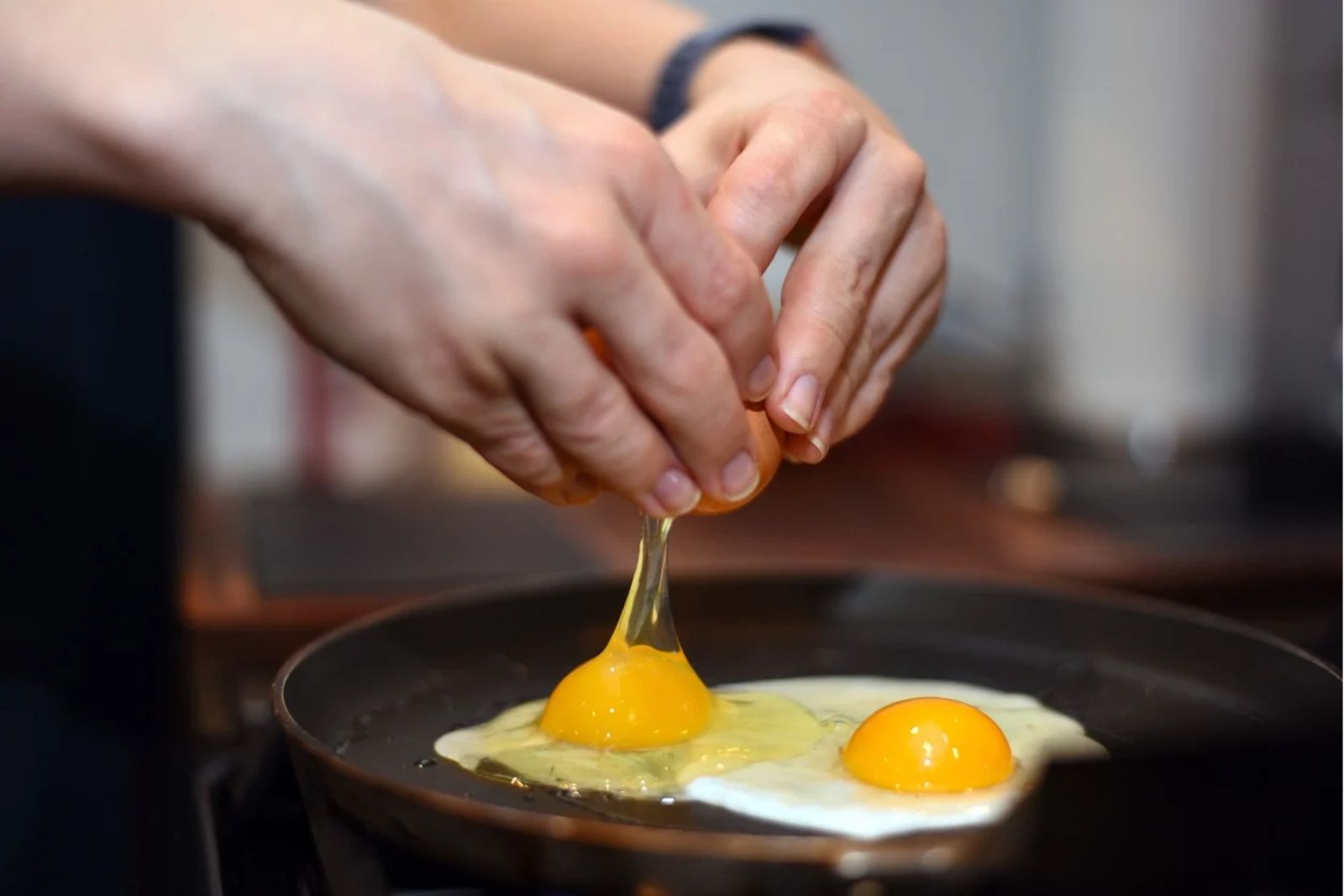
Egg white is mostly water and proteins folded into tiny shapes. As the pan heats up, those proteins unfold and join together. That’s when the clear white turns opaque and firm.
So where does vinegar come in? It lowers the egg’s pH, and that nudges the proteins to set sooner. The same basic chemistry is commonly used to explain why vinegar helps poached eggs hold together instead of trailing wispy strands through the water. It can work in a frying pan, too.
A skillet is a little less tidy, though. Vinegar is mostly water, so it beads up in the butter or oil instead of mixing in. A few drops that land right on the spreading white can help that patch firm up faster. Where the vinegar lands matters, and that’s why many cooks save their splash for later.
The splash that comes after the eggs
The more dependable use for vinegar in the frying pan is flavor. Once the eggs are done, cooks lift them out and add wine vinegar to the buttery skillet. They let it reduce for a moment, then spoon the warm, tart sauce over the yolks.
It works a lot like a vinaigrette on something rich. The vinegar cuts through the butter and the runny yolk, and the browned bits left in the pan soften its sharp edge.
A generous wine-vinegar reduction is one way to use this technique. The version here is gentler: one teaspoon for two eggs. Red wine, sherry or cider vinegar all suit the job.
From the skillet to a warm plate
For two eggs, heat an 8-inch nonstick skillet over medium heat. Melt 1 tablespoon of butter until it foams, slide in the eggs, then lower the heat to medium-low. Give them 2 to 3 minutes, until the whites are opaque and the yolks are as firm as you like them.
Move the eggs to warm plates. Now comes the vinegar. Take the pan off the burner and wait for any loud sizzling to settle. Then add 1 teaspoon of red wine or sherry vinegar down the side of the skillet.
Set the pan back over low heat for 20 to 30 seconds and swirl it once, until the liquid reduces slightly. Pour the warm vinegar and butter over your eggs, then season with salt and pepper.
Hot fat, runny yolks and what vinegar can’t fix
Never add vinegar to smoking oil: a water-based splash can make hot fat spit and burn. Take the eggs out, turn off the burner and wait. If flames appear, cover the pan and never use water, and let burned butter cool before lifting the burned-on residue.
Vinegar won’t make a soft yolk safer, either. USDA advises cooking shell eggs until the white and yolk are firm, or using pasteurized eggs for a runny center.