If your home got built or painted between about 2005 and 2015, the first photo is going to feel personal. Warm golden-tan walls. White raised-panel wainscoting underneath. A brass chandelier overhead. Dark iron balusters at the stair. A gilt-framed painting that has been in the family longer than the kids. None of it is ugly. It just feels tired now, dated in a way you can see but cannot name.
That was this homeowner. She was ready to swap fixtures, rip out wainscoting, even replace the chandelier. Her painter took one look and talked her out of all of it.
She almost reached for the white paint
That was the plan. The Pinterest boards all point one of two ways: go bright white and call it modern, or lean into cool gray. Both would have broken this house. Bright white would have stranded the brass and turned the entry into a dentist’s office. Cool gray would have fought every warm element in the room.
What warm tan actually does to a stairwell
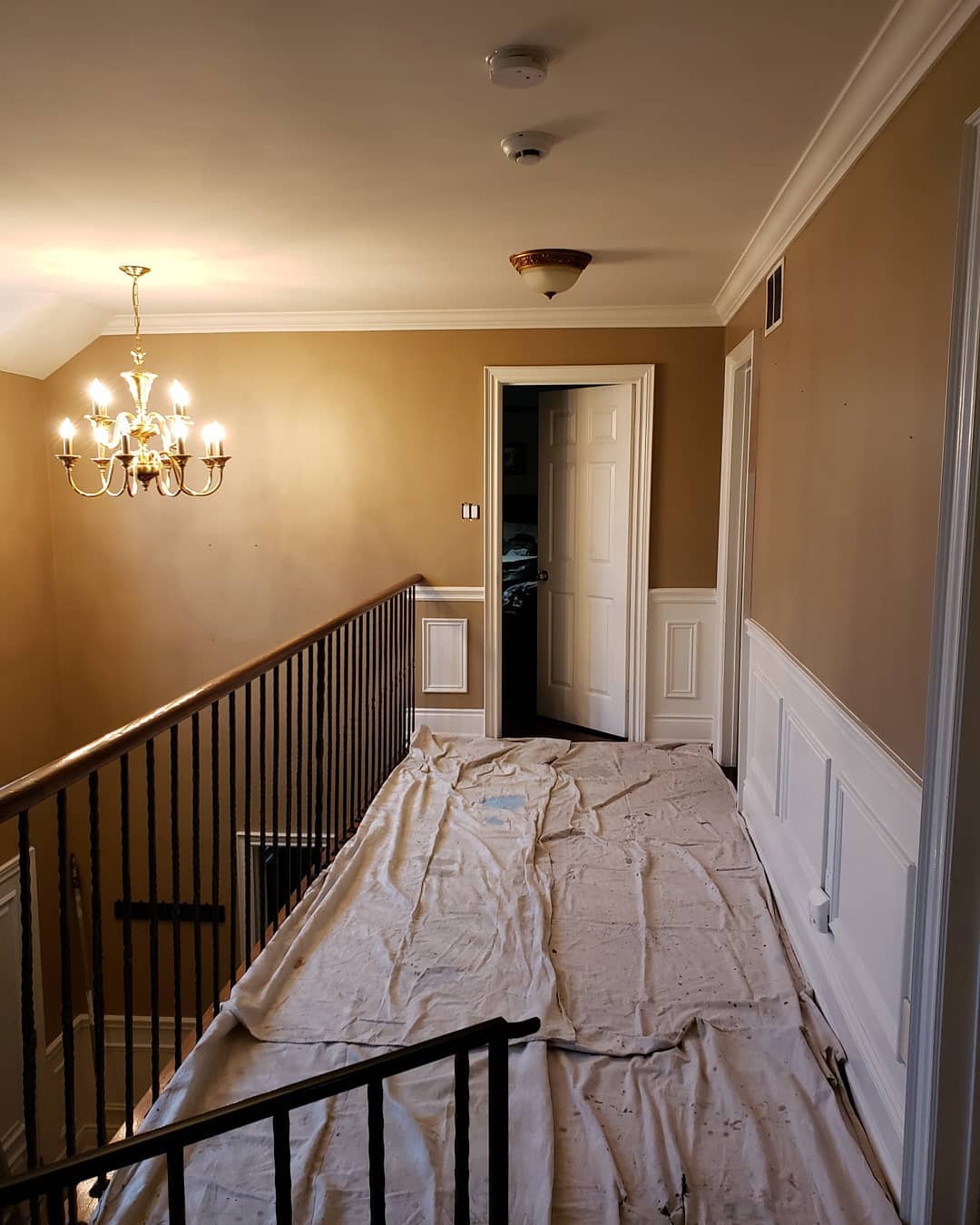
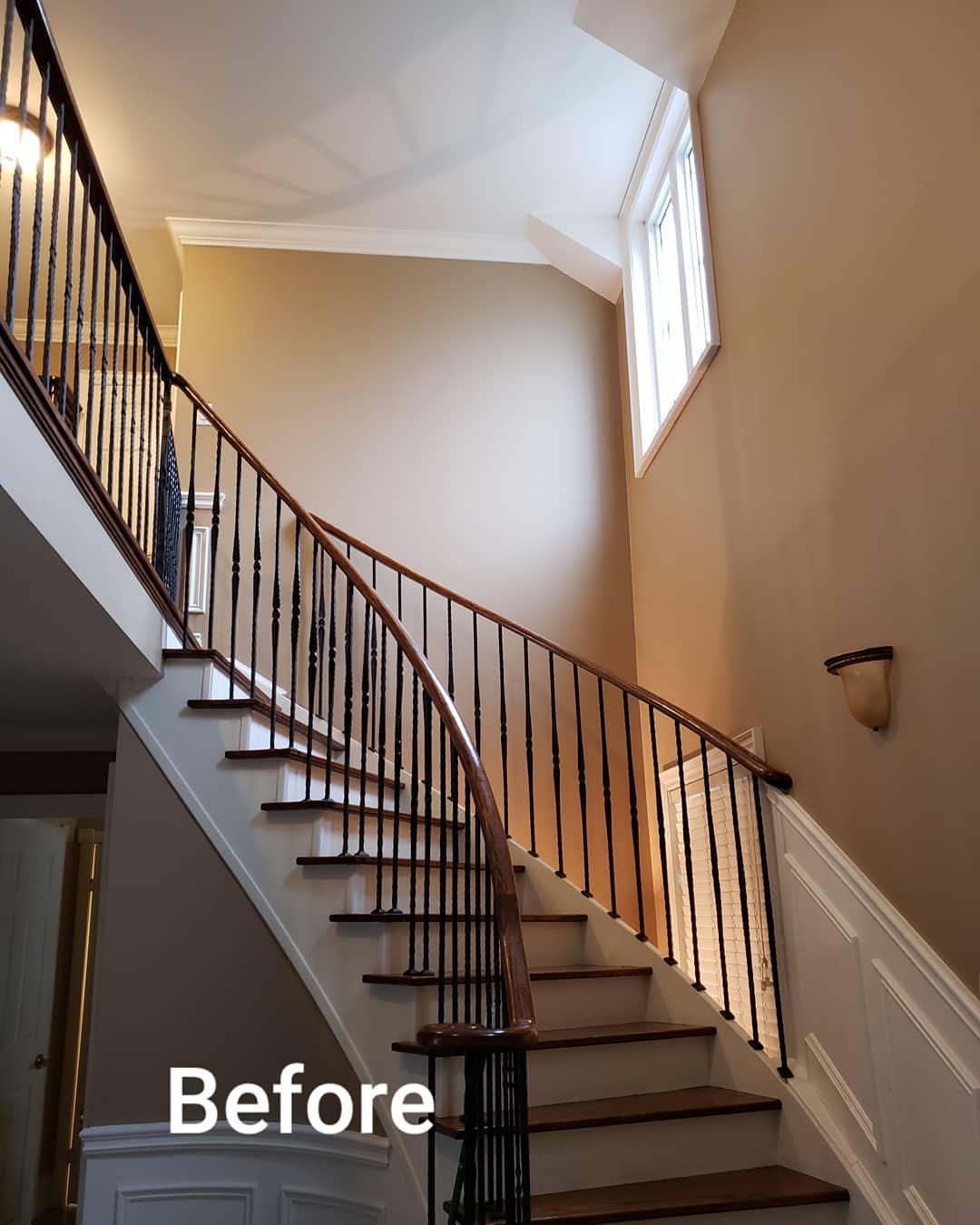
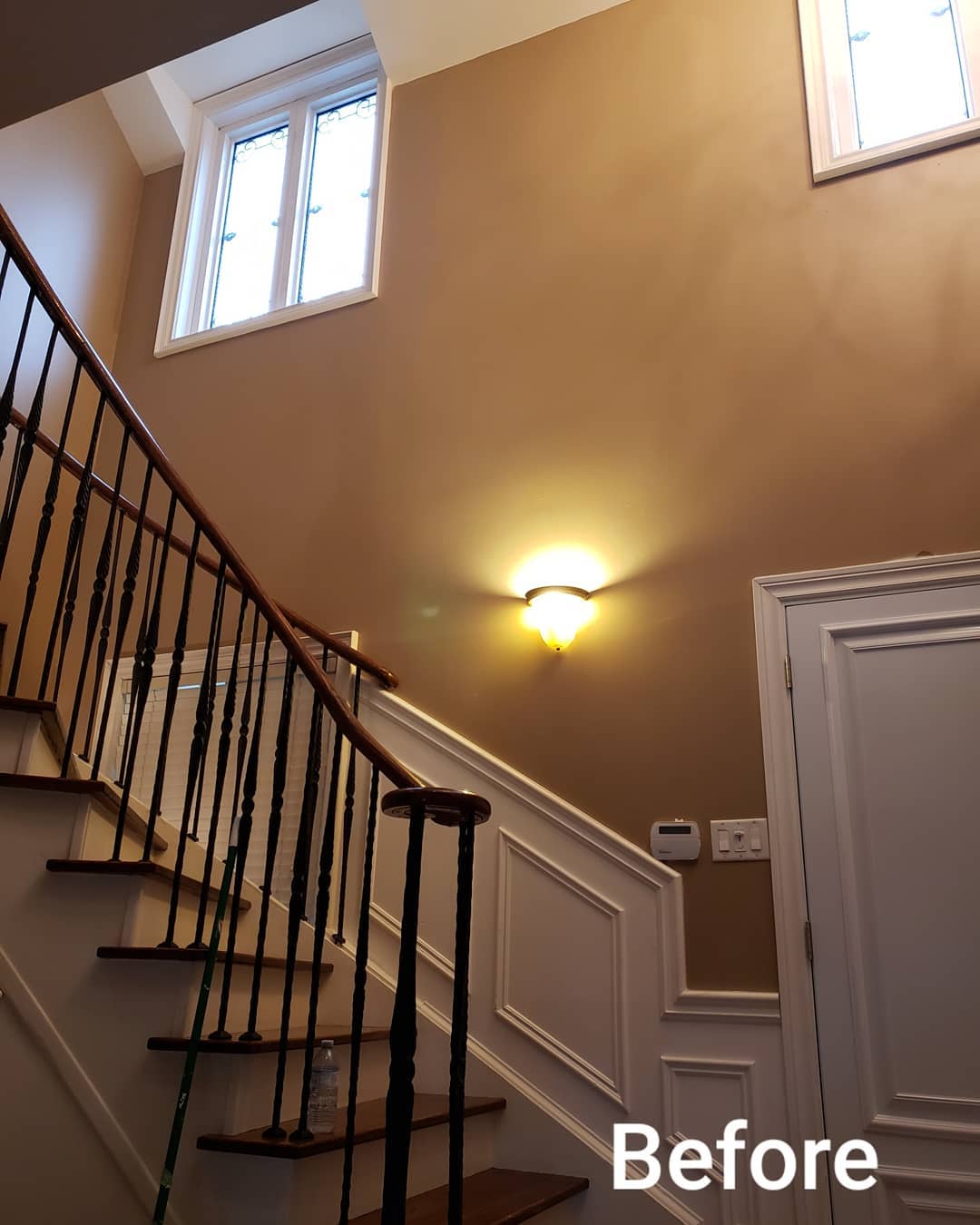
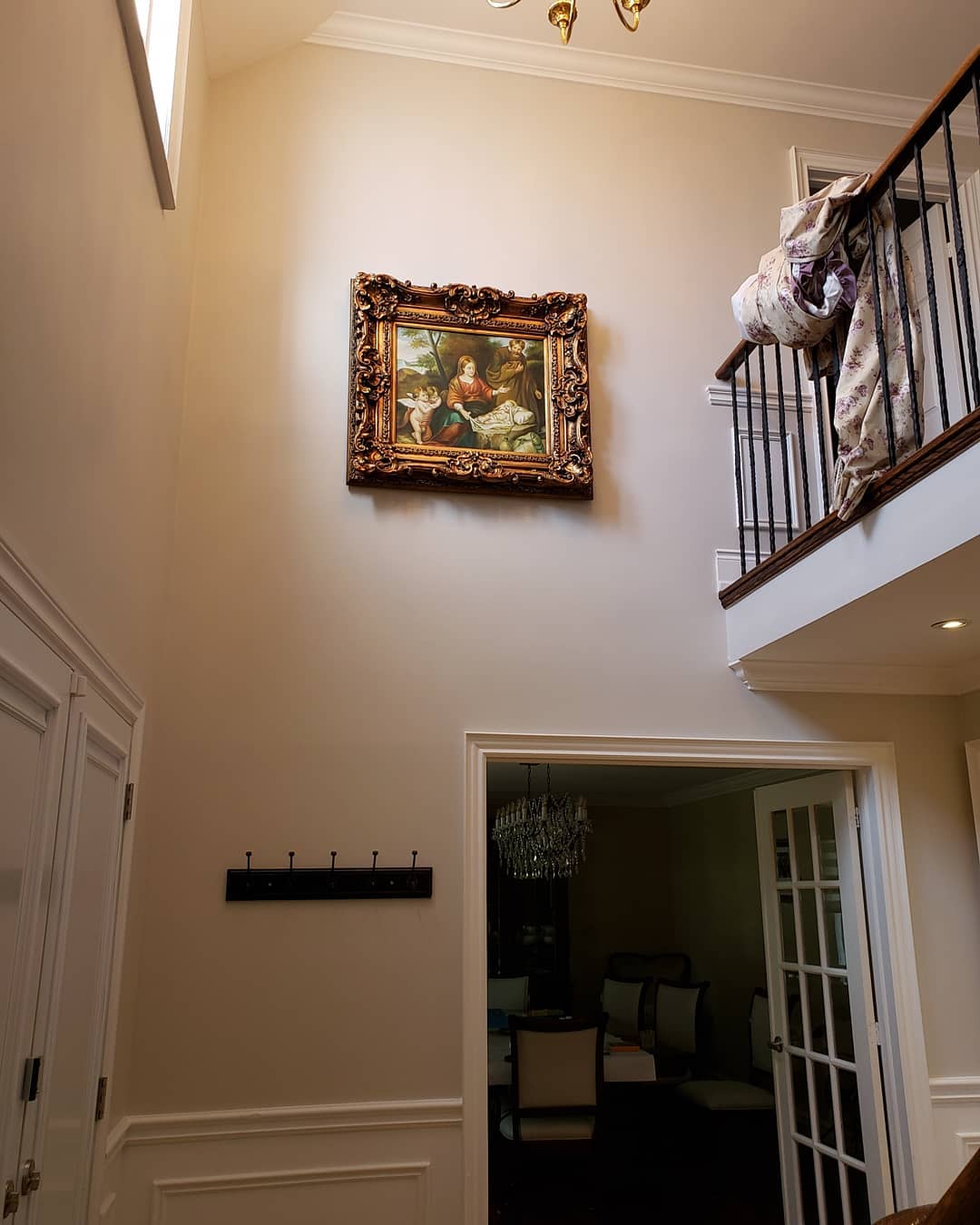
Before anyone moved a brush, this is what the stairs looked like. Pay attention to what the tan does in a two-story space. All the daylight pouring through the upper windows gets swallowed before it can bounce. The ceiling feels lower than it is. The white wainscoting reads yellow-tinged instead of crisp. Even the dark iron balusters lose their punch, blending into the warmth instead of standing out.
One paint color later, same house, different decade
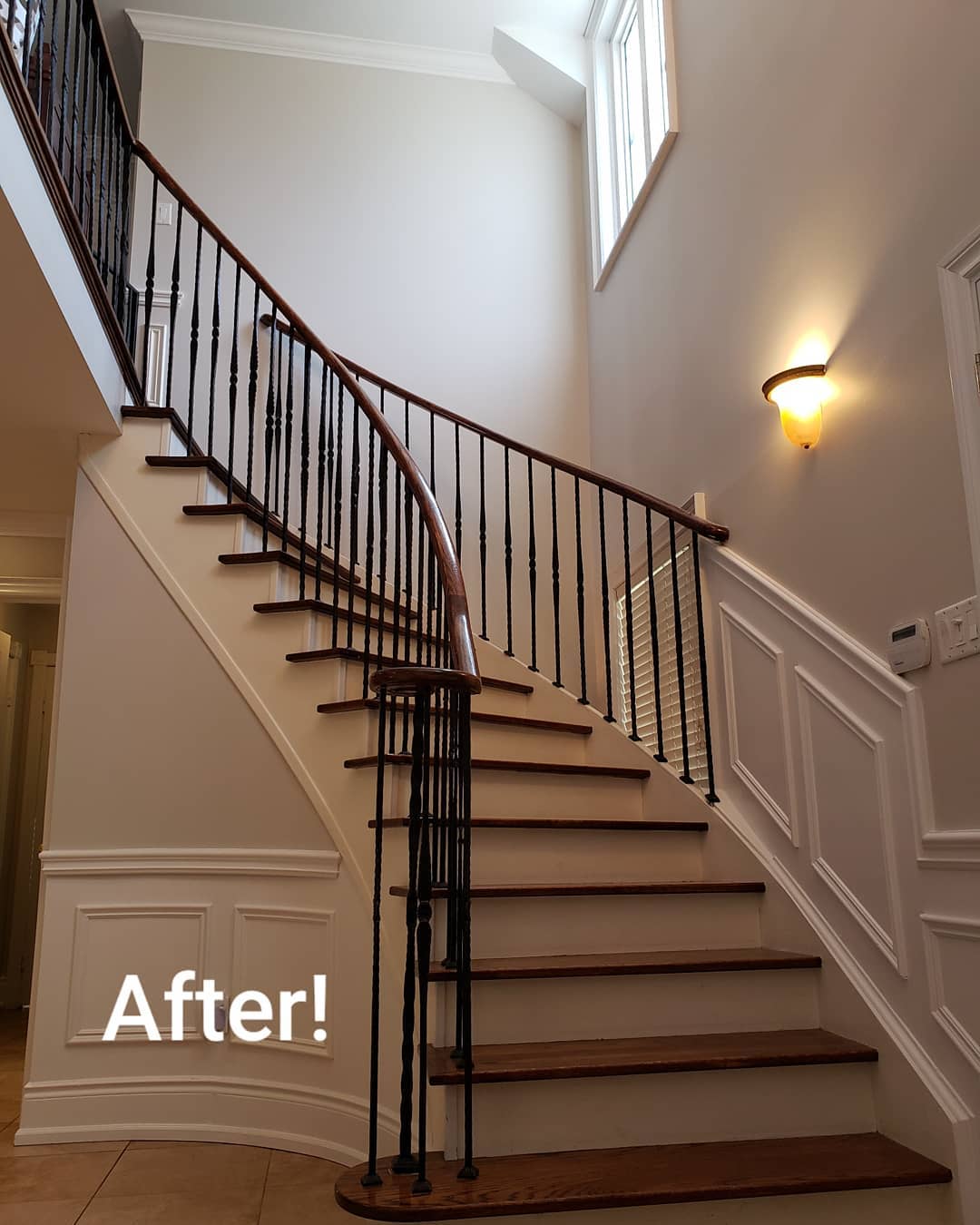
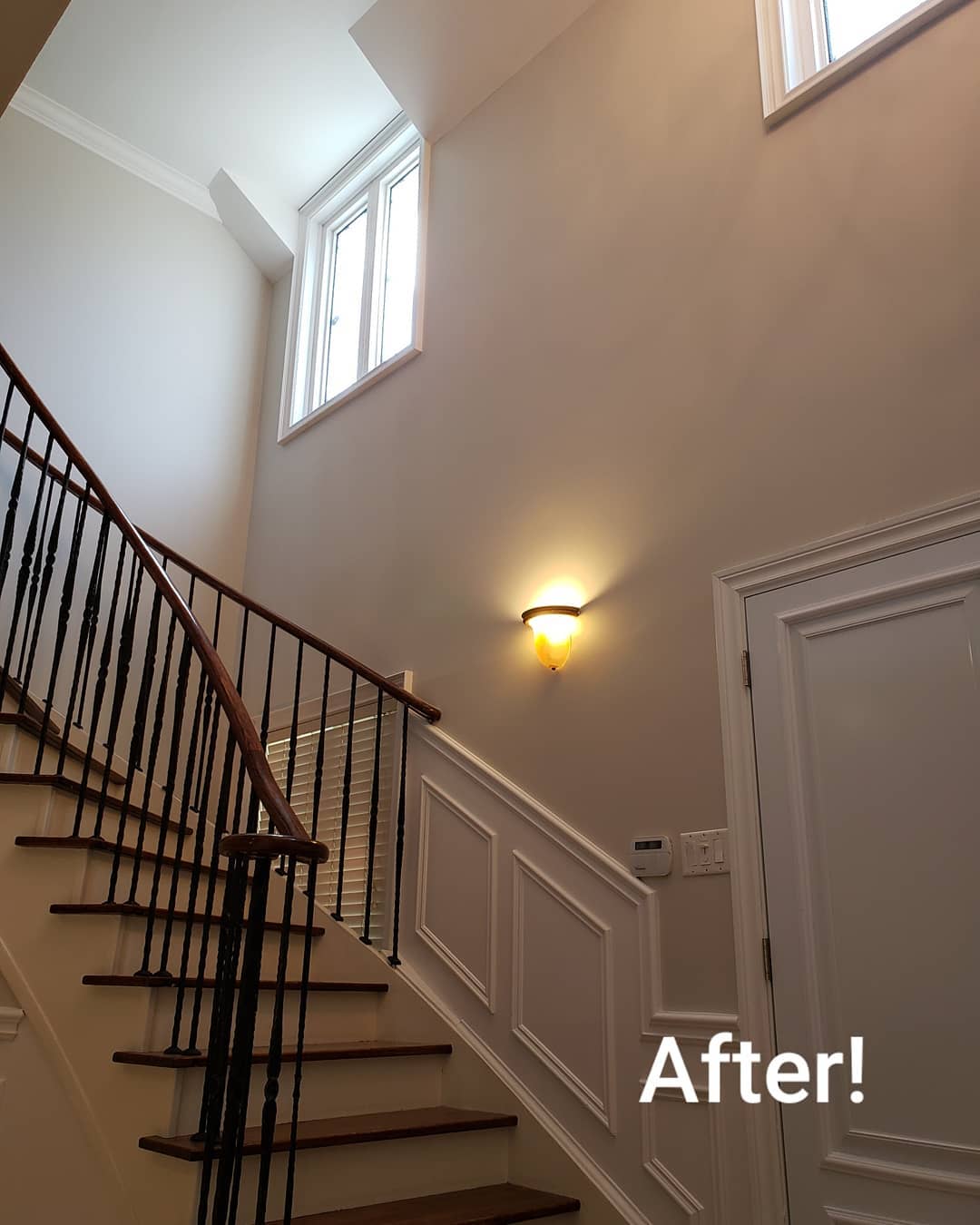
Same stair. Same iron. Same handrail. Same windows. Same sconce. Nothing was replaced, not even the wainscoting. The wall color alone pulled the climb forward about ten years. The balusters pop. The handrail reads as wood again. Daylight actually bounces around the space instead of being absorbed.
The sconce finally gets to be a sconce
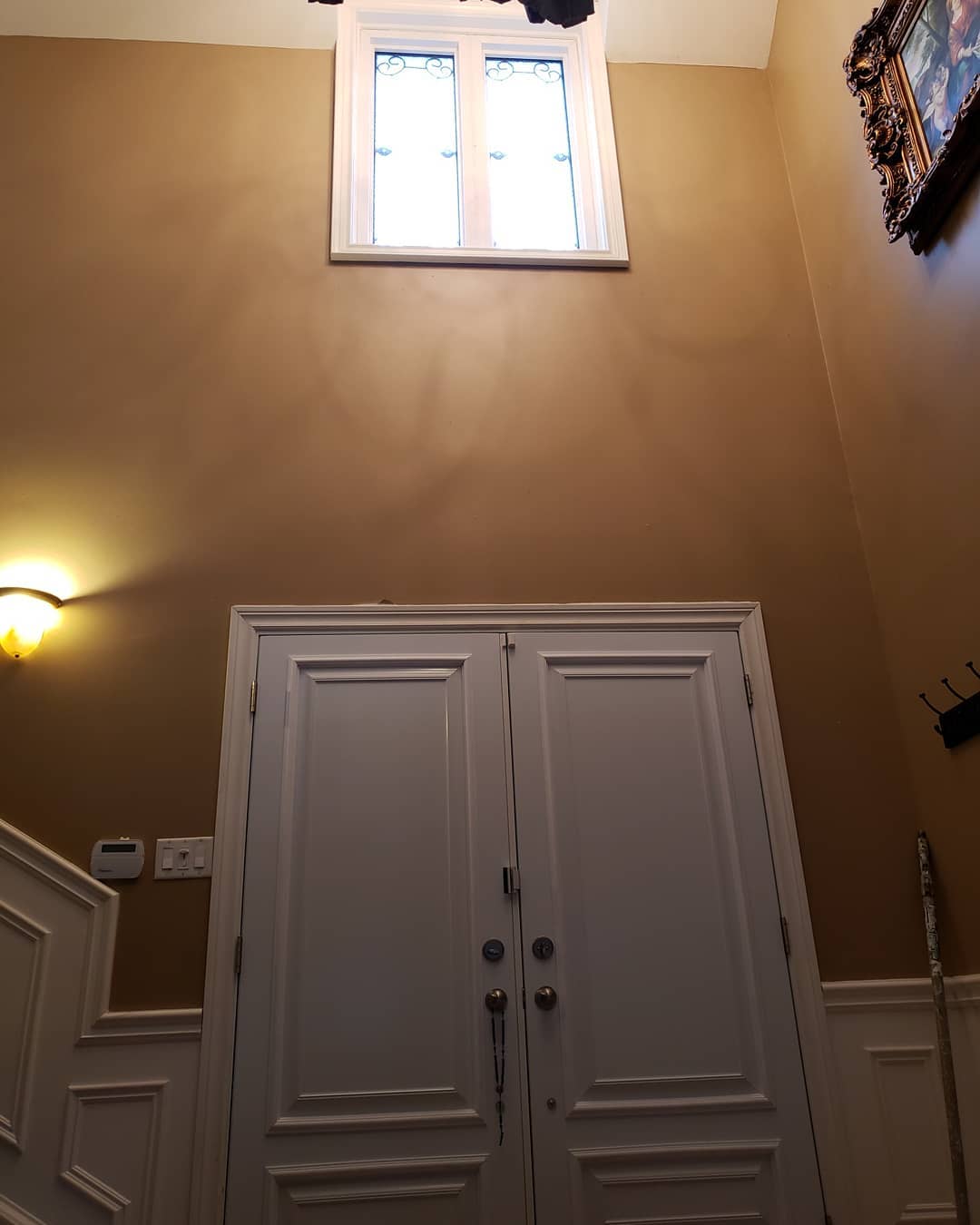
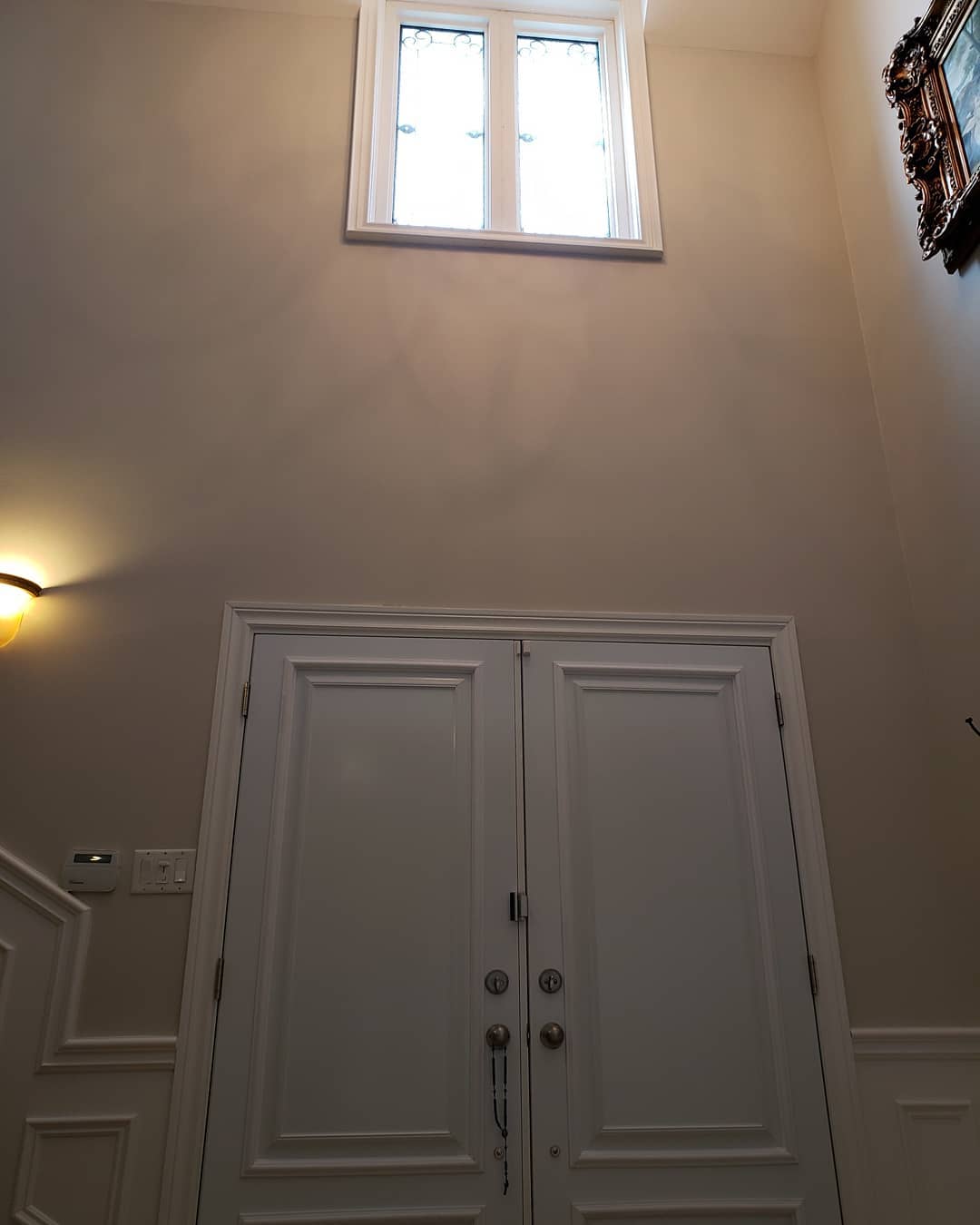
This is where the color choice earns its keep. In the tan version, the yellow bulb blends right into the yellow wall and the glow vanishes. In the repaint, the wall is cooler but still warm enough that the bulb reads as a deliberate accent, not a fight. That is the real trick, and it is exactly why going too cool would have killed the room.
The color she picked, and why it worked
Benjamin Moore Balboa Mist OC-27, eggshell finish. Balboa Mist is a warm greige, which means a light neutral with a quiet taupe warmth, not the blue or green undertones that make a gray feel cold. It flatters brass. It flatters dark wood. It lets white trim pop. Eggshell is the finish that actually survives hallway life, wipes down, and bounces enough light to brighten a dim space without looking plastic.
One heads-up on light. Balboa Mist shifts. In a north-facing room it leans cooler, almost violet-gray. In a south-facing room with real sun it warms up to a soft sand. Buy a sample pot, paint a two-foot board, and move it around at breakfast, lunch, and after dark. If it still reads right next to your brass and your dark trim at all three times, buy the gallon.
The gilt frame finally gets a background
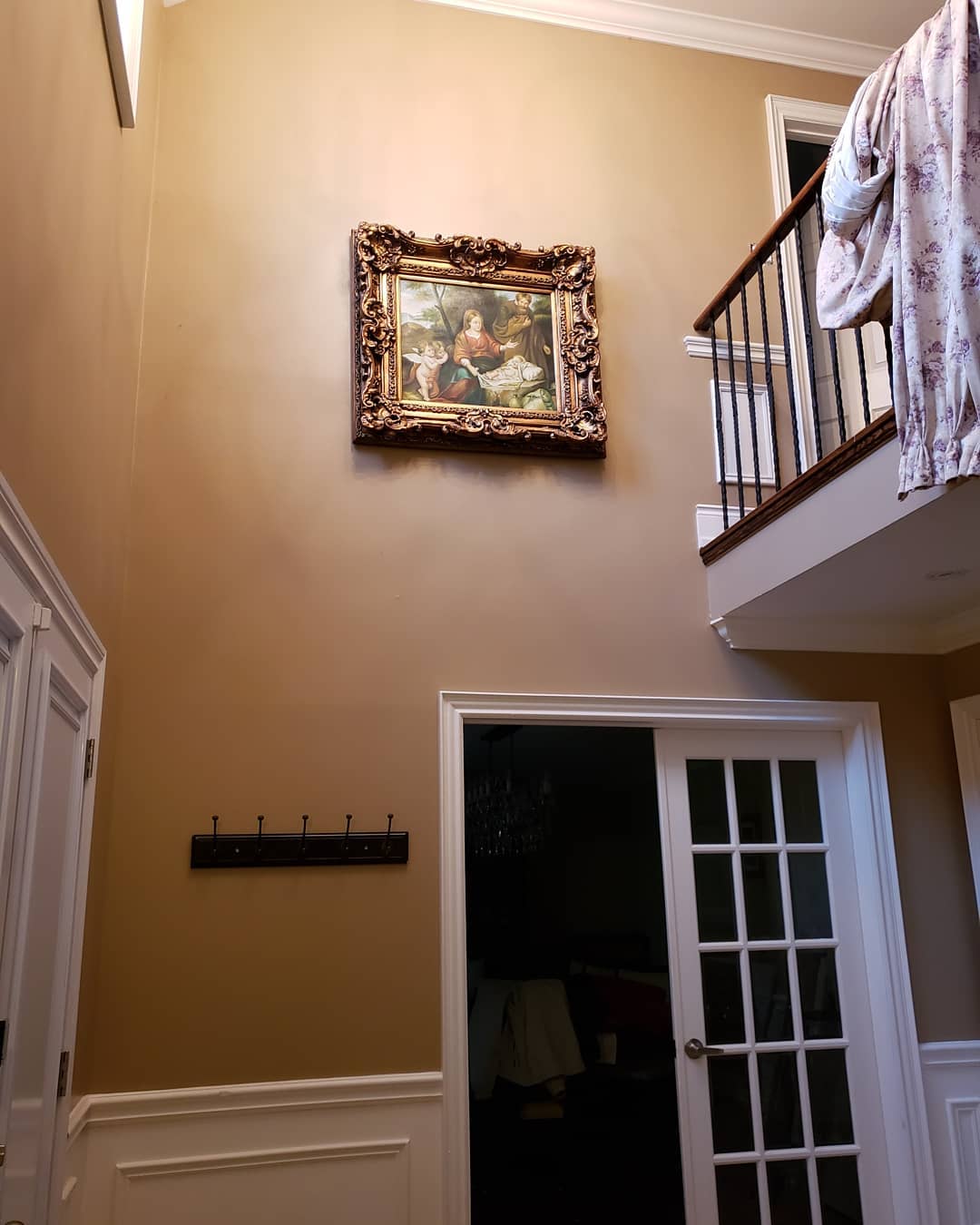
This one hits hardest in the two-story entry. In the tan version, the heavy gilt frame has to shout just to be seen. Same color family as the wall, no contrast. In the repaint, the gold leaf finally reads as gold leaf. The oil tones come forward. The whole piece looks like the focal point the owner paid real money for years ago.
Upstairs, same chandelier, different feeling
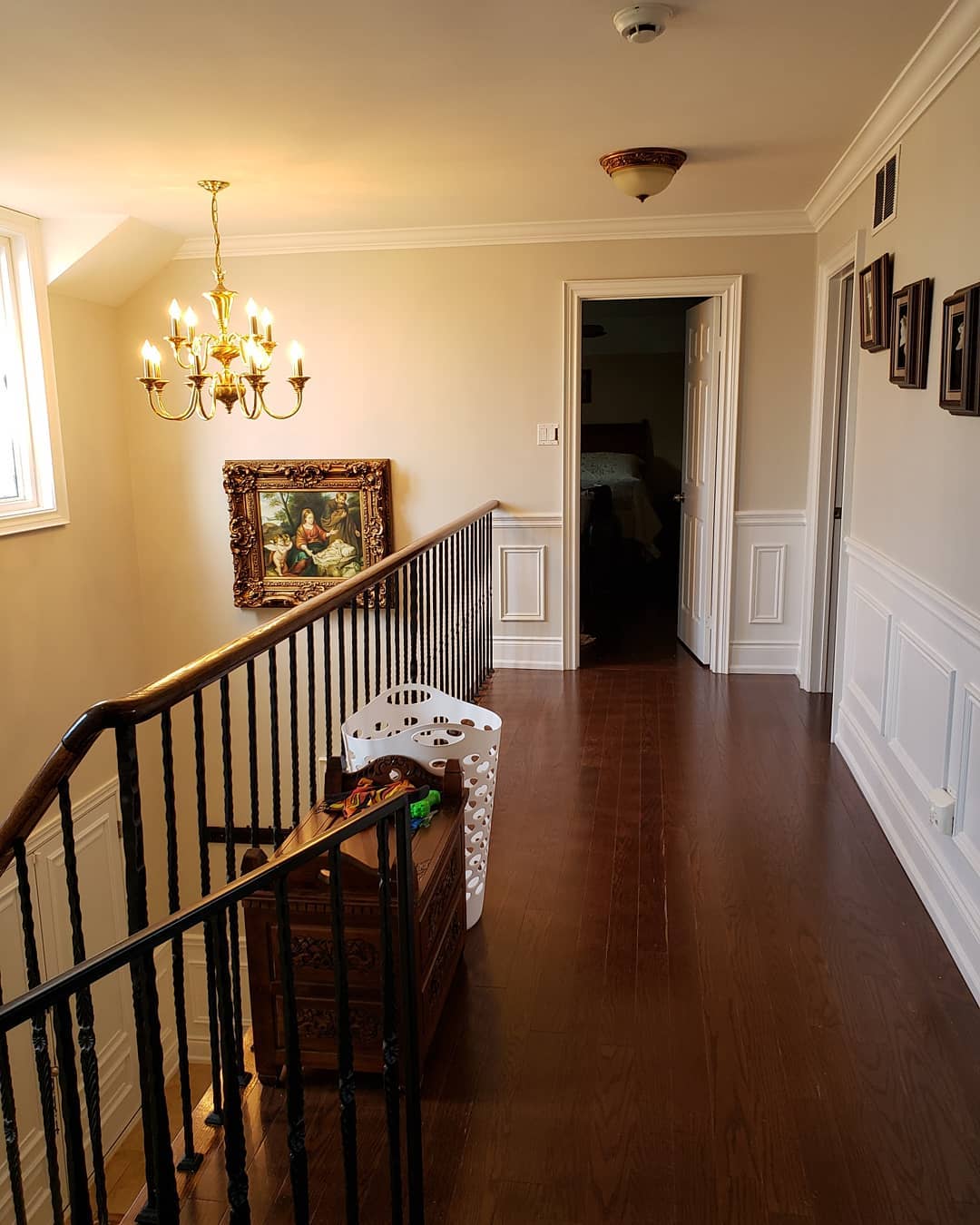
Same brass chandelier she almost replaced. Same dark hardwood. Same floor plan. The painting on the left wall that used to camouflage into tan now holds its own corner. The brass that used to read as a leftover looks like a nice chandelier, the kind you notice walking into a short-stay rental. The brass just finally has a background that lets it do its job.
The front door reads like a boutique entry
Walk in now and it is a different experience. Same tall double doors. Same little arched window. Same sconce. Same wainscoting. But where the tan version felt like a 2009 builder foyer, the repaint reads like the entrance of a small boutique hotel.
If this is your hallway, try these three things
The color. Balboa Mist OC-27 is the one she used. If your hallway sits dark or faces north, try Edgecomb Gray HC-173 for a touch more warmth. If you have strong sun and want it cooler, Classic Gray OC-23 goes almost soft white in bright rooms. All three play nice with brass, dark wood, and traditional art.
The finish. Eggshell for hallways and stairwells, every time. Flat looks beautiful for about a week until the first scuff mark that will not wipe off. Satin reads too plasticky under daylight.
The prep. Golden-tan is a coverage nightmare. Sand down the sheen, patch any dings, prime over bare spots, and plan for two full coats no matter what the can promises. The second coat is where the color actually settles in and stops looking patchy.
One wall color. One weekend. No fixture left the house. What’s the first wall in yours you’d test it on?