
Show someone the “after” photo of this Manitoba kitchen and they will assume the clients spent $50,000 and lost their kitchen for two months. The real story is smaller, and much more useful if your own cherry cabinets have you quietly planning an escape.
Almost nothing in that after shot is actually new.
The quartz counters are the same. The herringbone backsplash hasn’t moved a tile. The navy island was already navy. The gray-brown plank floor runs under both versions of the room. The pantry door still has its frosted glass panel. Every appliance, from the Samsung fridge to the slightly chunky 2008-era microwave, is in the exact spot it sat in before. Nothing was torn out, nothing was replaced, nothing was re-faced.
What changed was a can of paint and a bag of hardware.
The painter behind @refreshedandrefurbishedmb sprayed every cabinet box, door, and drawer front in Chantilly Lace by Benjamin Moore (OC-65), finished with Sherwin-Williams Gallery Series. Then she pulled every satin nickel pull and screwed matte black bar pulls on in their place. The dark gray strip of wall above the range got rolled over white too. That is the whole list.
The cabinets you were ready to replace
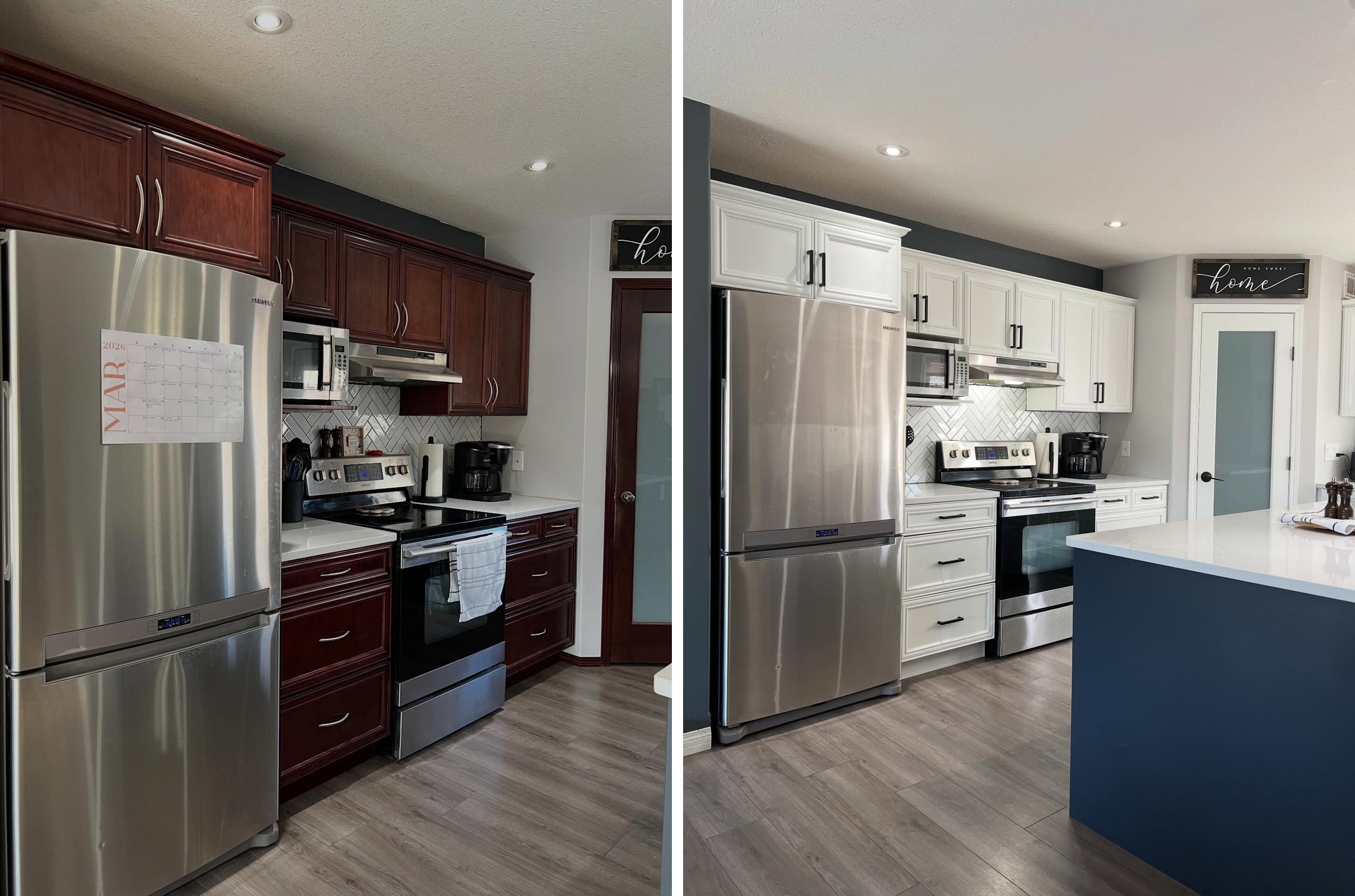
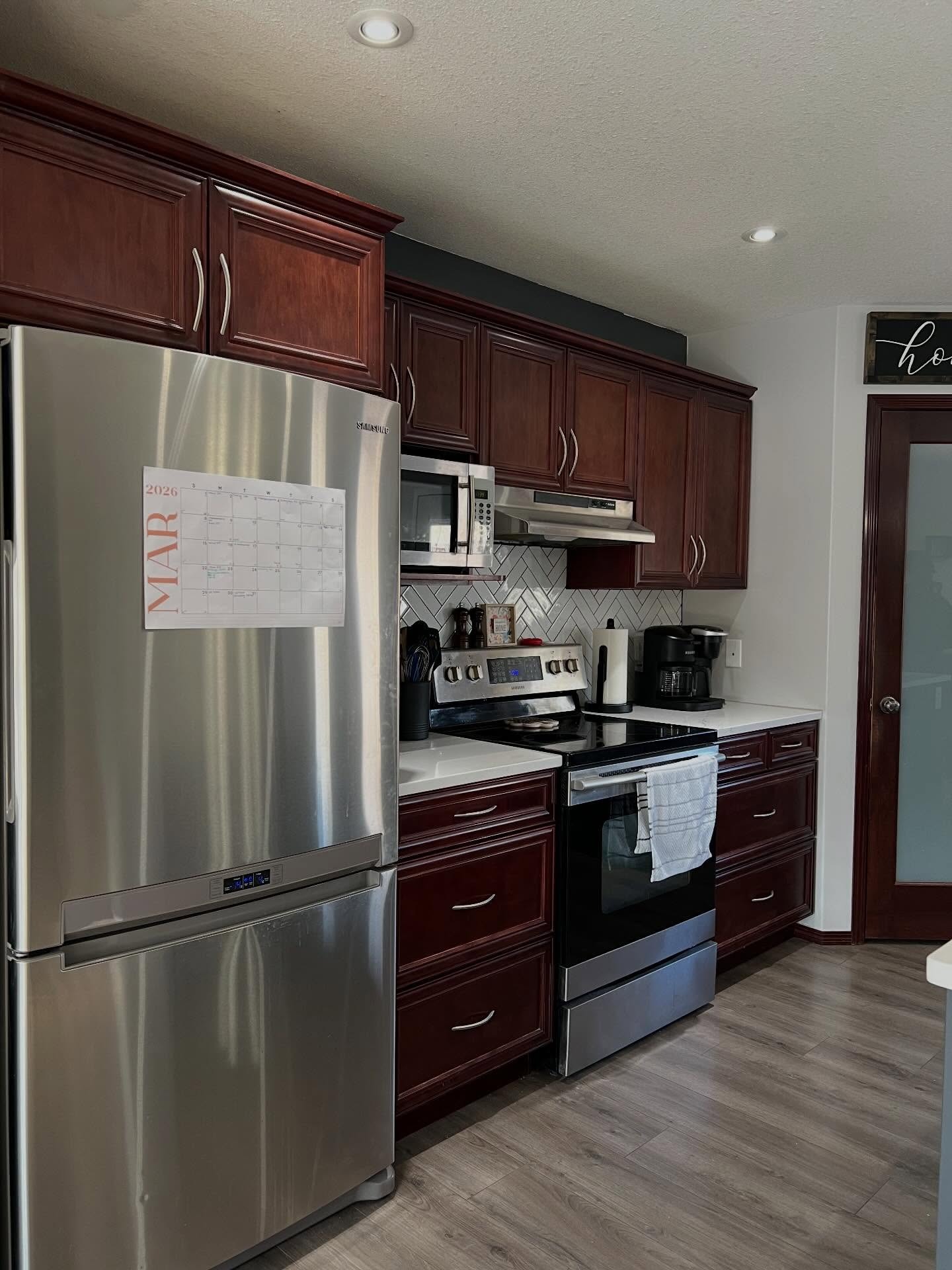
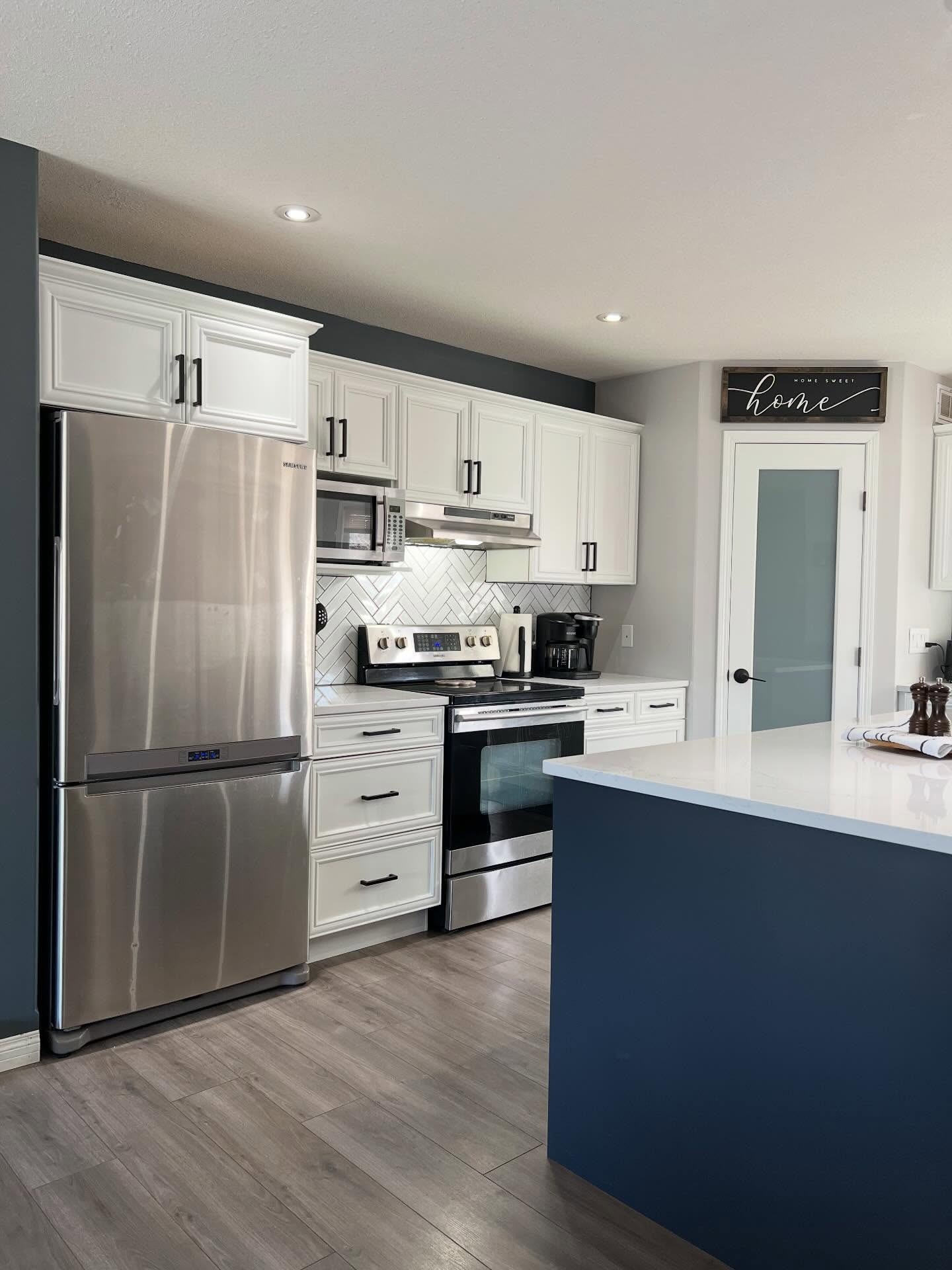
Scroll between the two sides. The raised panels on the doors? Same panels. The little cathedral arch at the top of each upper? Same cathedral. The whole drawer stack beside the range, down to the fussy curved pull profile? Same drawers, different pulls. Nobody added a shaker door. Nobody switched to slab fronts. The cabinets you were ready to apologize for are the ones a stranger would now compliment.
Why cherry kitchens read “2005” to your brain
The dated feeling in a room like this isn’t the cabinets, not really. It’s the conversation the cabinets have with their hardware. Red-brown wood plus warm satin pulls reads as a matched set to your brain, and your brain filed that set under “2005” fifteen years ago. As long as both halves of the pair are in the room, nothing you do, new counters, new backsplash, new floors, will outrun it.
Break the pair and the room resets. Even if you change nothing else.

The pantry corner tells the truth
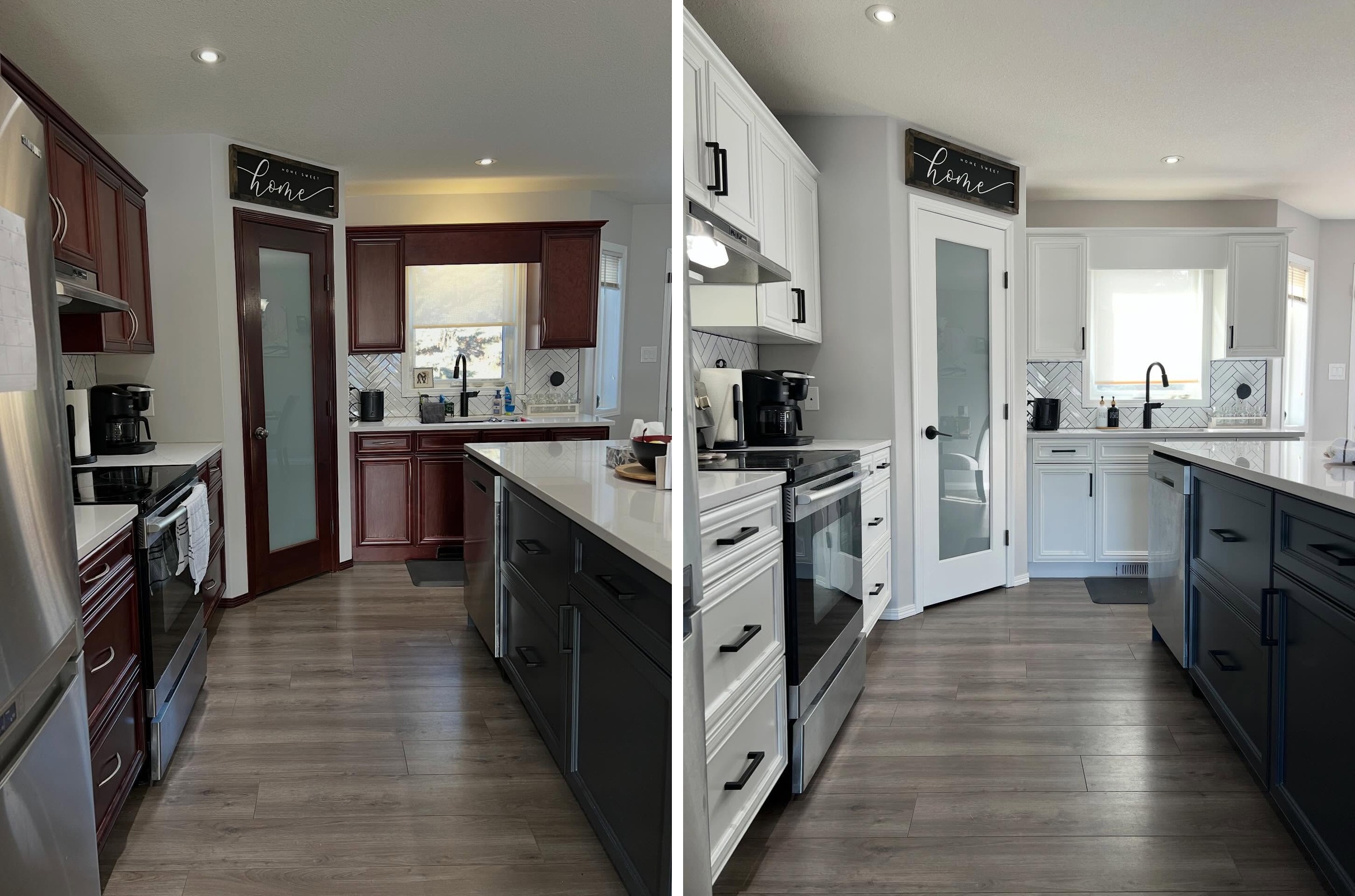
Everything your eye lands on in the after shot was already in the cherry version. The black gooseneck faucet. The waterfall quartz on the navy island. The frosted-glass pantry door. The little “home sweet home” sign over it. The gray plank floor underfoot. Every one of those pieces was quietly carrying the kitchen into 2026. The cherry was just so loud nobody could hear them.
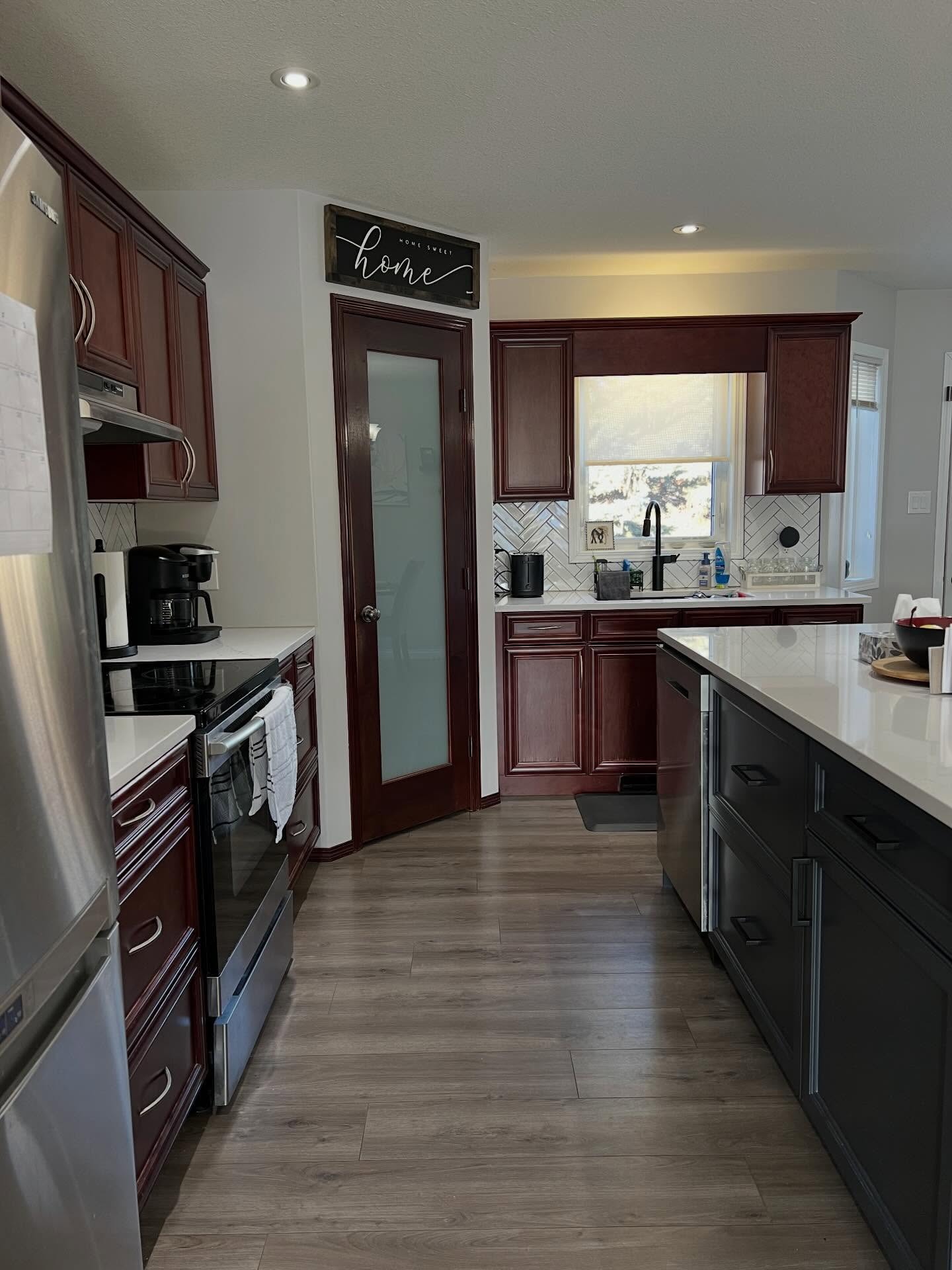
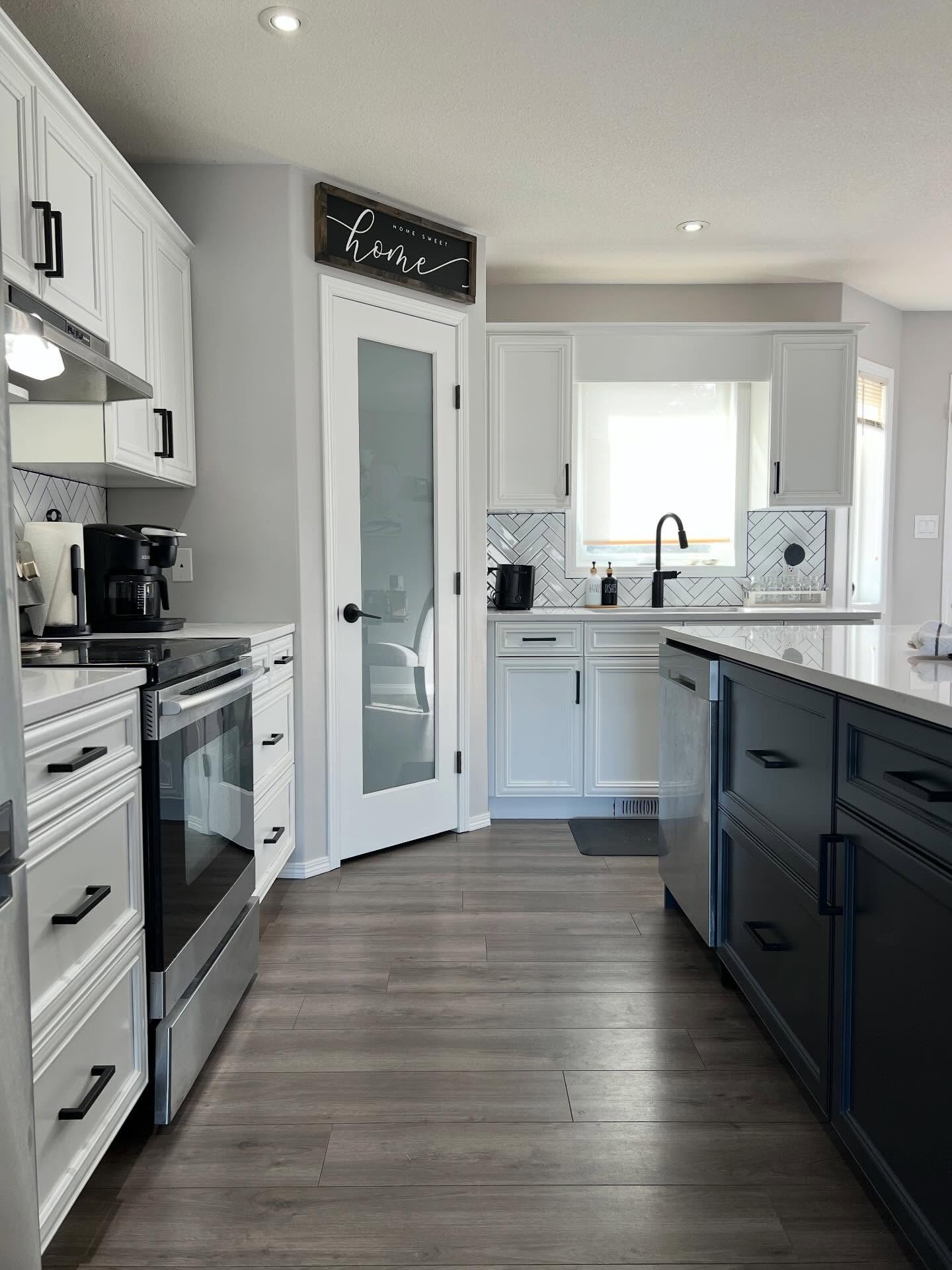
Watch the pantry door closely. In the before, it reads like a heavy stained slab from a 2007 study. In the after, it looks like a crisp door from a new build. It is the same door. Same frosted glass, same frame, same hardware position. Different color, different lever finish, and your brain writes it a new story.
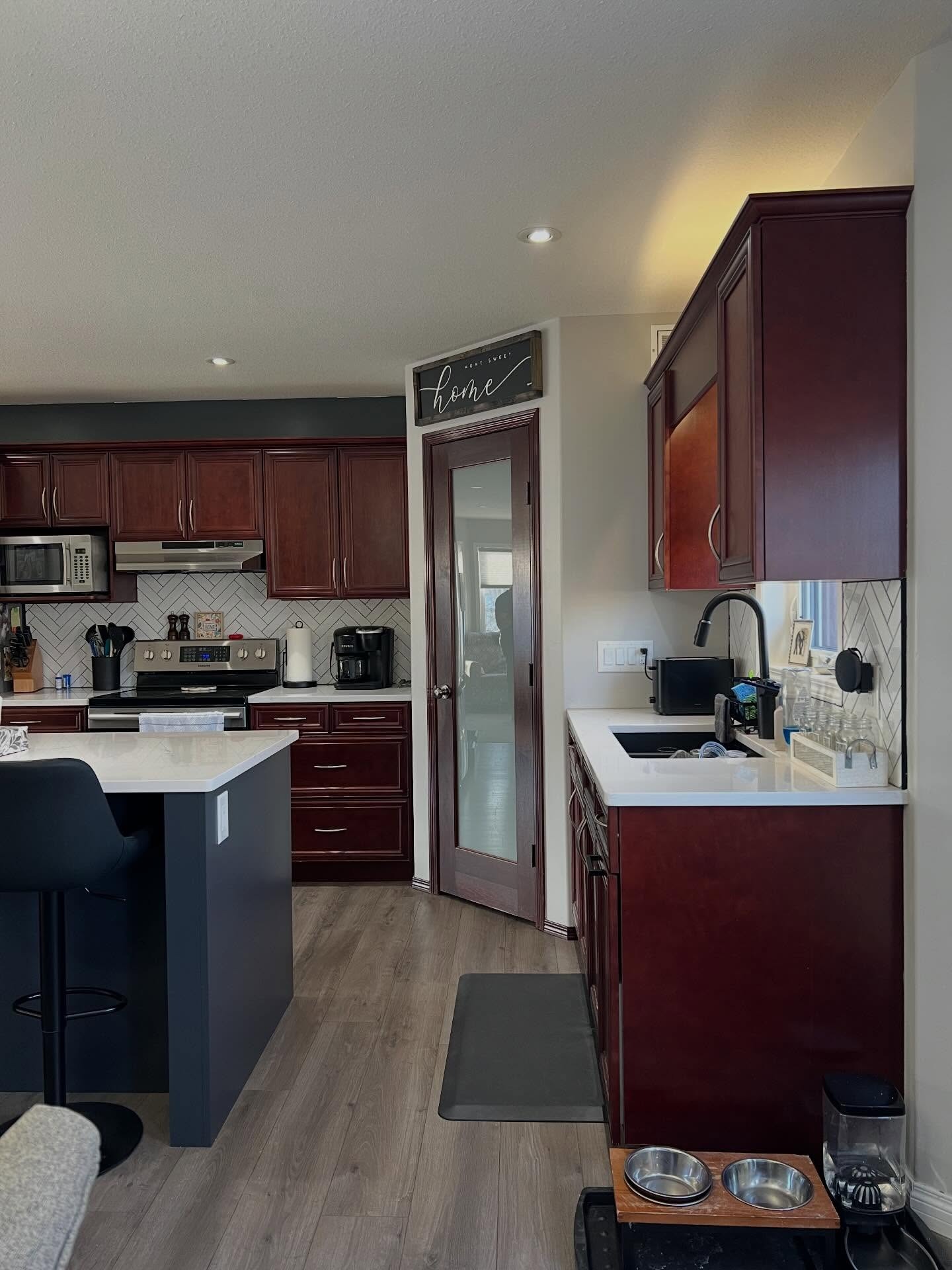
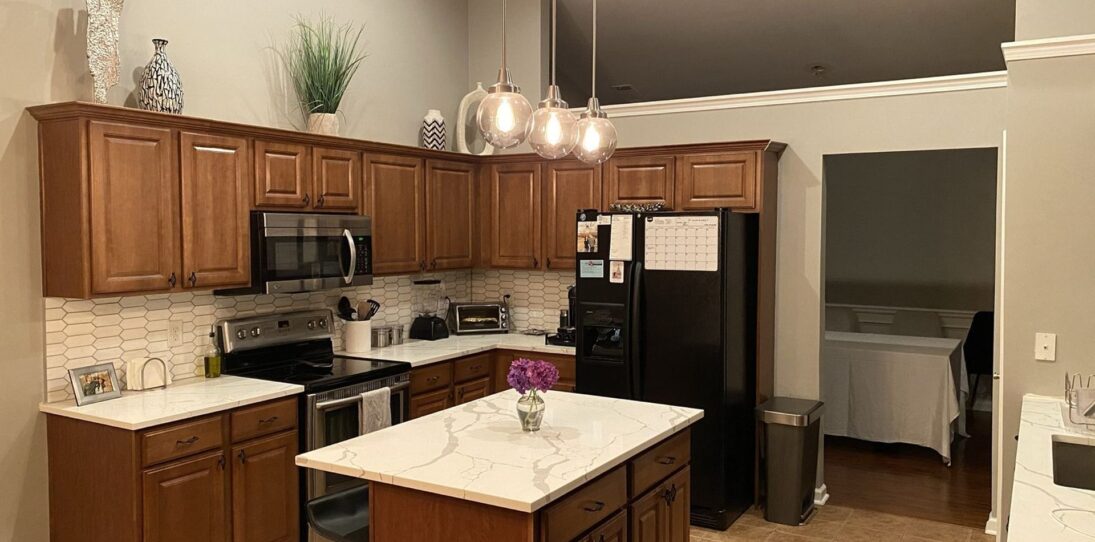
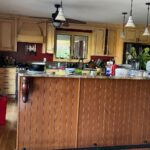
One last before, from the opposite end of the room. The entire case against gutting a kitchen like this sits in a single frame. Navy island on the left, modern. Stainless dishwasher behind it, current. Black faucet, quartz, plank floor, even the dog’s water station tucked against the kickplate, all stuff you’d see in a new build. The only thing pulling the shot backward is the cherry wrapped around the sink wall and the pantry door frame. Pull that one color and the whole room moves forward.
Zoom in and the trick stays obvious
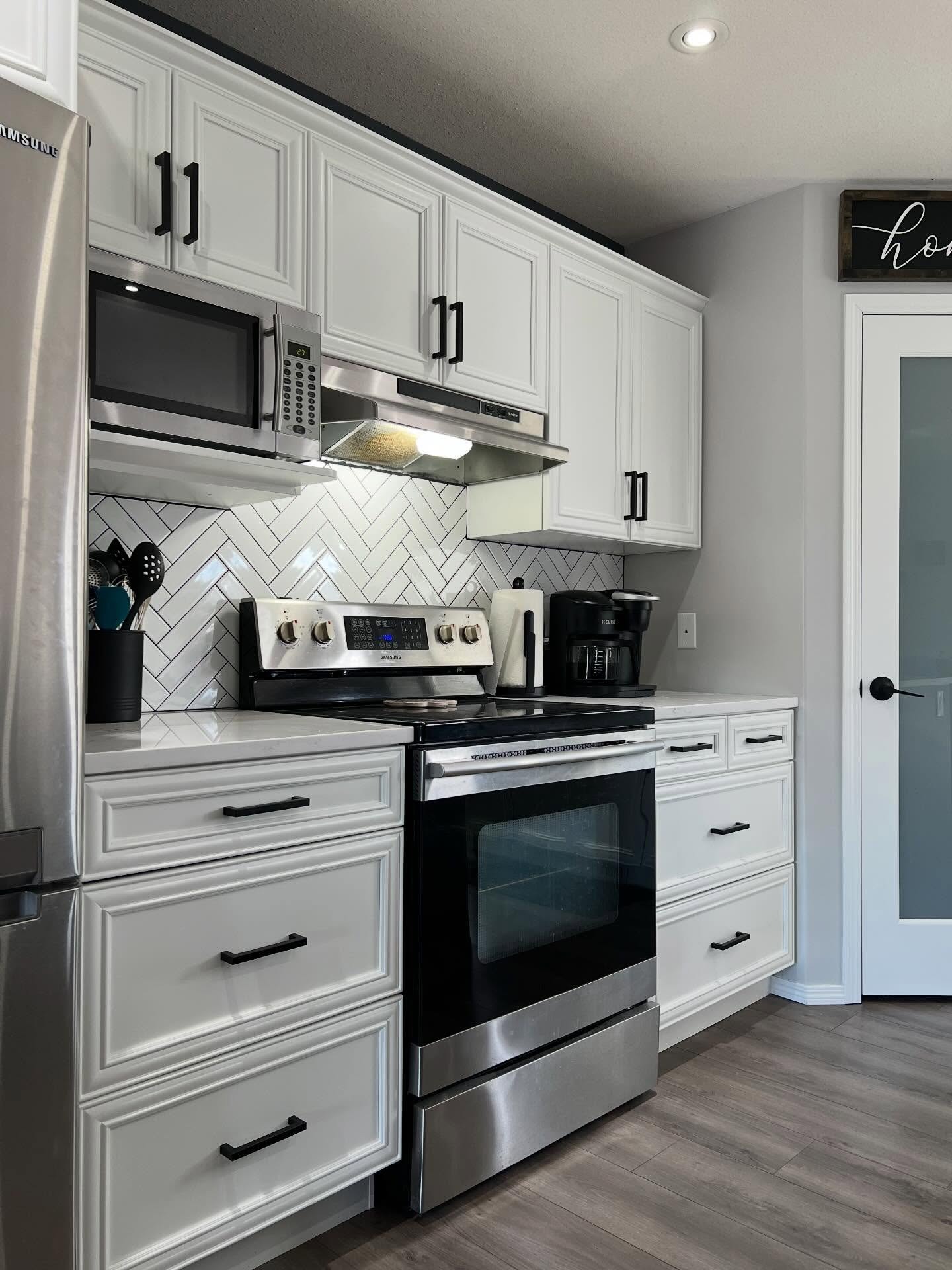
The range wall close-up is almost funny. Still raised-panel doors. Still a dated microwave over the hood. Same utensil crock. Same range. All that moved was the color behind it and the shape of the hardware, and the whole wall now reads like a magazine photo instead of a 2010 listing.
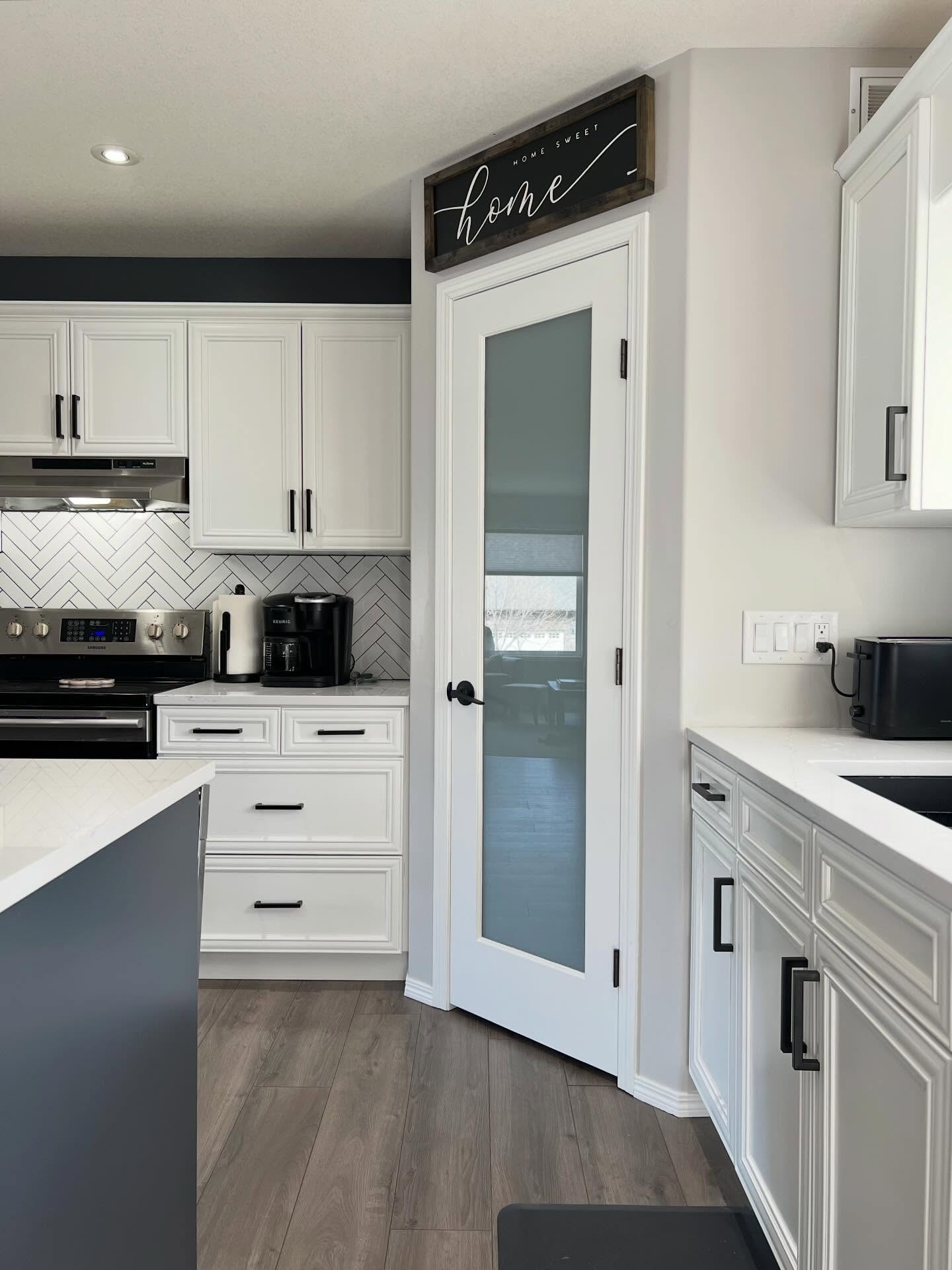
The pantry door close-up is the thesis of the whole project. Every object in that frame existed before. Somebody picked a color, loaded a sprayer, swapped a few handles, and the whole mood of the corner changed. No contractor. No permit. No month of takeout.
What copying this actually costs you
If you’re living with a cherry kitchen you’ve quietly been trying to tolerate, the thing standing between you and these afters is small. A bag of matte black bar pulls off the shelf. A few quarts of Chantilly Lace in a cabinet-grade finish. A weekend of coats and dry time. And a willingness to stop treating your cabinets like a lost cause and start treating them like a canvas.
The clients kept the quartz, the backsplash, the navy island, the floors, every appliance, even the pantry door they already loved. The painting is by @refreshedandrefurbishedmb in Manitoba. The counters and island were originally installed by Kitchen & Bath by Mark, with the herringbone tile by Neepawa Tile Installer. All of that was already in place before anyone opened a paint can. The painter walked in with a sprayer and walked out with a brand-new-feeling kitchen hiding under the same old bones.
That’s it. Not expensive. Not complicated. Just the move almost nobody with a cherry kitchen thinks is actually allowed.
Sources:
- Instagram post by @refreshedandrefurbishedmb
- Benjamin Moore Chantilly Lace (OC-65)
- Sherwin-Williams Gallery Series


I love the makeover!! what a difference! It’s fine if you prefer an older dated look that somehow feels comforting to you; but there’s no denying the new look is much more cheery, modern, and sleek!
The floor is heinous….there isn’t enough Chantilly Lace in the free world to make it remotely appealing. Funny, I didn’t look twice at the floor until the cabinets were “refreshed”.
Those beautiful cabinets in white! Wait for the dirty finger prints and grease show up. Change the color of the wall and get rid of that floor!
Before is so much prettier, richer, and warmer. The white looks generic and institutional.
The cherry cabinets were the best part of the kitchen – no home sweet home sign is enough to restore any warmth. The Chantilly Lace should have gone on the the island, and please please find some rugs to hide the floor.