

The cabinets were brand new. Soft-close drawers, shaker fronts, waterfall quartz island, Viking wall oven, built-in fridge, towering ceilings, warm cherry floors underfoot. On paper, this was the kitchen most people spend two years and a loan trying to land. On a listing page, it would have been called timeless. On an open house flyer, it would have been called turnkey.
The homeowner looked at it and said it was boring.
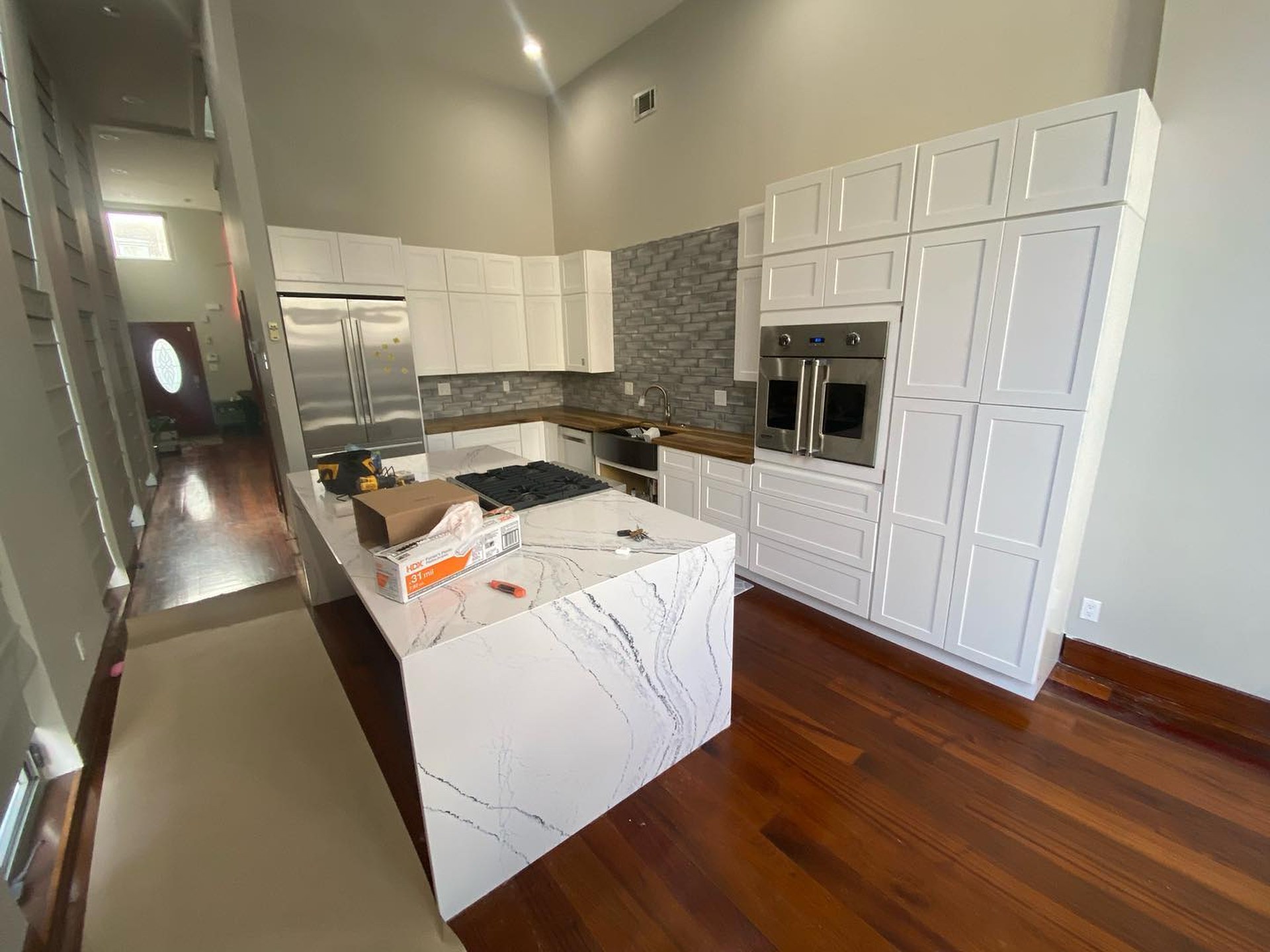
That is the part most people skip past when they see a transformation like this. The before is not a dated kitchen begging for rescue. It is the finish line. White shaker, grey veined quartz, stainless appliances, butcher block runs along the walls. It is the kitchen every realtor nods at. The kitchen Pinterest told us to want for a full decade. And the whole room still felt like it was holding its breath.
Why White Became the Default (And Why That Started Hurting Rooms)
White kitchens won the 2010s for a simple reason: they do not offend anyone. They photograph bright. They play nice with any countertop. They do not date as fast as the trend of the moment, and resale agents swear by them. Safe became the goal, and safe quietly turned into forgettable.
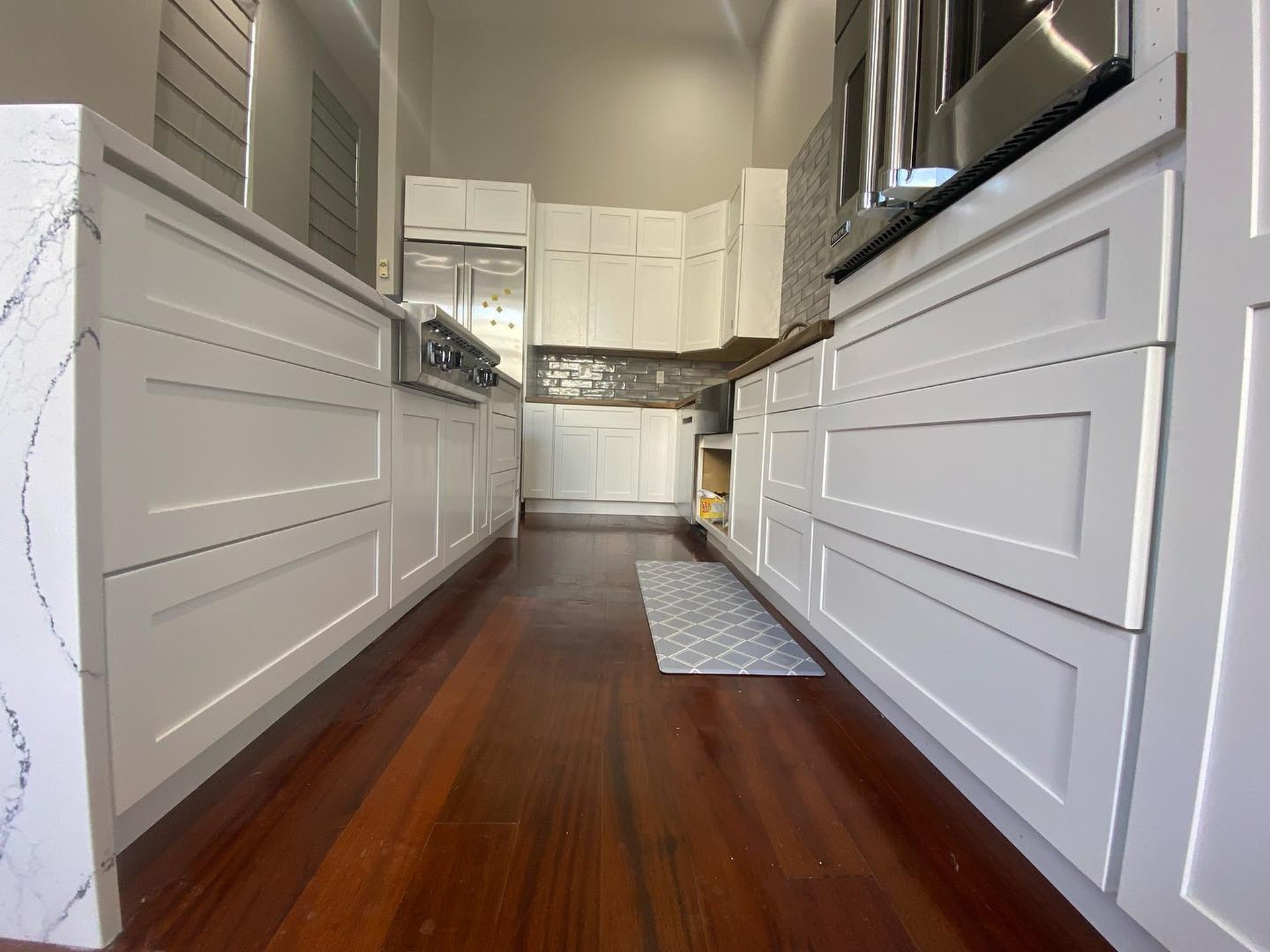
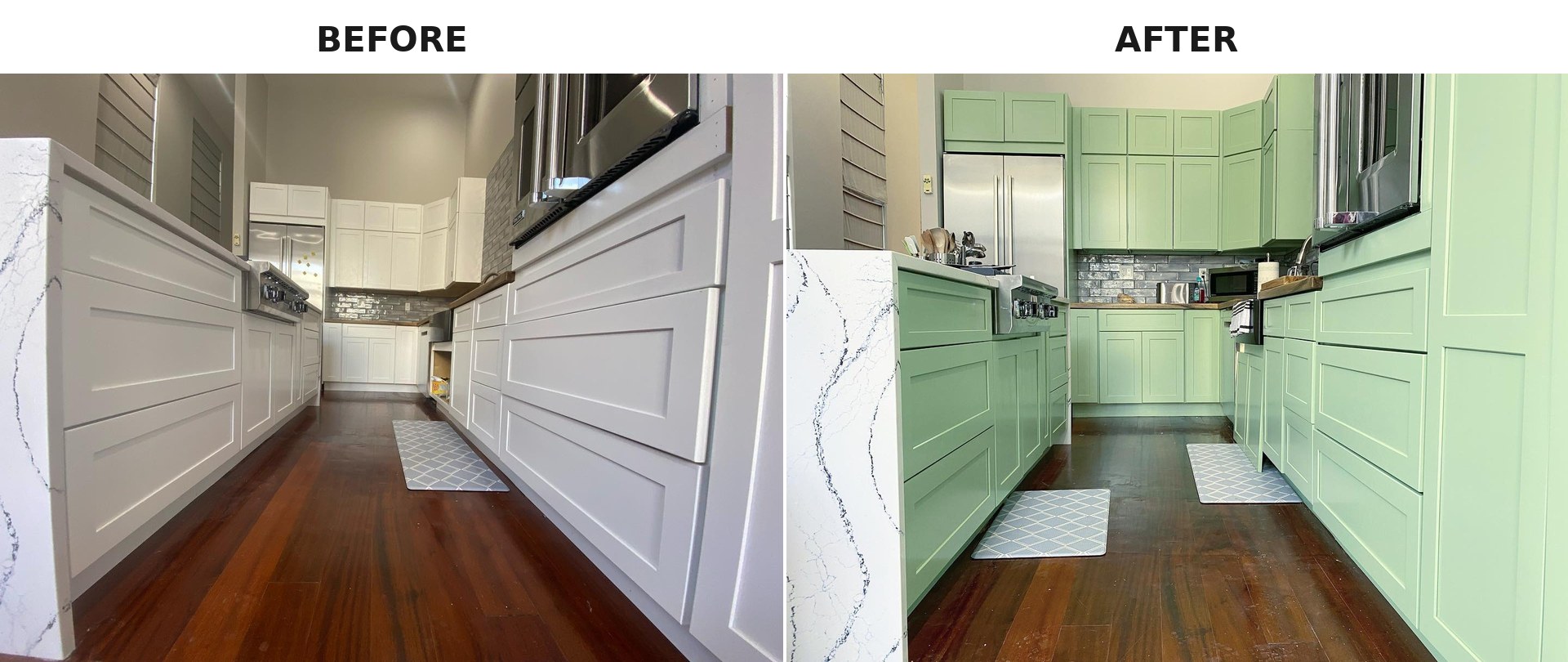
Look down the galley above. Every surface is doing its job. Nothing is wrong. And nothing has an opinion either. The eye slides across white doors, hits the stainless microwave, slides across more white doors, and lands on the floor because the floor is the only thing in the frame with a voice.
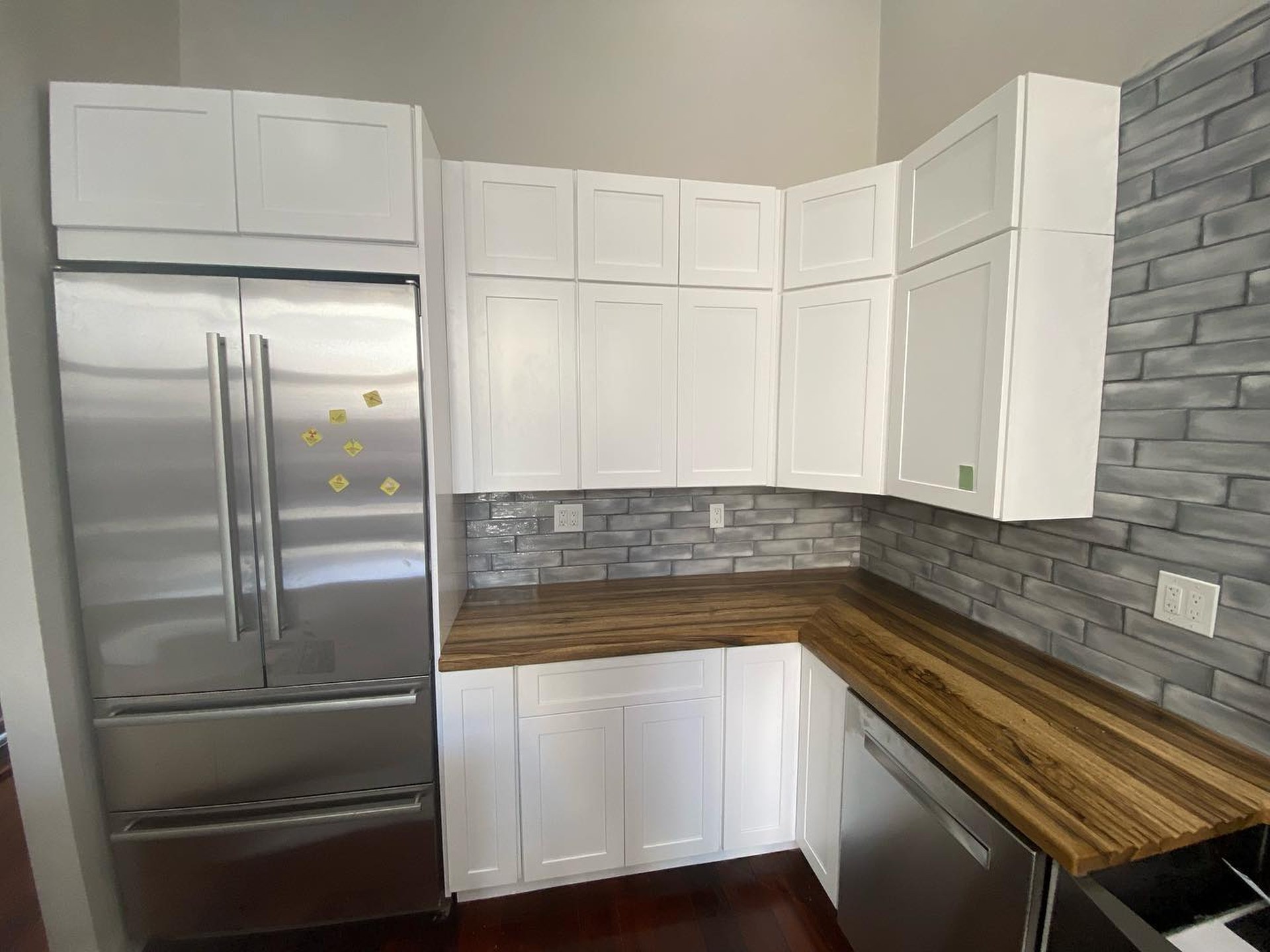
Even the parts of this kitchen built to stand out, the hand-glazed grey brick, the thick butcher block, the built-in fridge, read as background. The cabinets are not framing them. The cabinets are competing with them.
The Color That Changed Everything
The paint is Sherwin-Williams Haven. Not a dusty, barely-there sage. Not the muted greige-green that design accounts have been slow-walking as acceptable for the last two years. Haven is saturated. It reads mint in daylight, deeper celadon in shadow, and it is the loudest finish most people would ever put on a kitchen cabinet.
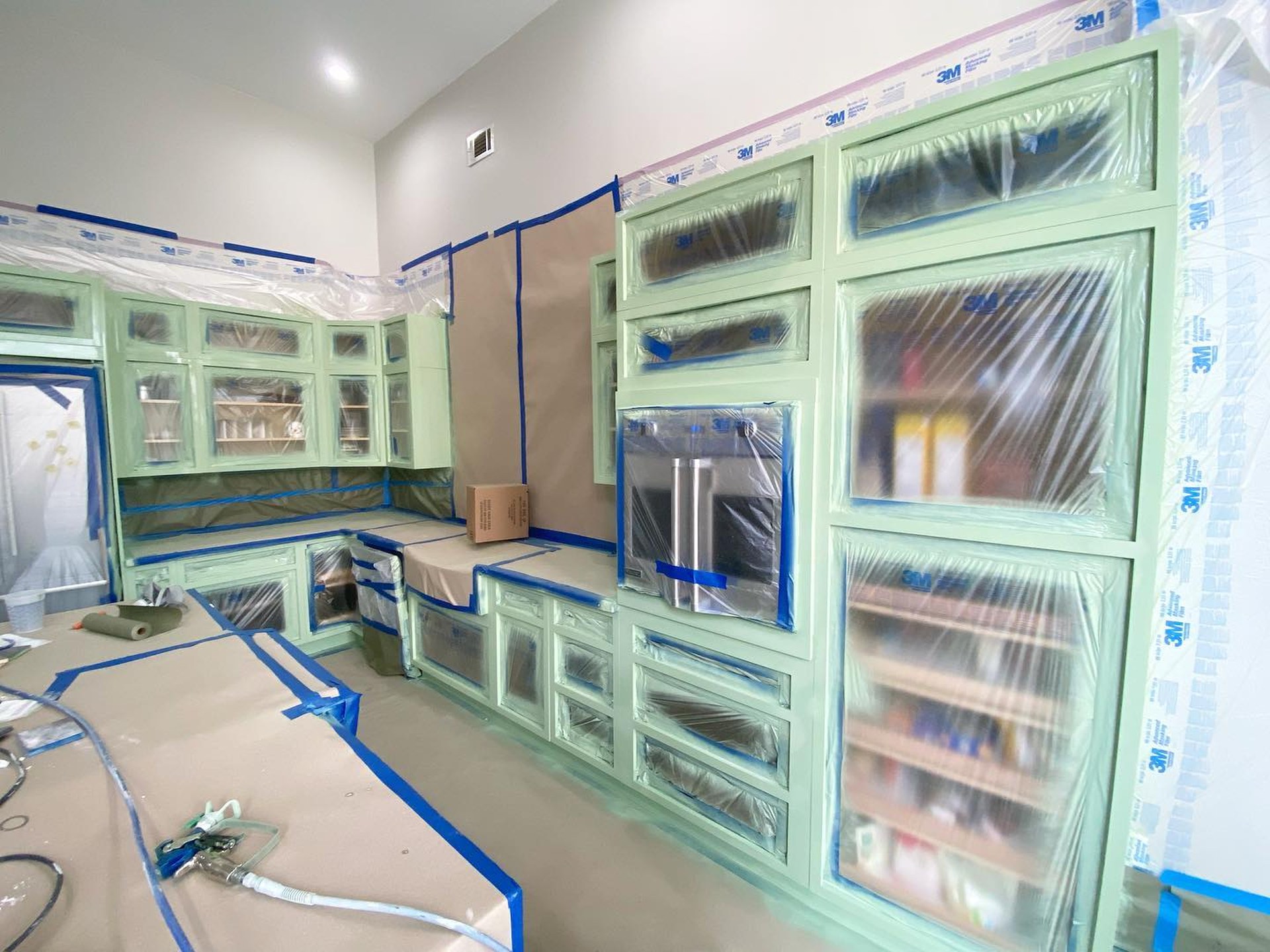
Pezzotti Painting masked the whole room, taped off every appliance, draped the island, and sprayed the cabinets in place. Doors and drawer fronts came off for a flat spray. The result is a factory-smooth finish you cannot get with a brush and roller, which is why this kind of job is worth hiring out when the cabinets are new and worth protecting.
The After
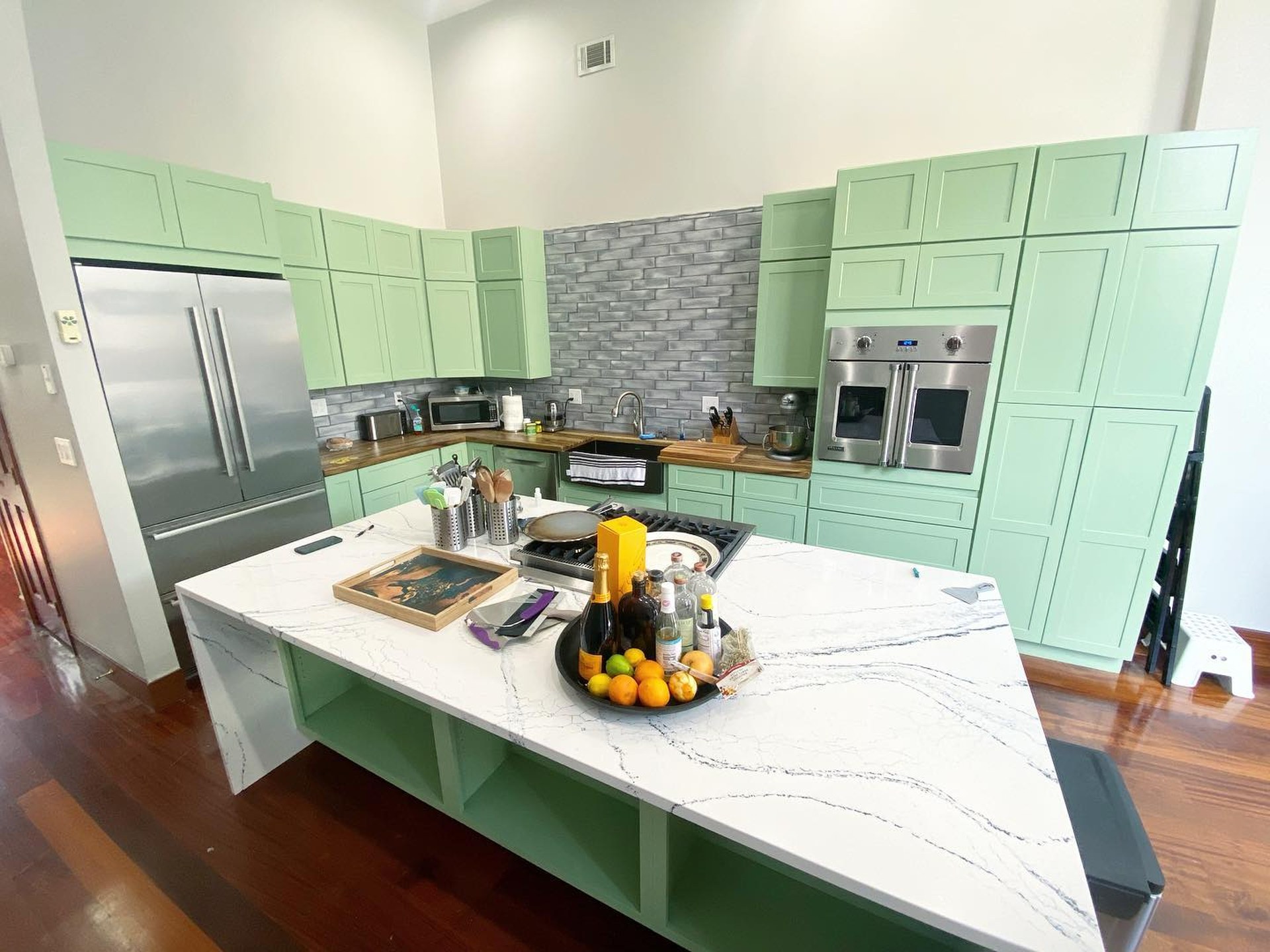
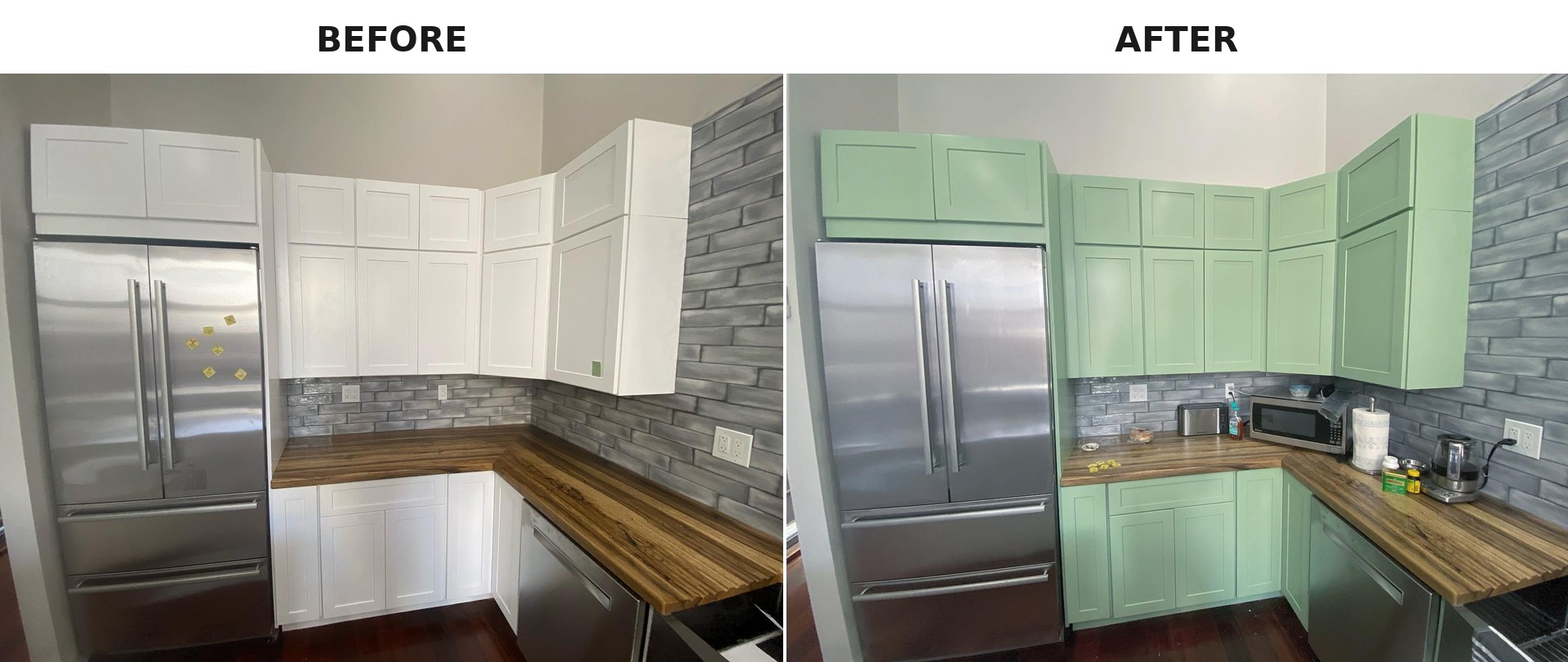
Same room. Same cabinets. Same quartz, same backsplash, same floors. The green does something white could not: it builds the kitchen instead of assembling it. The veining in the quartz pops now. The warm wood on the counters warms up instead of competing. The stainless appliances stop looking like showroom props and start looking like tools inside a real room.
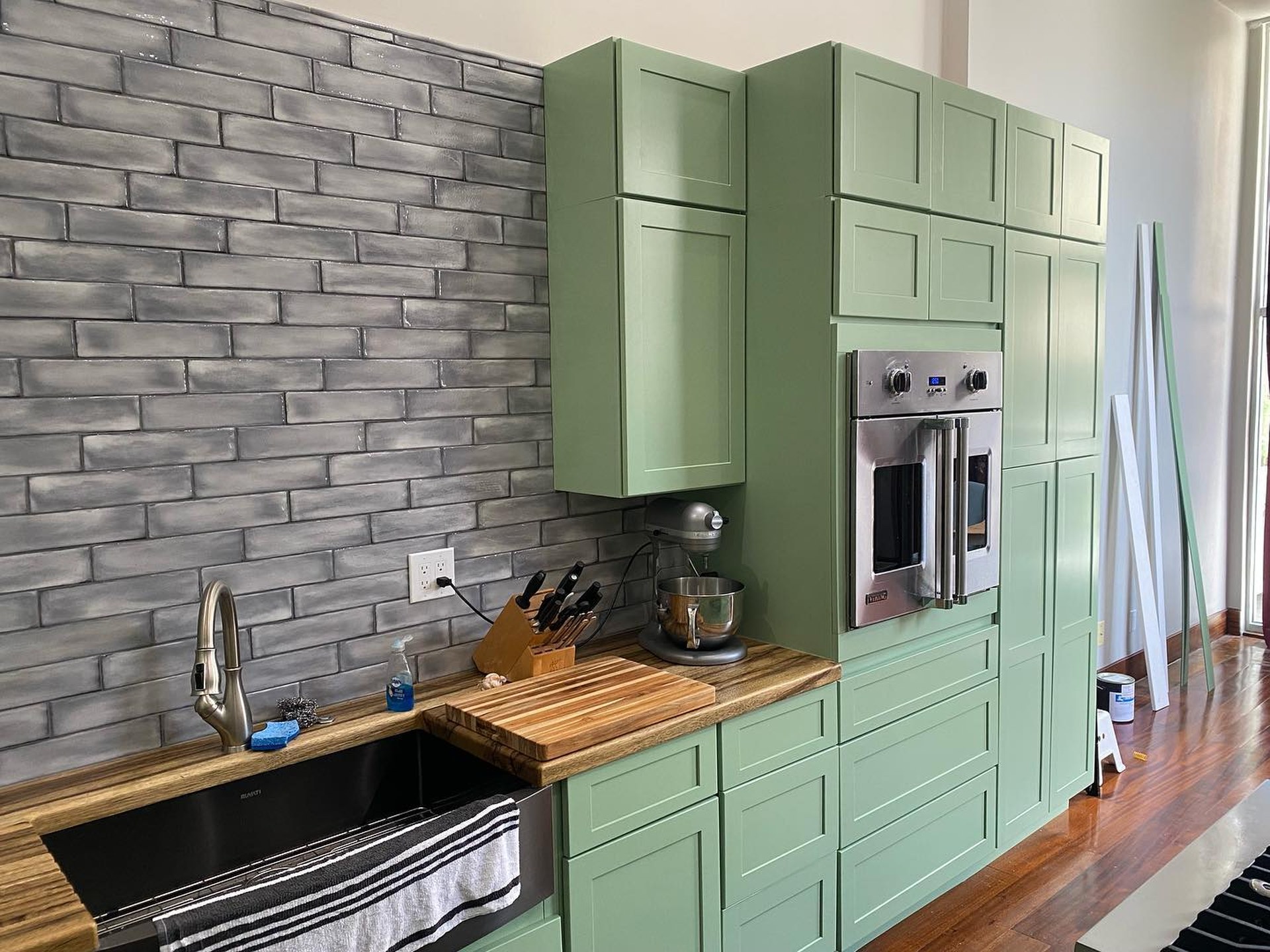
Look at the brick now. In the before shots, that backsplash was a quiet grey wall nobody noticed. Against Haven green, the glaze catches light and the brick starts to read as its own feature. The warm brown of the butcher block, the brushed nickel faucet, the matte black sink: every finish in the room has a reason to be there now.

Side By Side
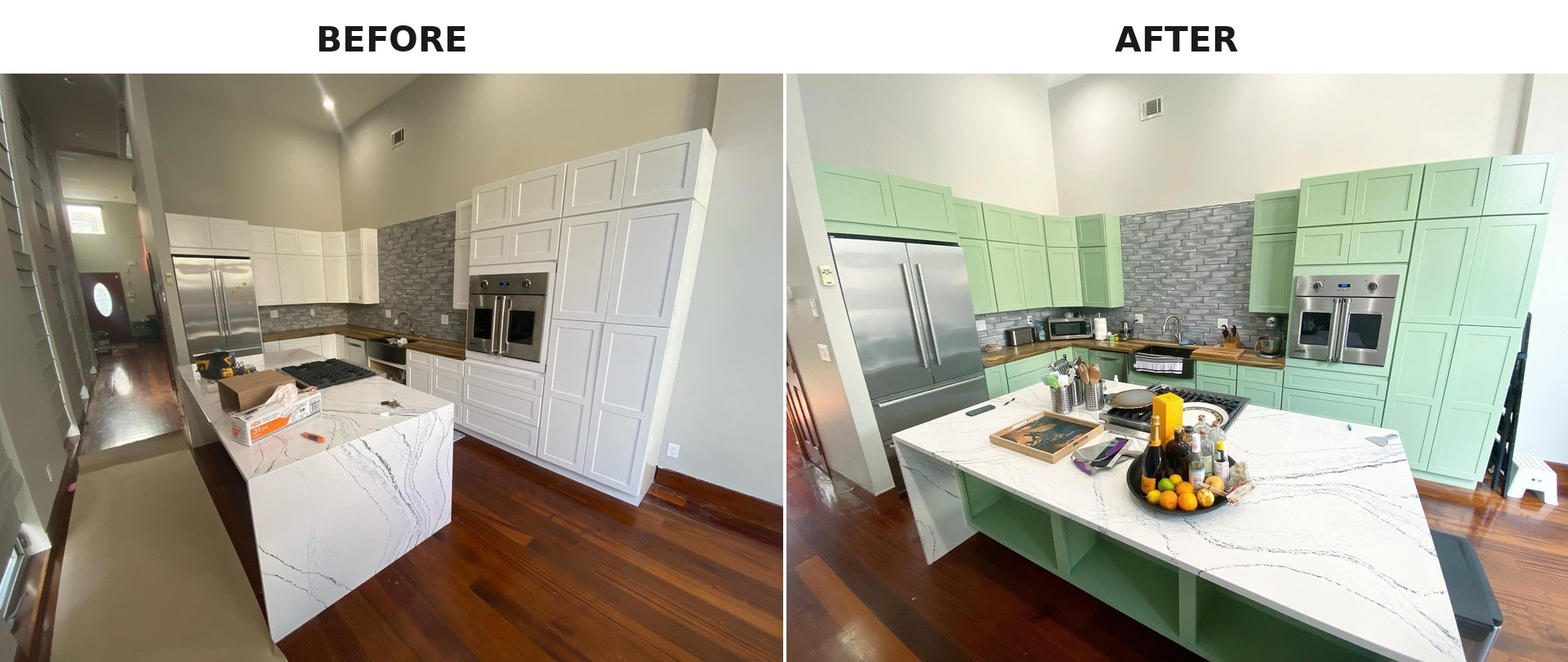
Nothing else changed. Not the layout, not the counters, not the tile, not the floors. The only variable is color. And the white version, which seemed finished a week ago, suddenly looks like a staged flip.
The Island Was Already a Feature. Now It Fits the Room.
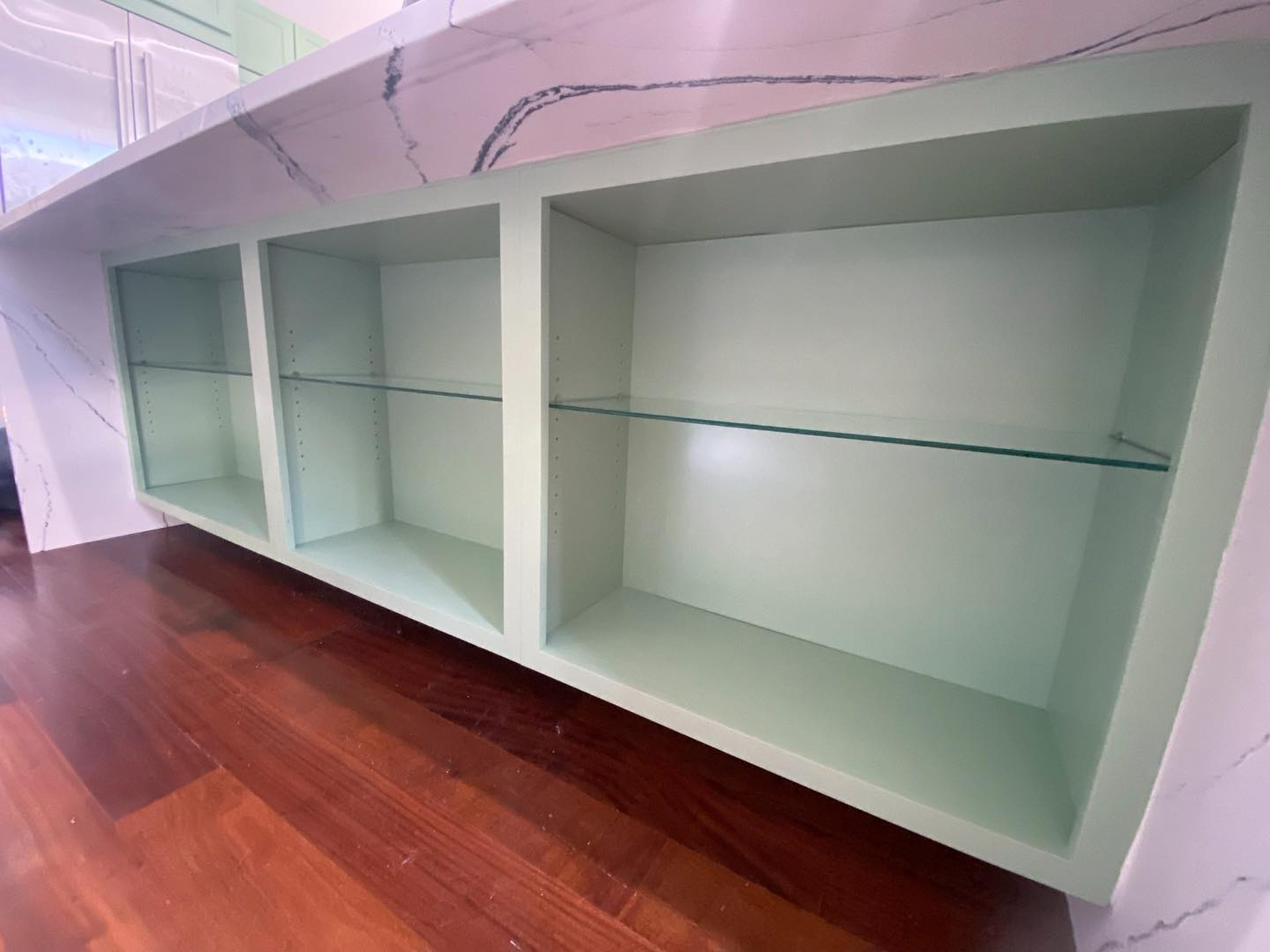
The three open display cubbies on the island used to blend into the white shell above them. Painted Haven green, they turn into a built-in display case. The quartz above feels more like a slab of real stone, less like a factory sheet, because the color underneath is giving it something to push against.
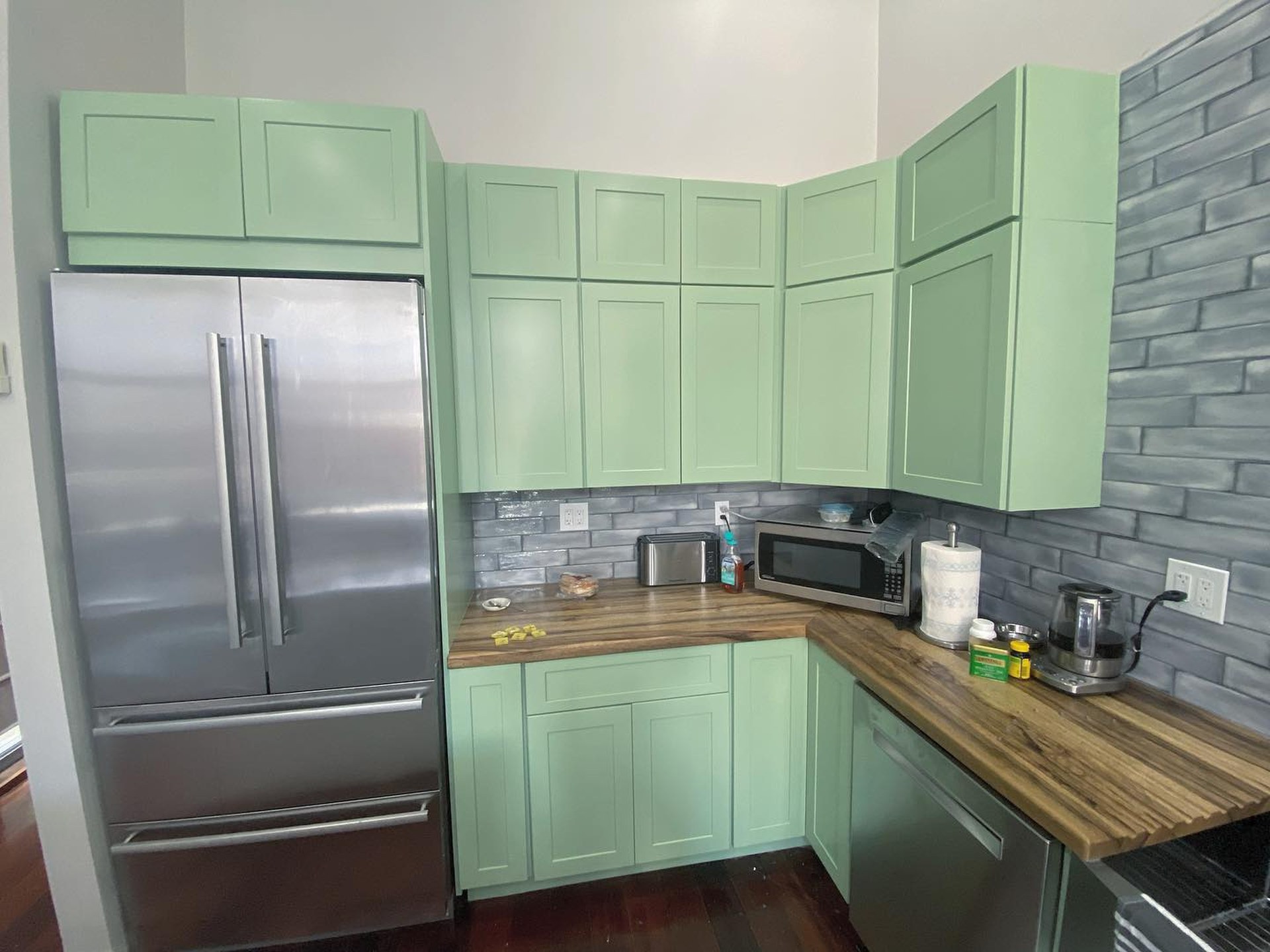
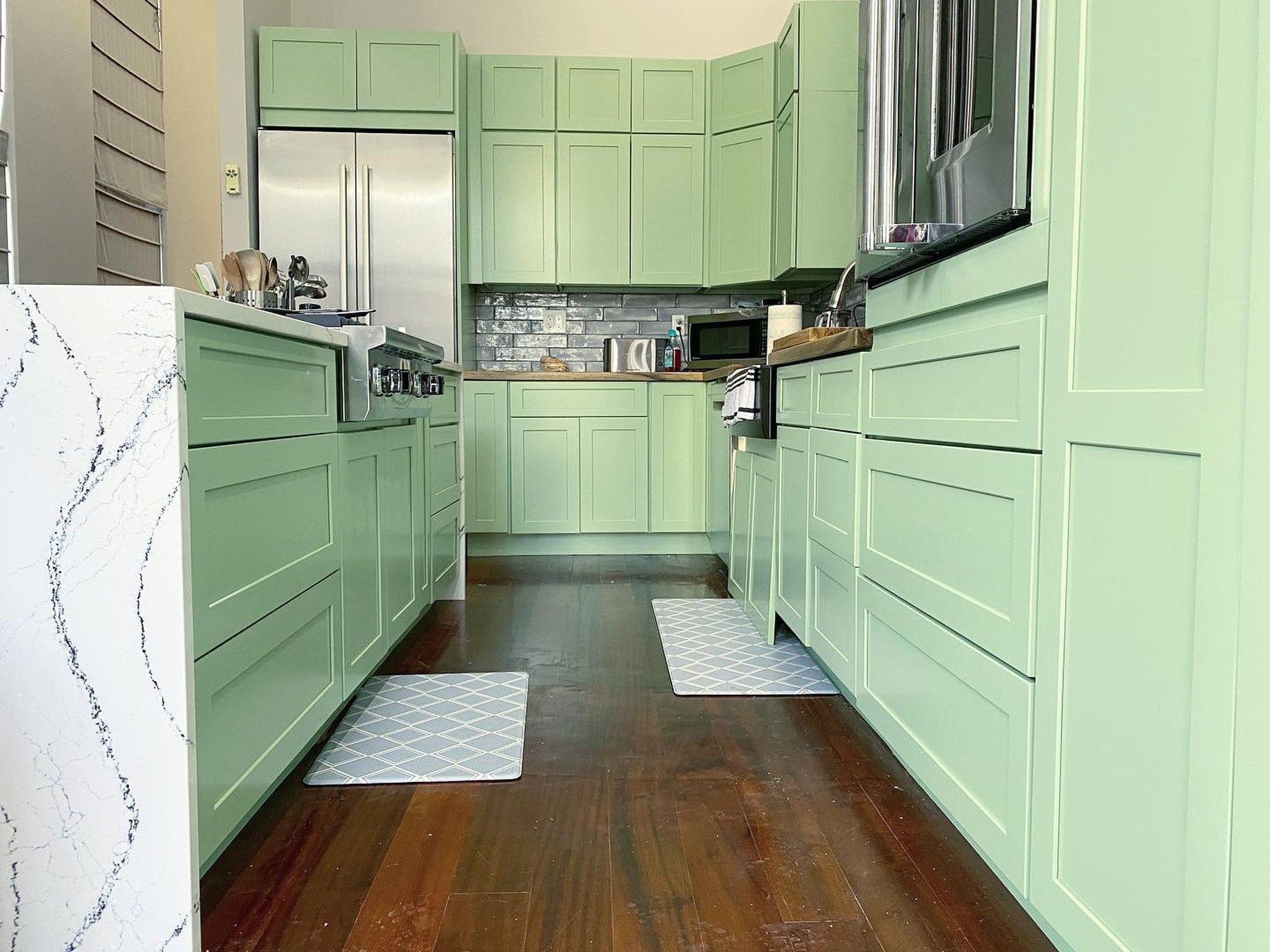
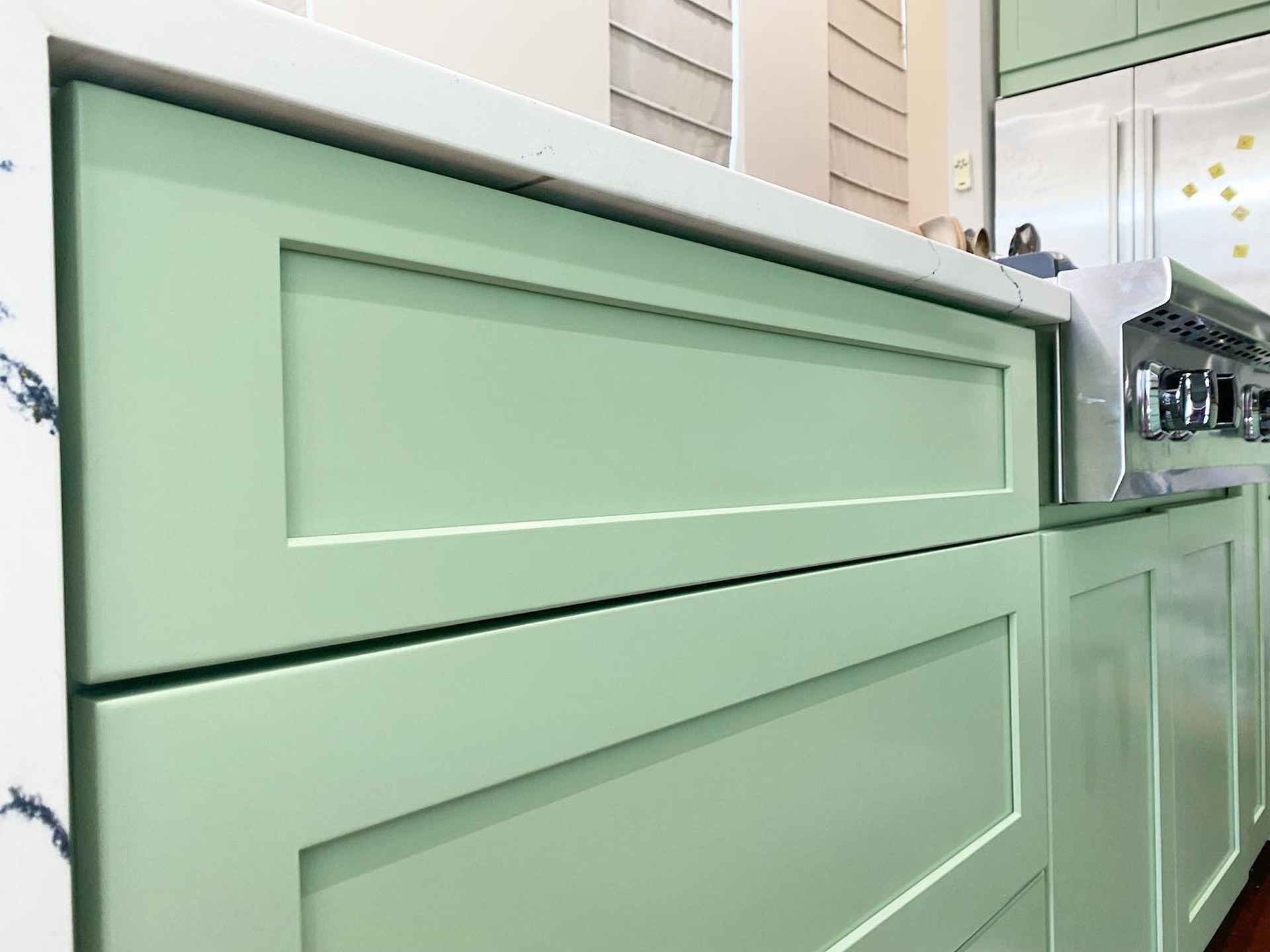
Close up, you can see what a professional spray job buys you. No roller stipple, no brush marks, no streaks where one coat lapped onto another. The shaker profile stays crisp. The color is even across the frame and the panel. This is the detail that makes a repaint look like custom cabinetry instead of a weekend DIY.
The Takeaway
Handles go on next week. The color is Sherwin-Williams Haven. The painter is Pezzotti Painting. And the real lesson is not about one green kitchen in one house.
The lesson is that a white kitchen is a starting point, not a finish line. When every renovation is pushed toward the same safe palette, the rooms that break the rule are the ones that stop feeling like a showroom and start feeling like somebody actually lives there.
The homeowner painted over brand new white cabinets because the kitchen was not hers yet. Now it is.

I think that green is hideous. I’m glad the homeowners likes it.