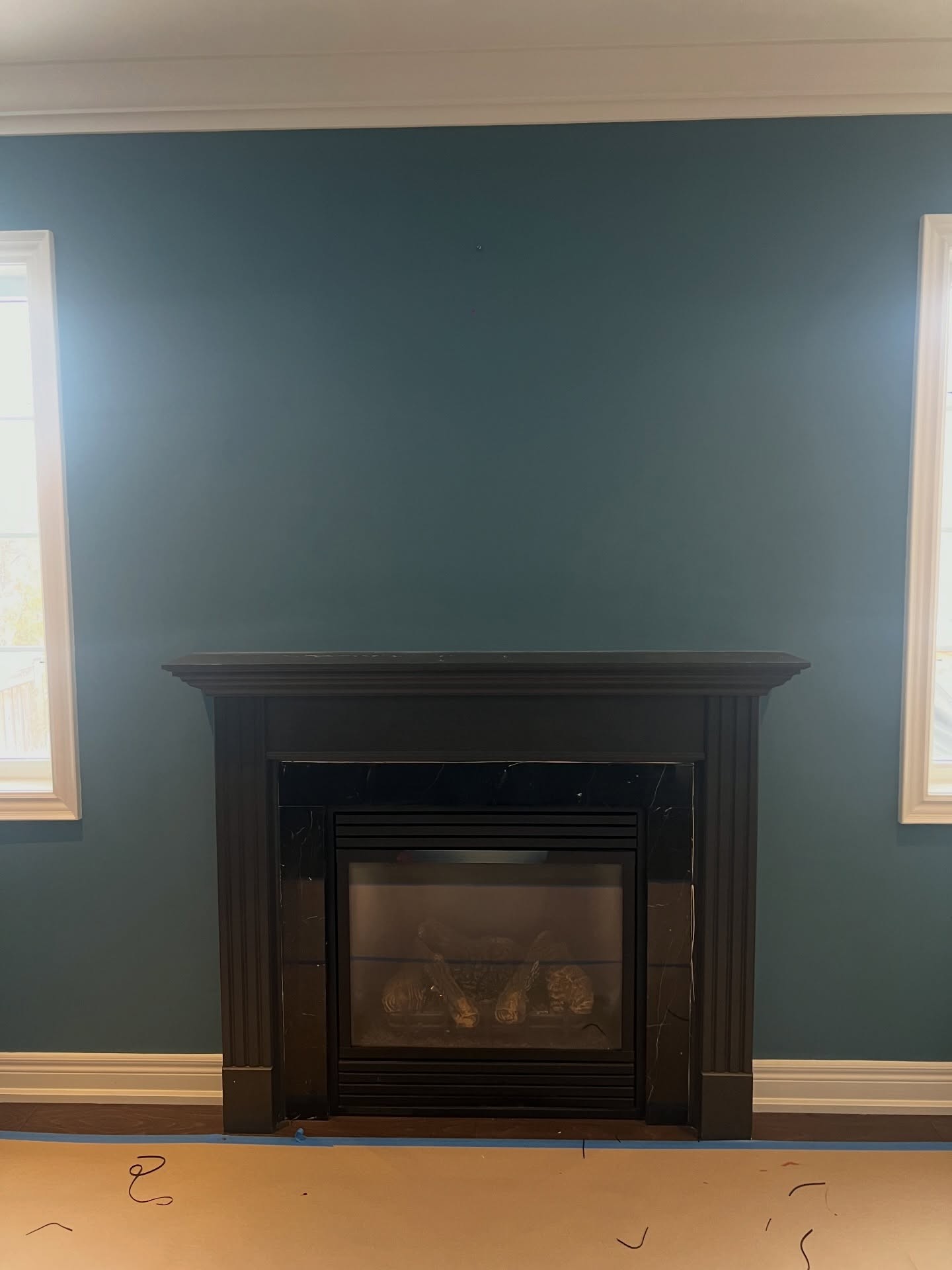
The old mantel wasn’t ugly. That’s what made it hard to see the problem.
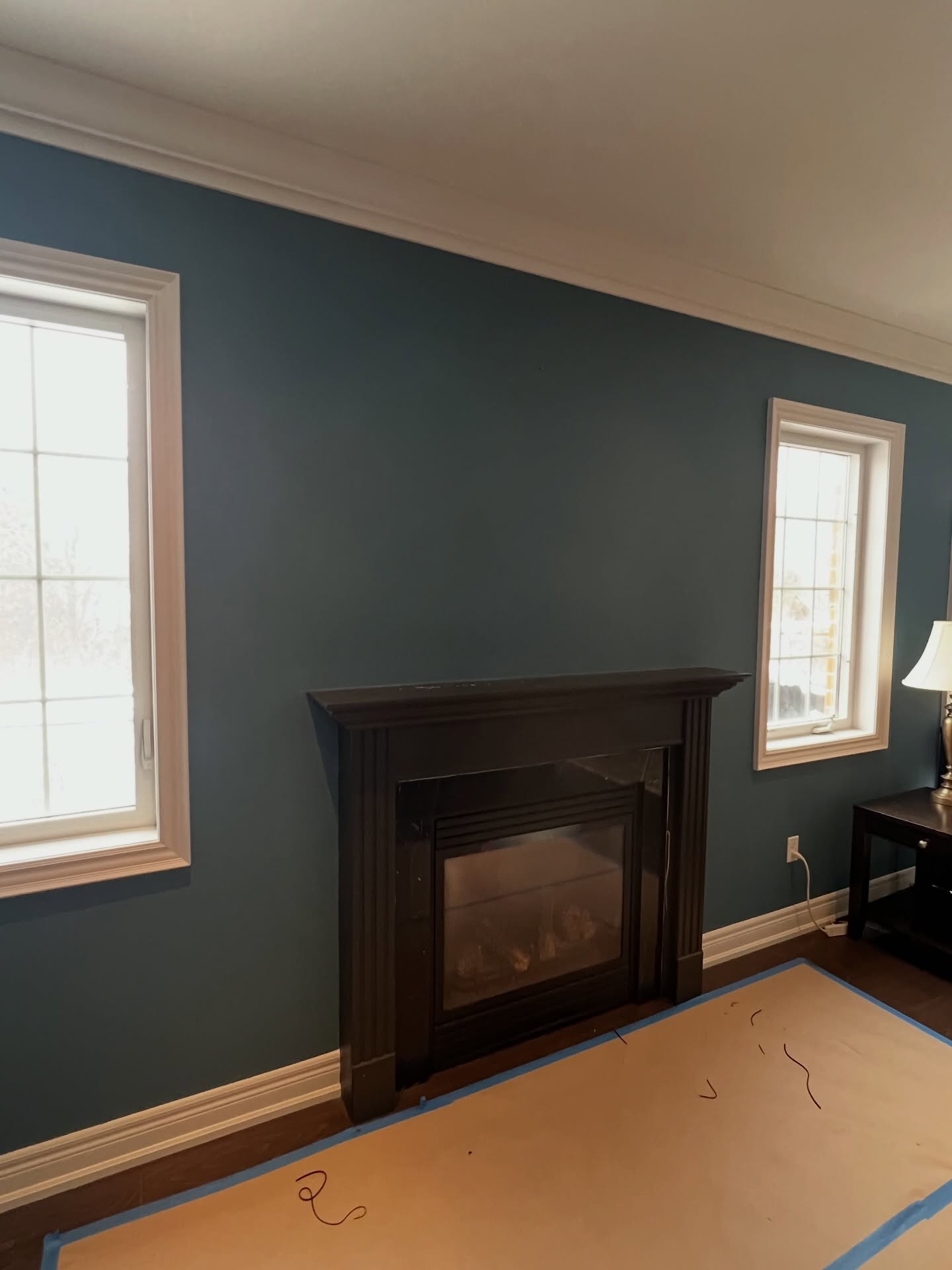
It was a classic espresso wood frame with carved pilasters and a polished marble inset. On paper, perfectly fine. In the living room, it was doing three things wrong at the same time, and the owners probably couldn’t tell you why the space felt heavy and small. They just knew it did.
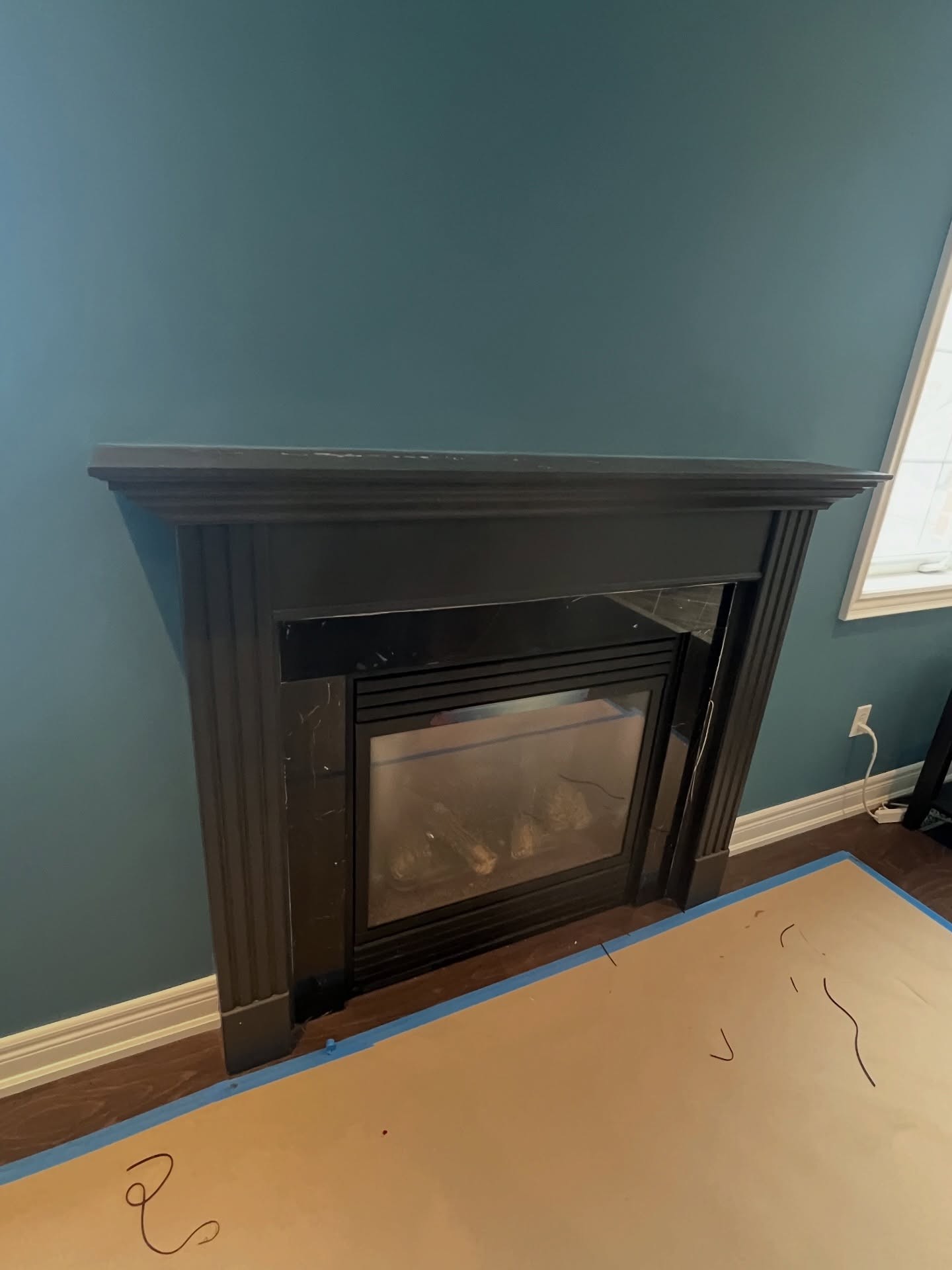
Look at the wall. The mantel stops just above head height. Everything from there to the ceiling is dead space. The dark wood sits against dark teal paint, so the fireplace, which is supposed to be the room’s main event, basically disappears into the wall. And that heavy horizontal mantel line cuts the whole wall in half, telling your eye to stop short of the ceiling. Most people would paint the mantel white, stone-stack it, or rip the whole gas insert out and start over. None of those actually solve the real problem, which is that the fireplace is too short for the wall.
The Smart Move Was Keeping the Firebox
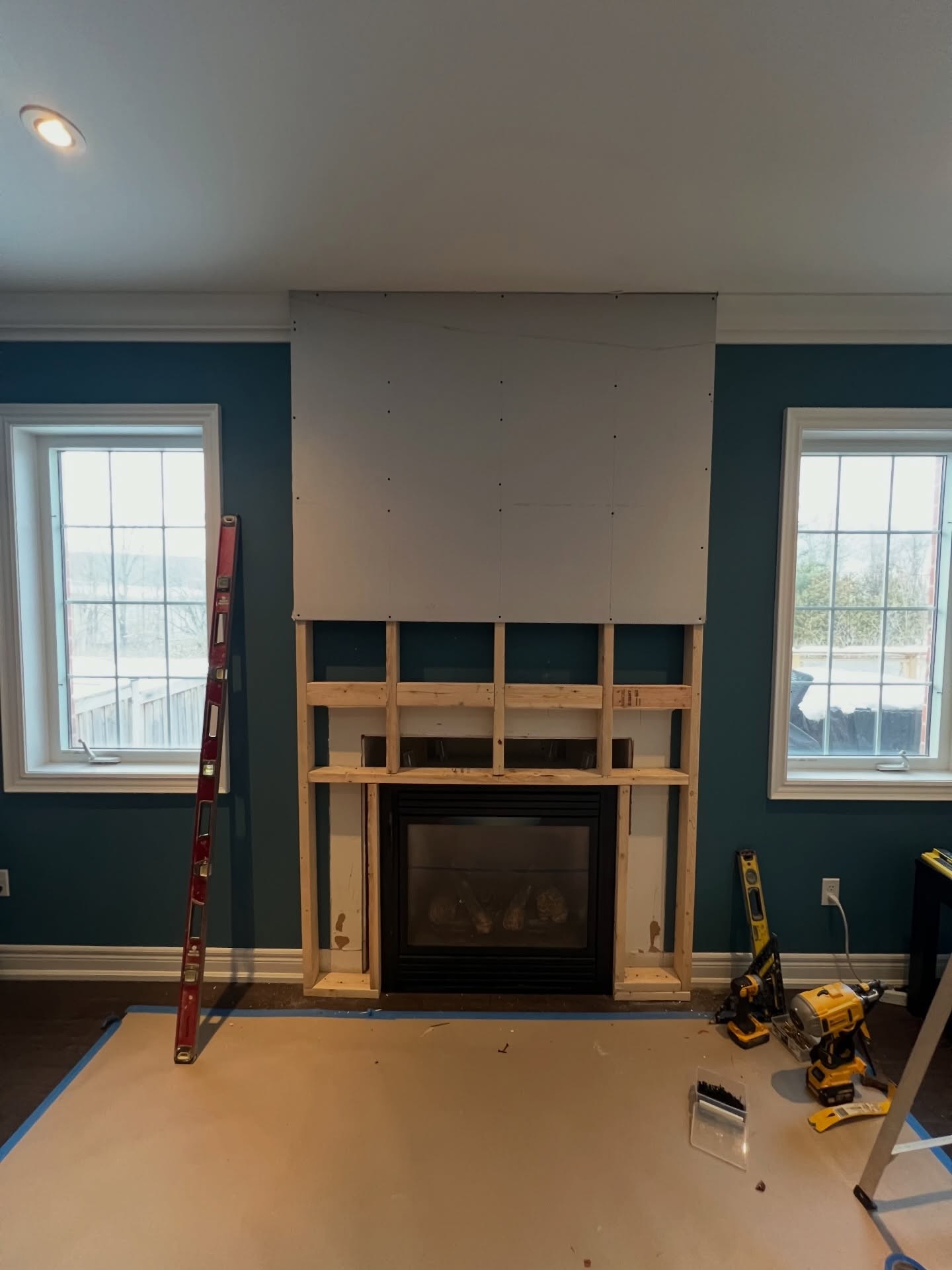
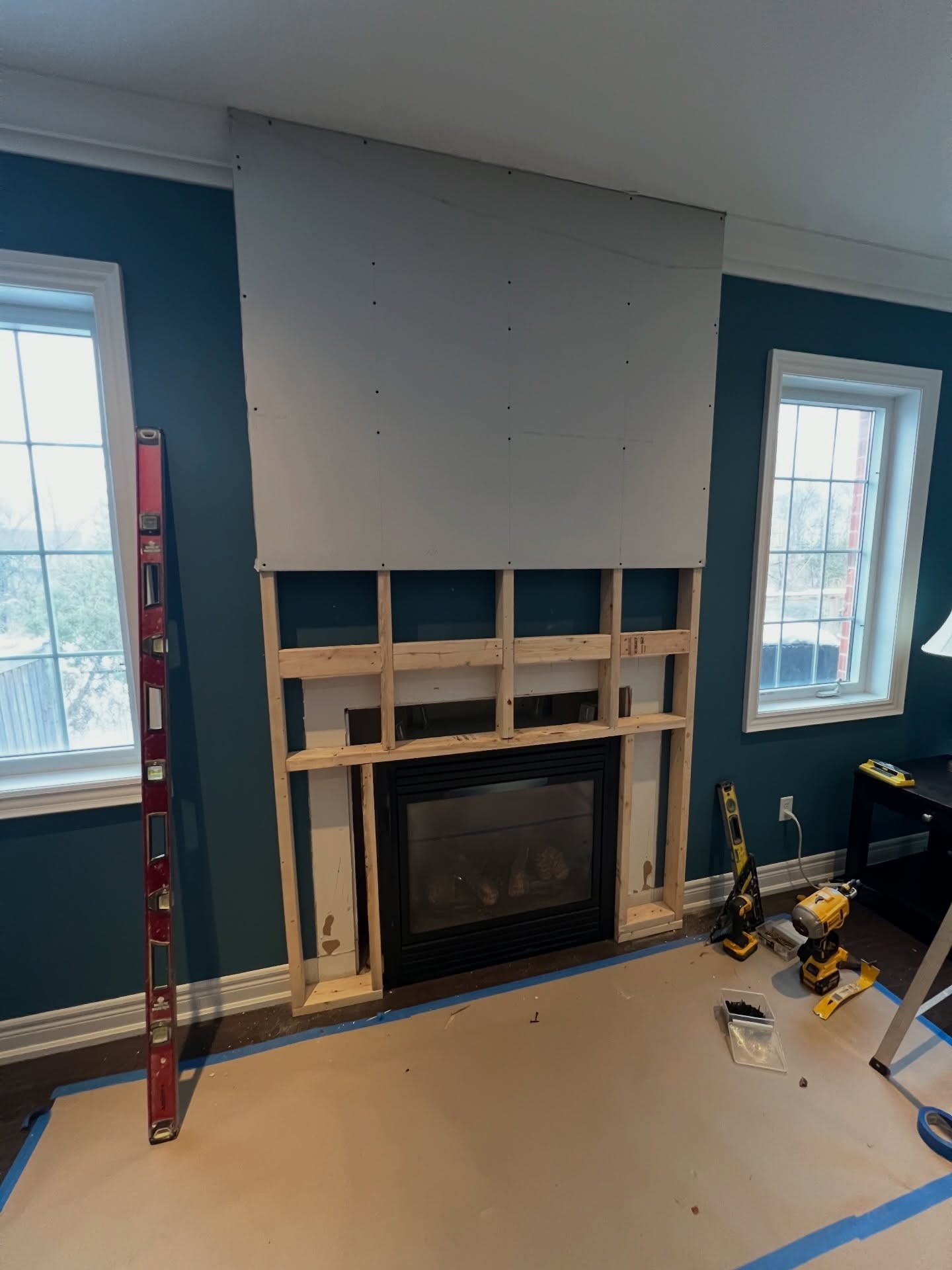
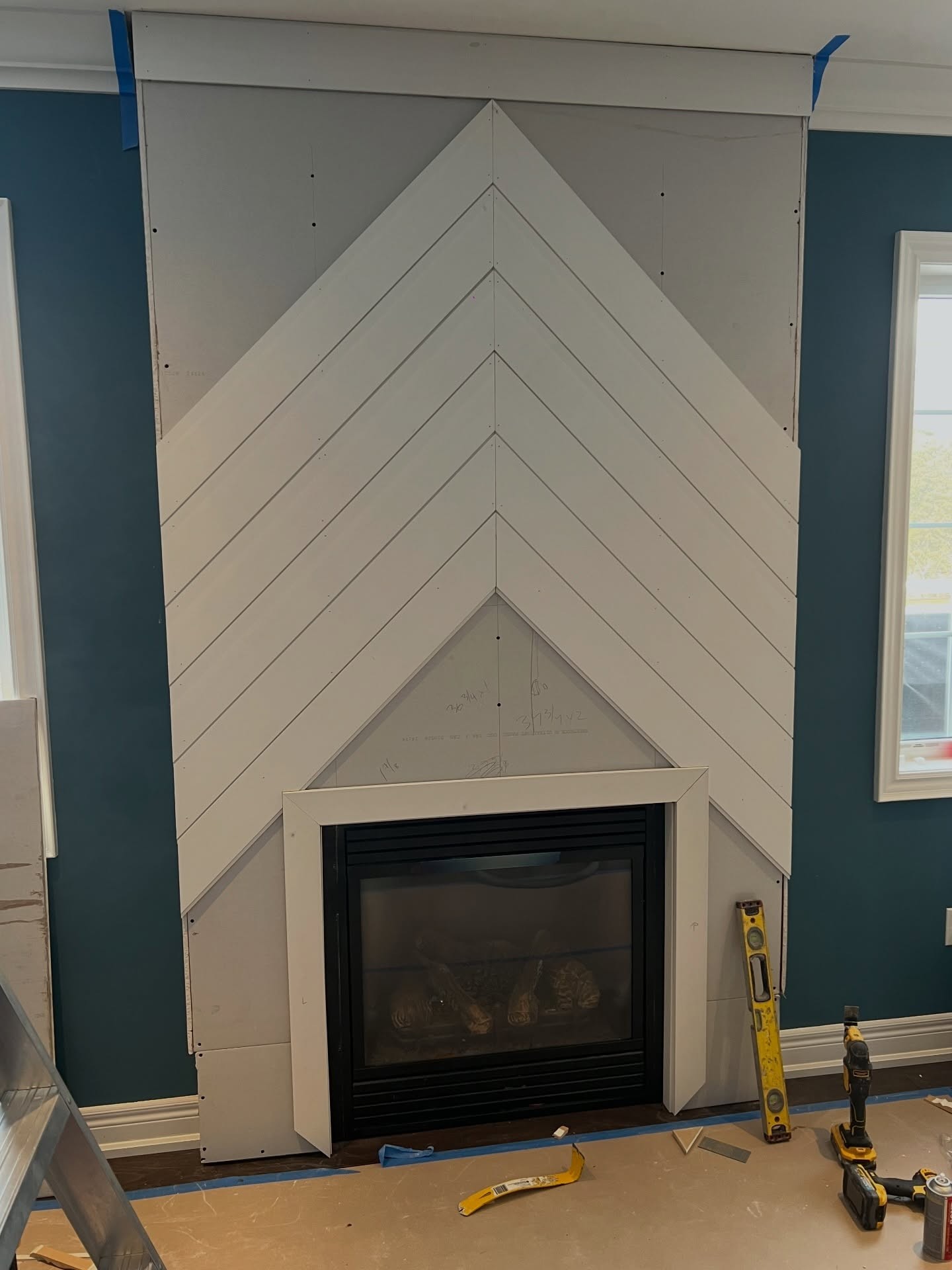
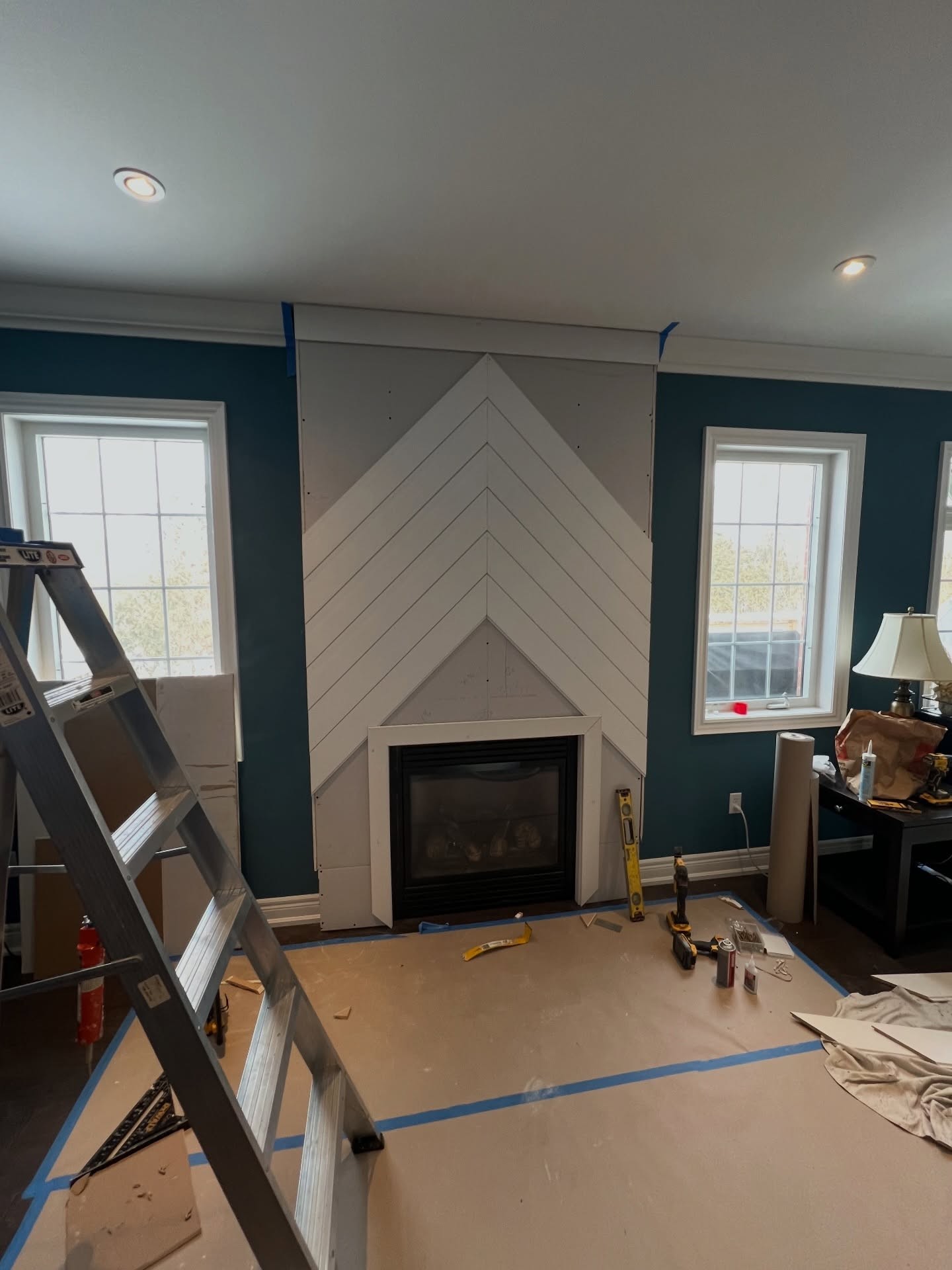
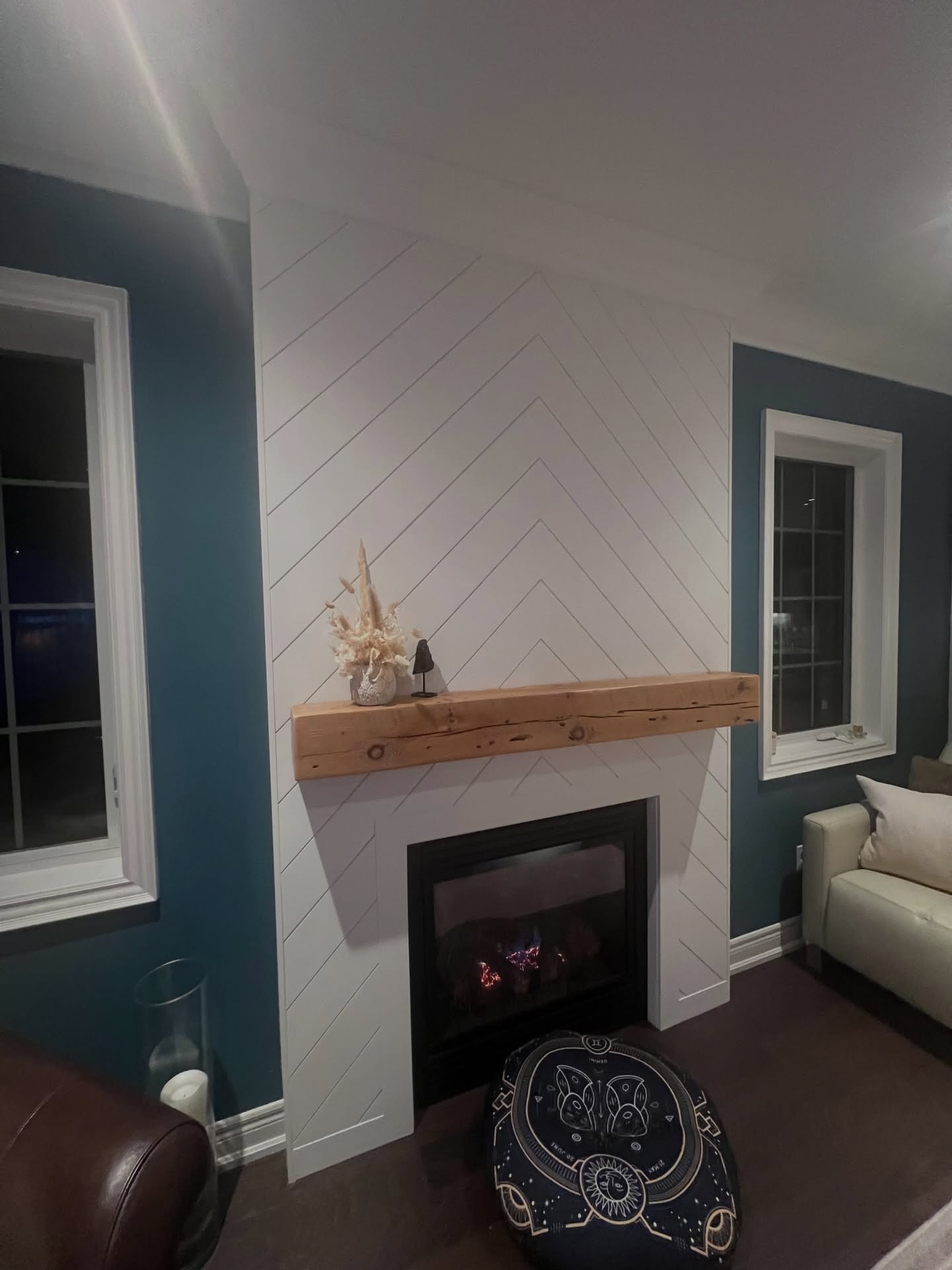
Scavetta Renos didn’t touch the gas insert. No gas line work, no permit headache, no new firebox. They built a new frame around what was already there and treated the whole wall as one tall statement instead of a mantel pasted on a wall.
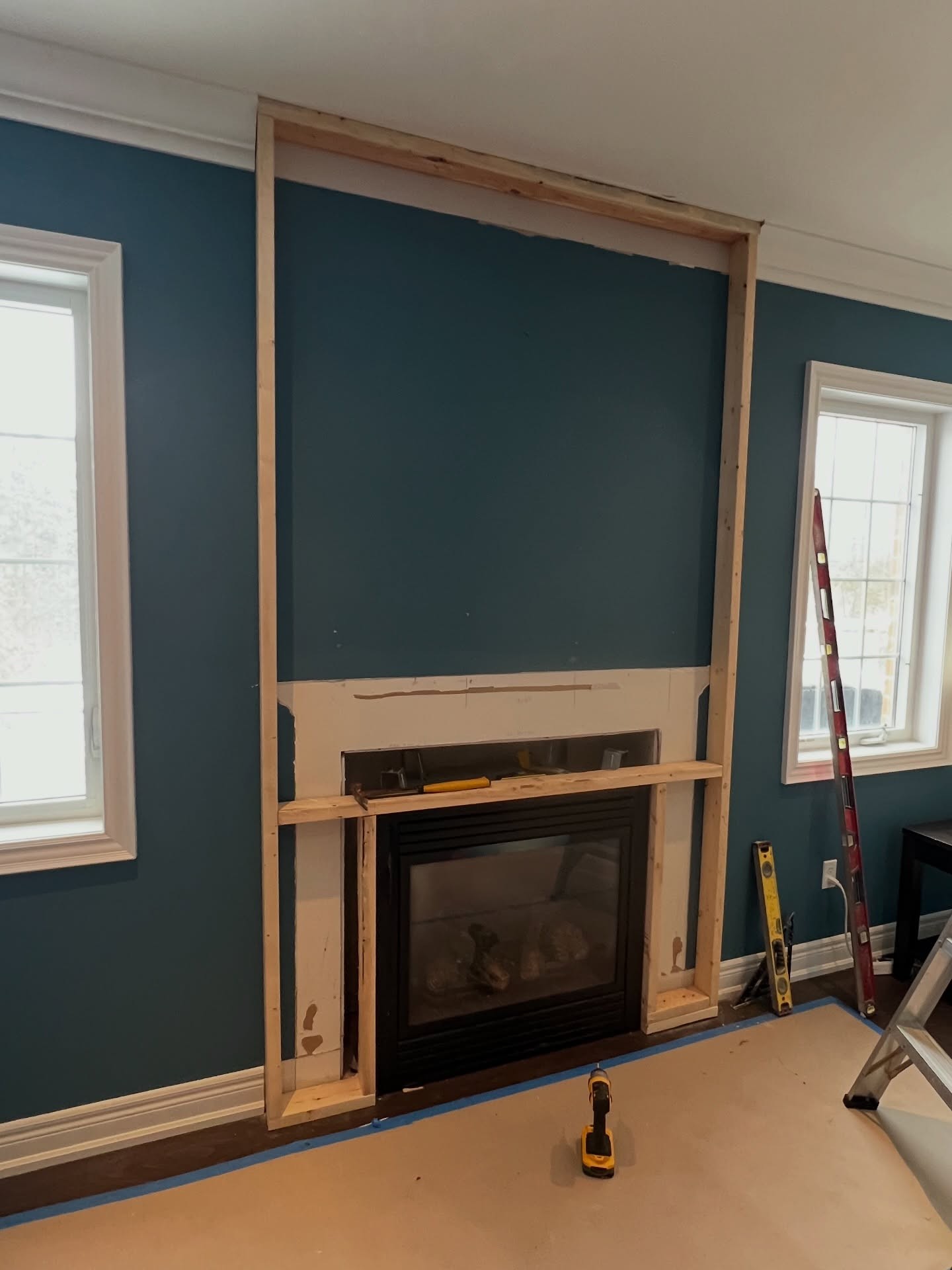
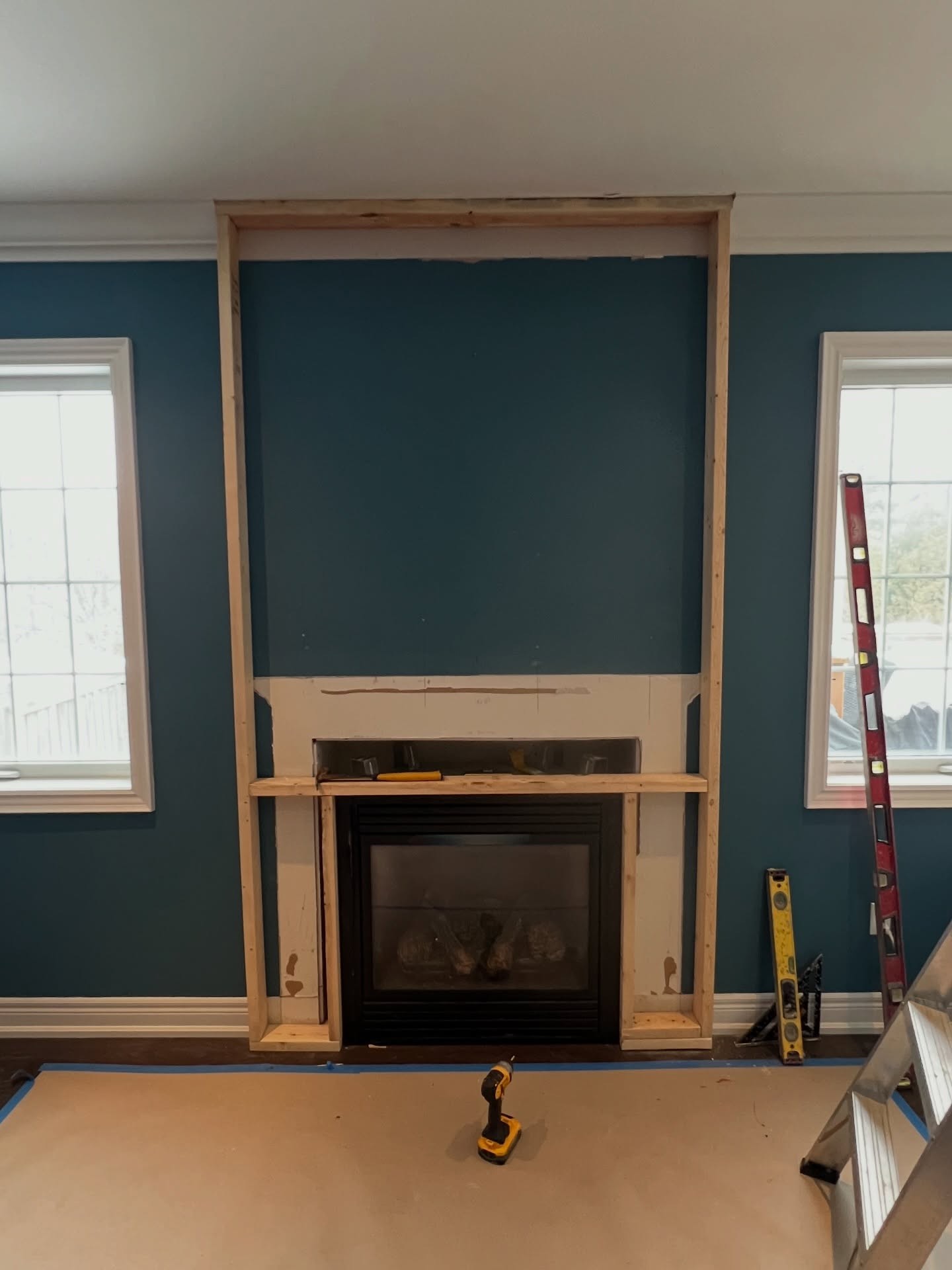
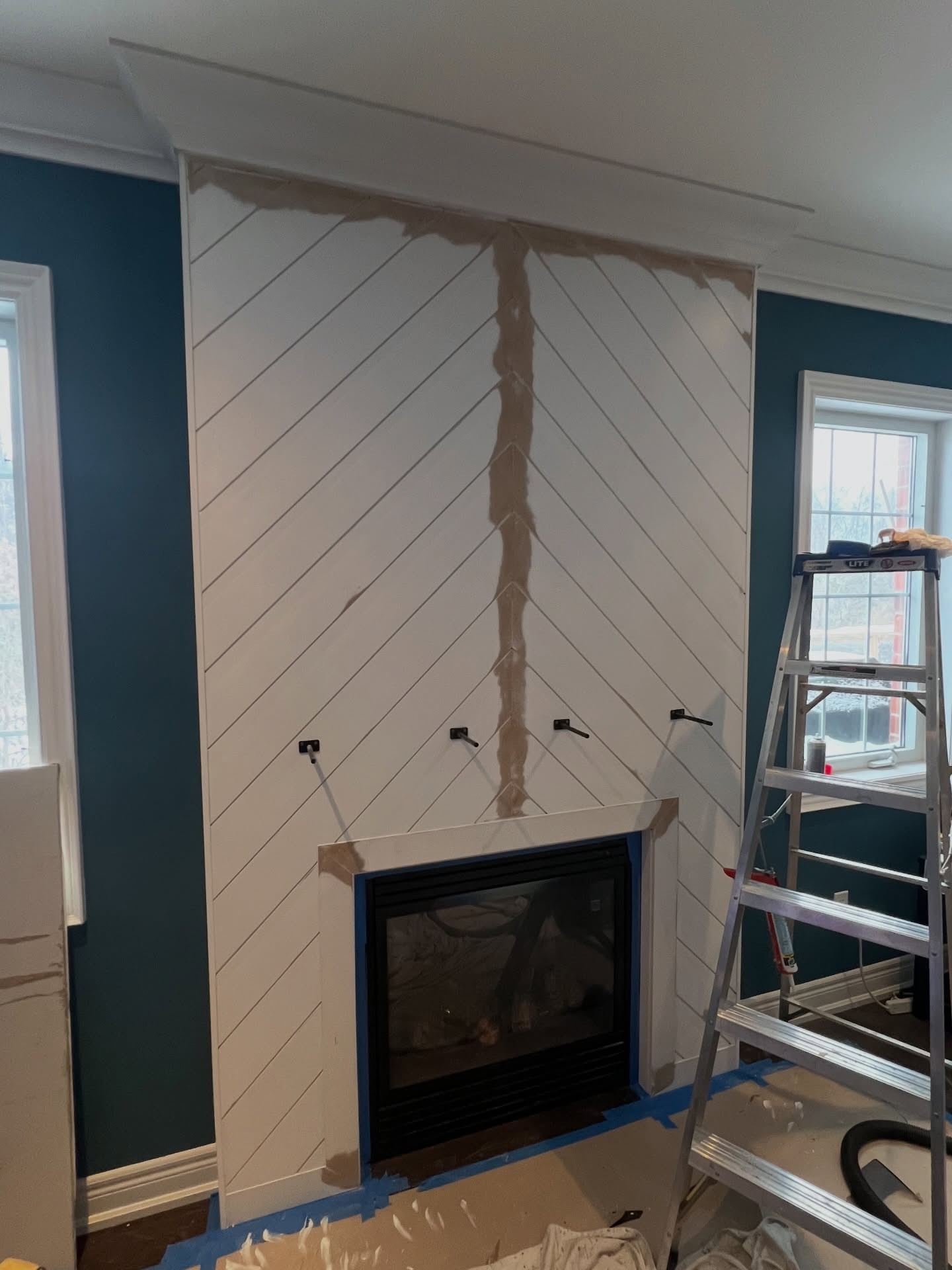
That one choice is the whole trick. The wall runs floor to ceiling now, so your eye follows it all the way up. Nothing stops short.
Why Chevron Instead of Plain Shiplap
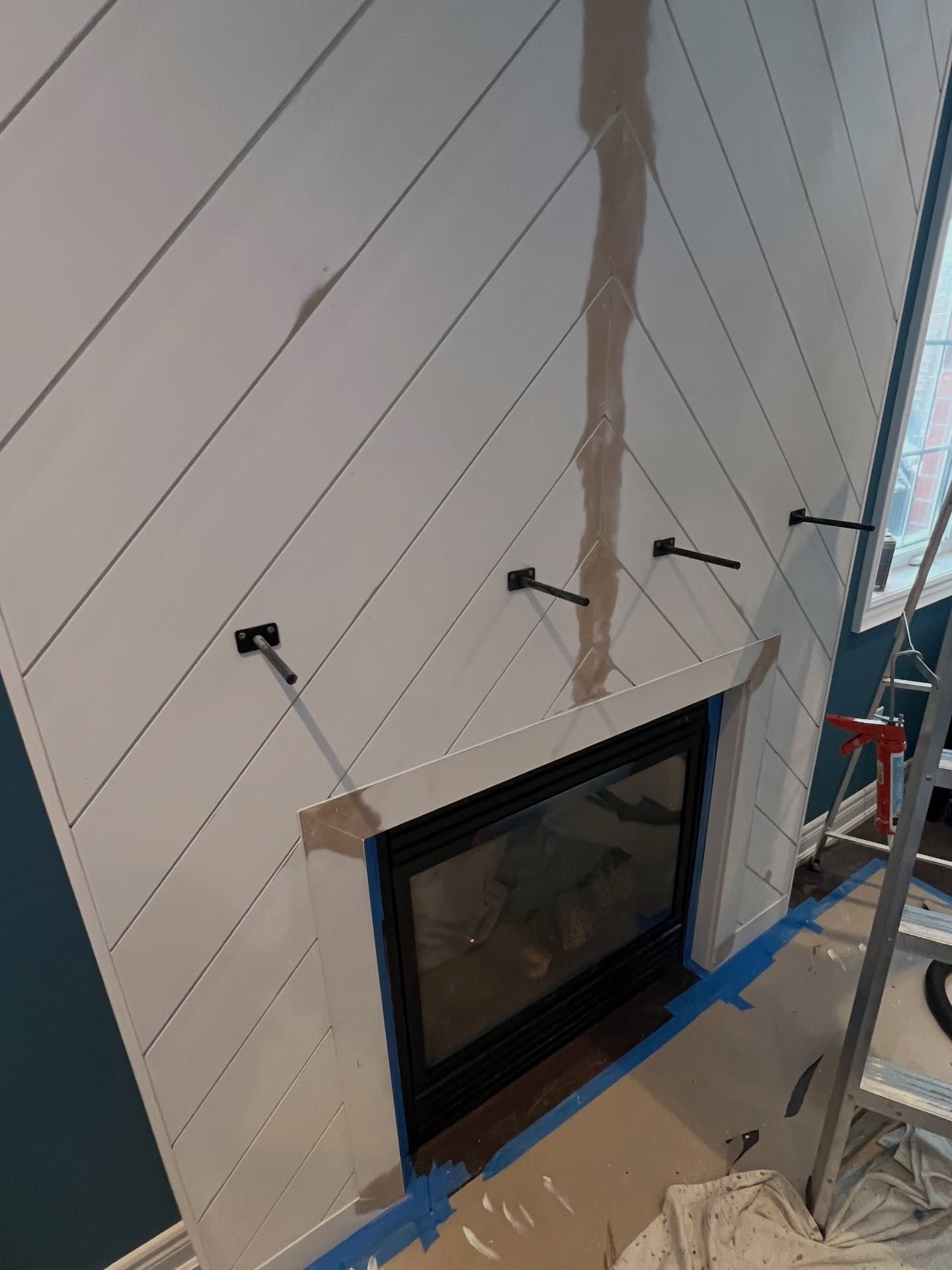
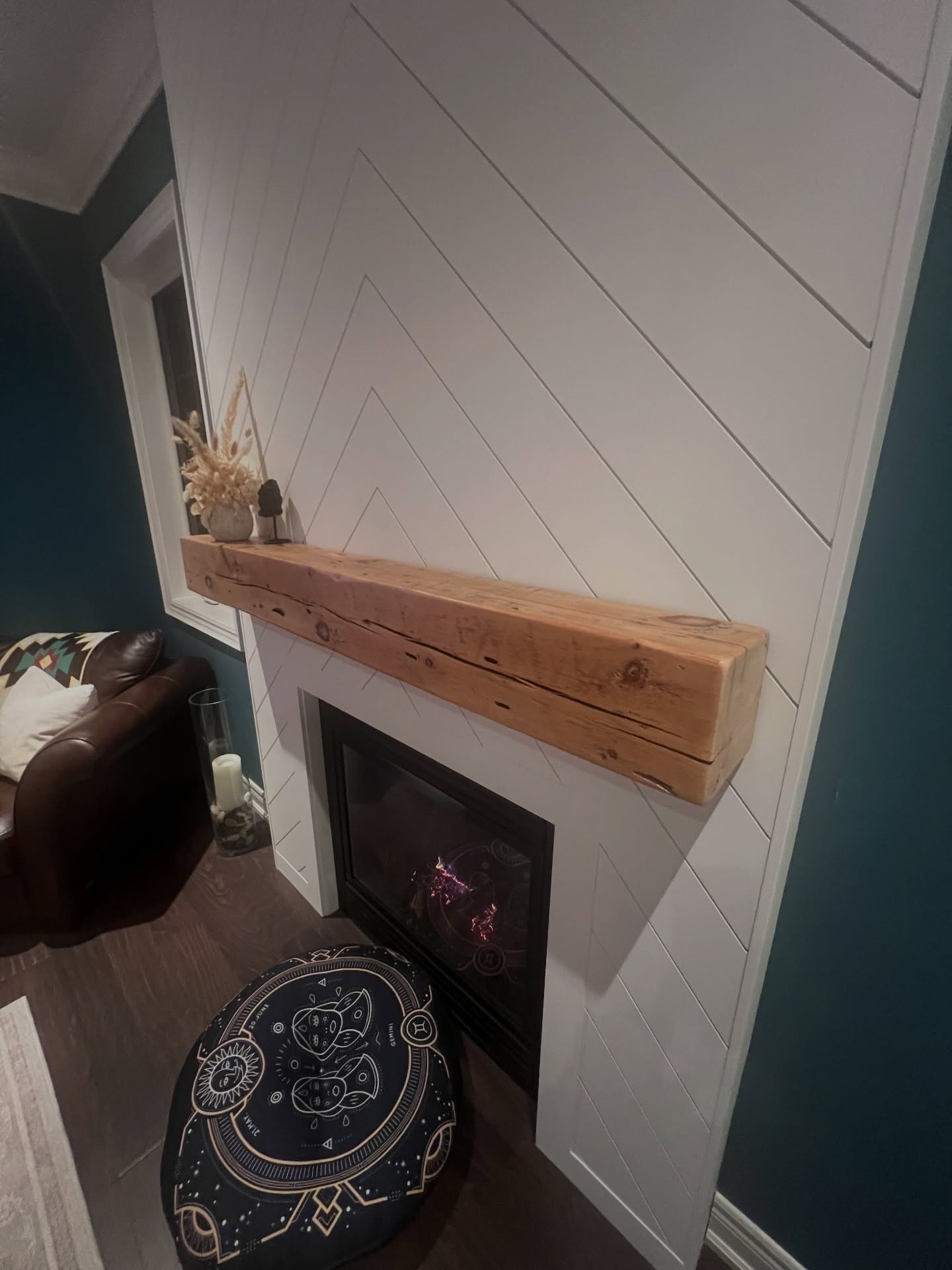
Flat vertical shiplap would have been fine. The chevron is better. Every diagonal line points up and inward to a center peak that sits right above the fireplace. Your eye physically follows those lines up like an arrow. That upward pull is what makes the ceiling feel taller than it was five minutes ago, even though no one touched the ceiling.
The One Warm Move That Saves It All
All that white would read sterile without one warm interruption. The 200-year-old reclaimed barn beam does that job. It’s chunky, honest, full of knots and age, and it anchors the whole wall at mantel height.
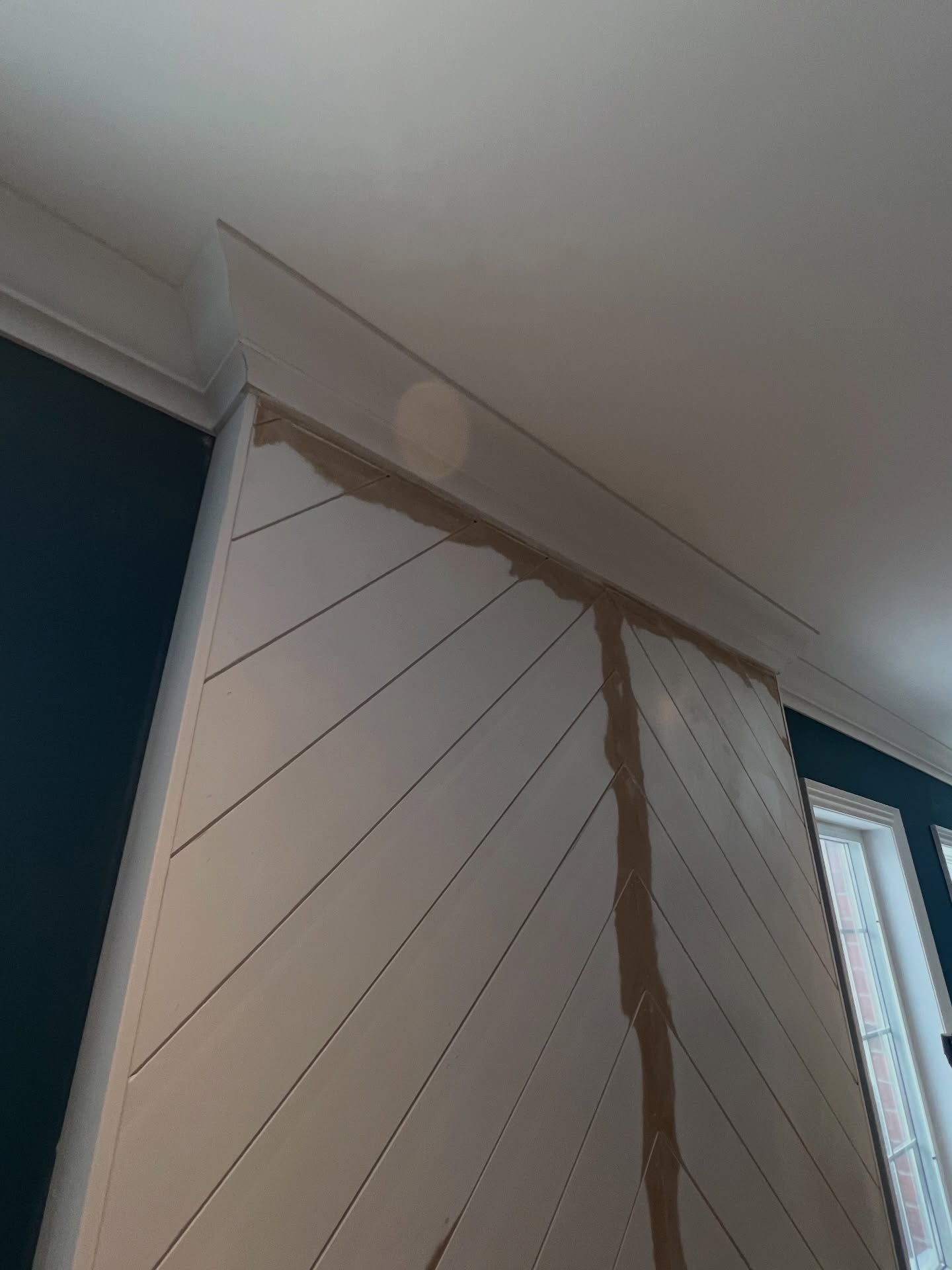
That 7-inch crown finishes the vertical pull cleanly. Without it, the chevron would just dribble into the ceiling and feel unfinished. The crown says the wall meets the ceiling on purpose.
The Payoff
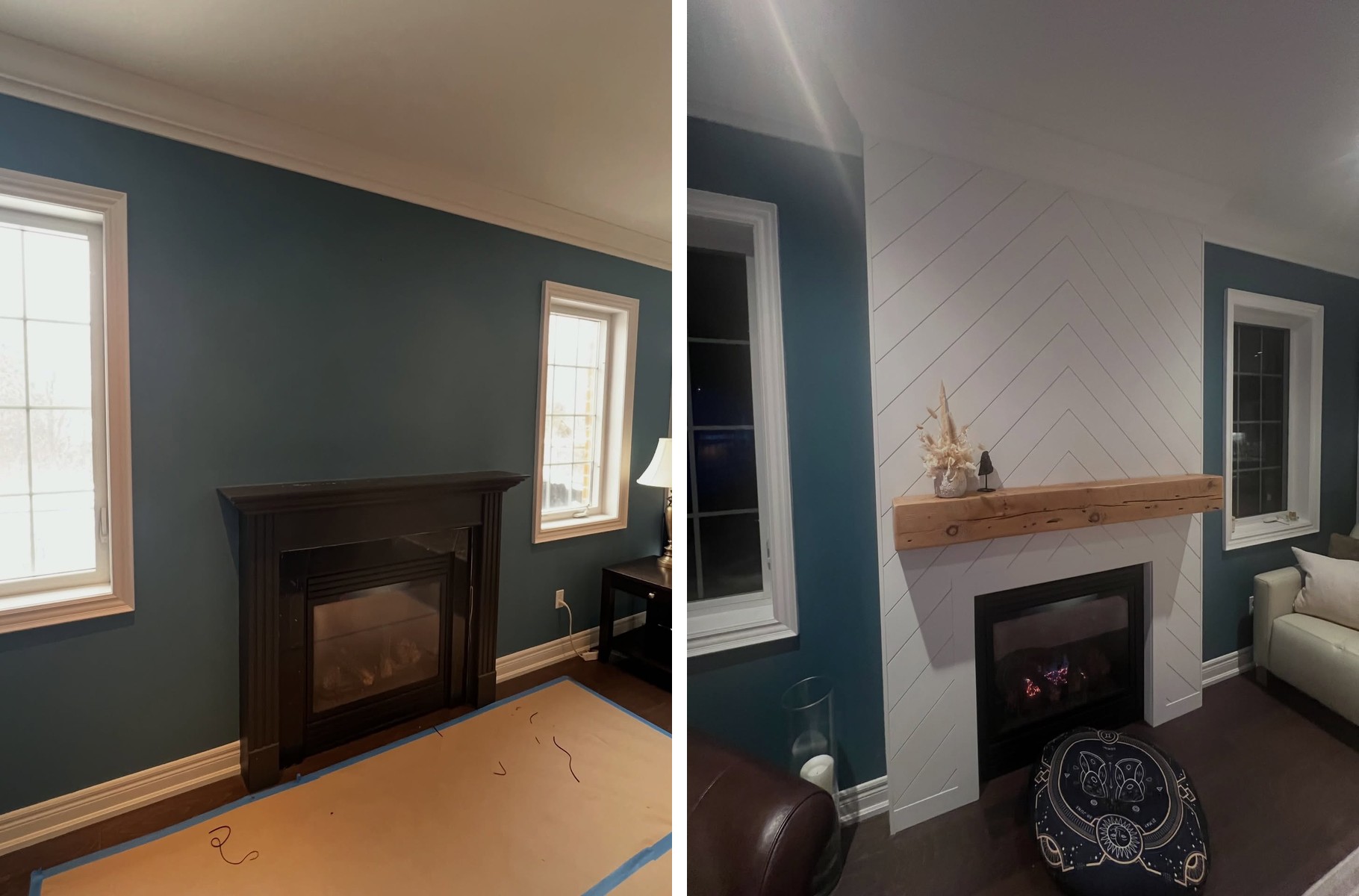
Same ceiling. Same room footprint. Same gas insert. Same teal paint on the walls that frame it. Only the surface changed, and only one dimension got added: height.
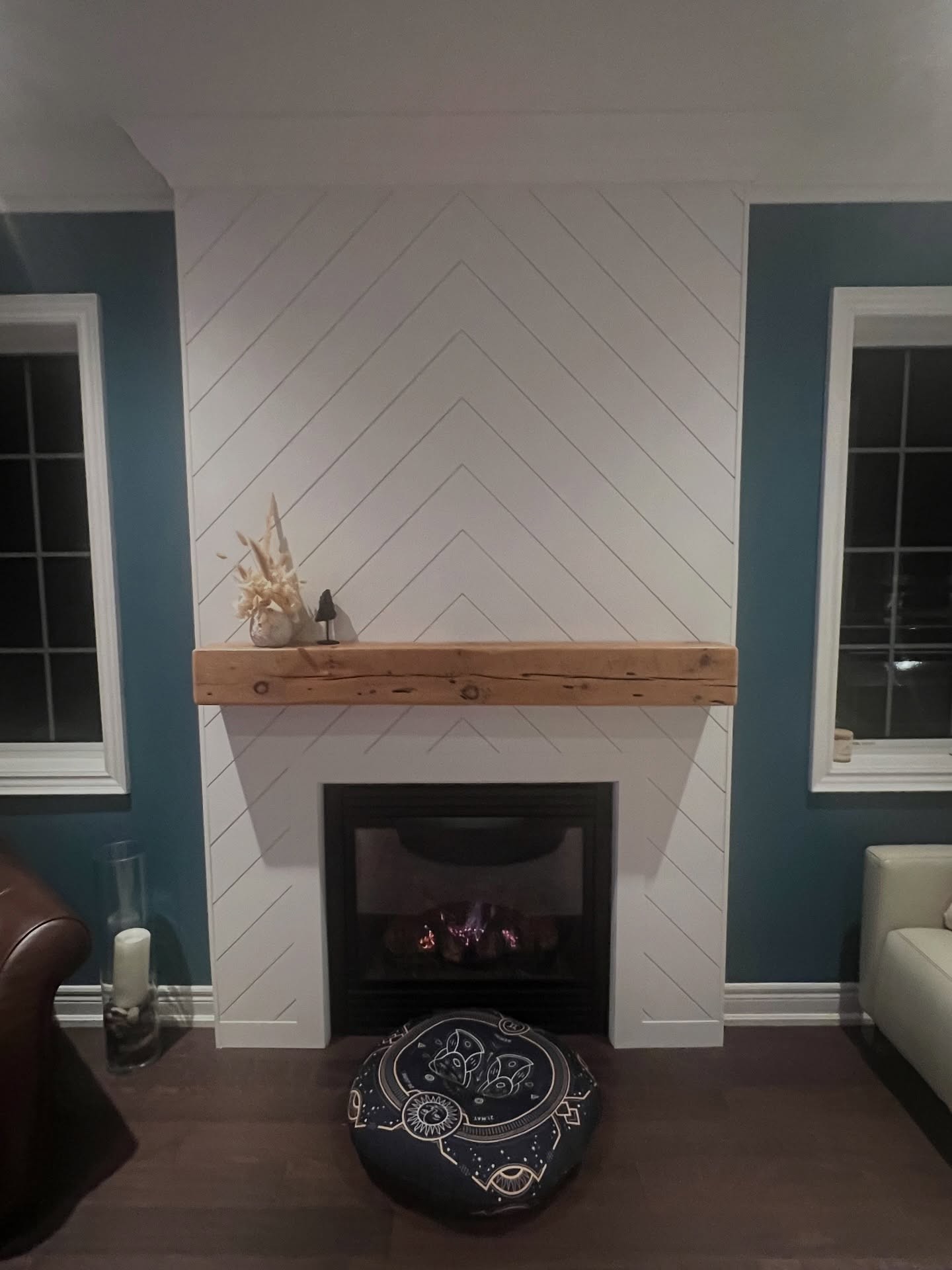
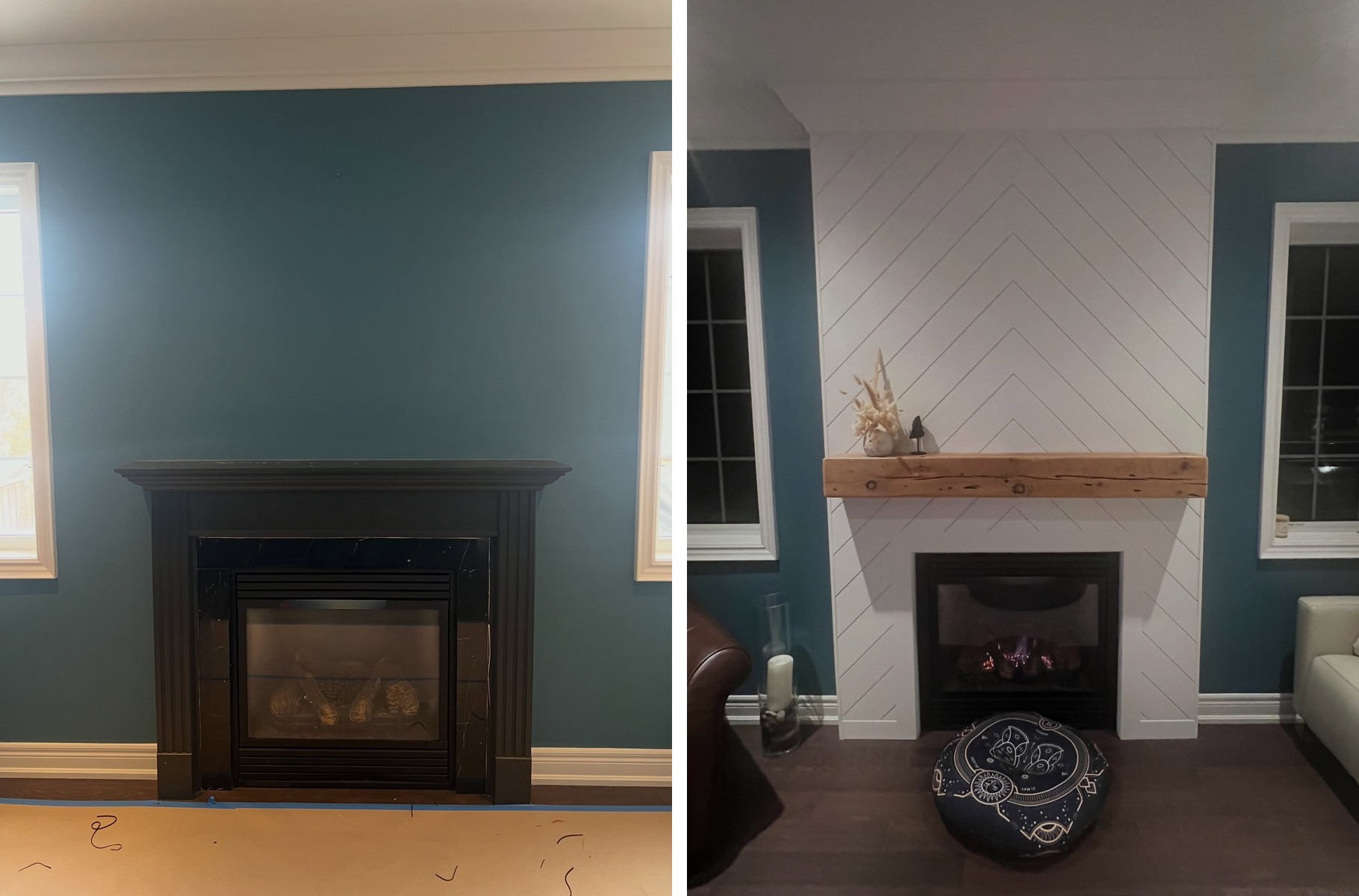
The teal walls that used to swallow the fireplace now frame it. The white panel punches forward because of the contrast. The ceiling reads taller because the chevron pulls your eye there. The beam keeps all that white from feeling like a hotel lobby.
Total cost of the illusion: a few hundred dollars of lumber, strips, drywall, mud, paint, and one great reclaimed beam. The firebox never got touched. The room is the exact same size it was before.
Which room in your house has the same problem?