Last July, the garden hose ran for an hour every evening and the water bill showed it. Then October arrived, and the rain poured off the roof and straight down the driveway, gallons and gallons heading to the storm drain. It’s the same water you’ll be paying for next summer, and it’s falling for free right now.
Missing it isn’t your fault: most people only think about rain barrels in the dry months, when there’s nothing to catch. Fall is when the idea finally makes sense, as long as you know the one timing rule that keeps a barrel from cracking.
What a rain barrel is actually for
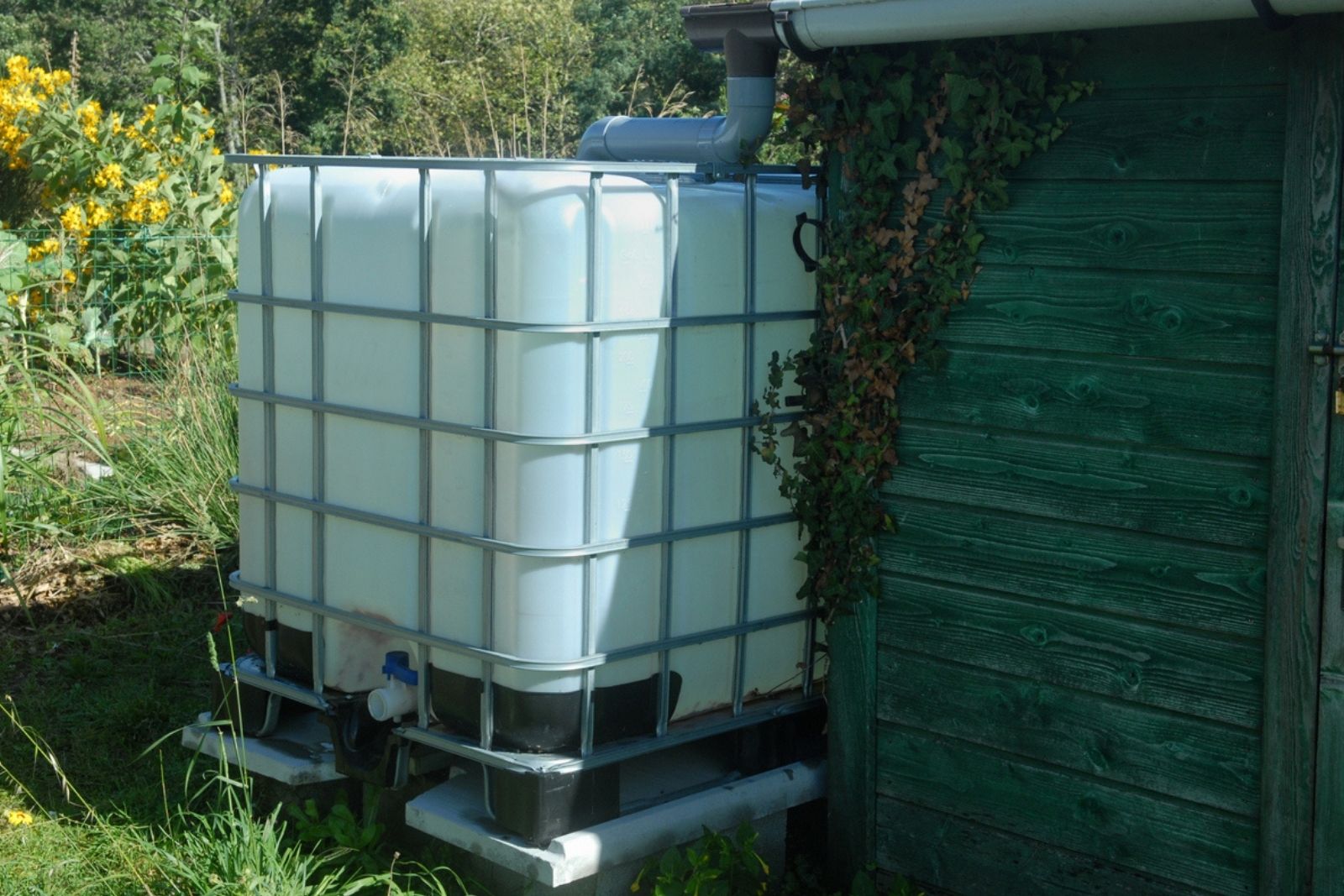
The numbers are bigger than most people expect. According to the University of Wisconsin’s horticulture extension, for every inch of rain that falls on 1,000 square feet of roof, about 600 gallons of water can be collected. A typical recycled food-grade barrel holds about 55 to 60 gallons, so a single moderate storm can fill one easily.
That water is meant for irrigating flower beds, shrubs, trees and lawns. It is not recommended for vegetables or for drinking. Used that way, a barrel shifts some of next season’s watering from the tap to the sky.
Setting it up the right way
- Pick the downspout. Barrels go at the bottom of a downspout. Skip it if your roof is tar and gravel, asbestos, or treated cedar shake.
- Build a stable base. Set it on level ground, raised on concrete or cinder blocks or a sturdy wooden stand. Height adds water pressure, and a secure base keeps a full barrel from tipping.
- Screen the top. A fine mesh screen or filter keeps mosquitoes out. Without one, empty the barrel every week.
- Add an overflow. An overflow valve redirects water during heavy rain and when the barrel is full.
- Use it, don’t store it. Water shouldn’t sit in the barrel for more than five to seven days, so plan to use it on beds and lawns between storms.
Why timing matters: the first freeze
Here is the catch. A full barrel left out in a hard freeze can crack, which is why the extension advice is to disconnect and drain it in the fall in cold climates. That doesn’t make a fall setup pointless. It means doing it with the calendar in mind: install the base, the screen and the overflow now, use the barrel through the fall rains, then drain it and reconnect the downspout before the first hard freeze, so water flows away from the foundation all winter. Where winters stay above freezing, the barrel can simply keep working.
A few local rules can apply to collecting rainwater, so check with your city or county before buying several barrels. And if you’re already out tidying the yard, the branches you cut this season don’t have to go to the dump: pruning scraps can become free mulch for the same beds the barrel will water.
Set it up now, catch the fall rain, and drain it before the freeze. That’s the trick.