The tap had been dripping for weeks, one patient drop at a time, so she did the responsible thing and called a pro. He arrived, turned off the water, had the handle apart in minutes, swapped a small part from a bin in his truck, and was gone within the hour. Then the invoice landed, and it read like a punchline: a couple hundred dollars for what she’d just watched take fifteen minutes and a part the size of a wine cork. She wasn’t cheated; the national average for fixing a leaky faucet runs about $270, most jobs landing between $100 and $400, because you’re paying for the trip and the minimum hour, not the part. The part costs a few dollars. And the fifteen minutes? Genuinely learnable.
Because here’s the secret the invoice hides: a dripping tap is almost never “broken.” The cause is a worn internal seal, a rubber washer, O-ring or cartridge that no longer closes fully, and the whole repair is swapping that seal: $2 to $5 for a washer, $10 and up for a cartridge.
The swap, step by step
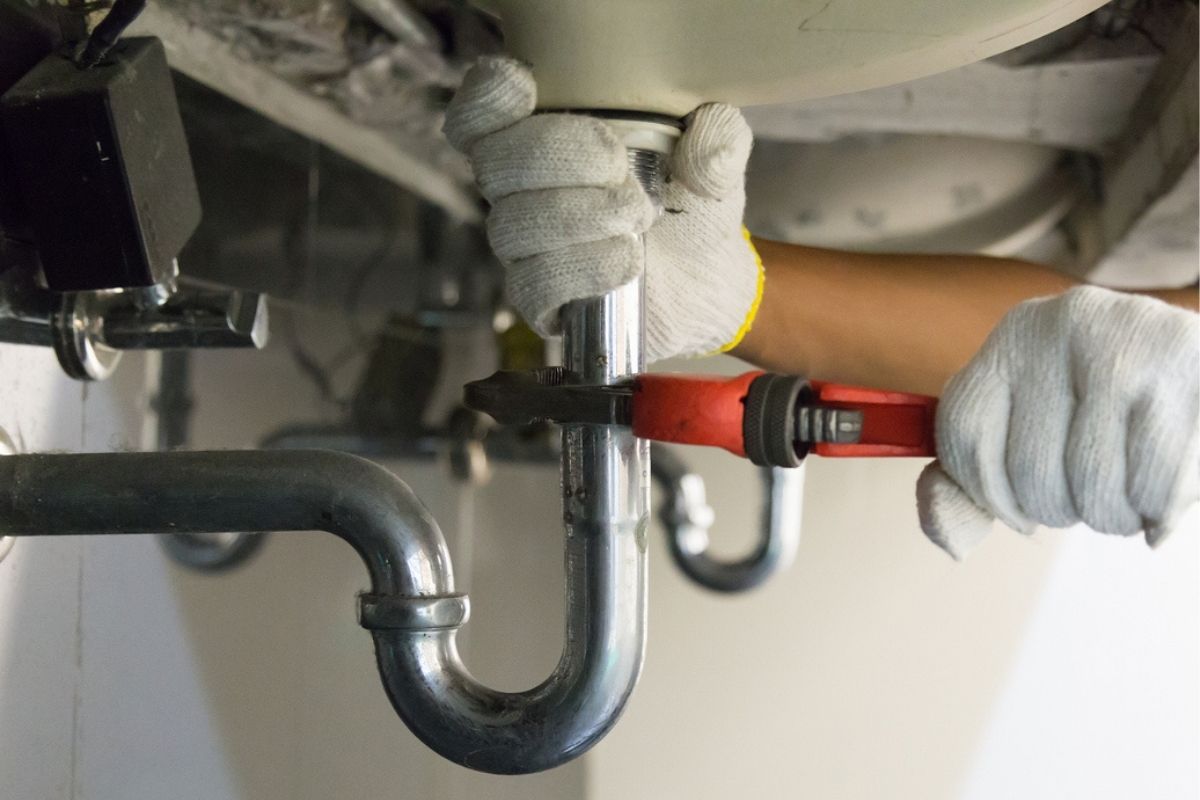
- Cut the water and plug the drain. Close the two small valves under the sink (or the main), open the tap to empty the line, and stopper the drain so no tiny screw escapes.
- Open the handle. Pry off the decorative cap, remove the screw beneath it, lift the handle off. Lay the parts out in order; a phone photo at each step is your reassembly manual.
- Pull the culprit. On a modern single-handle tap, unscrew the retaining nut or pull the clip and draw out the cartridge, a plastic-and-brass cylinder. On an older two-handle compression tap, unscrew the valve stem and find the small rubber washer at its base, usually cracked or squashed flat, plus the O-rings on the stem.
- Match it at the store. This is the step that makes the job foolproof: bring the old part to the hardware store, and leave with its exact twin, since cartridges are brand-specific. While it’s apart, smear the O-rings with plumber’s grease.
- Reassemble in reverse, open the valves slowly, and listen. Silence. That’s the whole repair.
What’s actually on the invoice, and when to pay it anyway
The pro’s price is honest once you decode it: a service call fee, a one-hour labor minimum at $45 to $200 per hour, the van, the insurance. For a washer swap, you’re renting a truck to deliver a $3 part. But the call earns its cost the moment the job stops being a seal swap: corroded valve seats, a seized cartridge that won’t pull, drips under the sink, water damage already visible, or shutoff valves so old they won’t close; force any of those and the $270 problem becomes a $1,000 one. Rule of thumb: if it unscrews, it’s yours; if it fights back, it’s theirs.
One drip per second wastes roughly 3,000 gallons a year, so either way, the fix shouldn’t wait, and while you’re under the sink with the valves, give the rest of the plumbing its minute, from the trap you’ll want full before the next trip to the vinegar habit your washer wants you to quit.
Fifteen minutes, a photo trail, and a $4 part carried to the store in your pocket. The drip stops, and the only joke left is how long you waited. That’s the trick.