They don’t break in. That’s the unsettling part. Every fall, as nights cool, snakes turn up in garages, basements and laundry rooms across the country, and in most cases they got in the same way: flat on the ground, through an opening at the one spot of the house almost nobody ever inspects from the right angle. It’s at your front door, it’s been there for months, and checking it takes lying on the floor for ten seconds.
The detail is the gap under the door: a worn-out door sweep, a sagging threshold, or the daylight at the bottom corners where weatherstripping has curled with age. A snake’s skeleton is built for exactly this. Pest professionals note that snakes can squeeze through cracks as narrow as a quarter inch, the diameter of a pencil, and the strip under an exterior door is often the widest, longest opening a house offers at ground level.
Why they’re testing your door right now
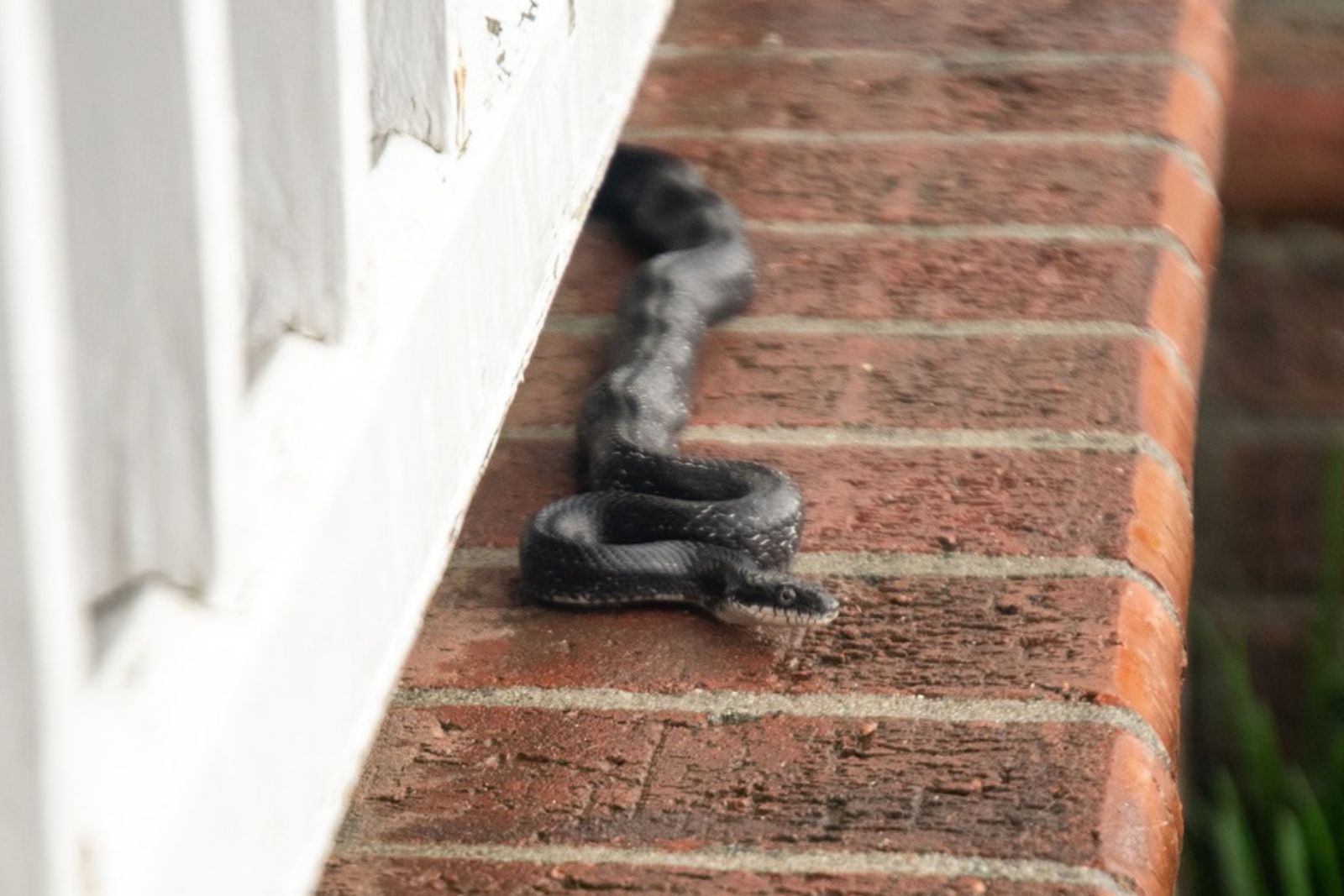
From October on, snakes are hunting for a brumation site: a protected, frost-free spot to spend the winter in a dormant state. A garage, a crawl space or a basement wall cavity is, from a snake’s point of view, a perfect artificial rock crevice. Wildlife extension specialists list gaps under doors among the main ways snakes end up inside homes, along with the openings where pipes and wiring pass through walls. There’s often a second draw: the mice that moved in ahead of them. A house with rodents is, to a snake, a house with a pantry, which is one more reason to deal with the mice first.
The ten-second check, and the fix
Tonight, with the lights on inside, step outside, crouch, and look at the bottom of the front door. Any line of light is an entry. Then do the same for the door between garage and house, and the garage door itself, whose rubber base seal is the most common snake entrance of all: on a wide door, the rubber only needs to have hardened or cracked in one corner.
The fix is hardware-store basic:
- A new door sweep on every exterior door, screwed or glued so it brushes the threshold with no daylight. Ten dollars, fifteen minutes.
- A threshold seal or fresh bottom gasket for the garage door, sized so the rubber compresses against the slab along its whole length, corners included.
- Caulk or copper mesh in the gaps around pipes, wiring, and the base of the door frame, the same quarter-inch openings mice and insects use.
- A clear strip along the foundation. Firewood, dense ground cover and clutter stacked against the wall give a snake cover right up to the door; pulled back a few feet, the approach becomes exposed, and snakes avoid exposure.
The same hour of sealing closes the door on the season’s other migrants, mice included, and it’s the same exclusion logic that keeps stink bugs on the outside of the glass.
If one is already inside
Most snakes that enter homes are harmless rat snakes and garter snakes doing you the favor of eating rodents. Don’t grab it: open the nearest door, give it a path, and guide it gently with a broom. If you can’t identify it, or it has the triangular head and thick body of a pit viper, close the room’s door, roll a towel against the gap, and call animal control or a wildlife removal service.
One crouch at the doorstep, one strip of rubber, one tube of caulk. The snake never argues with a sealed door. It just keeps moving, to a house that didn’t check.