A free couch with clean cushions can feel like a lucky find. Before loading it into your car, though, there is something its appearance cannot tell you: what is hiding inside it.
Bed bugs can travel into a home on furniture. The U.S. Environmental Protection Agency recommends checking secondhand couches before bringing them home. A quick glance across the seat does not cover the places these insects hide.
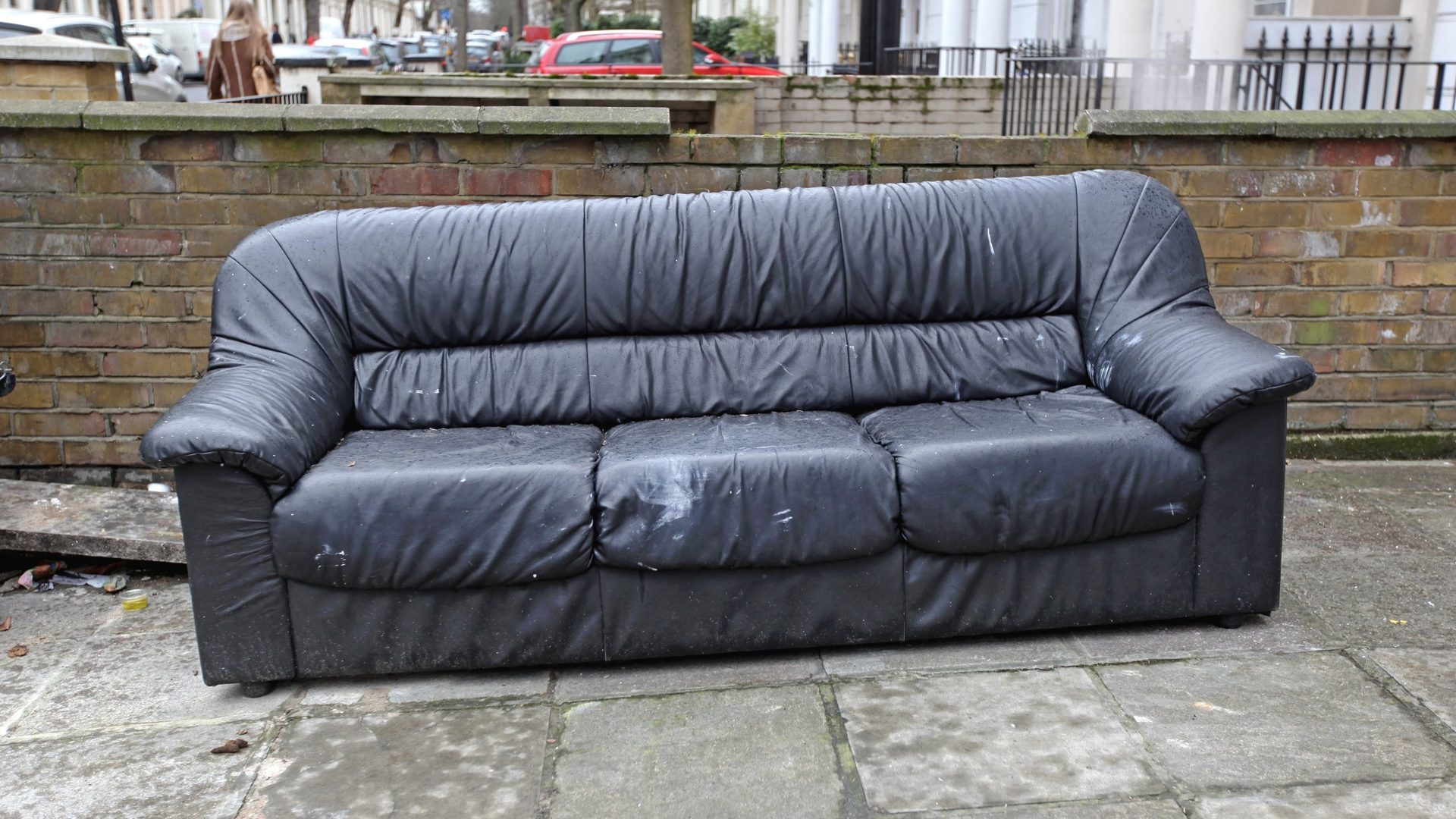
For a couch abandoned on the curb, the advice is stronger. University of Minnesota Extension advises against collecting discarded curbside furniture. Leaving it behind is the safer choice, even if you cannot spot a problem.
If you are inspecting a sofa offered by a secondhand seller, these are the signs and hiding places that deserve attention.
Know what you are hunting for
You are checking for bugs and the evidence they leave behind. The EPA’s identification guide describes adults as roughly apple-seed-sized, about 5 to 7 millimeters long. Unfed adults are brown, flat, and oval. After feeding, they become fuller and reddish-brown.
Young bugs are smaller and pale enough to be difficult to see. Eggs are pearl-white and about 1 millimeter long, so searching only for adult insects can miss part of the problem.
Also watch for:
- Dark, ink-like dots: Fecal spots can soak into fabric.
- Pale, empty skins: Young bugs shed their outer skins as they grow.
- Rusty or reddish marks: These may come from crushed bugs.
The EPA’s guide to finding bed bugs explains these physical signs. An unexplained stain alone does not identify an infestation, but it is a reason to pause.
Inspect these four places before moving the sofa
Bring a bright flashlight and, if available, a magnifying glass. Inspect before loading, and ask the seller’s permission before lifting fabric or moving the couch. Keep your bag and jacket off it.
1. Upholstery seams and piping
Follow the stitching around the arms, back, and seat edges. Gently separate accessible folds to see beside the raised piping. Check tucked edges and button folds, too.
2. Between and underneath the cushions
With permission, lift every removable cushion. Examine both sides, the edges, and folds around zippers. Check the platform below and gaps beside the arms and back. Clean cushion tops do not clear the hidden gaps below them.
3. The underside and fabric lining
If the sofa can be safely tipped with help, examine the thin fabric covering its bottom. Check folds, loose edges, staple lines, and the areas around the legs. An intact bottom cover can conceal the interior. If you cannot inspect inside, that remains an unknown.
4. Wooden frames, joints, and screw holes
Look at accessible frame corners, connections, and recessed fasteners. Illuminate gaps where pieces meet. The wooden structure needs checking along with the fabric.
These checks draw on Cornell University’s bed bug inspection guidance, written for group living facilities. Its detailed furniture checks show why a surface inspection is insufficient.
Found something suspicious? Stop there
Do not load the sofa while you work out what you found. Tell the seller, take clear photographs, and seek identification from a pest professional or cooperative extension service. If a specimen can be safely contained, keep it in a sealed container for identification.
Minnesota Extension advises stopping an inspection when a bed bug is found because disturbing hiding places can make bugs move. Further dismantling is not the next step for a buyer.
If the couch has already entered your home, avoid carrying it through more rooms. Contact a pest professional for advice before moving or treating it.
A clean inspection is not a guarantee
Small infestations are difficult to find. Upholstered furniture also has places you cannot see without taking it apart. Finding no evidence means exactly that: you did not find evidence. It does not prove that every hidden space is clear.
Nor does a quick vacuum turn a suspect sofa into a safe purchase. The EPA’s prevention and control booklet describes vacuuming as a way to reduce bed bug numbers, with effective control requiring more than one approach.
For a secondhand purchase, inspect thoroughly and walk away from unresolved warning signs. For a discarded curbside couch, follow the stronger advice and leave it. A free sofa is only a bargain if it stays one.