The tree came down in September, and now a wide, stubborn stump sits in the middle of the yard. You’ve tripped over it twice, the mower bumps around it, and the quote for a grinder visit stopped you cold. So you try hacking at it with an axe one Saturday and get nowhere but sore shoulders.
This is not your fault. A stump is mostly roots you can’t see, and brute force on the visible part barely scratches it. The methods that work either let nature break it down for you, or attack the roots directly. The real question is how patient you are.
Why a stump fights back
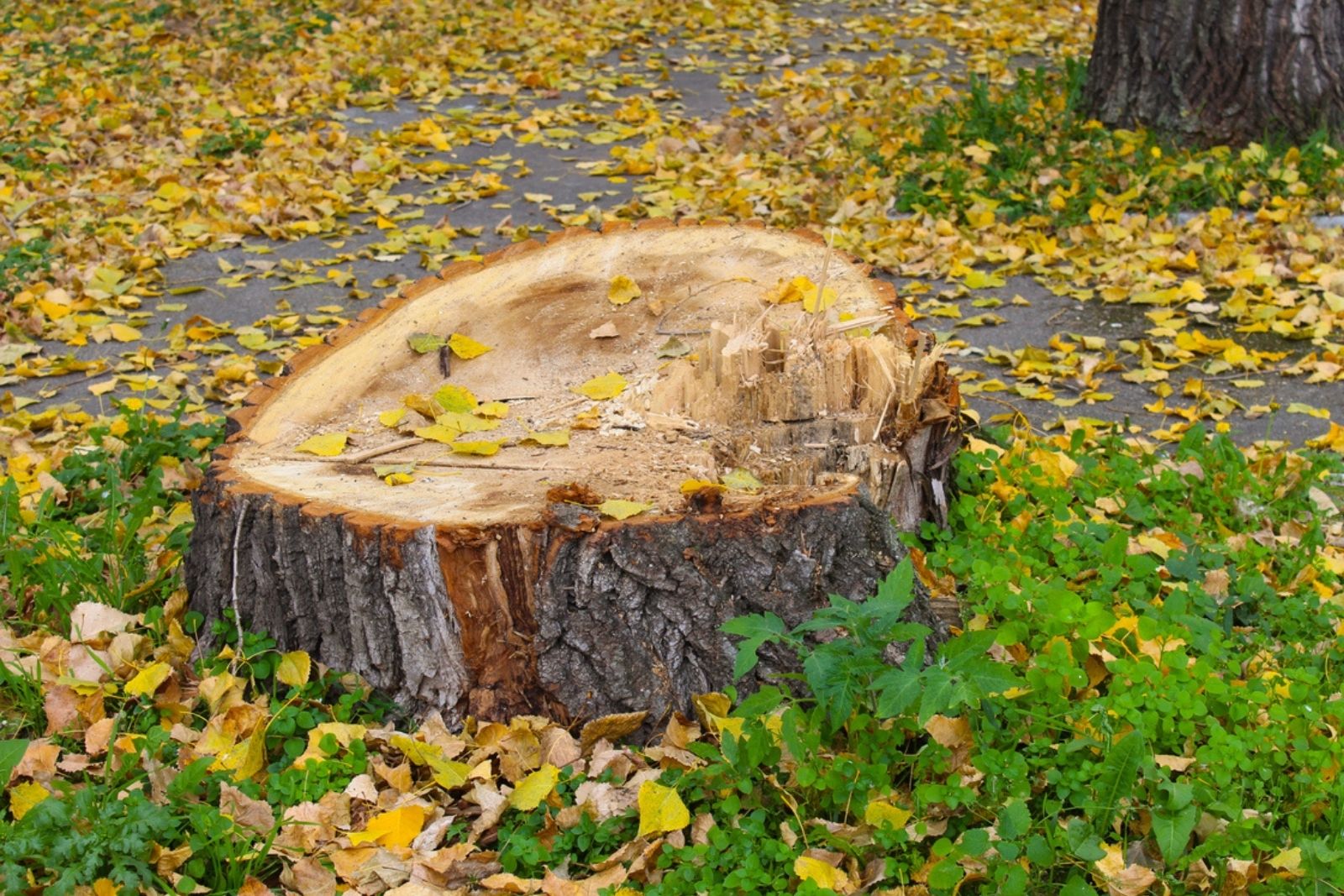
Left alone, a stump can take years to rot. The goal of every no-grinder method is to speed that up, by getting moisture, nutrients or chemicals deep into the wood, or to cut the root system so the stump can be levered out. Angi notes that professional stump grinding runs $170 to $500, depending on location and stump size. That’s the number these methods save, at the cost of time or effort.
The 3 methods, from patient to physical
- Drill and rot (slowest, easiest). Drill holes at least 8 to 12 inches deep into the top and sides, a few inches apart. Fill them with a potassium nitrate stump remover or a nitrogen fertilizer, soak with water, then cover the stump with a tarp and mulch to keep it moist and dark. Results should start to show within six to eight weeks, and full breakdown takes months. Potassium nitrate can be a danger to pets and wildlife, so use it sparingly.
- Epsom salt (gentle, slow). Drill holes 8 to 12 inches deep and about 1 inch apart, pack them with Epsom salt, water lightly, and cover. Expect several months. Angi describes it as safe around people and the environment. When the stump gives as you push or kick it, it’s ready to dig out.
- Dig it out (fastest, hardest). Water the soil two days before. Dig around the base, cut the anchor roots with clippers or a saw, cut the taproot, then lever the stump up with a digging bar and roll it away. It’s the quickest result, and the most labor.
You can also starve a stump under a heavy, dark tarp, checking after three to six months, and the boiling-water idea that works on weeds between pavers can be poured into drilled holes over several weeks, with gloves and long sleeves.
The method that wrecks the lawn, and other limits
Rock salt is the one to skip. Because it contains sodium and chlorine, it can harm the surrounding plants and lawn, and regular table salt shouldn’t be used either. Glyphosate-based products can also kill nearby grass, and household chemicals like bleach, gasoline or TSP can poison the soil. Don’t mix methods, either.
Burning is the riskiest route: check local laws first, since many areas ban it, avoid it in drought, and never leave a burning stump unwatched. For a very large stump, a stump close to the house, or roots tangled with utility lines, call a pro.
Drill, feed and cover if you can wait, dig if you can’t, and leave the rock salt in the garage. That’s the trick.