Some rooms just run cold, and the window always gets the blame: too old, too thin, needs replacing. Before anyone prices out new glass, energy auditors would like you to try the diagnostic they run first, because the real leak is usually not the glass at all, and finding it costs one sheet of paper and ten seconds per window, this weekend, before the first real cold snap arrives.
The test is almost insultingly simple, and it’s a standard of professional home energy audits: open the window, lay a sheet of paper (a dollar bill is the classic) across the frame, close the window on it, and pull. If the paper slides out easily, that spot is leaking air and energy; a healthy seal grips it so firmly it resists or tears.
Why one sheet of paper finds what eyes can’t
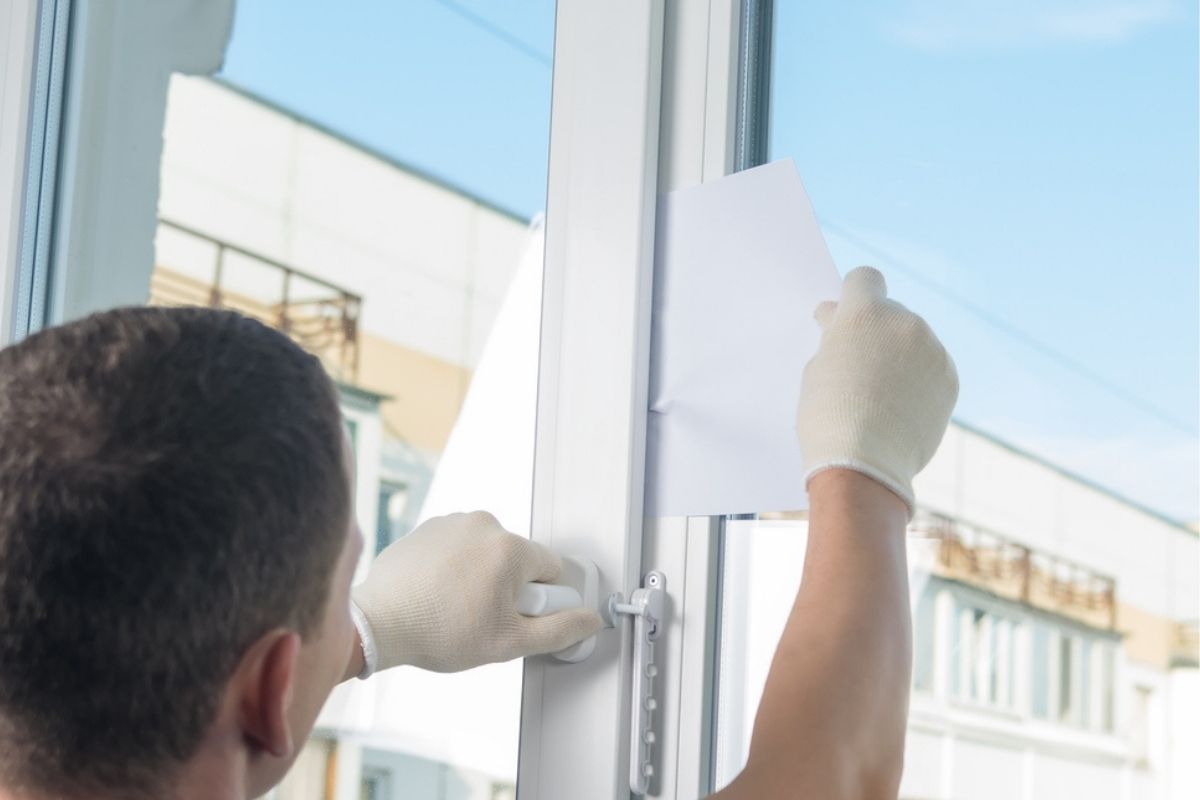
Your window’s defense against winter isn’t mainly the glass; it’s the squeeze, the compression of the weatherstripping between sash and frame when it closes. That squeeze fails invisibly: the stripping flattens, hardens or cracks with age, hinges and latches loosen, and a window that looks shut stops sealing shut. The paper is a feeler gauge for exactly that grip, which is why a window that fails the test usually needs new weatherstripping or a hardware adjustment, not a new window. Run the test at several points per window, both sides, top and bottom, since seals fail in sections, and repeat it on every exterior door, including the hinge side. Mark each failing spot with a bit of painter’s tape; in ten minutes you’ll hold a map of exactly where your heating bill escapes.
What to fix first, in paying order
- Weatherstripping on the failures: self-adhesive foam or V-seal strip, a few dollars a roll, pressed along the spots that let the paper slip. This is the highest-return fix in home weatherization, which is why auditors following DOE guidance say to start with caulk and weatherstripping.
- Caulk the frame-to-wall joint: the paper tests the moving seal; cracked caulk around the fixed frame is the other classic leak. A visual check plus a bead of acrylic-silicone caulk on anything cracked finishes the window.
- Doors get the same medicine plus a sweep: a failing paper test along a door bottom means a door sweep, the five-minute screw-on kind.
- Rattling sashes mean hardware: if the window shakes in its frame, tighten or adjust the latch so it actually compresses the seal, then re-run the test.
The follow-ups for stubborn cases
A window that passes the paper test everywhere but still breathes cold needs the second-tier checks: hold a lit incense stick or a strip of toilet paper near the frame on a windy day and watch for flutter, which catches leaks the closing edge can’t explain, often at the sill or behind the trim. For old single-panes that leak everywhere at once, seasonal shrink film buys a cheap winter. And note the family resemblance: this is the same grip-diagnosis as the fridge-door paper test, one sheet, one pull, one verdict on a seal. Fix what it finds and the thermostat argument gets easier too, whatever number you’ve settled on.
One sheet of paper, every window and door, ten seconds each. The failures get tape today and weatherstripping this weekend, and the cold snap arrives to find the house already sealed. That’s the trick.