It’s mulching weekend across half the country: bags of shredded bark, a wheelbarrow, and the satisfying feeling of tucking the garden in before winter. Drive through any neighborhood afterward and you’ll see the same shape repeated at the base of tree after tree, tidy, professional-looking, and quietly lethal. Arborists have a name for it, they consider it one of the leading killers of landscape trees, and the fix costs nothing but a change of shape.
The shape is the volcano: mulch piled in a cone against the trunk, sometimes eight inches high, often rebuilt every fall on top of last year’s layer. It looks like extra protection. What it actually does is press a permanently damp blanket against the one part of the tree that must stay dry.
How the volcano kills, slowly
Bark above ground is not root tissue; held against constant moisture, it softens, rots and opens the door to fungus and disease. Buried, the root flare, the widening where trunk meets soil, suffocates, because roots under a deep pile can’t get the oxygen they need. The tree responds by sending new roots up into the mulch itself, and those adventitious roots often circle the trunk and, years later, strangle it. The pile is also five-star rodent habitat: voles tunnel through the cozy cone all winter, gnawing the bark under cover. The cruelest part is the timeline: a volcanoed tree declines over five to ten years, long after anyone connects the damage to the mulch.
Around perennials and shrubs, the same mistake in miniature: mulch mounded over crowns and against stems traps moisture exactly where rot starts.
The rule that fixes it: 3-3-3, and a donut
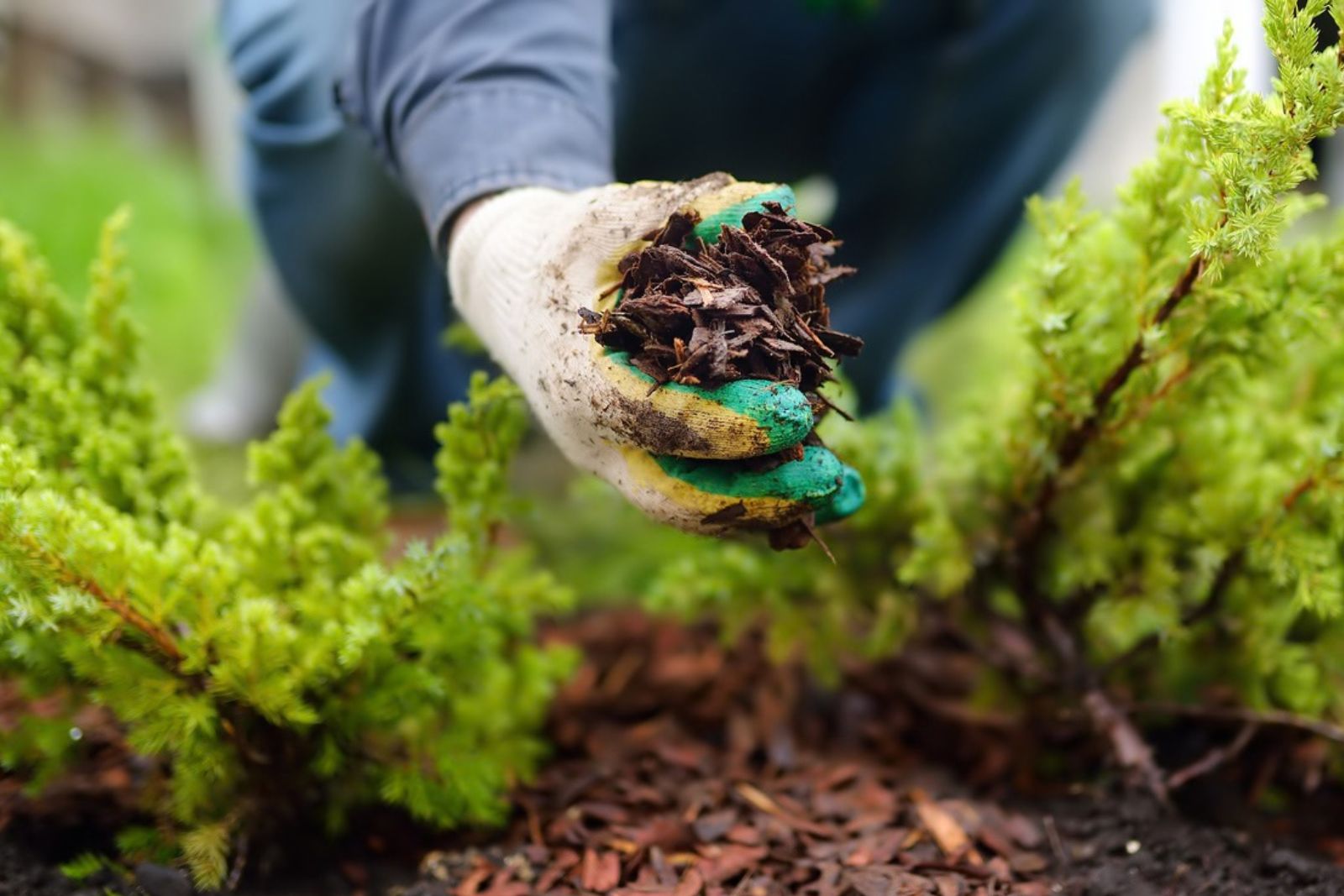
Proper mulch is a flat ring, not a cone, and arborists compress the whole method into three threes: keep mulch at least 3 inches away from the trunk, spread it no more than 3 inches deep, and extend the ring about 3 feet wide, or out toward the drip line if the bed allows. From the trunk you should see bare soil, then the flare, then the ring. Think donut, with the tree in the hole.
Applied that way, mulch delivers everything the volcano promised: moisture held in the root zone, soil insulated against freeze-thaw swings, weeds suppressed, and a buffer that keeps mowers and trimmers off the bark.
If your trees are already wearing volcanoes
Fixing one takes ten minutes. Pull the mulch back with gloved hands or a rake until the root flare is fully visible, breaking up any crusted layers. Check what’s underneath: soft or damaged bark is worth a look from an arborist. Then reshape the surplus into the ring, and before buying more this fall, measure what’s there; old mulch usually only needs fluffing and a thin top-up, not a fresh three inches on top. And where beds rather than trees need winter cover, the cardboard method does that job without endangering a single trunk.
Mulch was never the mistake. The shape was. Keep the flare in daylight, keep the ring flat, and the same bag of bark switches sides, from poison back to protection.